


Antique Tea Trio
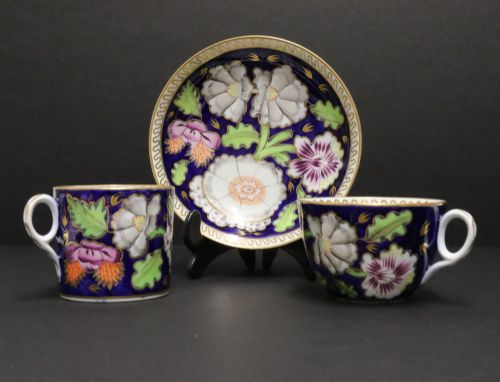
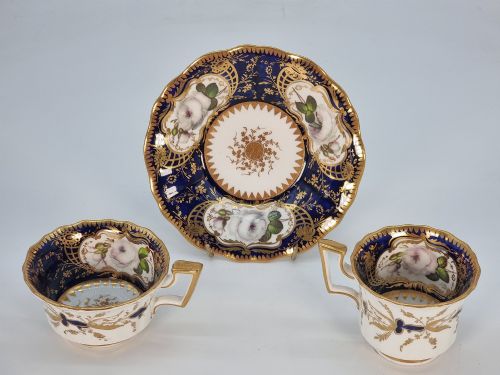
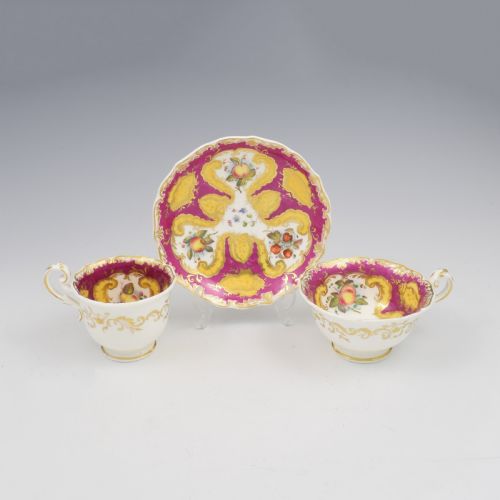
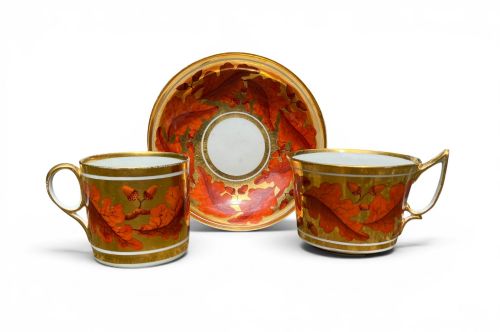
An antique tea trio brings together cup, saucer, and plate or coffee cup from the nineteenth century, offering the complete service for a single place setting.
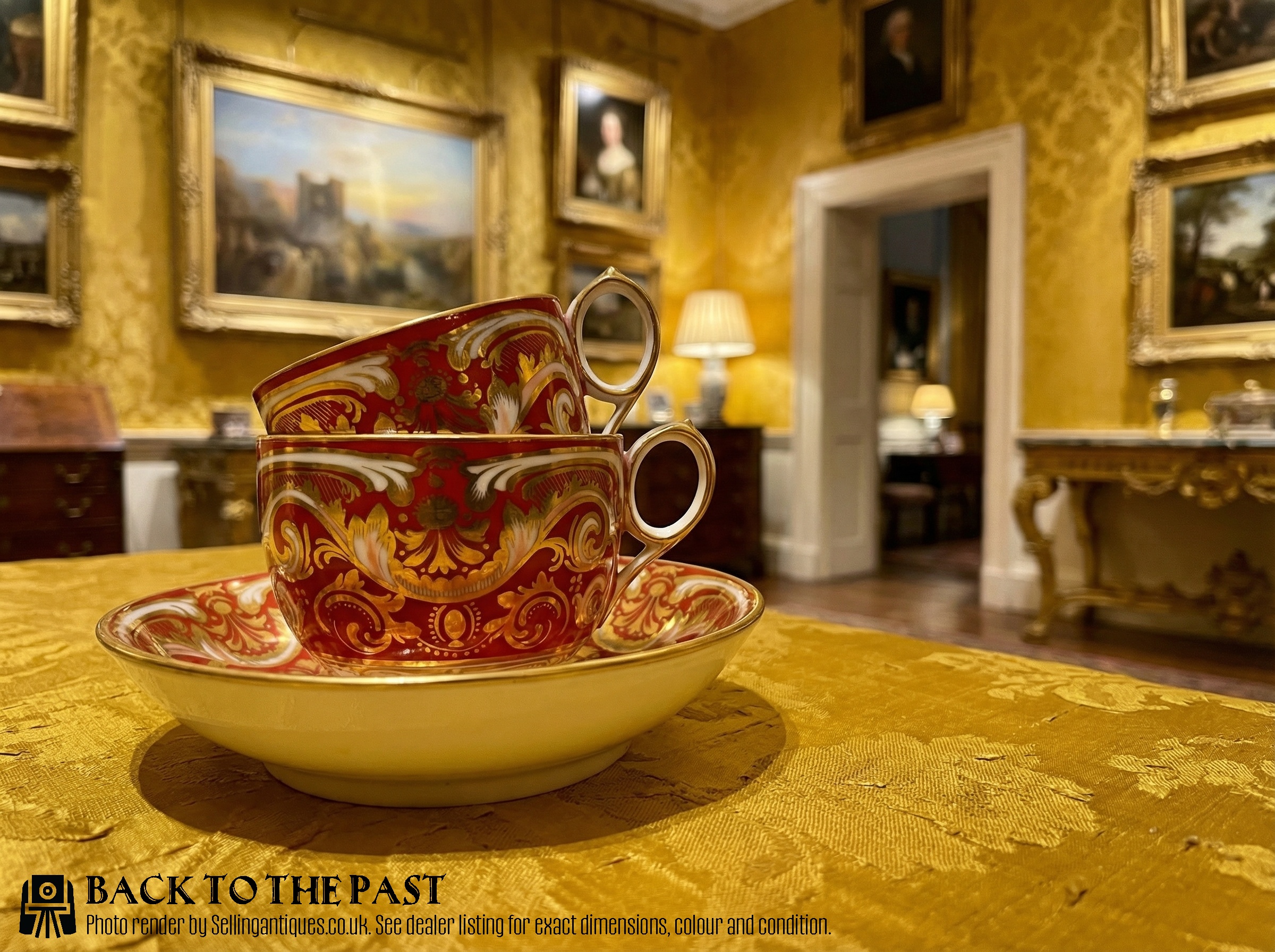
What an antique tea trio is
An antique tea trio comprises matched ceramic components intended for the service of hot drinks, typically uniting a teacup, a saucer, and either a side plate or an additional coffee cup. These sets date from the nineteenth century, encompassing Regency and Victorian eras as recorded across current stock and archive holdings.
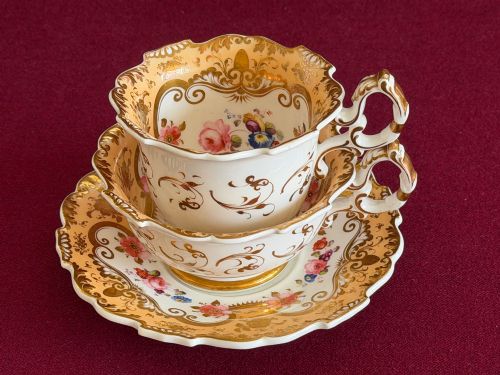
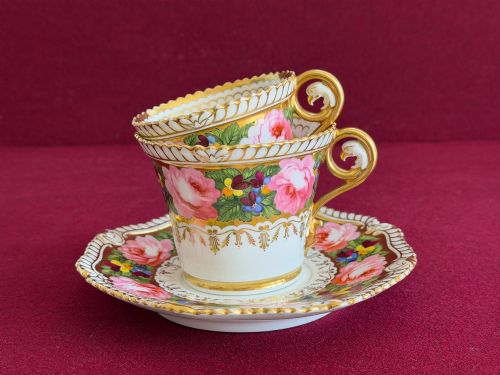
The composition varies between different configurations, such as the true trio featuring both a teacup and a coffee cup alongside a saucer, or sets incorporating a side plate. Makers such as H & R Daniel, Spode, Davenport, Brown-Westhead & Moore, Ridgway, Copelands China, and Rockingham produced these sets in porcelain.
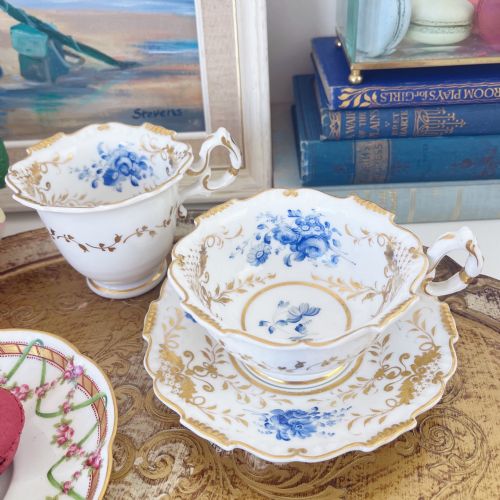
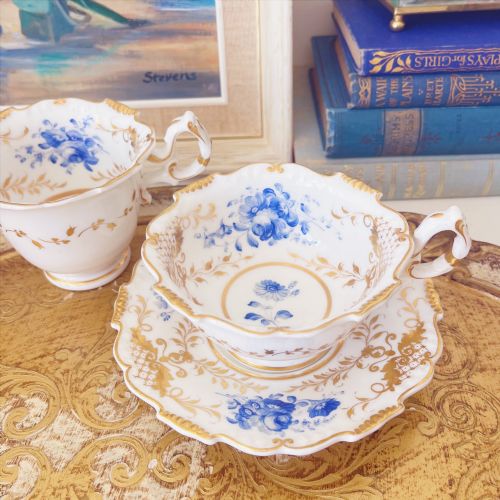
Examples on this page reflect forms like the Shrewsbury shape and London shape, often decorated with handpainted flowers, foliage moulding, pink cabbage roses, and gold gilding or gold leaf. Buyers encounter these porcelain sets as survivors of nineteenth-century dining habits.
How they were made
Potteries shaped these items from porcelain, employing moulded forms such as Nantgarw type moulding or specific profiles like the Shrewsbury shape and London shape. Workers formed cups, saucers, and plates individually before firing them in kilns.
Decoration relied on handpainted floral motifs, foliage designs, and enamel details applied directly onto the ceramic body. Artisans finished these pieces using gold leaf and gold gilding along the rims and handles.
Listings feature nineteenth-century porcelain decorated with handpainted flowers, enamel, and gold gilding across Regency and Victorian periods.
What varies in quality
Quality rests upon the precision of the handpainted details, distinguishing standard floral decoration from finer, more intricate brushwork depicting naturalistic flowers and roses. The crispness of moulded elements, such as foliage or specific factory shapes like the Shrewsbury form, also separates simpler wares from ambitious productions.
The application of gold leaf and gilding dictates the visual weight of a set, with heavier, burnished gold finishes marking out superior factory outputs from Spode, Daniel, or Rockingham. Preservation of the enamel colours and the integrity of the porcelain body further define the hierarchy among surviving trios.
H & R Daniel·Spode·Davenport·Brown-Westhead & Moore·Ridgway·Copelands China·Rockingham
The Antique Tea Trio Glossary
- True trio
- A matching set consisting of a teacup, a coffee cup, and a saucer. This combination was popular in the nineteenth century for serving different hot beverages.
- London shape
- A standard nineteenth-century teacup profile distinguished by a deep bowl tapering towards the base. Factories such as Spode frequently utilised this design.
- Gold gilding
- The application of a thin layer of gold to ceramic surfaces for decoration. It appears on rims, handles, and painted motifs across Victorian and Regency pieces.
- Enamel
- Opaque glass-based pigment fused to porcelain during firing. It provides the vibrant pinks, greens, and other colours found in handpainted floral decoration.
Frequently Asked Questions
What makes a true trio?
A true trio consists of a teacup, a coffee cup, and a saucer formed as a matched set. This configuration allowed drinkers to take both tea and coffee from coordinated porcelain.
Other sets replace the coffee cup with a side plate for food. Surviving examples from makers like Rockingham and Ridgway demonstrate both arrangements.
How do I date a tea trio?
Dating relies on factory marks, ceramic bodies, and stylistic evidence such as Regency or Victorian moulding and painting techniques. Shape names and pattern numbers recorded by makers like H & R Daniel help narrow the period.
Porcelain composition and enamel styles also offer clues. Nineteenth-century pieces display specific characteristics distinct from later reproductions.
Can I use an antique trio?
Using these porcelain sets requires care due to their age and delicate handpainted enamel decorations. Hand washing is essential to protect the gold leaf and gilding from wear.
Many collectors prefer to display them rather than risk damage. Thermal shock from boiling water can also affect nineteenth-century ceramics.