


Victorian Porcelain Teacup
A victorian porcelain teacup brings the weight and detail of nineteenth century tables straight to the modern morning.
Victorian Porcelain Teacup
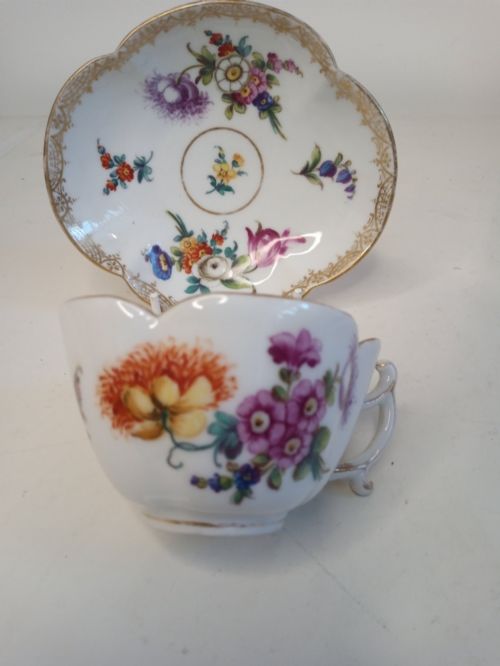
When you search for a victorian porcelain teacup, you look at domestic vessels spanning the nineteenth century and the turn of the twentieth. The pieces on this page appear as single cups, pairs, trios, and larger afternoon tea services. Forms range from standard teacups and saucers to demitasse cups, breakfast sets, and miniature solitaire sets.
Most examples originate from English potteries, alongside continental European factories such as Meissen and Dresden. Styles cover standard Victorian work, Late Victorian designs, Rococo Revival, nineteenth century neoclassical, and Victorian Imari patterns. You also encounter specialist forms like pedestal cups and teapot sets with matching cups and saucers.
How they were made
Potters built these vessels using porcelain, bone china, and ironstone, shaping them into standard or pedestal forms. Workshops applied hand painted decoration directly onto the ceramic body, often combining polychrome enamels with intricate floral or landscape motifs. Some pieces incorporate transfer printed elements alongside the painted work.
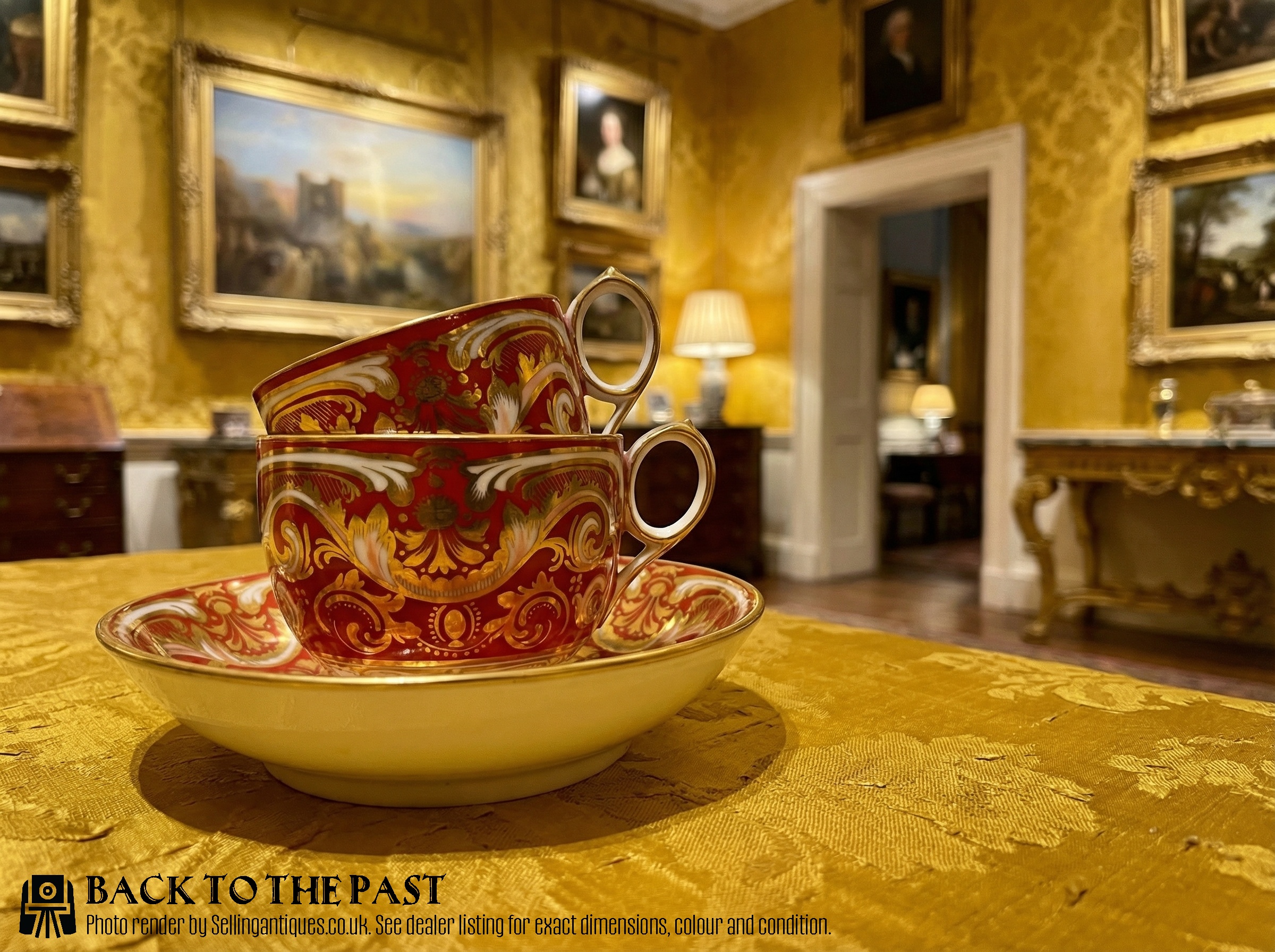
Gilding forms a core part of the manufacture, utilising gold leaf, standard gilt, and heavy gold gilt to line rims, handles, and borders. Specialised factories developed distinct bodies, such as the blush ivory ground seen on specific English productions or the robust ironstone used for durable service wares.
Periods represented span the Victorian era, the nineteenth century, and the early twentieth century up to nineteen ten.
What varies in quality
The standard of painting sets the baseline for quality, moving from simple factory output to meticulous hand painted scenes and botanical studies. Superior examples display crisp brushwork and well composed Dresden flowers or fence and doves patterns that remain sharp across the surface.
The application and richness of the gilding further divide the range, with solid gold leaf accents outlasting thin washes of gilt. Body selection also matters, where refined bone china or translucent porcelain demonstrates a higher grade of manufacture than standard utilitarian ironstone.
Royal Worcester·Masons Patent Ironstone·Davenport·Wileman Foley Shelley·Hirsch Dresden·Royal Crown Derby
The Victorian Porcelain Teacup Glossary
- Bone China
- A type of soft-paste porcelain containing bone ash, developed in England to create a strong, bright white ceramic body. It allowed potteries to cast thinner walls while maintaining structural durability.
- Demitasse
- A small cup used for serving strong espresso or Turkish coffee. These diminutive vessels often mirror the decoration of larger teacups within the same service.
- Ironstone
- A heavy, durable ceramic patented in the nineteenth century to rival true porcelain. It provides a sturdy body well suited for everyday breakfast and tea services.
- True Trio
- A matching set comprising a teacup, a saucer, and a corresponding tea plate. Collectors prize complete trios for their utility in formal table settings.
- Imari
- A decorative style inspired by Japanese export wares, featuring rich cobalt blue and iron red enhanced with gold. Victorian interpretations adapt these traditional motifs to European ceramic shapes.
- Solitaire Set
- A compact tea service designed for one person, typically including a small teapot, cup, saucer, and sometimes a creamer or sugar bowl on a matching tray.
Victorian Porcelain Teacup: Frequently Asked Questions
What is a true trio?
A true trio consists of a matching teacup, saucer, and tea plate produced as a single set by the pottery. They formed the standard place setting for formal afternoon tea during the Victorian period.
Collectors look for these three matching components because many tea sets were split up over time. Finding a complete trio together ensures uniform glaze and pattern wear.
How do I use them daily?
You can use these cups for morning tea or afternoon service, provided you treat them with appropriate care. Hand washing protects the delicate enamels and gold gilt from harsh machine detergents.
Avoid thermal shock by warming the porcelain with warm water before pouring boiling tea. Storing them safely on saucers prevents rim chipping in the cupboard.
Are demitasse cups smaller?
Demitasse cups are significantly smaller than standard teacups, designed specifically for concentrated coffee rather than tea. They appear frequently in nineteenth century cabinet collections alongside standard tea wares.
Despite their smaller canvas, painters often lavished the same detailed floral or gilded decoration on demitasse cups as they did on larger breakfast sets.
How do I date these pieces?
Dating relies on factory registry marks, impressed ciphers, and stylistic shifts between early Victorian, Rococo Revival, and Late Victorian designs. Hand painted signatures and specific body types like blush ivory also narrow the production window.
Comparing the handle shape and gilding style against documented factory periods helps establish whether a piece originates from the mid or late nineteenth century.