
Antique Teacup Saucer Set
An antique teacup saucer set brings daily ritual to life, offering porcelain and pottery crafted for tea and coffee across centuries.
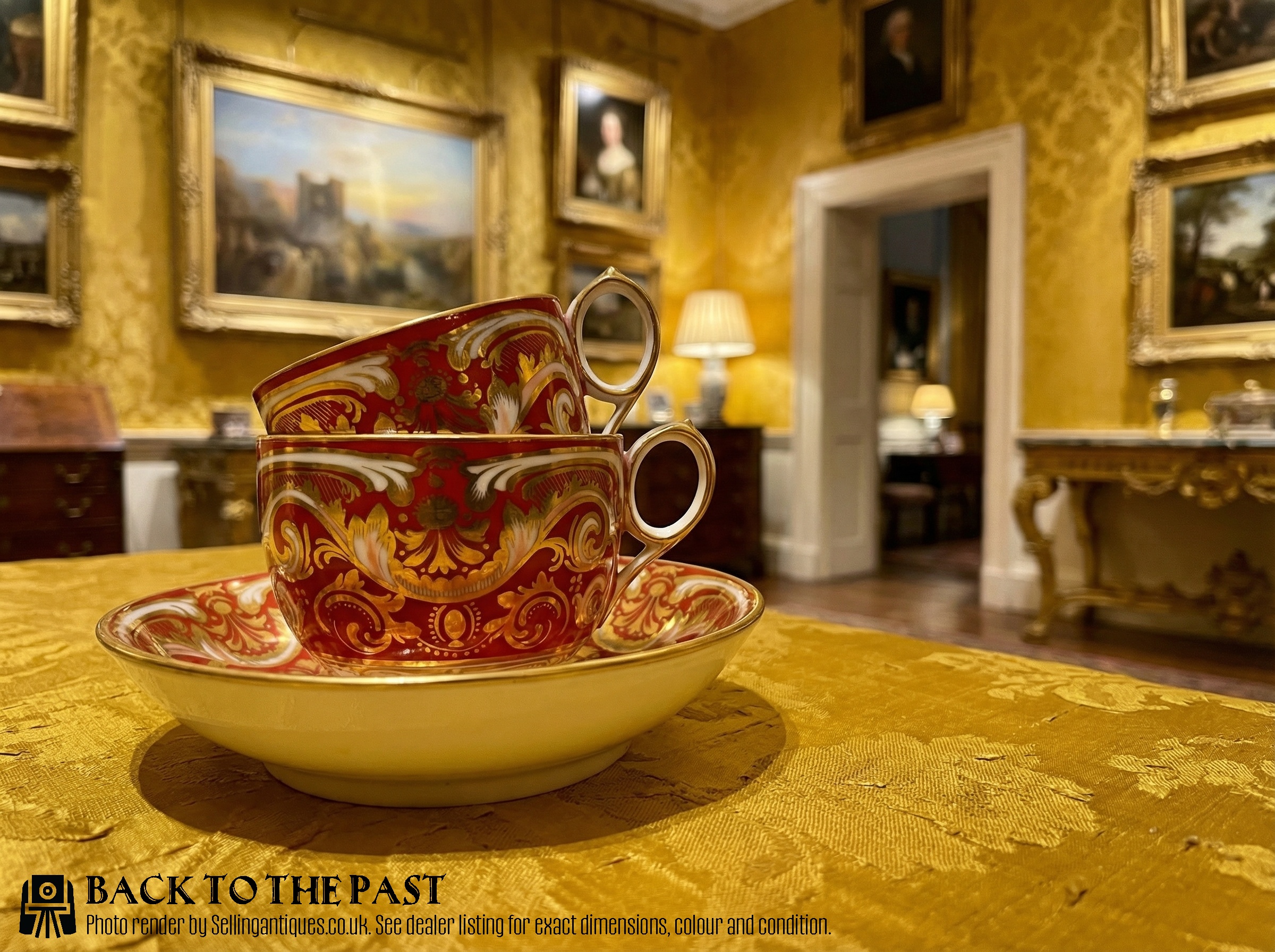
Antique Teacup Saucer Set
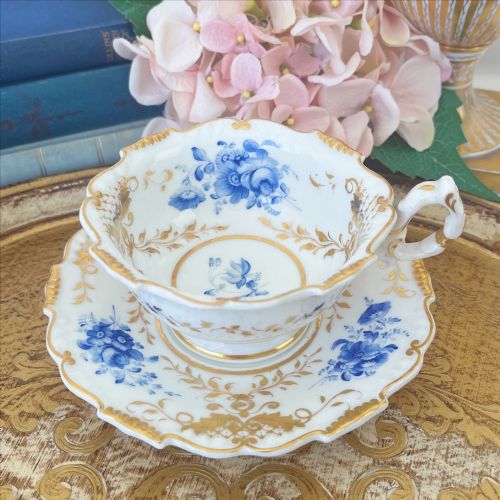
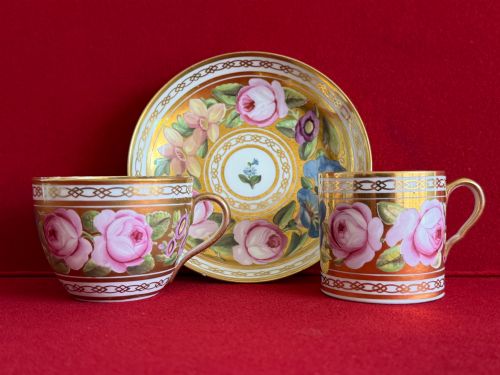
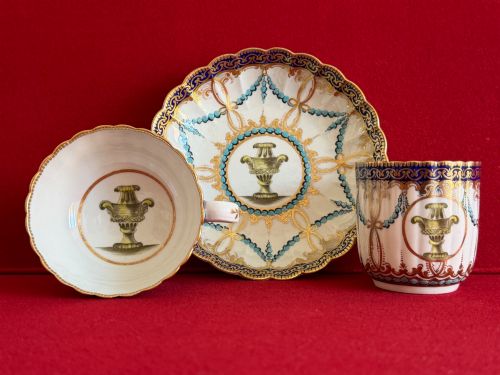
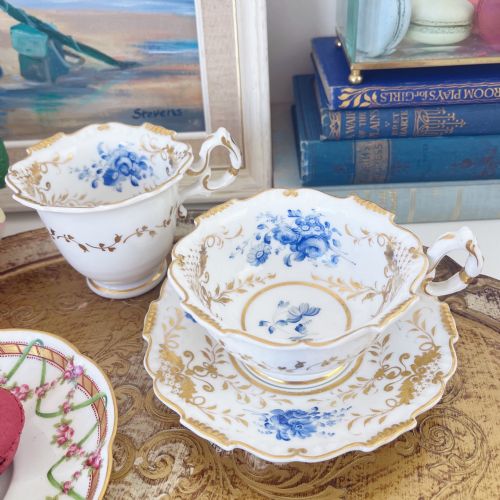
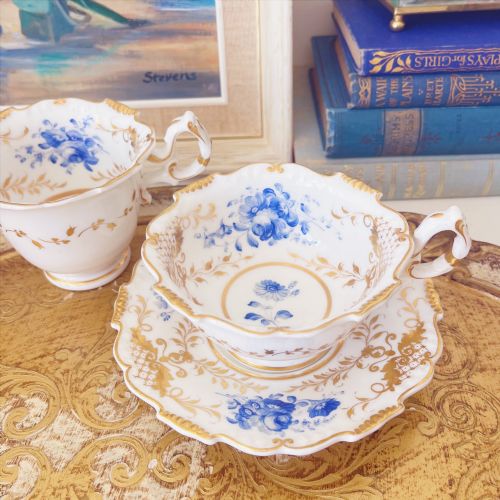
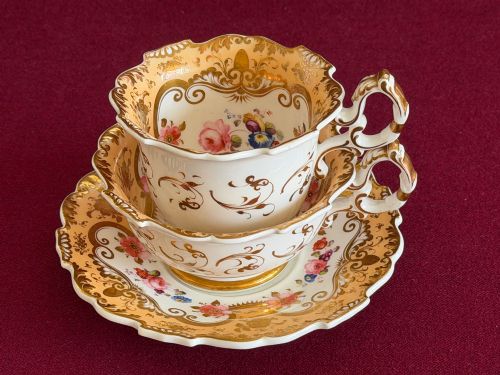
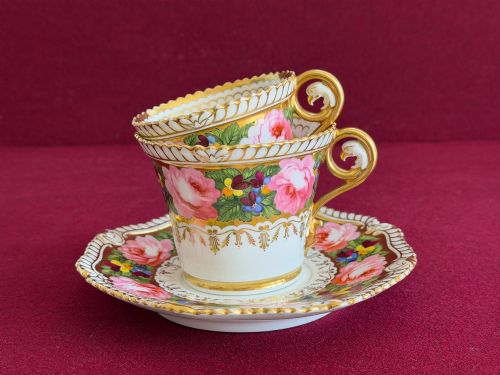
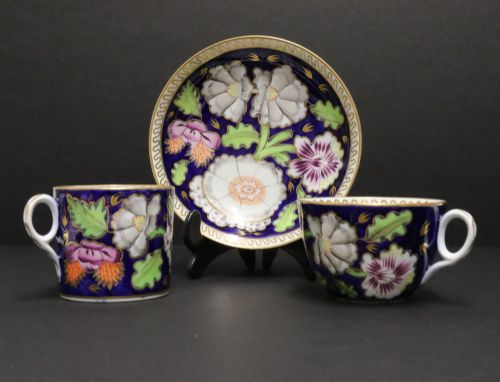
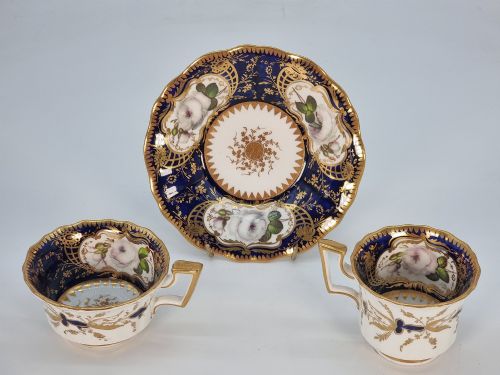
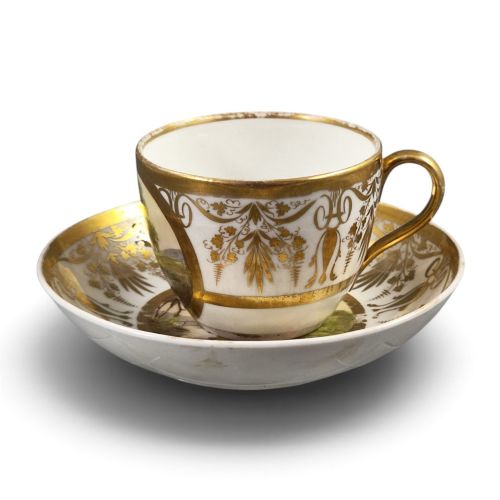
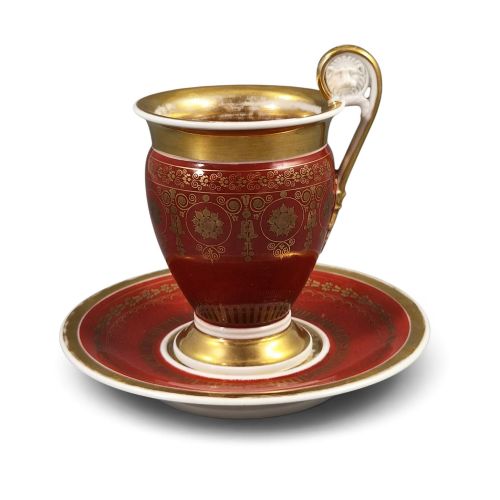
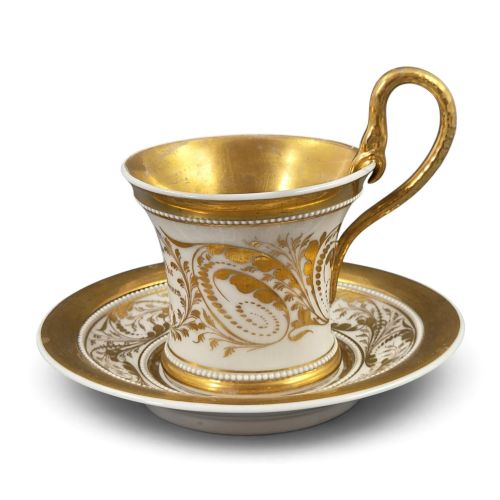
An antique teacup saucer set spans single pairs, trios including coffee cups, and larger tea services originating from English, European, and Asian kilns. The pieces on this page emerge primarily from the eighteenth, nineteenth, and early twentieth centuries, reflecting changing domestic habits.
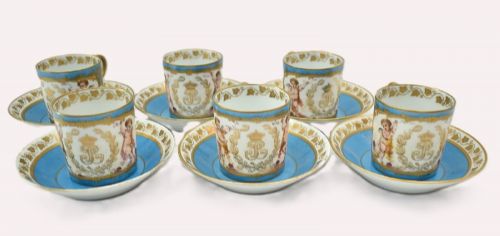
Makers shaped these sets in styles ranging from Georgian and Regency to Victorian, Edwardian, and Art Deco. Forms appear as delicate cabinet cups, everyday tea sets, and gaiwans, utilising porcelain, bone china, creamware, and enamel.
Materials and construction
Potters and ceramists shaped hard-paste porcelain, bone china, and creamware by hand or wheel before applying hand-painted or transfer-printed decoration. Kiln firing fixed the body and underglaze colours.
Gilding with gold leaf, gold gilt, and enamel work was added in subsequent low-temperature firings to create metallic highlights and vibrant motifs.
What determines quality
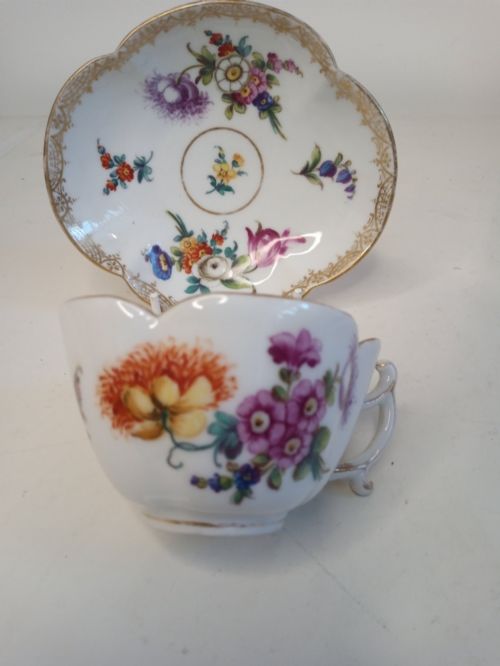
Quality rests in the precision of the hand-painted brushwork, the delicacy of the porcelain paste, and the crispness of the moulded form. Pieces with intact gilding and well-preserved enamel details stand above worn examples.
The reputation of the manufactory, such as Worcester, KPM Berlin, or Meissen, dictates distinction, alongside the complexity of patterns like hand-painted landscapes or intricate bird motifs.
H & R Daniel·Chamberlain Worcester·Newhall·Coalport·KPM Berlin·Derby·Flight Barr And Barr·Royal Worcester·Moser·Meissen·Ridgway·Rockingham
The Antique Teacup Saucer Set Glossary
- Trio
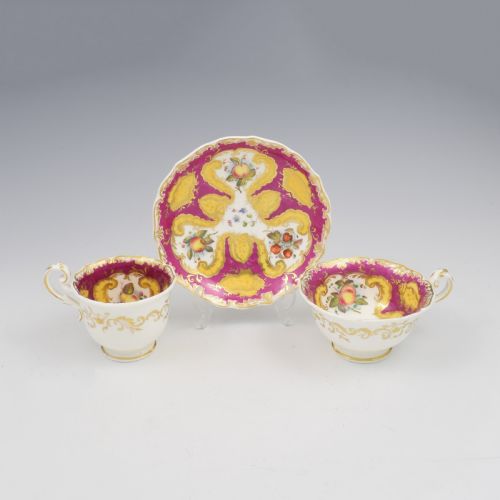
- A matched set comprising a teacup, a coffee cup, and a saucer. This combination was popular in nineteenth-century English and European porcelain services.
- Cabinet cup
- A decorative cup and saucer intended for display in a cabinet rather than for regular dining use. These often feature hand-painted landscapes or gilt presentation finishes.
- Bone china
- A type of soft-paste porcelain containing bone ash, developed in England to create a durable, translucent white ceramic body.
- Gilding
- The application of gold leaf or powdered gold to the surface of ceramics. This finish is fired to adhere to the glaze.
- Creamware
- A refined earthenware with a pale yellowish-cream glaze, perfected in eighteenth-century England.
- Gaiwan
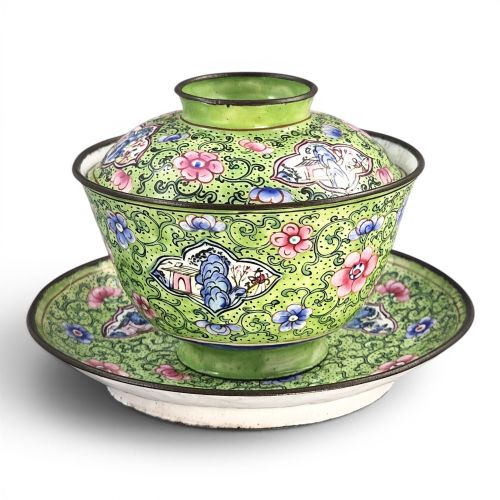
- A traditional Chinese lidded bowl used for steeping and drinking tea, consisting of a saucer, bowl, and lid.
Antique Teacup Saucer Set: Frequently Asked Questions
What is a tea trio?
A tea trio consists of a matching teacup, coffee cup, and saucer used together in nineteenth-century settings.
Collectors prize these complete three-piece sets for their unified decorative schemes.
How do I date a porcelain set?
Dating relies on maker marks, paste characteristics, and stylistic traits like Georgian neoclassical motifs or Victorian gilding.
Comparing pattern numbers and factory periods helps narrow the year of manufacture.
Can I use antique cups for tea?
Many sturdy nineteenth-century porcelain and bone china sets remain robust enough for careful daily use.
Delicate cabinet cups or pieces with fragile gold leaf are better suited for gentle display.
What is hard-paste porcelain?
Hard-paste porcelain is a ceramic composed of kaolin and petuntse fired at very high temperatures.
This material produces a durable, vitrified body that resists scratching and absorbs no liquid.