


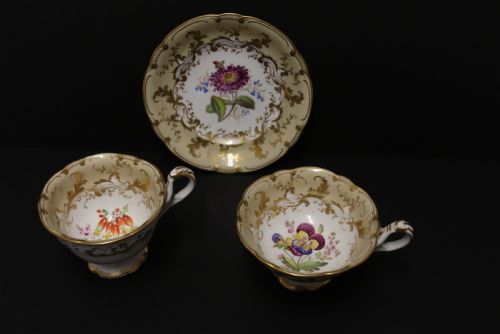
Hand Painted Porcelain Trio
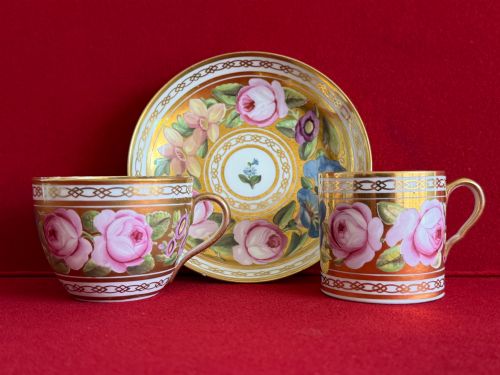
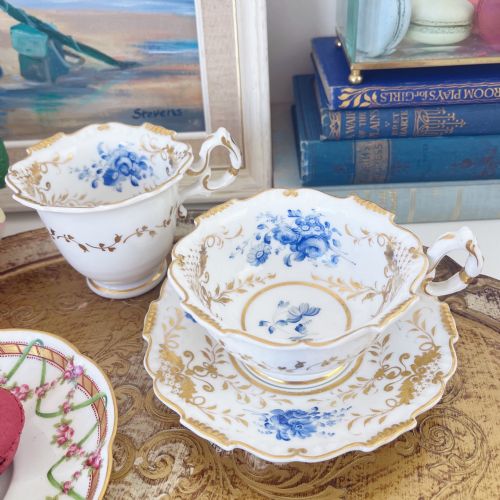
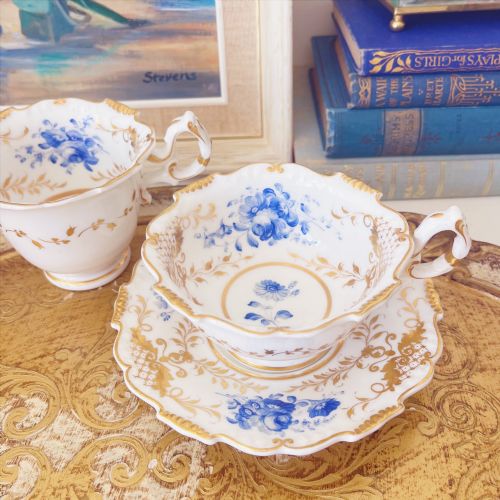
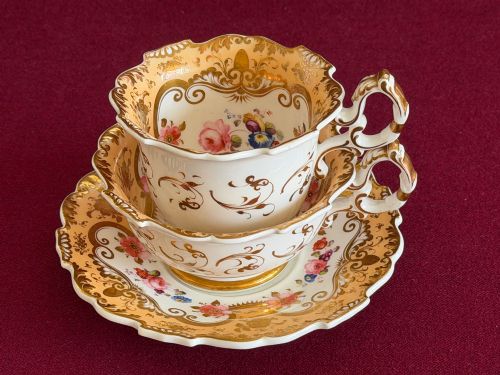
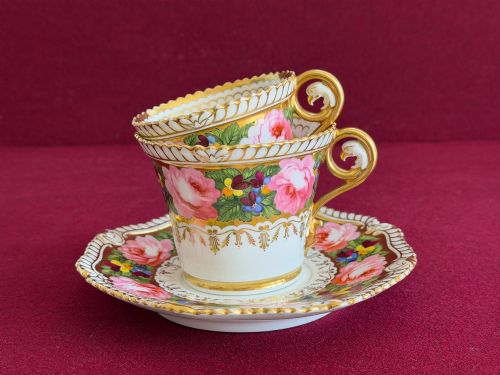
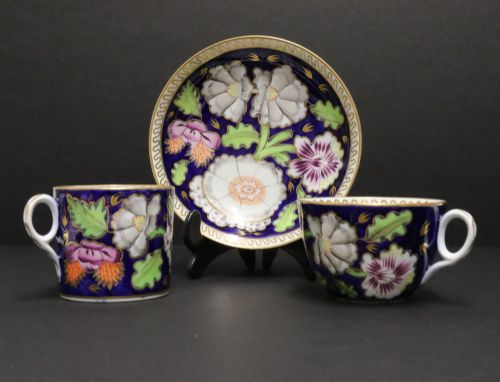
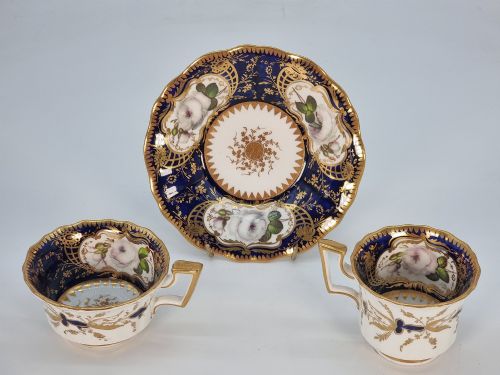
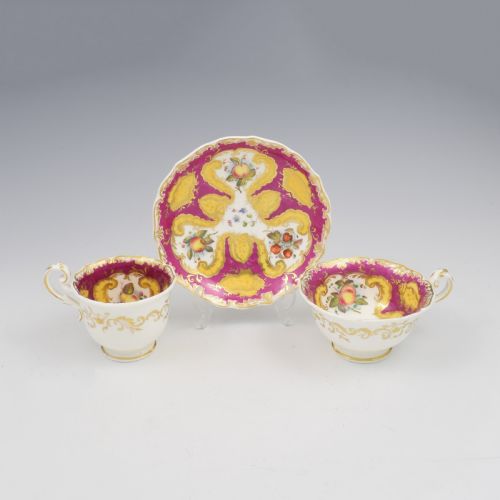
These hand painted porcelain trio sets bring Regency and Victorian tea tables to life, offering a teacup, coffee cup, and saucer matched for a collector.
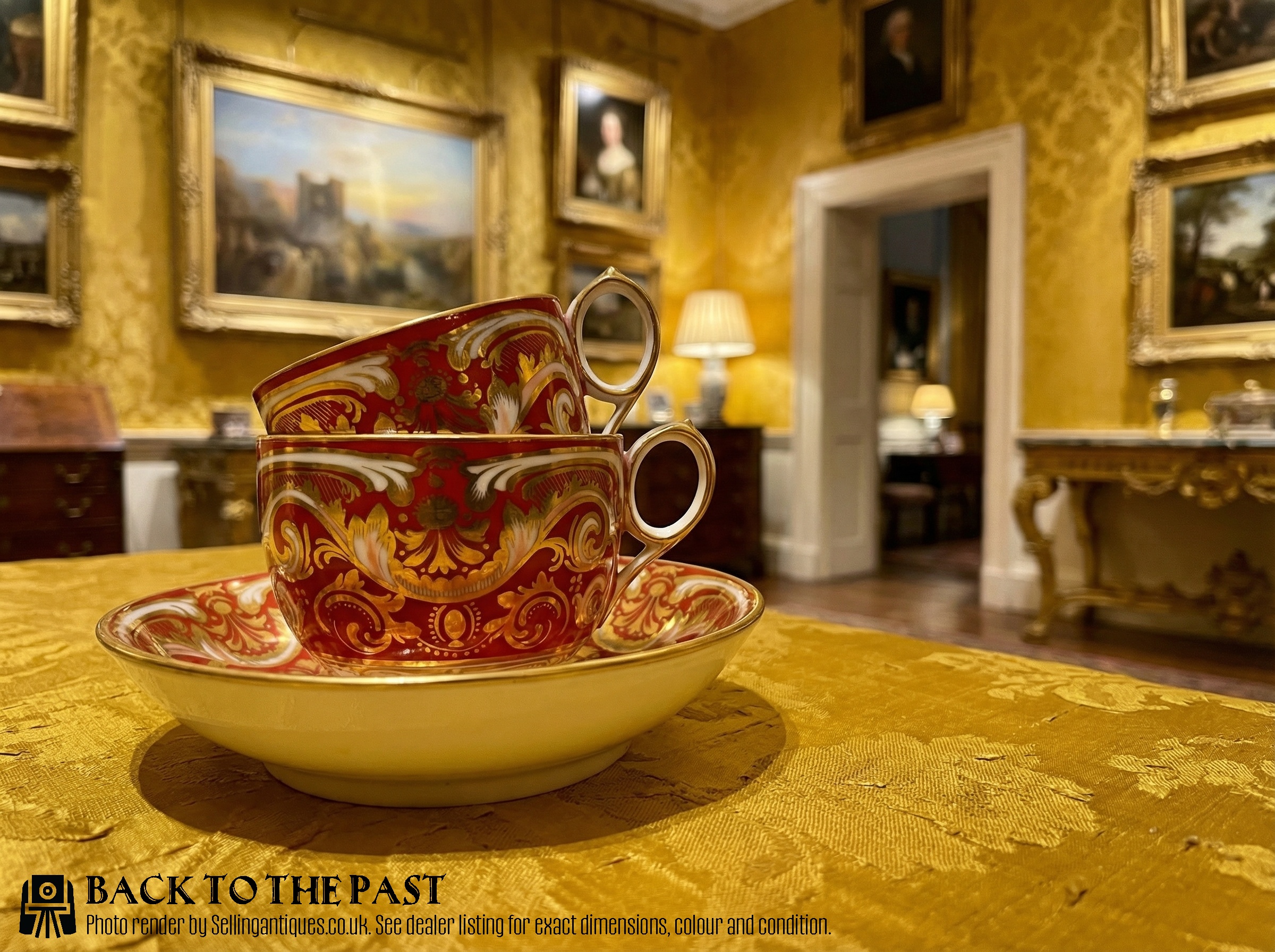
Hand Painted Porcelain Trio
A hand painted porcelain trio comprises a matched teacup, coffee cup, and saucer intended for formal tea and coffee service. The form emerges frequently across the Regency and 19th-century periods, capturing an era of refined domestic hospitality.
Most examples found here date from the late 18th century through to the Victorian era, spanning Georgian elegance and later flourishes. Collectors encounter cabinet trios designed for display alongside functional tea sets used in period parlours.
Origins trace to notable English manufactories that shaped porcelain production. These pieces reflect the shift from simple domestic wares to ornate cabinet items painted with botanical and fruit patterns.
Materials and manufacture
The body consists of hard-paste porcelain or bone china, providing a smooth white base for decoration. Artisans applied enamel colours by hand over the glaze, often integrating gold leaf and rich gilding to highlight handles and rims.
Firing techniques of the period required steady kiln temperatures to set the porcelain glaze and fix the hand-painted pigments. Gilders then applied gold leaf by hand, returning the pieces to the kiln to secure the metallic lustre.
Early coffee cups lacked handles entirely, forcing drinkers to master the art of holding a hot porcelain bowl without spilling.
Judging quality and execution
Quality rests in the precision of the hand-painted decoration and the crispness of the porcelain moulding. Superior sets display meticulous brushwork in floral or fruit patterns, where inferior examples show rushed application and uneven enamel thickness.
The application of gold leaf and gilding dictates the level of finish, with burnished gold indicating higher craftsmanship than flat, unpolished applications. The translucency of the porcelain body and the absence of firing flaws further separate standard wares from cabinet pieces.
H & R Daniel Shrewsbury·Chamberlain Worcester·Newhall porcelain·Derby porcelain·Davenport·Spode
The Hand Painted Porcelain Trio Glossary
- Trio
- A set of three matching pieces consisting of a teacup, a coffee cup, and a saucer. This grouping became popular during the Georgian and Regency periods for formal entertaining.
- Bone China
- A type of porcelain containing bone ash, creating a strong, milky-white body. It allowed makers to produce thinner walls while retaining durability.
- Gilding
- The application of gold leaf or gold powder to ceramic surfaces for decoration. Skilled artisans burnished this gold to achieve a bright, reflective finish.
- Enamel
- Opaque glass-like paint applied over the glazed porcelain body. It provided vibrant colours for floral and figurative motifs.
- Cabinet Trio
- A decorative set intended primarily for display in a glass-fronted cabinet rather than daily use. These pieces often feature more elaborate hand-painted scenes and heavier gilding.
Hand Painted Porcelain Trio: Frequently Asked Questions
What is included in a hand painted porcelain trio?
A standard trio includes three matching ceramic items designed for hot beverages: a teacup, a coffee cup, and a saucer.
During the Georgian and Regency periods, drinkers used different cups for tea and coffee, which explains the inclusion of two distinct cup shapes with a single saucer.
How do I care for antique porcelain trios?
These delicate items require gentle hand washing in warm water with mild soap. Avoid soaking them, as moisture can infiltrate old glaze crazing.
Keep them away from direct sunlight and modern dishwashers to protect the hand-painted enamel and fragile gold leaf details.
Can I use these cups for daily tea service?
While these pieces were originally functional, most collectors treat antique cabinet trios as display items due to their age. Regular use can wear away the hand-painted enamel and delicate gilding over time.
Gentle occasional use is possible, but hand washing and careful handling remain essential.
How do I date an 19th-century trio?
Dating relies on maker marks, pattern numbers, and stylistic shifts between the Regency and Victorian eras. Shape variations, such as the Shrewsbury or cabinet styles, also point to specific manufacturing decades.
Comparing the porcelain body and gilding style against documented factory periods helps narrow down the production year.