



Antique Coffee Teacup Trio
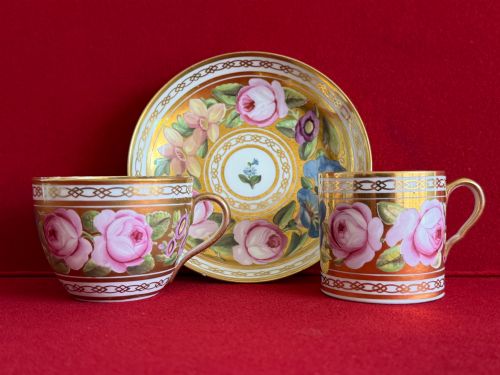
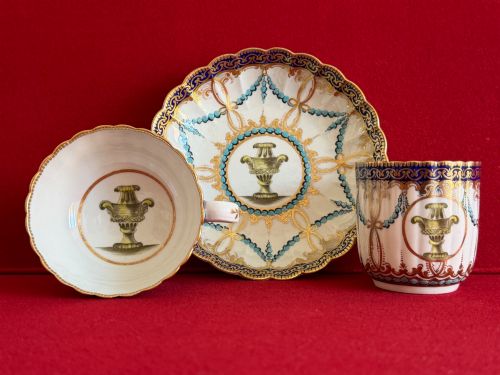
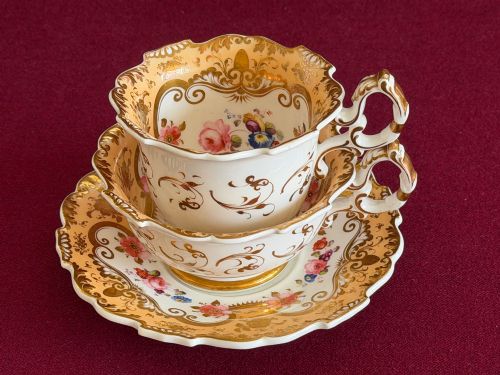
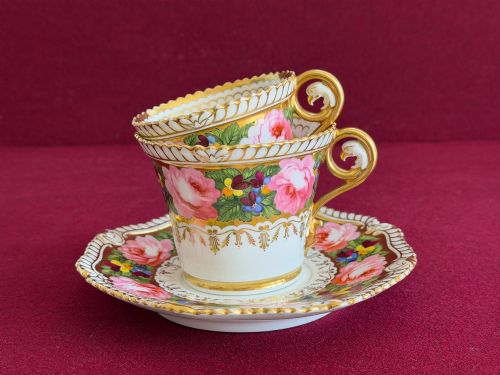
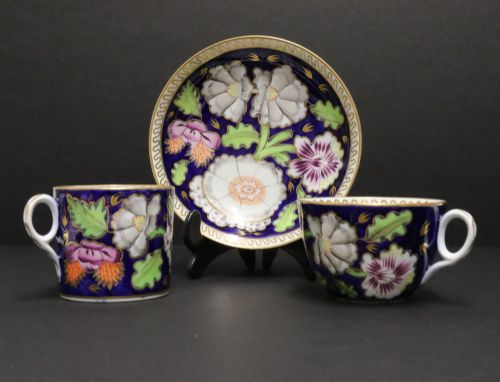
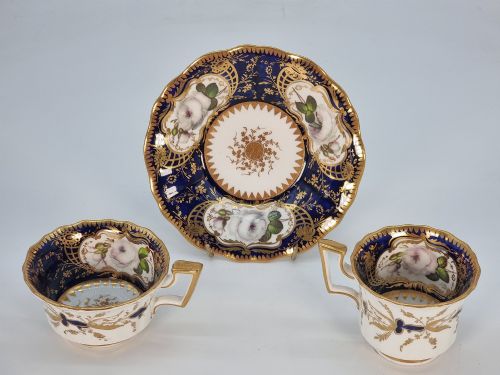
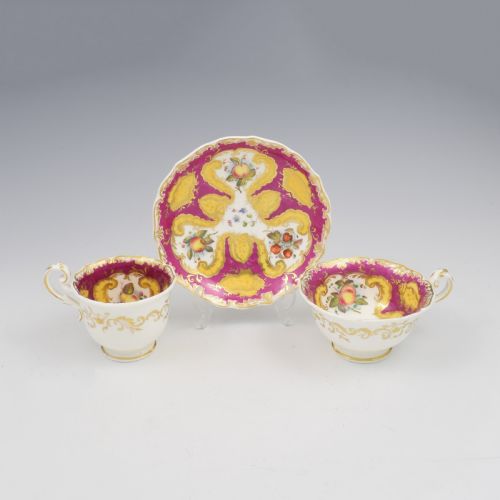
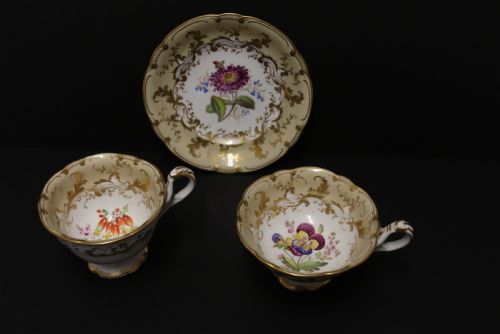
An antique coffee teacup trio gathers two matching cups and a saucer into one complete set.
Antique Coffee Teacup Trio
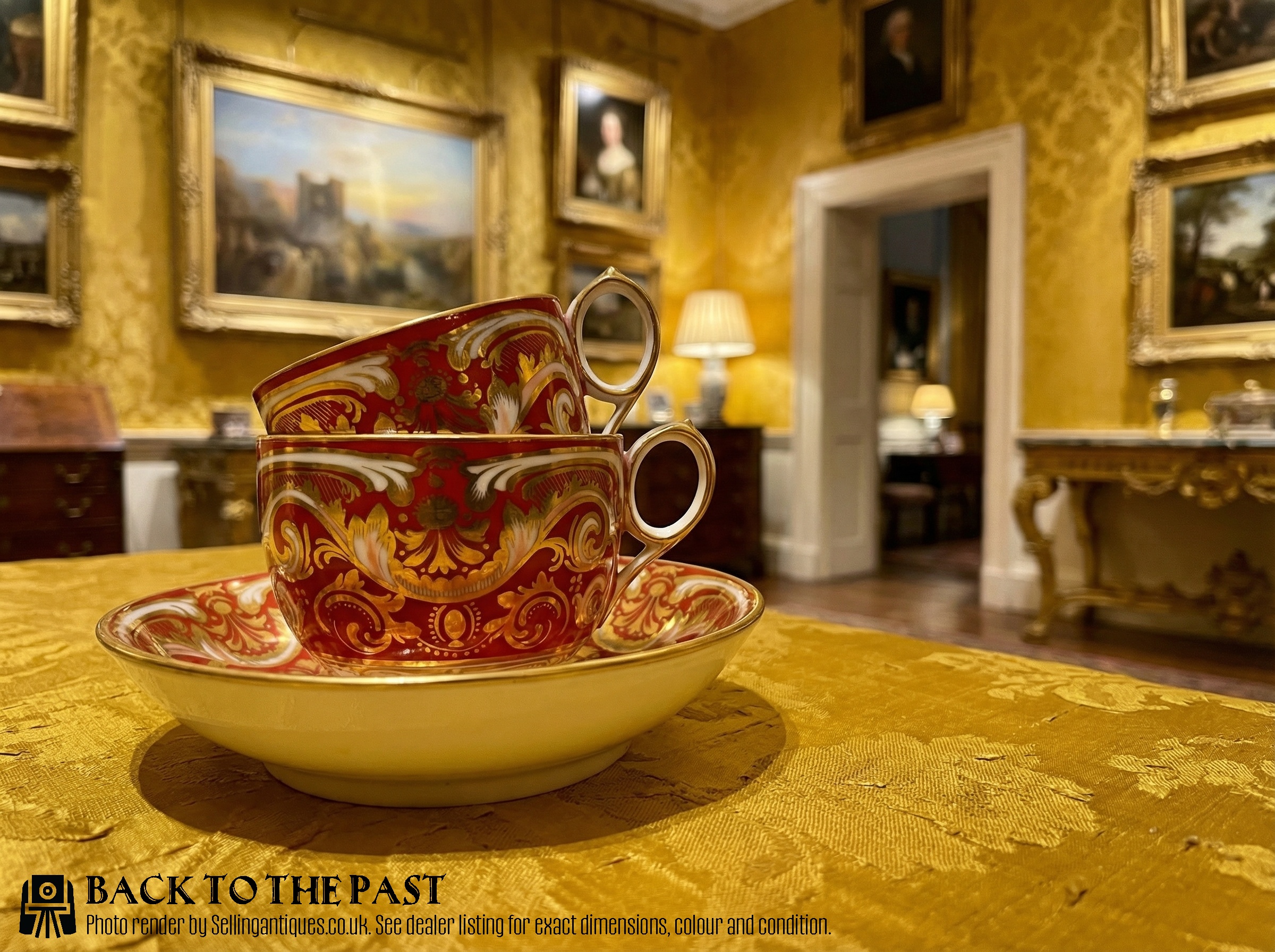
An antique coffee teacup trio brings together a teacup, a coffee cup, and a matching saucer, forming a set designed for nineteenth-century hospitality. These pieces emerge from periods such as the Regency era, the Victorian decades, and the Edwardian years.
Makers such as H & R Daniel, Chamberlain Worcester, Newhall, Coalport, Derby, Davenport, Minton, Spode, and Ridgway produced these sets. Buyers most often meet Regency and nineteenth-century examples fashioned as true trios comprising a coffee cup, teacup, and saucer.
What varies in quality
The fineness of the porcelain body and the crispness of the moulding separate standard examples from superior pieces. Thinner walls and more translucent ceramics indicate greater skill at the bench.
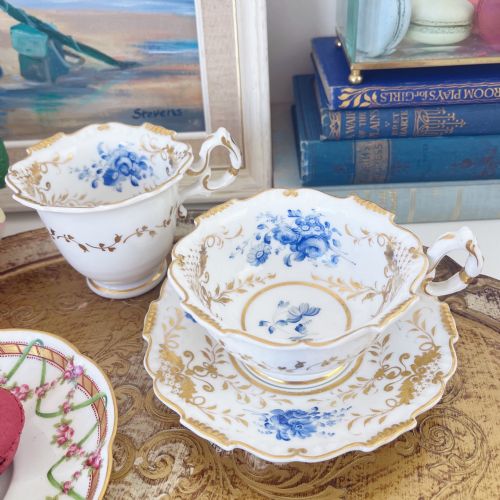
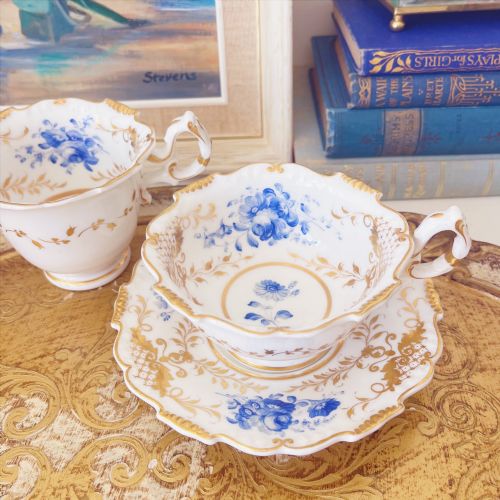
Handpainted botanical or pictorial scenes executed with precision elevate a set above simpler monochrome or abstract patterns. The preservation of the original gilding and enamel highlights also determines the standing of each trio.
Listings feature porcelain and bone china decorated with handpainted motifs, enamel glaze, and gold gilding across the Regency, Victorian, and Edwardian periods.
H & R Daniel·Chamberlain Worcester·Newhall·Coalport·Derby·Davenport·Minton·Spode·Ridgway
The Antique Coffee Teacup Trio Glossary
- True trio
- A matching set comprising a teacup, a coffee cup, and a saucer. This grouping allows a person to serve both beverages with uniform decoration.
- Bone china
- A type of porcelain incorporating bone ash into the paste. This material yields a strong, slightly translucent body suitable for delicate forms.
- Gilding
- The application of gold leaf or gold paint to ceramic surfaces. It frames the painted scenes and highlights handles and rims.
- Enamel glaze
- A vitreous coating fused to the pottery during firing. It provides a glossy protective layer over painted decorations.
Antique Coffee Teacup Trio: Frequently Asked Questions
What is a true trio?
A true trio consists of three specific ceramic pieces made to match one another. It includes a teacup, a taller coffee cup, and a saucer.
Potters created these sets during the Regency and nineteenth-century periods for formal morning or after-dinner hospitality.
How do coffee cups differ from teacups?
Coffee cups in these sets are typically taller and narrower than their teacup counterparts. This shape helped retain the warmth of the coffee.
Teacups are wider and shallower, allowing the tea to cool more readily for drinking.
When were these trios made?
The listings show pieces originating primarily across the nineteenth century, including Regency, Victorian, and Edwardian eras. Dates span from around 1805 through to the early 1900s.
Early nineteenth-century examples often bear distinctive handpainted botanical or scenic motifs associated with specific factories.
Can I use these antiques daily?
These fragile porcelain and bone china items require careful handling due to their age and delicate handpainted surfaces. Hand washing in warm water preserves the enamel and gilding.
Many collectors choose to display them in cabinets rather than use them for routine dining.