


Gilded Porcelain Trio
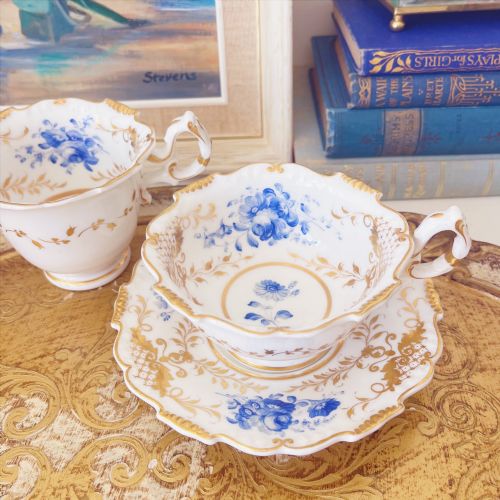
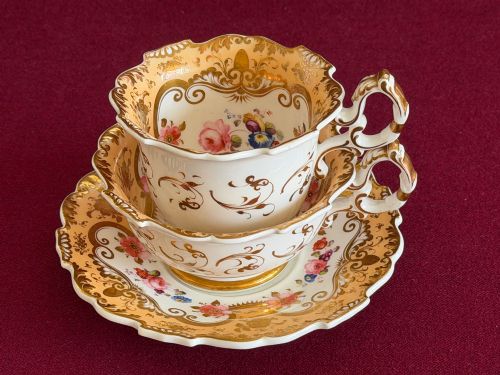
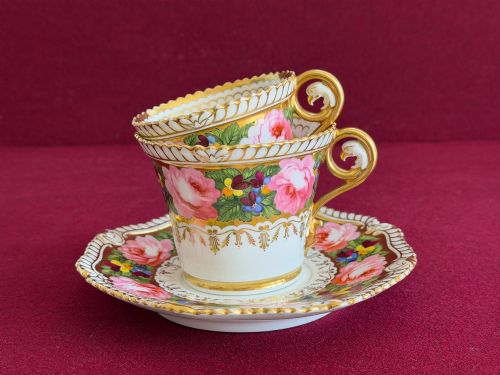
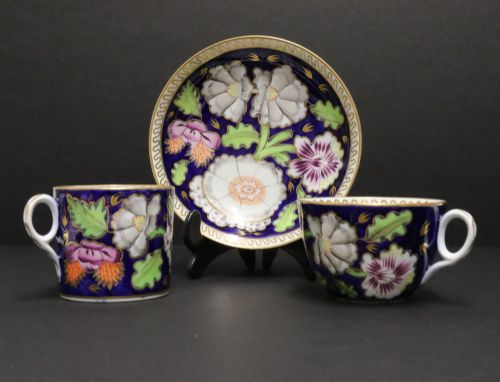
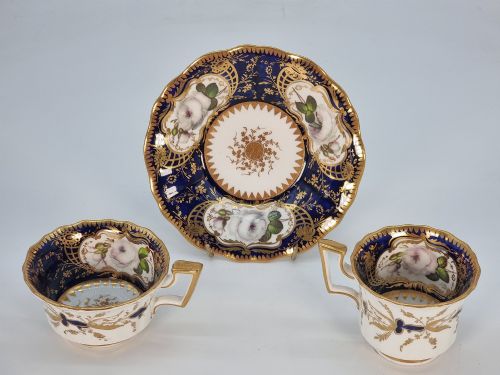
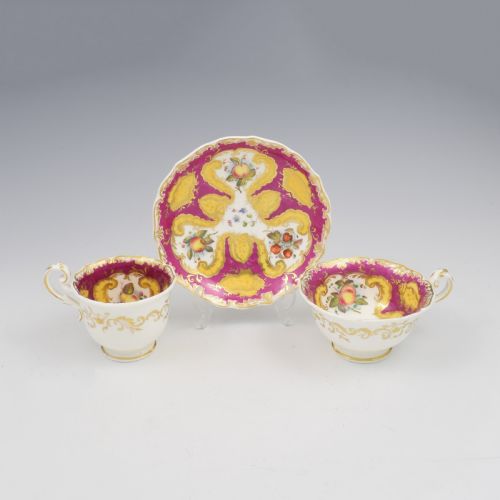
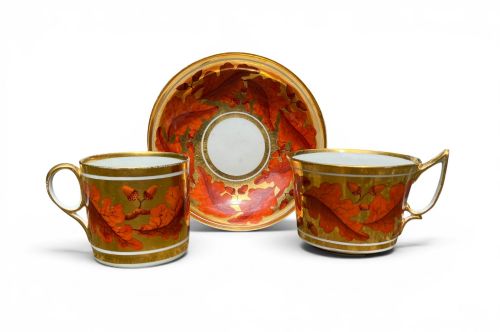
A gilded porcelain trio brings together matching tea or coffee cups and a saucer, offering a complete tabletop setting from centuries past.
Gilded Porcelain Trio
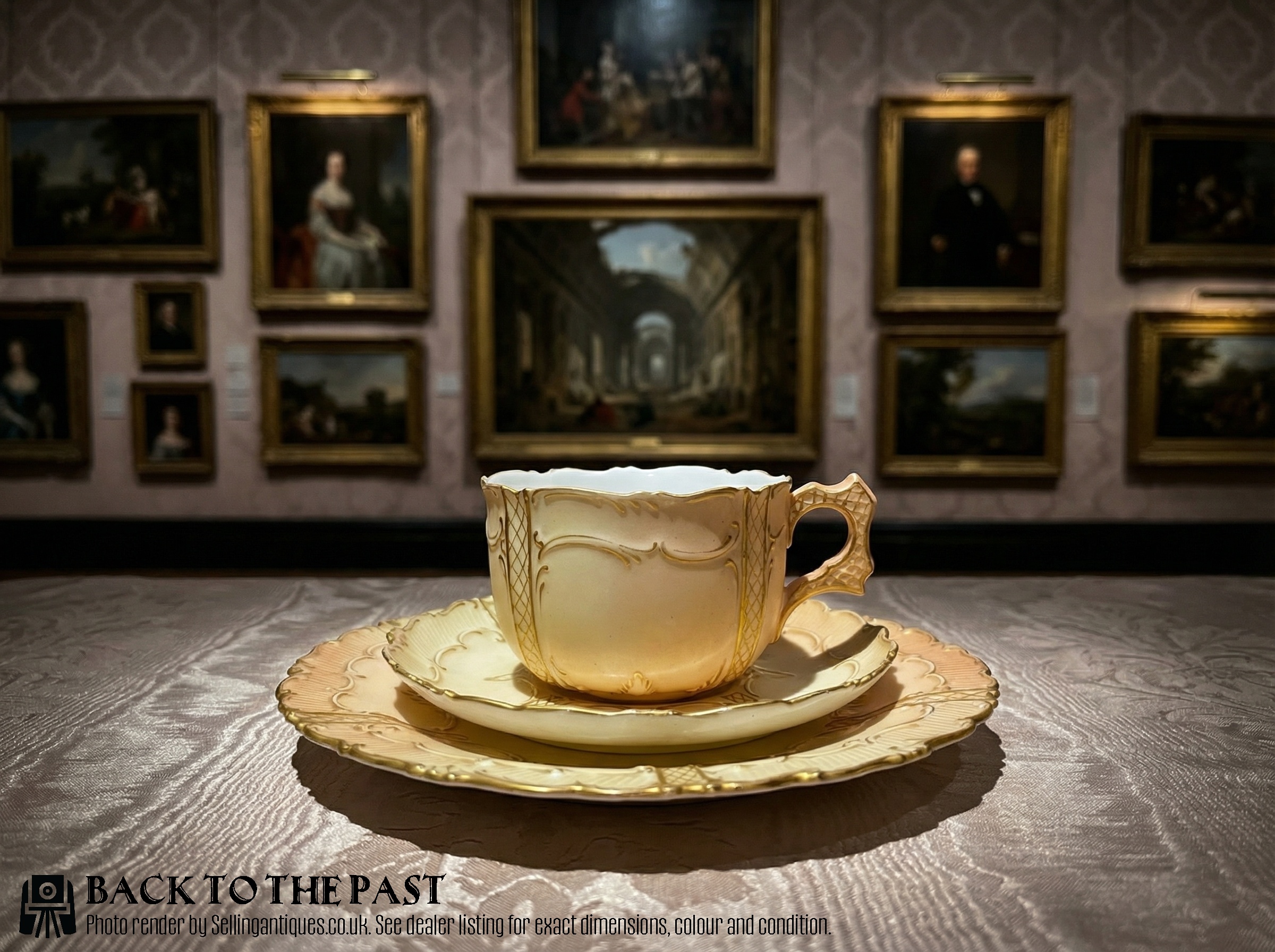
A gilded porcelain trio typically comprises a tea cup, a coffee cup and a matching saucer, forming a set designed for formal hot beverage service. When searching for a gilded porcelain trio, buyers encounter pieces spanning from the eighteenth century through the Edwardian era and the art deco period.
The selections on this page feature notable English factories such as Coalport, Worcester, Derby, Spode and Davenport, alongside cabinet trios and decorative vase sets. These items reflect stylistic shifts from Georgian simplicity through Regency elegance to later Victorian and Edwardian ornamentation.
Most examples rely on traditional British ceramic bodies, including bone china and earthenware, enhanced with handpainted details and rich gold leaf. Such sets served both functional and display purposes in prosperous households, preserving the social rituals of tea and coffee.
Materials and production methods
Potters shaped these vessels using fine porcelain, bone china or earthenware, often forming distinct shapes like the Shrewsbury pattern associated with specific manufactories. Artisans applied handpainted enamel designs alongside heavy gold leaf, gilding and gilt accents to create intricate surface decoration.
Firing techniques in kilns set the hard body and fixed the delicate enamel colours before final metallic gilding was applied and polished. Master painters executed detailed botanical, abstract or figural motifs by hand prior to the commercial introduction of transfer printing.
Early coffee cups in these sets were often taller and narrower than their tea-drinking companions to keep the brew warm.
Factors determining quality
The standard of a set rests upon the precision of the handpainted brushwork, the crispness of the porcelain moulding and the weight of the applied gold leaf. Superior pieces display intricate, well-preserved gilding and finely balanced forms that indicate skilled studio execution.
Condition plays a central role, with intact gilt edges and unblemished enamel surfaces distinguishing cabinet-grade examples from items showing heavy wear. The historical importance of the pottery, such as Flight period Worcester or early Coalport, further elevates the standing of an individual set.
H & R Daniel·Chamberlain Worcester·Newhall porcelain·Coalport John Rose·Derby porcelain·Royal Worcester·Davenport·Wedgwood·Wileman Foley Shelley·Gladstone potteries
The Gilded Porcelain Trio Glossary
- Trio
- A matched set consisting of a tea cup, a coffee cup and a saucer. These three pieces were produced together for nineteenth-century domestic service.
- Gilding
- The application of gold leaf or liquid gold to ceramic surfaces. This technique highlights rims, handles and painted motifs.
- Bone china
- A type of porcelain incorporating bone ash. It produces a strong, translucent body favoured by English potteries.
- Enamel
- Opaque glass used to paint coloured designs onto glazed ceramics. Artisans fired these pigments onto the piece to secure the decoration.
- Cabinet trio
- A decorative set intended primarily for display within a glass-fronted cabinet rather than daily dining use. These pieces often feature exceptional artistic detail.
Gilded Porcelain Trio: Frequently Asked Questions
What is included in a trio?
A standard trio includes a tea cup, a coffee cup and a matching saucer. This combination allowed a host to serve different hot beverages from a coordinated service.
Such sets became popular in the eighteenth and nineteenth centuries as tea and coffee drinking evolved into formal social rituals.
How were these sets used?
These pieces served functional roles during formal morning or afternoon gatherings in wealthy households. Tea cups and coffee cups were often shaped differently to suit the specific beverage.
Finer cabinet trios were also displayed in sitting rooms to signal the household's taste and wealth to visitors.
How do I care for gilded porcelain?
Gilded porcelain requires gentle hand washing with mild soap and warm water. Abrasive sponges and modern dishwashers will damage the delicate gold leaf and handpainted enamels.
Storing pieces with soft dividers between cups and saucers prevents surface scratching on the glaze and gilding.
How do I identify the maker?
Makers are often identified by painted or impressed marks on the underside of the saucer and cup bases. Pattern numbers and factory culls help date the item.
Stylistic elements, such as specific handle shapes and gilding styles, also point to particular English potteries.