

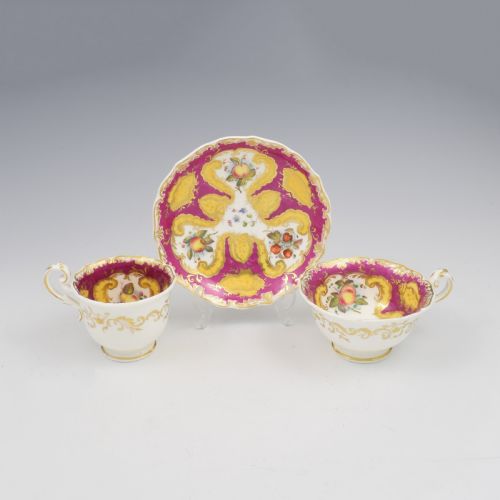


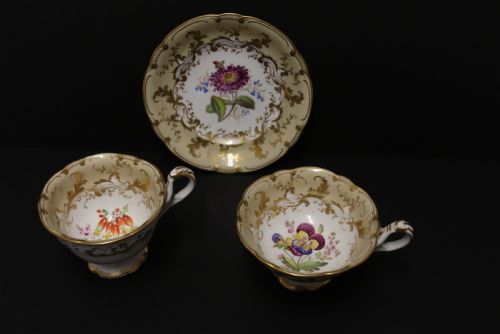

Georgian Tea Trio
A georgian tea trio brings together a teacup, a coffee cup and a saucer, offering a complete morning service from the late eighteenth and early nineteenth centuries.
Georgian Tea Trio
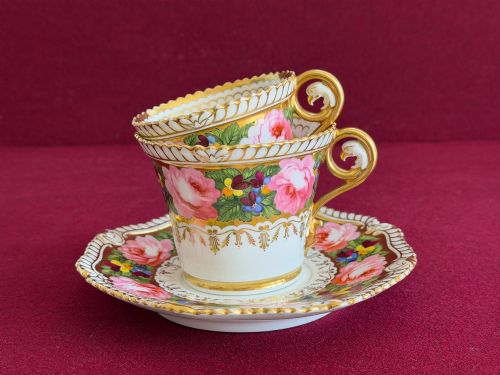
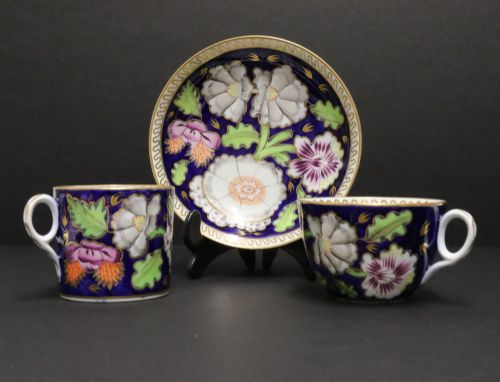
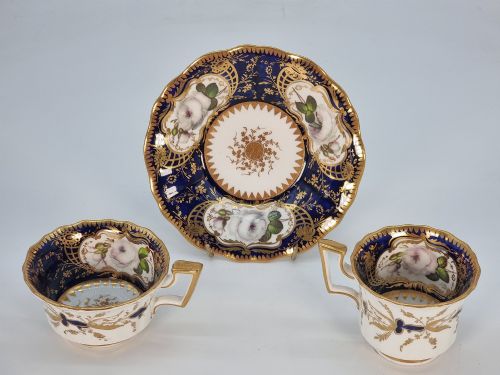
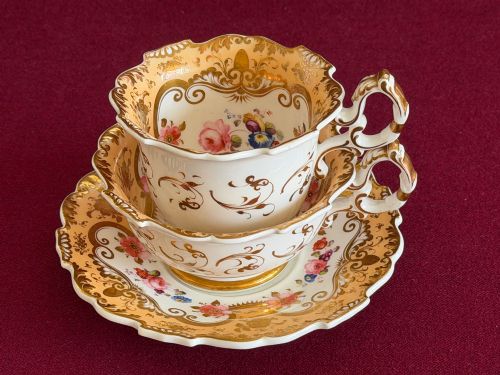
A georgian tea trio consists of a matching teacup, coffee cup and saucer, created to serve both hot beverages during formal and domestic gatherings. These sets originate from the eighteenth century, the Regency period and the early nineteenth century, spanning dates such as seventeen eighty-five up to eighteen fifty.
Buyers will encounter various forms on this page, including teawares, tea bowls, coffee cans and cabinet trios. The makers span famous English factories like Coalport, Worcester, Spode, Derby, Newhall, Minton, Davenport, Chamberlain Worcester and H & R Daniel.
The styles reflect the decorative shifts of the period, moving from eighteenth century handpainted motifs to Regency patterns like the Shrewsbury shape. Each set provides a glimpse into the domestic dining habits of the era through surviving ceramic tableware.
What varies in quality
The standard of painting separates standard utility wares from cabinet trios, with meticulous handpainted details indicating superior artistic skill. Factory attribution also influences standing, as documented pieces from known makers command greater interest.
Preservation of the original gilding and enamel glaze dictates the visual integrity of each set. Surviving patterns like pattern forty-three-eighteen or specific fruit designs retain sharper definition when handled with care over the centuries.
Georgian Tea Trio Retail Price Guide 2026
Typical asking prices for georgian tea trio among the pieces listed under this phrase on Sellingantiques today, from the lower quarter to the upper quarter. They describe what is for sale here now, not the wider market.
Some Minton pieces recorded in the evidence carry the curious pattern names 'Crazy Cow' and 'Bengal Tiger'.
H & R Daniel·Chamberlain Worcester·Newhall·Coalport John Rose·Derby·Worcester·Minton·Spode·Davenport
The Georgian Tea Trio Glossary
- Trio
- A matched set comprising a teacup, a coffee cup and a saucer. These three pieces were sold together for contemporary breakfast or afternoon service.
- Coffee can
- A straight-sided cylindrical cup intended specifically for drinking strong coffee in the eighteenth and nineteenth centuries. It lacks the curved handle profile typical of standard teacups.
- Tea bowl
- A handleless cup used for drinking tea before the widespread adoption of handled teacups. They derive their form from imported Chinese porcelain prototypes.
- Gilding
- The application of gold leaf or gold paint to ceramic surfaces for decorative enrichment. It is frequently found along the rims, handles and foot rings of tea wares.
- Enamel glaze
- A vitreous coating fused to the pottery body by firing to provide colour and protection. It creates a glossy base for handpainted polychrome designs.
Georgian Tea Trio: Frequently Asked Questions
What is a georgian tea trio?
A georgian tea trio is a matching set comprising a teacup, a coffee cup and a saucer. These items date from the eighteenth and nineteenth centuries.
They were produced by English porcelain factories during the Regency period and earlier eras. Each set provided the necessary vessels for serving both tea and coffee.
How were these tea sets used?
These ceramic trios were used in polite society for serving hot drinks during formal gatherings and domestic meals. The coffee can accommodated dark coffee while the teacup held tea.
Servants and hosts utilised the saucer to hold either cup between sips. Many surviving sets eventually transitioned into decorative cabinet pieces rather than daily tableware.
How do I date a tea trio?
Dating relies on identifying the factory mark, shape and decorative style recorded in the listing evidence. Periods such as the Regency era or specific decades like eighteen ten help narrow the timeline.
Characteristics such as handle shapes and pattern numbers provide further clues. Makers like Coalport and Worcester changed their styles between seventeen eighty-five and eighteen fifty.
Are these trios made of porcelain?
The listings show that these pieces are constructed from porcelain and bone china. Makers applied enamel glazes to these ceramic bodies before adding handpainted details.
Precious metals including gold leaf and gilding were frequently added to the rims. This combination of materials defines English ceramics from the period.
How should I display my trio?
Cabinet trios are traditionally displayed on secure shelving or within enclosed display cabinets to protect their fragile ceramic bodies. Keeping them away from direct sunlight preserves the handpainted enamel colours.
Arranging the teacup, coffee cup and saucer together showcases the complete pattern. Proper placement prevents accidental knocks to delicate handles and gilded rims.