



Vintage Teacup and Saucer
A vintage teacup and saucer brings tactile history to the table, offering a small functional piece of art from centuries past.
Vintage Teacup and Saucer
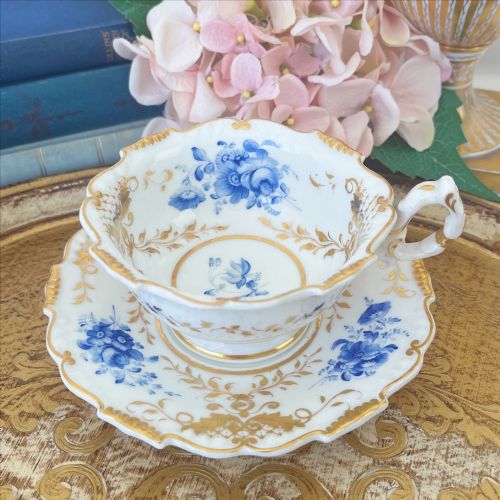
A vintage teacup and saucer combines ceramic vessels designed for hot beverages, spanning periods from the eighteenth century through the early twentieth century. These objects appear as individual cabinet pieces, paired trios, or parts of larger afternoon tea services.
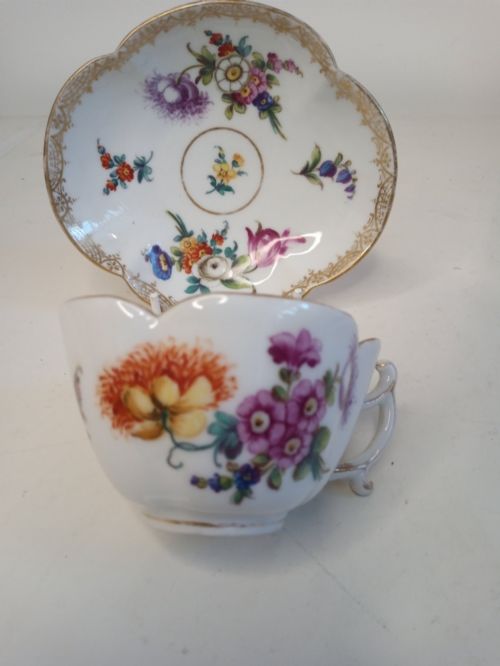
Makers from English potteries, continental European factories, and Asian export houses shaped these forms. Collectors encounter hand-painted porcelain, bone china, and ironstone vessels featuring diverse regional styles from Georgian simplicity to Edwardian ornamentation.
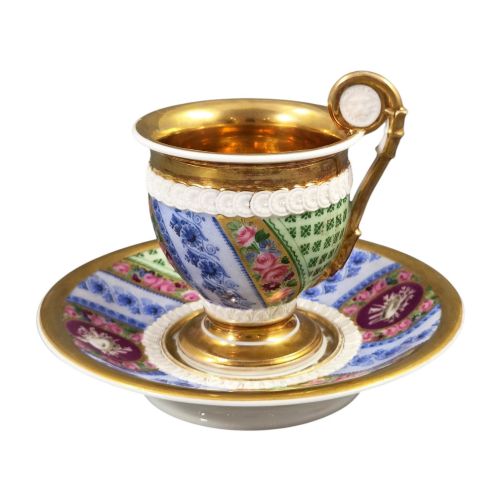
The assortment on this page ranges from delicate cabinet cups with lion mask handles to complete tea sets intended for multiple guests. Buyers select these items for daily use, display, or historical collection.
How They Were Made
Potters utilised hard-paste porcelain, soft-paste porcelain, bone china, and ironstone as the primary ceramic bodies. Artisans shaped these materials on wheels or cast them in moulds before kiln firing.
Decoration relied on hand-painted pigments, transfer printing, and enamel application. Craftsmen frequently added gold leaf, gilding, and gold gilt accents to rims, handles, and surfaces.
Vintage Teacup and Saucer Retail Price Guide 2026
Typical asking prices for vintage teacup and saucer among the pieces listed under this phrase on Sellingantiques today, from the lower quarter to the upper quarter. They describe what is for sale here now, not the wider market.
Items originate from English, French, German, Russian, and Japanese workshops and factories.
What Varies in Quality
The refinement of the ceramic body and the translucency of the porcelain dictate the foundational standard of the piece. Finer items exhibit thinner walls, lighter weights, and precise moulding without distortion from the kiln.
Artistic execution separates standard production ware from superior examples. Skilled hand-painting, intricate gilding, and signed artist work elevate the visual and tactile depth of the cup and saucer.
Royal Crown Derby·Royal Worcester·Royal Albert Crown China·KPM Berlin·Spode·Gardner Moscow Factory·Coalport·Wileman Foley Shelley·Lowestoft Porcelain·Hutschenreuther
The Vintage Teacup and Saucer Glossary
- Bone China
- A type of soft-paste porcelain containing bone ash, known for its high strength, milky white colour, and delicate translucency.
- Cabinet Cup
- A decorative cup and saucer intended for display in a cabinet rather than functional table use.
- Gilding
- The application of gold leaf or powdered gold to the surface of ceramic wares for ornamentation.
- Soft-Paste Porcelain
- An artificial porcelain mixture fired at lower temperatures than hard-paste, common in eighteenth-century European factories.
- Transfer Printing
- A method of transferring a printed design from an engraved copper plate onto ceramic surfaces via tissue paper.
Vintage Teacup and Saucer: Frequently Asked Questions
Can I use these cups for hot tea daily?
Many antique porcelain and bone china cups remain structurally robust enough for regular use with hot beverages. Hand washing protects the fragile ceramic bodies and delicate gold leaf decorations.
Historical pieces from the eighteenth and nineteenth centuries often possess finer walls than modern ceramics, requiring gentle handling during use and storage.
How do I date an old teacup?
Maker marks stamped or painted on the underside of the saucer provide the most reliable indicator of origin and production date. Stylistic clues such as handle shapes, enamel colours, and paste composition also assist in identification.
Comparing glaze characteristics and floral patterns helps narrow down the manufacturing decade across different European and Asian potteries.
What is the difference between a cup and a tea bowl?
Tea bowls lack handles and derive from early Chinese export traditions where drinkers cradled the small vessel in their hands. Cups feature applied handles designed for lifting the vessel without touching the hot ceramic body.
Tea bowls predominantly appear in eighteenth-century and earlier contexts, while handled cups become standard in subsequent centuries.
Are saucers always matched to their original cups?
Most antique sets maintain their original paired saucers, particularly in cabinet pieces and cased sets. Replacements do occur over long spans of time due to accidental breakage of one component.
Examining the glaze consistency, paste colour, and matching hand-painted patterns confirms whether a cup and saucer started their journey together.