


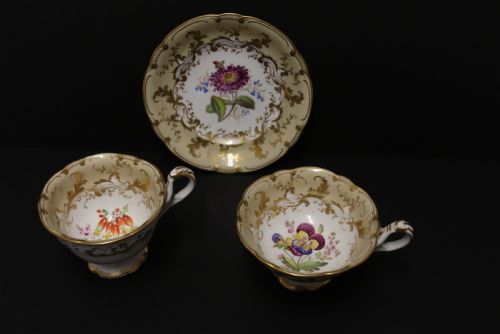
Georgian Porcelain Trio
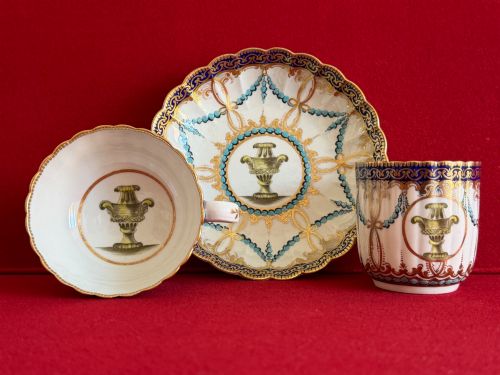
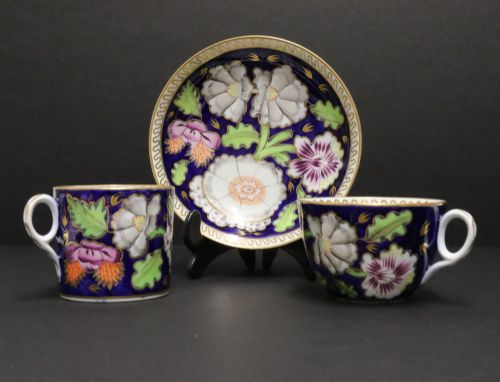
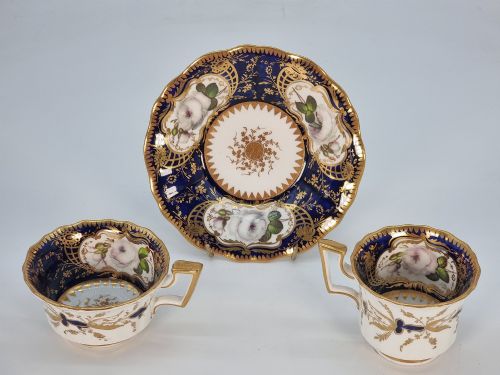
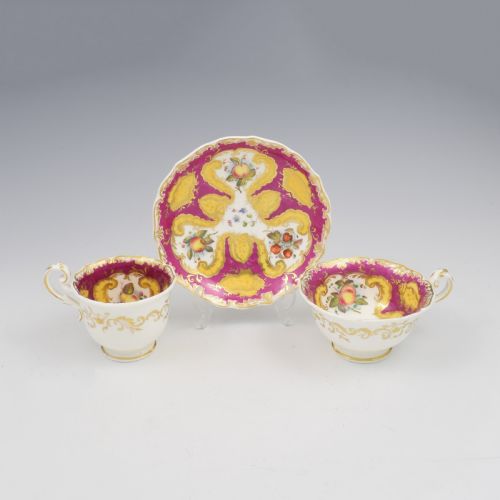
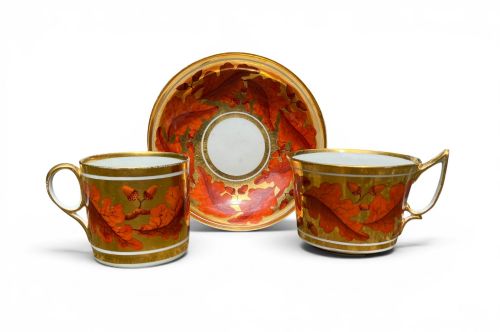
A georgian porcelain trio brings together a teacup, a coffee cup, and a saucer from the late eighteenth or early nineteenth century.
Georgian Porcelain Trio
A georgian porcelain trio comprises a matched teacup, coffee cup, and saucer designed for the refined tea and coffee service of the period. These sets emerge primarily from the Regency and eighteenth-century eras, reflecting the social rituals of upper-class households.
The pieces on this page span cabinet trios and functional teaware, featuring forms such as the Shrewsbury shape alongside standard teacups and saucers. Origins include prominent factories operating during the Georgian and Regency periods.
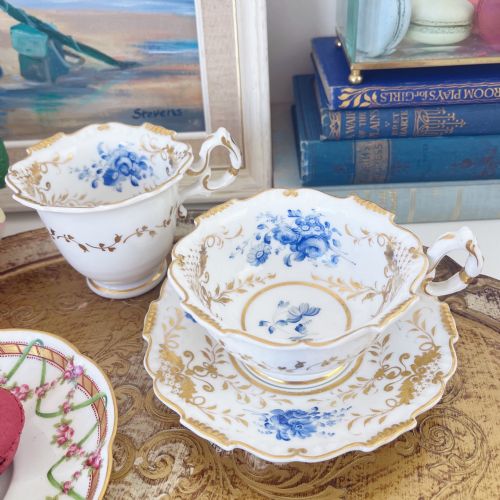
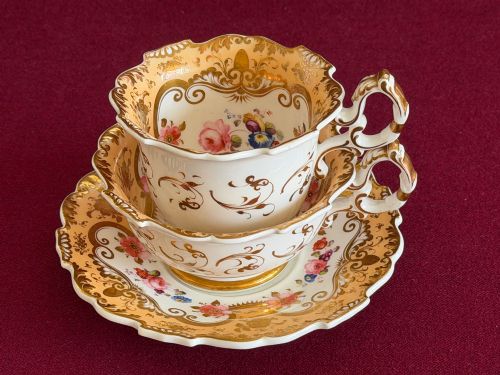
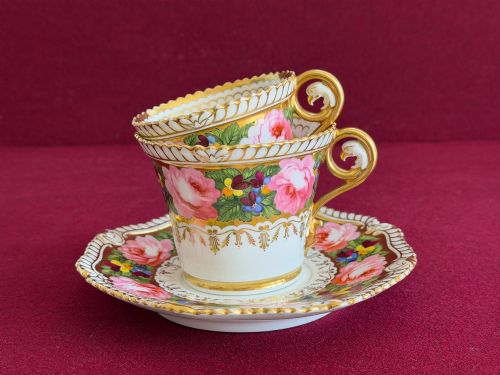
Buyers will encounter items ranging from simple tea bowl formations to elaborate cabinet trios decorated with fruit patterns or oriental-inspired designs. Each grouping provides a tangible link to the domestic habits of early nineteenth-century England.
How they were made
Potters utilised fine porcelain and bone china as the primary substrates, shaping them on wheels or in moulds before firing. These bodies provided the smooth white canvas necessary for detailed surface decoration.
Craftspeople applied handpainted enamel glazes alongside gold leaf and gilding to enrich the surfaces. Kiln firings set these colours permanently into the glaze, securing the intricate patterns seen on the finished wares.
The periods represented span the eighteenth century, the Regency era, and the wider nineteenth century.
What varies in quality
The precision of the handpainted details dictates the visual distinction of a set, separating factory work from exceptional artistic execution. Finer pieces display confident brushwork and rich application of enamel and gold gilding.
The crispness of the porcelain moulding and the preservation of the original gilding define the superior examples in this category. Sets that retain their original vibrance and structural integrity represent the higher tier of surviving wares.
H & R Daniel·Chamberlain Worcester·Newhall·Coalport John Rose·Derby·Minton·Spode·Davenport
The Georgian Porcelain Trio Glossary
- Trio
- A set consisting of a teacup, a coffee cup, and a matching saucer. This combination catered to the Georgian preference for serving both tea and coffee at the same gathering.
- Cabinet trio
- A decorative set intended primarily for display in a china cabinet rather than daily use. These pieces often feature more elaborate handpainting and gilding.
- Bone china
- A type of porcelain incorporating bone ash to increase strength and translucency. It became a favoured material for English factories during the Regency period.
- Enamel glaze
- A vitreous composition fused to the ceramic body to add colour and protection. Artisans used it for intricate handpainted motifs.
- Gilding
- The application of gold leaf or gold paint to the rims and handles. This decorative touch signals higher status wares.
Georgian Porcelain Trio: Frequently Asked Questions
What is in a georgian porcelain trio?
A standard set includes a teacup, a coffee cup, and a matching saucer. This arrangement allowed drinkers to partake in both hot beverages during formal social calls.
The inclusion of a coffee cup alongside the teacup is the defining characteristic that separates a trio from a standard duo.
How were these trios used historically?
These sets functioned during polite tea and coffee services in affluent households. Guests held the cups while seated in drawing rooms or parlours.
Cabinet trios were sometimes reserved for display behind glass rather than active service, highlighting the owner's taste and wealth.
Can I use my antique trio for tea?
While technically usable, antique porcelain requires careful handling due to its age and delicate enamel decoration. Modern dishwashers and microwaves will damage the historic gold gilding and glaze.
Hand washing in lukewarm water with mild soap is the only safe method for cleaning these fragile pieces.
How do I date a georgian porcelain trio?
Dating relies on factory marks, pattern numbers, and stylistic shifts between the eighteenth century and the Regency era. Shape profiles and the composition of the paste also offer clues to the decade of manufacture.
Comparing pieces to documented archives helps narrow the production window to specific periods like the Flight era or the Regency years.