


Gilt Bone China Saucer
A gilt bone china saucer brings refined British ceramic artistry to the table, offering a touch of historic elegance for daily use or display.
Gilt Bone China Saucer
When you search for a gilt bone china saucer, you are looking at small ceramic dishes designed to accompany teacups, coffee cups, or larger tea services. These pieces span periods from the Georgian and Regency eras through to the Victorian, Edwardian, and twentieth-century decades. They appear individually, in duos and trios, or as part of extensive tea services.
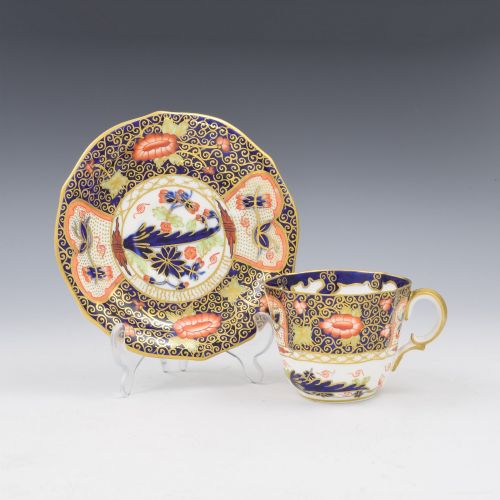
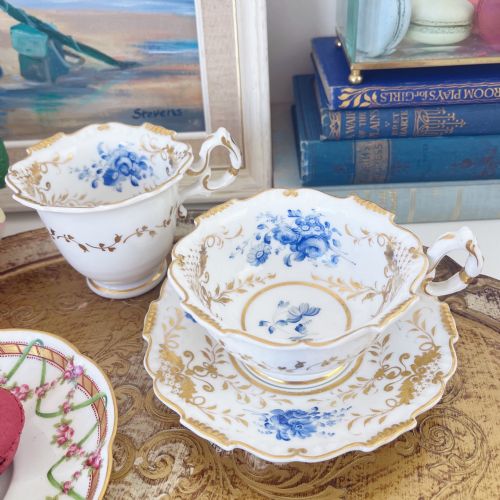
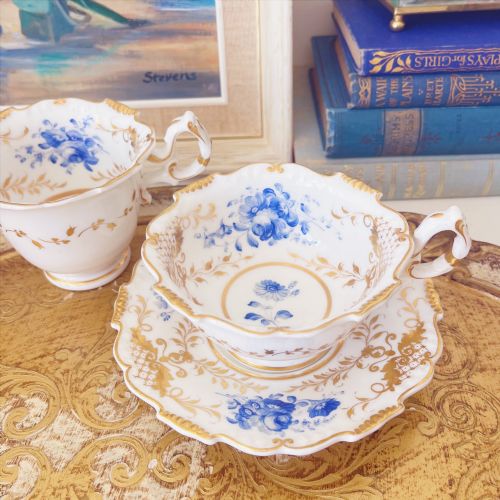
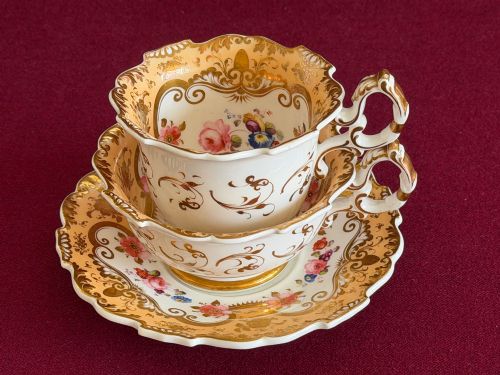
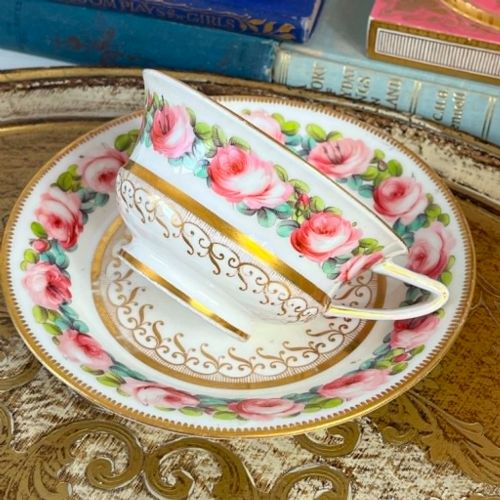
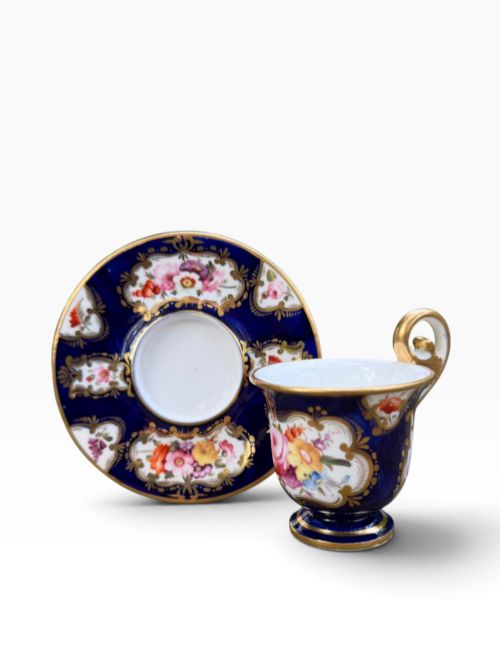
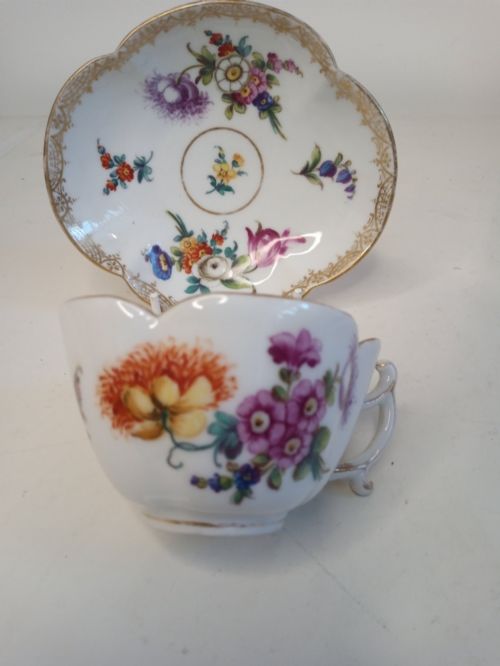
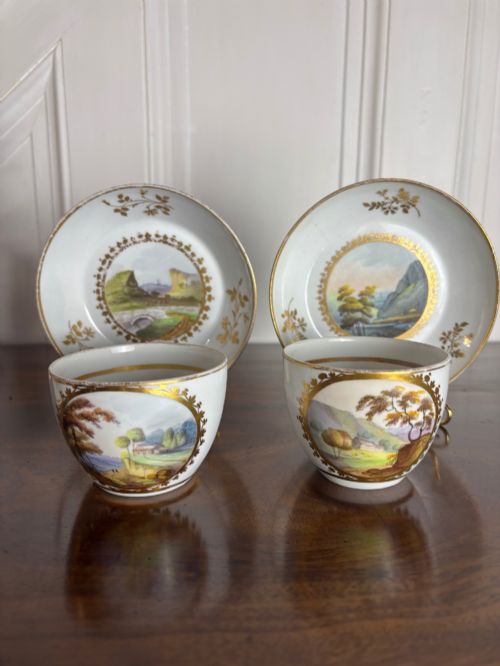
The version you are most likely to meet on this page is a British-made piece shaped from bone china or porcelain, frequently decorated with gold leaf or gilding. Many examples combine handpainted floral motifs or landscapes with rich gold accents, reflecting traditional British manufacturing centres. Makers represented include historic names such as Coalport, Davenport, Minton, Spode, and Royal Worcester.
Distinctions in quality and execution
The finest examples display exceptional skill in handpainting, with precise brushwork on floral subjects or miniature landscapes. Superior pieces also feature heavy, burnished gold gilding that retains its rich lustre rather than dulling over time.
The refinement of the ceramic body itself sets the standard, with thinner, more translucent bone china indicating a higher grade of manufacture. Matching trios and complete services demonstrate greater harmony across the individual components.
Some saucers preserve the specific handpainted weight of pink cabbage roses or oak and mistletoe motifs from two centuries ago.
Royal Crown Derby·H and R Daniel·Davenport·Coalport·Minton·Royal Worcester·Royal Albert Crown China·Yates·Spode·Spode Copeland
The Gilt Bone China Saucer Glossary
- Bone china
- A type of soft-paste porcelain incorporating bone ash, known for its strength and high degree of whiteness and translucency.
- Gilding
- The application of gold leaf or gold powder to the surface of ceramics to create decorative metallic accents.
- Trio
- A matching set consisting of a teacup, a saucer, and a corresponding tea plate.
- Cabinet cup and saucer
- A decorative piece made more for display in a cabinet than for practical use at the tea table.
- Imari
- A decorative style inspired by Japanese export wares, featuring a palette of iron red, cobalt blue, and gold gilding.
Gilt Bone China Saucer: Frequently Asked Questions
What is a gilt bone china saucer?
A gilt bone china saucer is a small ceramic dish made from bone china and embellished with gold leaf or gilding, typically designed to accompany a matching teacup.
These pieces range from Georgian and Regency cabinet items to Edwardian tea service components, all showcasing traditional British ceramic craftsmanship.
How were these saucers used historically?
Historically, saucers were utilised during formal tea and coffee services to hold the cup or to cool hot liquids poured out from the cup.
Finer gilt examples were often reserved for guests or displayed in drawing-room cabinets as a sign of household status.
Can I use antique saucers every day?
While many bone china pieces are durable enough for gentle use, older items featuring delicate handpainted enamels and gold gilding require careful handwashing.
Avoiding dishwashers and microwaves preserves the fragile metallic decoration and historic glaze.
How do I identify the period of a saucer?
Periods are identified by examining the ceramic body, the style of the handpainted decoration, and any factory marks or pattern numbers present on the underside.
Georgian and Regency pieces often show neoclassical influences, while Victorian and Edwardian examples lean towards lush florals or Imari patterns.