


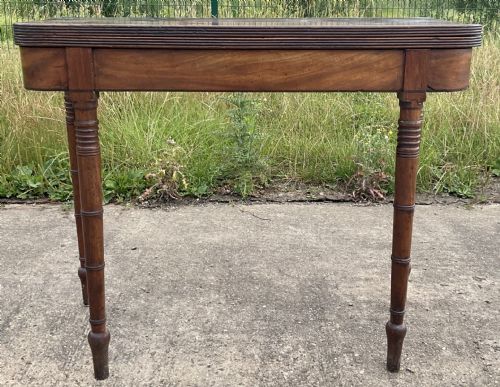
18th Century Games Table
An 18th century games table brings folding ingenuity and polished mahogany into a drawing room, offering dual surfaces for cards and tea.
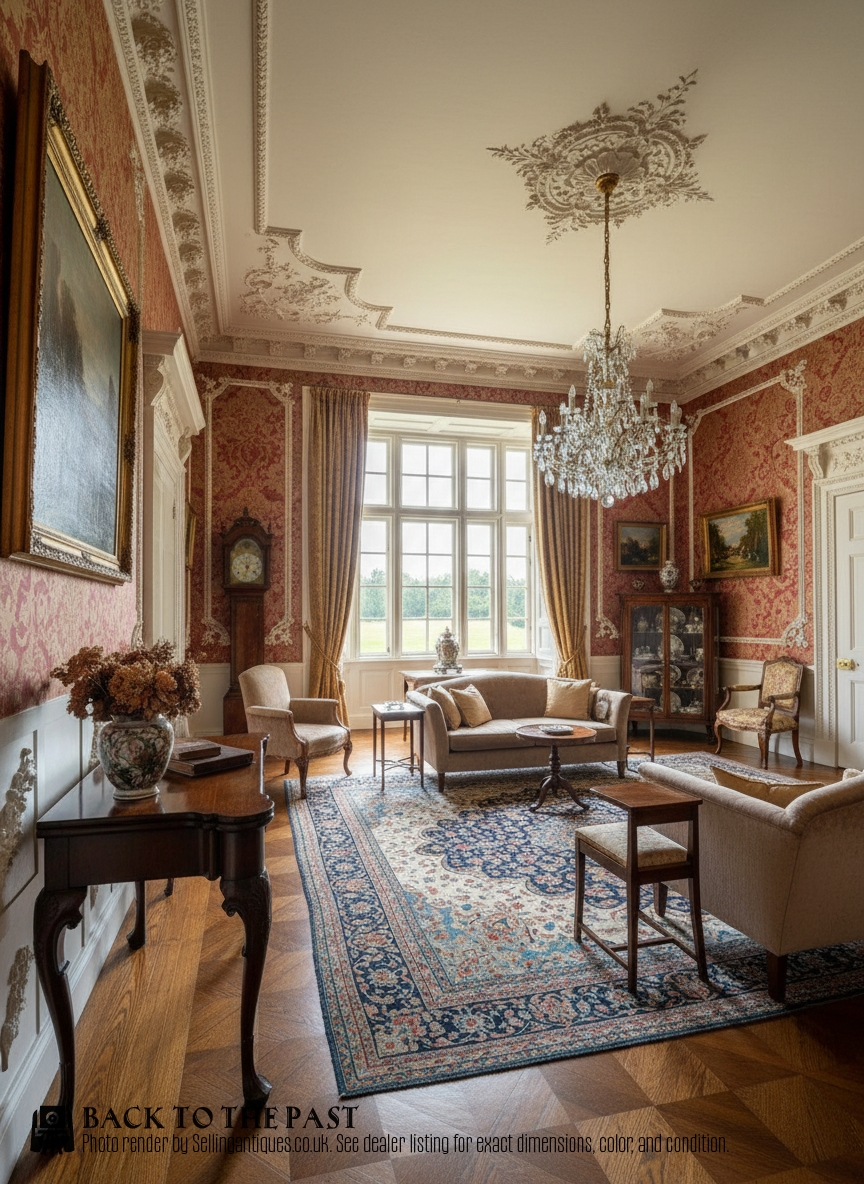
18th Century Games Table
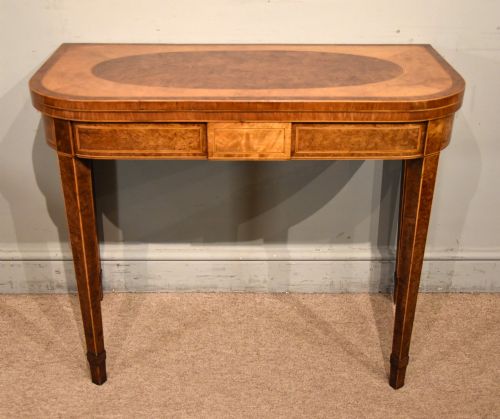
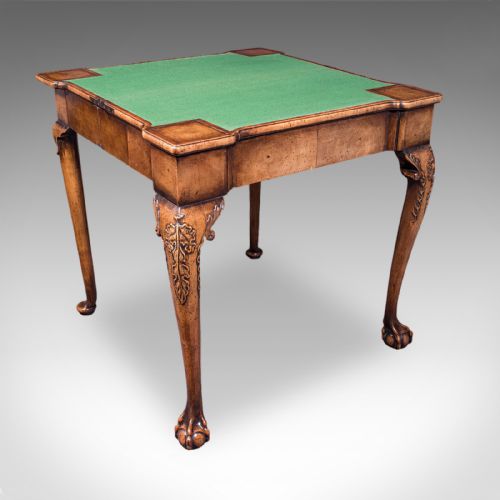
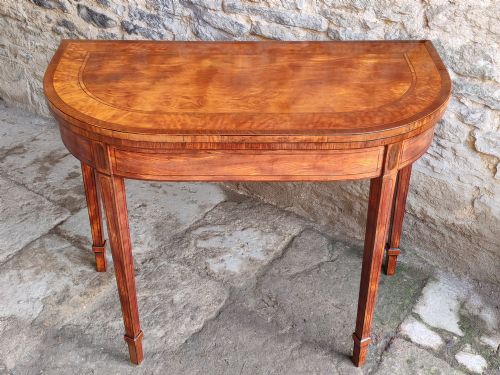
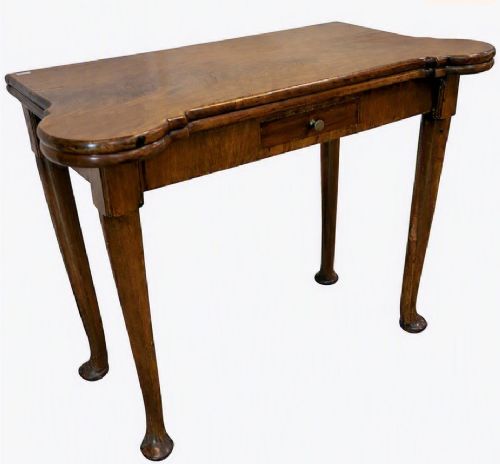
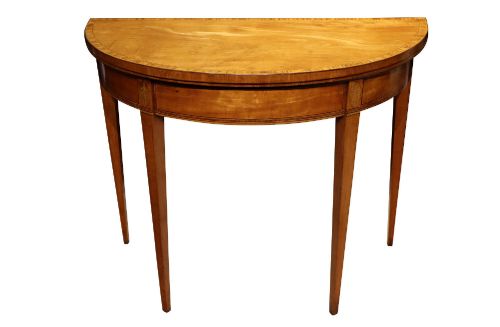
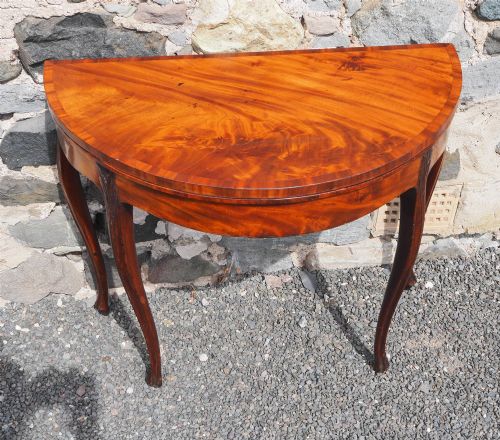
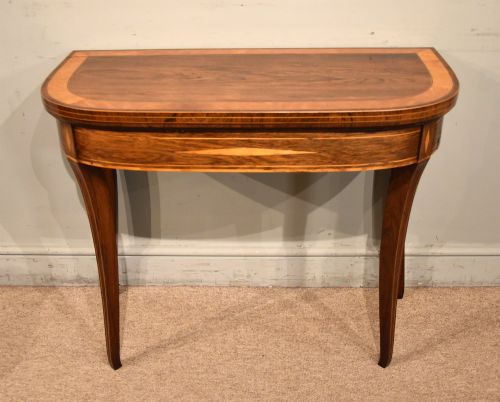
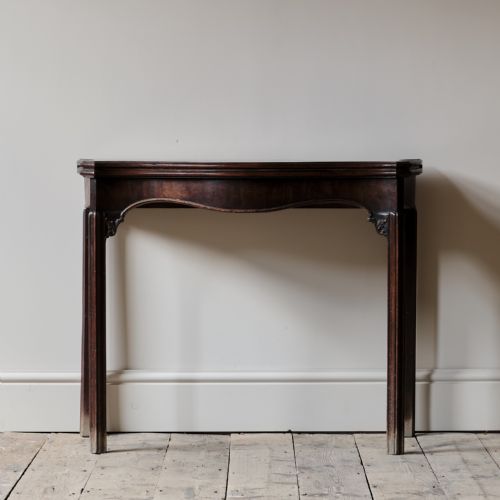
An 18th century games table is primarily a folding piece designed for card playing, tea drinking, or general social gatherings in domestic interiors. The examples here span periods from George I through to the Regency, alongside French, Italian, and Dutch pieces.
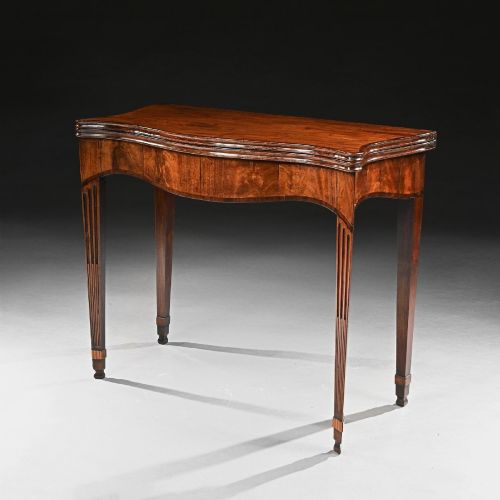
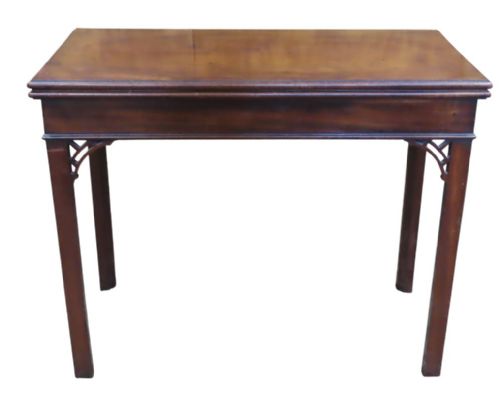
Buyers will most frequently meet mahogany card tables and demi-lune consoles with fold-over tops, alongside occasional tea tables that convert for play. Forms range from straight-edged rectangular versions to serpentine fronts and semi-circular shapes.
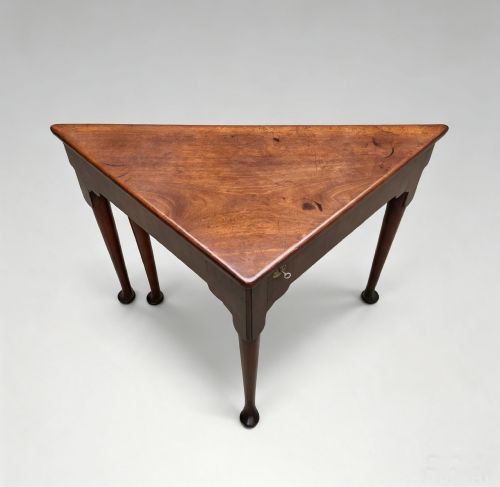
The inventory includes specialised formats such as concertina action tables, envelope or handkerchief corners, and occasional patience tables. Walnut, satinwood, and rosewood also appear alongside the dominant mahogany.
How they were made
Cabinetmakers constructed these tables primarily in solid and veneered mahogany, incorporating secondary woods like oak or pine, with specialised surfaces utilising satinwood, rosewood, walnut, and amboyna. Inlays of boxwood and ebony accent the primary timbers, while brass fittings secure internal hinges and swing legs.
Construction techniques include concertina frames that allow the rear legs to extend outward with the unfolding top, supporting the extended leaf evenly. Fold-over mechanisms, cabriole legs, and crossbanding demonstrate the precision required to balance a moving top surface.
18th Century Games Table Retail Price Guide 2026
Typical asking prices for 18th century games table among the pieces listed under this phrase on Sellingantiques today, from the lower quarter to the upper quarter. They describe what is for sale here now, not the wider market.
Listings feature woods spanning mahogany, satinwood, rosewood, walnut, and amboyna.
What varies in quality
Quality separates tables by the precision of their timber selection, such as heavily figured flame mahogany or finely matched satinwood veneers. The handling of secondary elements like crossbanding and inlaid stringing dictates the refinement of the piece.
Mechanical complexity also divides the range, particularly the execution of concertina actions that maintain seamless alignment when open. Original patination and the crispness of carved details on cabriole legs or serpentine edges distinguish higher tiers.
Giles Grendey
The 18th Century Games Table Glossary
- Concertina action
- A table frame with a hinged rear rail that extends outward on an expanding frame, allowing all four legs to move when the top unfolds. This provides stable support for the open leaf without relying on a single swinging gate leg.
- Demi-lune
- A half-moon shape used for table tops and console bases that fit flat against a wall when closed. When unfolded, they form a full circle or oval for card playing.
- Crossbanding
- A narrow strip of veneer laid around the border of a table top so that the grain runs perpendicular to the central panel. This frames the primary timber and adds decorative contrast.
- Baize
- A coarse woolen fabric used to line the playing surface of card tables. It provides a soft, non-slip texture for dealing cards.
18th Century Games Table: Frequently Asked Questions
How were 18th century games tables used?
These tables served dual purposes in the home, functioning as console or side tables against a wall when folded shut. When guests arrived, the top unfolded to reveal a baize-lined surface for card games or social assemblies.
Many designs also accommodated tea service, combining the utility of a tea table with the mechanics of a gaming board. Their adaptability made them central pieces of furniture for entertaining in Georgian drawing rooms.
How do I tell different periods apart?
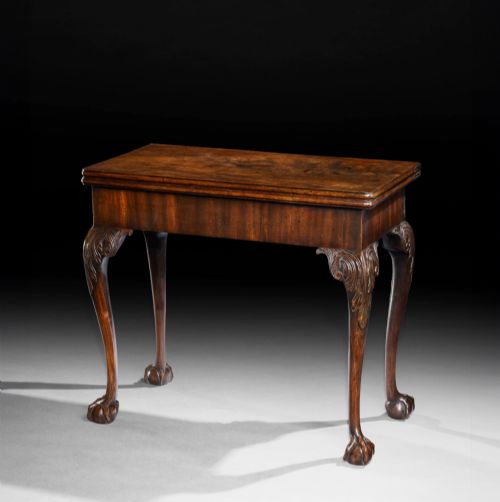
Early pieces from the George I and early George II eras often feature walnut timbers and sturdy cabriole legs ending in pad feet. As the century progressed into the George III and Hepplewhite periods, mahogany and satinwood became dominant, with straight tapering legs or delicate serpentine forms.
Later Regency examples introduce exotic woods like rosewood and bolder brass details. Observing the shift in leg shapes from curved cabriole to straight tapering styles offers the clearest guide to dating.
What is a concertina action table?
A concertina action refers to a specialised frame construction where the rear legs and apron expand outward together like a folding bellows when the top is opened. This allows the table to maintain four symmetrical legs beneath the corners even when fully extended.
It represents a more complex piece of cabinetmaking than a standard gate-leg table, where a single leg swings out to support the leaf. This mechanism ensures balanced weight distribution across the open playing surface.
How do I care for a wood games table?
Keep wooden surfaces away from direct sunlight and heat sources to prevent the veneers from drying or splitting. Maintaining stable room humidity preserves both the timber and any delicate inlay work.
Dust the piece regularly with a soft, dry cloth and avoid applying modern silicone polishes. Gentle application of traditional wax helps nourish the antique finish and protect the original patina.