


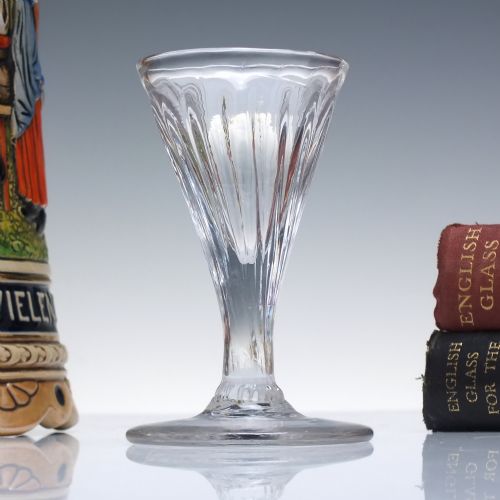


18th Century Dram Glass
An 18th century dram glass offers a tangible link to Georgian drinking habits, prized for its miniature scale and tactile weight.
18th Century Dram Glass
An 18th century dram glass is a small drinking vessel designed for serving spirits like whisky, gin, or cordials. These pieces belong to the Georgian era, spanning the seventeen-hundreds up to eighteen hundred, and serve as distinct examples of historical barware and stemware.
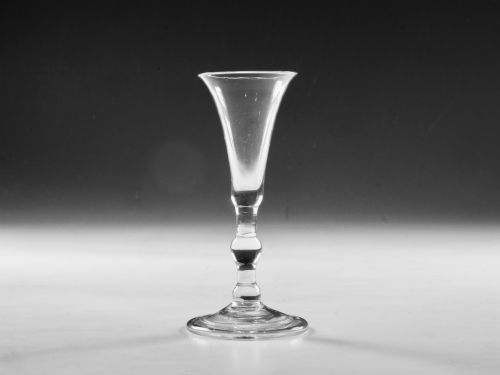
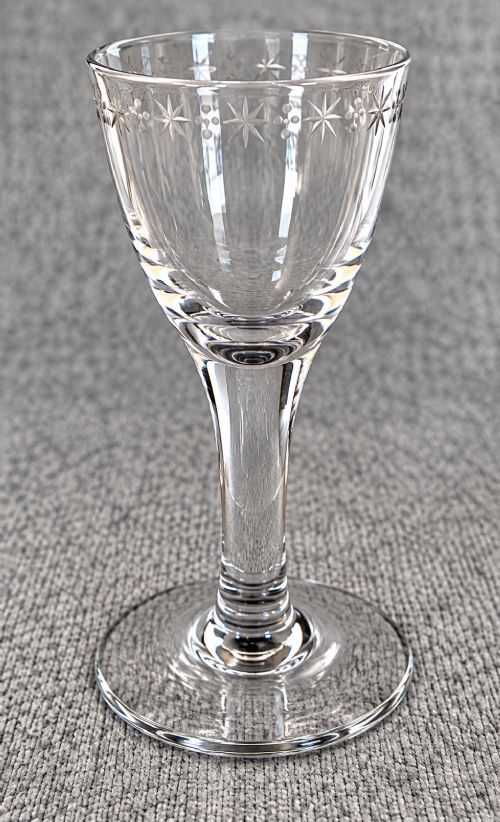
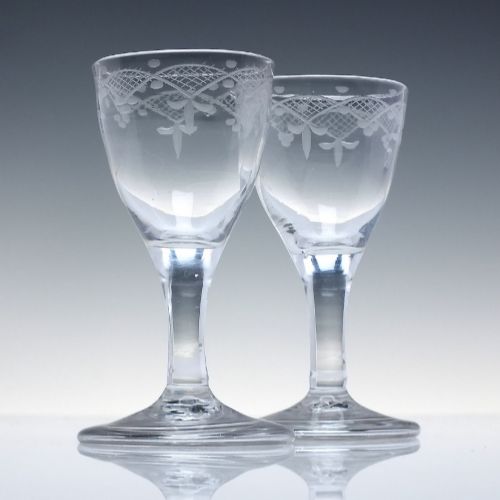
Collectors encounter diverse forms, including plain stem, baluster, rib moulded, and opaque twist varieties. Many examples feature engraved decoration, folded feet, or deceptive bowls designed to hold a smaller measure than appearance suggests.
How They Were Made
Makers utilised lead glass, lead crystal, and flint glass, shaping vessels through hand-blown techniques. Molten metal was gathered, blown, and manipulated to form bowls, stems, and folded or terraced feet.
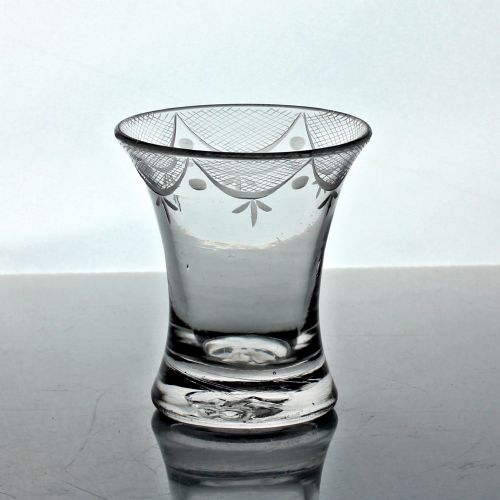
Decoration involved rib moulding, facet cutting, etching, and engraving. Artisans applied wheel-cutting and engraving to surface the glass with swags, tails, or Masonic motifs.
Toastmaster glasses encouraged heavy drinking by hiding small measures beneath deceptively deep bowls, keeping guests upright while spirits flowed.
What Varies in Quality
Quality rests in the clarity and weight of the metal, alongside the precision of the stem formation. Heavy baluster stems and clear lead crystal demonstrate superior craftsmanship compared to simpler utilitarian forms.
The 18th Century Dram Glass Glossary
- Folded foot
- A base edge turned under for extra strength. This technique prevents chipping along the rim during daily use.
- Baluster stem
- A thick, heavy stem shaped like an architectural baluster. These pillars add substantial weight to early Georgian drinking vessels.
- Opaque twist
- A stem containing white or coloured enamel threads twisted within clear glass. This decorative effect became popular during the middle decades of the seventeen-hundreds.
- Deceptive bowl
- A solid or thick-bottomed bowl that holds a much smaller volume of liquid than its exterior size implies. Such vessels often served in drinking games or toasts.
- Rib moulded
- Glass blown into a patterned dip-mould to create raised vertical ribs. This technique adds texture and strength to the vessel wall.
18th Century Dram Glass: Frequently Asked Questions
What is an 18th century dram glass used for?
These vessels served small measures of strong spirits such as whisky or gin during social gatherings. Their diminutive capacity suited potent drinks served in modest quantities.
Today, collectors appreciate them as display pieces of Georgian glassware rather than for daily dining use.
How do I date an 18th century dram glass?
Dating relies on stylistic markers such as stem construction, foot type, and manufacturing techniques. Heavy baluster forms typically point to the early seventeen-hundreds, while twist stems and facet cutting emerge later in the century.
Examining the pontil mark and glass composition also helps establish the period of manufacture.
Are these glasses safe to use?
While technically functional, antique glass requires careful handling due to its age and delicate composition. Thermal shock or modern dishwashers can easily damage lead glass and historic crystal.
Most owners choose to display them rather than risk damage from modern beverages.
What makes an opaque twist stem different?
An opaque twist incorporates fine white or coloured enamel rods drawn through the molten metal of the stem. This style succeeded earlier air twist designs during the middle of the seventeen-hundreds.
The technique requires precise control over temperature and drawing during the blowing process.