
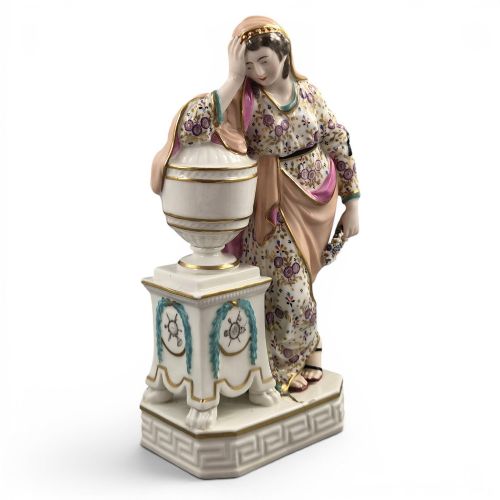


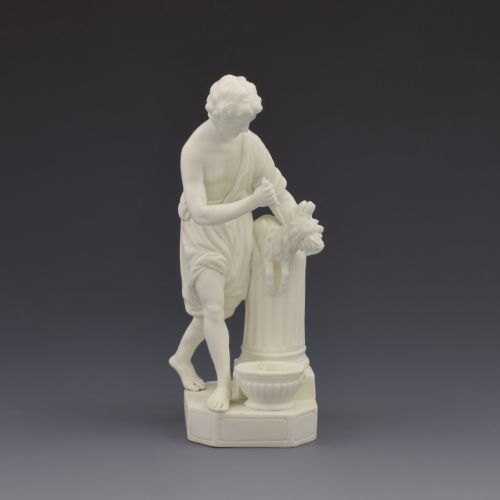


18th Century Derby Statuette
An 18th century derby statuette brings classical mythology, allegorical figures and rustic vendors into cabinet collections with remarkable sculptural presence.
18th Century Derby Statuette
An 18th century derby statuette encompasses porcelain figurines and figure groups produced during the Georgian period, typically dating from the 1760s to 1800. Buyers encounter mythological deities such as Minerva, Mars and Zeus, alongside allegorical representations of the seasons and the four continents.
Domestic and pastoral subjects also appear frequently across the selection. Figures include street vendors, flower sellers, bagpipers with dogs and gardeners, capturing Georgian social observation through modelled ceramic form.
Assessing Quality and Execution
The balance of multi-figure groups and the preservation of intricate appendages, such as fingers, props and floral elements, separate exceptional studio output from standard commercial production.
Father Time appears surprisingly busy clipping Cupid's wings in multiple recorded sculptural groups.
William Duesbury and Co
The 18th Century Derby Statuette Glossary
- Soft-paste porcelain
- A glassy ceramic composition fired at lower temperatures than hard-paste, producing a warm translucent body common in early English figures.
- Biscuit porcelain
- Unglaved ceramic material fired to a matte, tactile finish that resembles white marble and shows delicate sculptural detail.
- Patch mark
- Small unglazed blemishes on the base of figures caused by tiny fireclay supports used inside the kiln during firing.
- Enamel
- Coloured metallic oxide paints fused to the porcelain surface over the glaze during a secondary low-temperature firing.
- Gilding
- The application of gold leaf or gold paint to highlight borders, garments and decorative attributes on the figurine.
18th Century Derby Statuette: Frequently Asked Questions
How do I date an early Derby figure?
Dating relies on stylistic markers, paste composition and manufacturing clues like base patch marks. Pieces from the 1760s often display distinct glaze pooling and softer facial modelling compared to later neoclassical examples from the 1780s and 1790s.
Examining the palette and whether the piece uses glazed soft-paste porcelain or matte biscuit porcelain provides further chronological context.
Were these figures made as pairs or sets?
Many Derby models originated as components of larger decorative schemes, such as sets representing the four seasons, the four continents or pairs of rural characters like Welsh tailors on goats. Surviving examples often appear as matched pairs or isolated figures from disbanded sets.
Display arrangements traditionally balance these thematic groups across mantelpieces or display cabinets.
How should I care for antique porcelain?
Display figures away from direct sunlight to prevent the hand-painted enamels from fading over time. Dusting with a soft, dry brush keeps the surface clean without risking abrasion to delicate gilt highlights.
Avoid using water or liquid cleaners, particularly on biscuit porcelain or areas with delicate gilding.