




Gilded Porcelain Allegorical Figure
These gilded porcelain allegorical figure pieces bring classical personifications into the room through modelled ceramic sculpture touched in gold leaf.
Gilded Porcelain Allegorical Figure
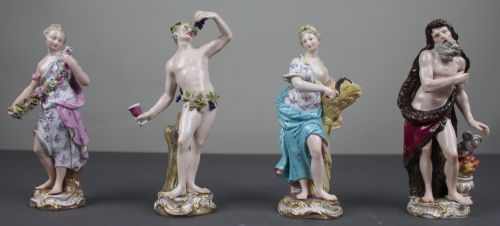
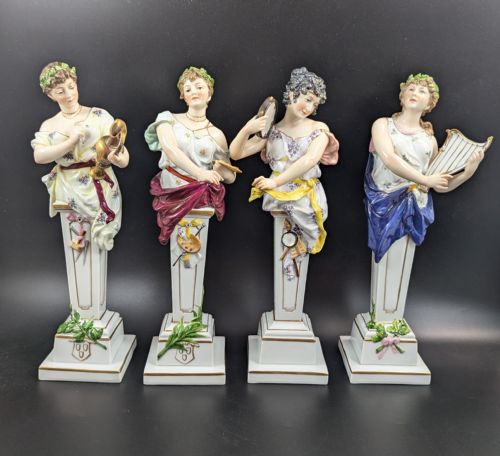
A gilded porcelain allegorical figure represents abstract concepts such as the seasons, elements or continents in ceramic form. These sculptures take shape as individual statuettes, pairs, or grouped figures incorporated into candlesticks and candelabra.
The pieces appearing on this page span the eighteenth and nineteenth centuries, taking inspiration from Rococo, Neoclassical and Victorian aesthetics. English factories like Bow, Chelsea and Derby sit alongside continental European works from Meissen, Volkstedt, Frankenthal and Dresden.
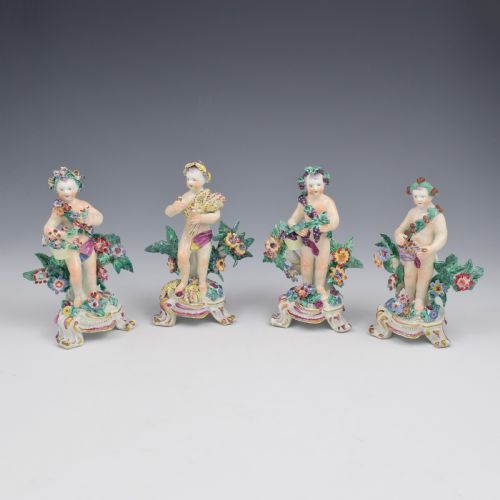
Buyers encounter subjects ranging from putti representing the Four Seasons to single figures symbolising continents like Asia and Europe, alongside mythological scenes such as Father Time. These ceramic works function primarily as decorative mantel or table centerpieces.
What varies in quality
The application of overglaze enamel painting and the precision of the gilding affect visual depth, with finer pieces showing careful brushwork and rich gold leaf details. The completeness of original sets, such as four seasons or continents, influences the standing of the work.
Listings feature both eighteenth-century Georgian items from English factories and nineteenth-century Victorian pieces from continental European workshops.
Meissen Porcelain·Bow Porcelain·Volkstedt·Carl Thieme Dresden·Chelsea Porcelain·Helena Wolfsohn·Achille Mollica·Derby Porcelain
The Gilded Porcelain Allegorical Figure Glossary
- Allegorical figure
- A sculpted representation of an abstract idea, personifying concepts like seasons, elements or continents through symbolic attributes. These figures translate philosophical themes into visual ceramic art.
- Soft-paste porcelain
- An artificial ceramic paste composed of glass frit and white clay, fired at lower temperatures than hard-paste. This material characterises many eighteenth-century English factory productions.
- Hard-paste porcelain
- A true porcelain made from kaolin and petuntse, fired at high temperatures to create a dense, vitrified body. Continental factories utilised this durable material extensively.
- Overglaze enamel
- Pigments painted onto the fired and glazed porcelain surface before undergoing a second, lower-temperature firing. This technique permits a wide palette of bright colours.
- Putto
- A chubby male child figure, frequently winged, used in classical art and often appearing in sets representing the seasons. These figures add narrative movement to sculptural groups.
- Gilding
- The application of gold leaf or gold powder to ceramic surfaces to accentuate details, bases and clothing. This finish adds reflective contrast to the painted porcelain.
Gilded Porcelain Allegorical Figure: Frequently Asked Questions
How were allegorical figures used historically?
Owners placed these sculptural groups on dining tables and mantelpieces as decorative conversation pieces during the eighteenth and nineteenth centuries. Their themes of seasons and continents reflected intellectual interests of the period.
Some pieces doubled as functional lighting by incorporating candle sockets into the sculptural composition, serving both decorative and practical roles in period interiors.
How do I tell eighteenth-century figures from later copies?
Eighteenth-century pieces typically employ soft-paste porcelain bodies with characteristic glaze textures and hand-mixed enamels unique to early factory methods. Their modelling reflects the artistic conventions of the Georgian era.
Nineteenth-century revivals and copies often utilise harder porcelain bodies, different base markings and manufacturing techniques that reveal a later Victorian or continental origin.
What do the different allegorical themes represent?
Figures representing the Four Seasons depict spring, summer, autumn and winter through seasonal activities, harvest fruits or bundled winter garments. Representations of continents use costume and symbolic animals to personify regions like Europe and Asia.
Mythological subjects, such as Father Time clipping Cupid's wings, draw on classical narratives to symbolise abstract concepts like the passage of time and the triumph over love.
How do I care for antique gilded porcelain?
Dust these fragile ceramic figures gently with a soft, dry brush to prevent accumulation without damaging delicate modelled details or paintwork. Avoid using water or chemical cleaners, which can degrade enamel and gold leaf.
Keep pieces away from direct sunlight and areas prone to temperature fluctuations to protect the porcelain body and historic surface decoration over time.