




White Porcelain Allegorical Figurine
These white porcelain allegorical figurine pieces capture personified virtues, seasons, and elements in delicate ceramic sculpture.
White Porcelain Allegorical Figurine
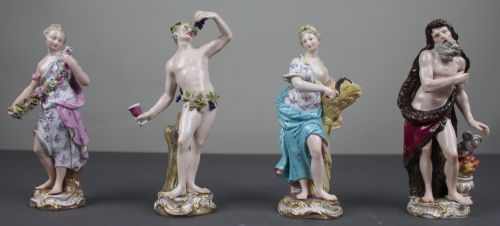
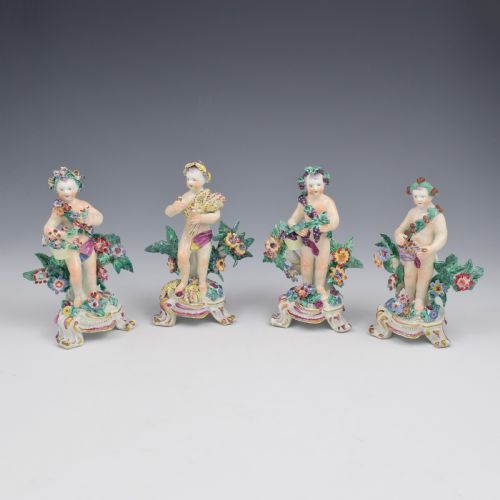
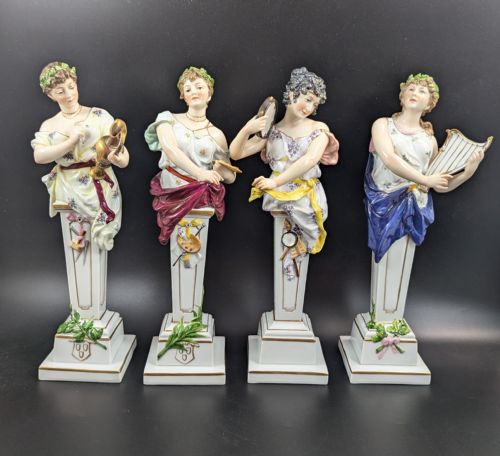
A white porcelain allegorical figurine depicts personified concepts such as the Four Seasons, the elements, the continents, or months of the year in sculptural form. Buyers encounter these figures in forms ranging from single seated figures to pairs and complete sets of standing putti. The pieces appearing in these listings span the eighteenth century, the nineteenth century, the Victorian era, and nineteen ten.
The objects take the form of porcelain figures, porcelain figurines, decorative statuettes, and larger sculpture groups. Eighteenth century examples frequently originate from English factories like Bow, Chelsea, and Derby, while nineteenth century and later pieces include works from continental makers such as Meissen, Royal Berlin, and Carl Thieme. These sculptures serve primarily as decorative table or mantel ornaments.
Materials and production methods
Makers utilised both soft-paste porcelain and hard-paste porcelain depending on the factory and period of production. Soft-paste porcelain characterises many eighteenth century English pieces, whereas hard-paste porcelain predominates in continental European works from later periods.
Makers applied enamel, overglaze enamel, and gold leaf or gilding to accent the white porcelain body. These painted and gilt details highlight the garments, attributes, and bases of the statuettes.
Materials represented across the selection include soft-paste porcelain, hard-paste porcelain, enamel, and gold leaf.
Distinctions in quality
Quality separates through the crispness of the modelling in the porcelain paste and the precision of the hand-painted enamel work. Finer sculptures retain sharp facial expressions and intricate details in foliage, drapery, and allegorical attributes.
The application of gold leaf and gilding varies across pieces, with superior examples showing careful placement that enhances the sculptural contours without obscuring the underlying porcelain form.
Meissen·Bow Porcelain·Royal Worcester·Carl Thieme Dresden·Derby Porcelain·Achille Mollica·Chelsea Porcelain·Royal Berlin
The White Porcelain Allegorical Figurine Glossary
- Allegory
- The representation of abstract ideas through human figures or symbolic attributes. A white porcelain allegorical figurine typically depicts seasons, elements, or continents.
- Putto
- A representation of a plump, naked young boy, often winged, frequently used in sets representing the seasons. These figures appear frequently in eighteenth century English groupings.
- Soft-paste porcelain
- An artificial porcelain composition fired at lower temperatures than hard-paste porcelain. Eighteenth century English factories utilised this material before hard-paste formulas became common.
- Overglaze enamel
- Pigments applied over the fired glaze and subjected to a second, lower temperature kiln firing. This technique produces the bright colours seen on nineteenth century figures.
- Gilding
- The application of gold leaf or gold powder onto the porcelain surface. It highlights specific decorative elements on the statuettes.
White Porcelain Allegorical Figurine: Frequently Asked Questions
What do these figures represent?
These sculptures represent abstract concepts such as the four seasons, the elements of water and land, the continents, or months of the year. Makers used human figures and specific symbolic attributes to convey these themes.
Such allegorical subjects were popular decorative themes in European porcelain factories throughout the eighteenth and nineteenth centuries.
How do I display them at home?
Place individual statuettes or pairs on mantelpieces, console tables, or within glass cabinets where adequate lighting highlights the porcelain modelling. Because these pieces are delicate porcelain, position them away from high traffic areas.
Keeping them out of direct sunlight helps protect the overglaze enamel colours and gold leaf accents over time.
Are these figures glazed or unglazed?
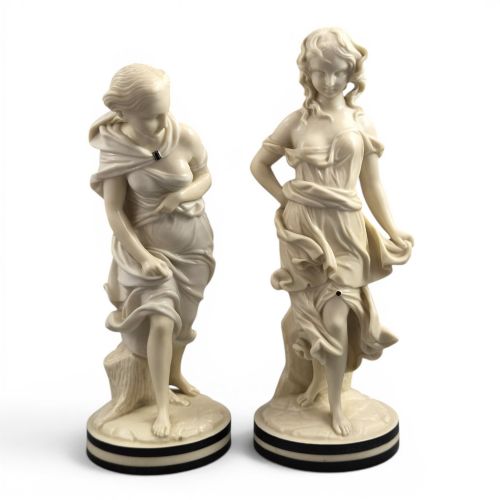
Most of these pieces feature a glazed porcelain body, which gives them a smooth and reflective surface finish. Some factories also produced biscuit porcelain, though the current selections primarily show glazed surfaces combined with enamel and gilding.
The glaze protects the ceramic body and provides a smooth ground for the painted details.
How do I distinguish eighteenth century pieces?
Eighteenth century pieces often utilise soft-paste porcelain and exhibit the characteristic sculptural styles of the period, such as Rococo curves and hand-modelled botanical details. Factory attribution relies on characteristic paste appearance and painted marks.
Consulting reference literature specific to factories like Bow, Chelsea, or Derby assists in verifying the period of production.