
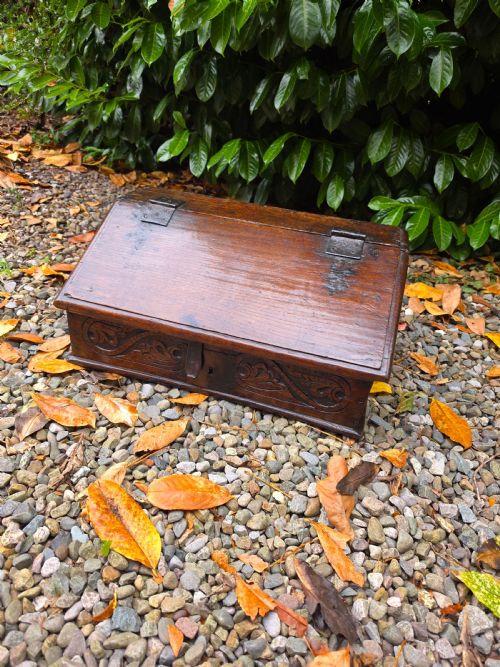
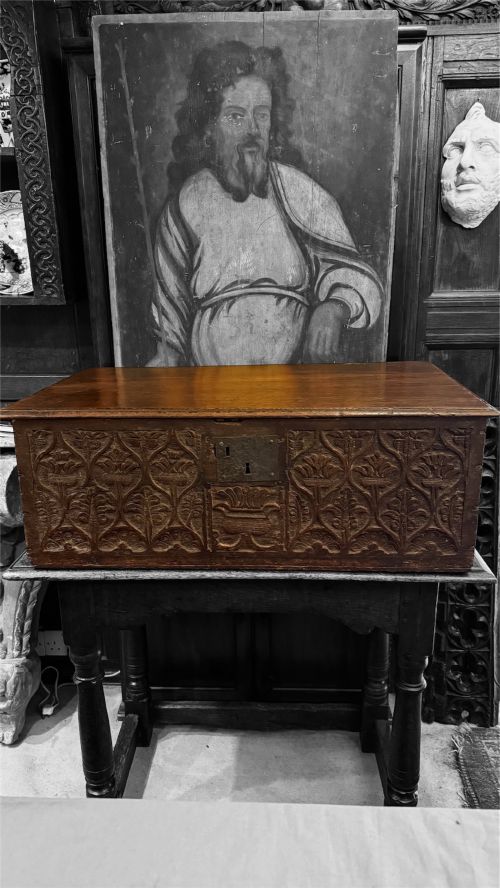
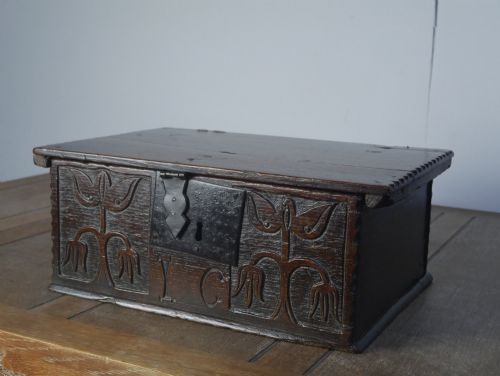
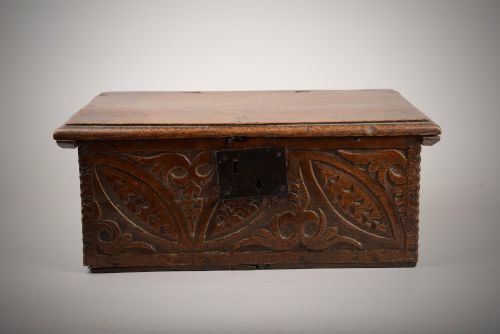
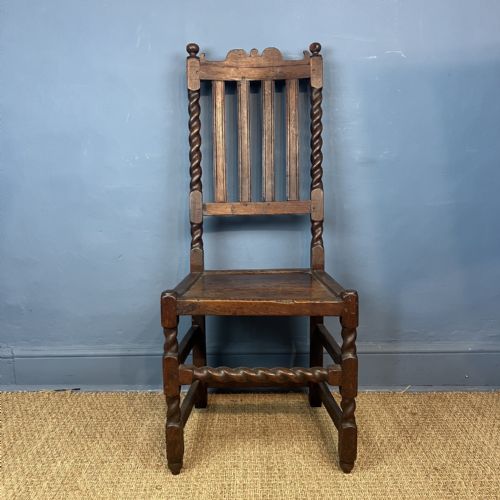


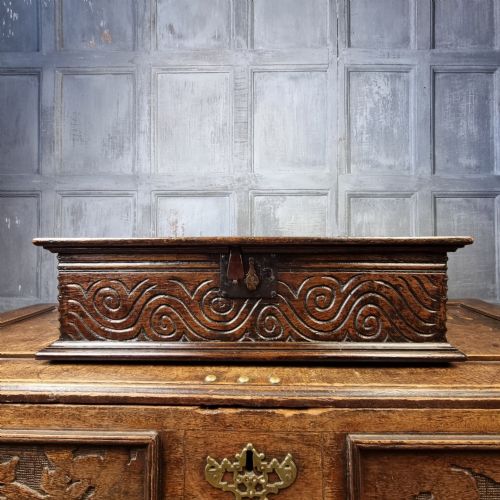
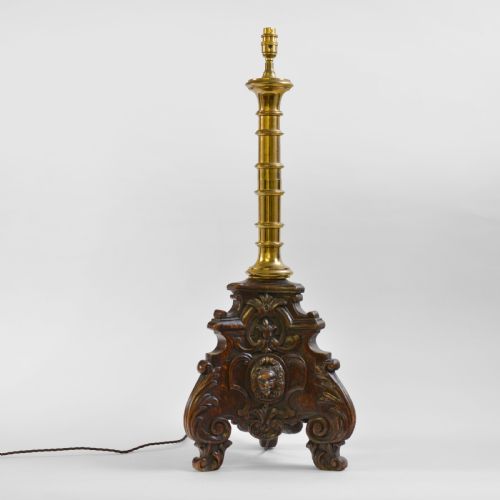


17th Century Oak Desk
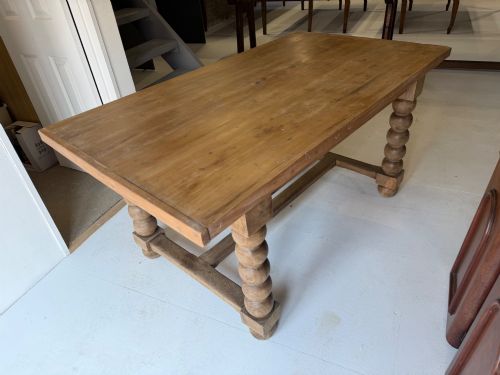
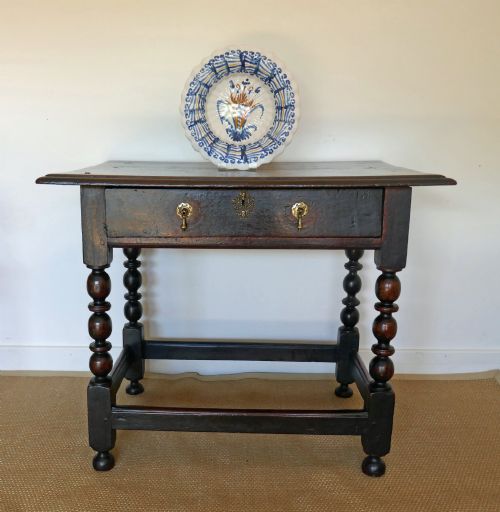
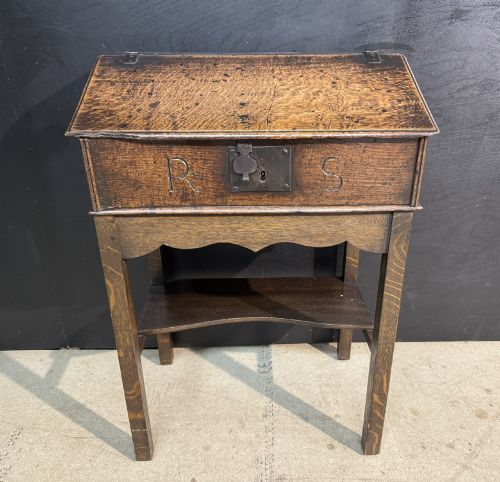
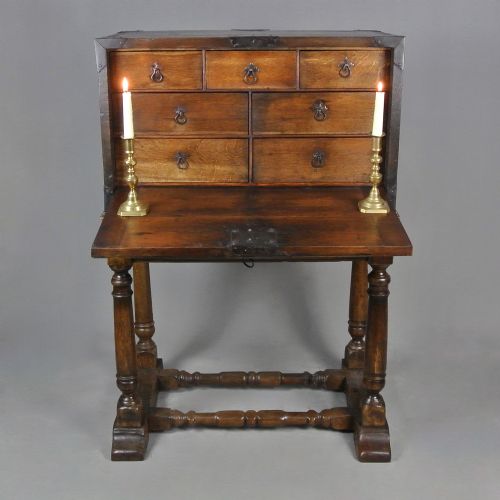
These heavy timber surfaces are the 17th century oak desk pieces collectors seek for genuine seventeenth-century character and sturdy domestic history.
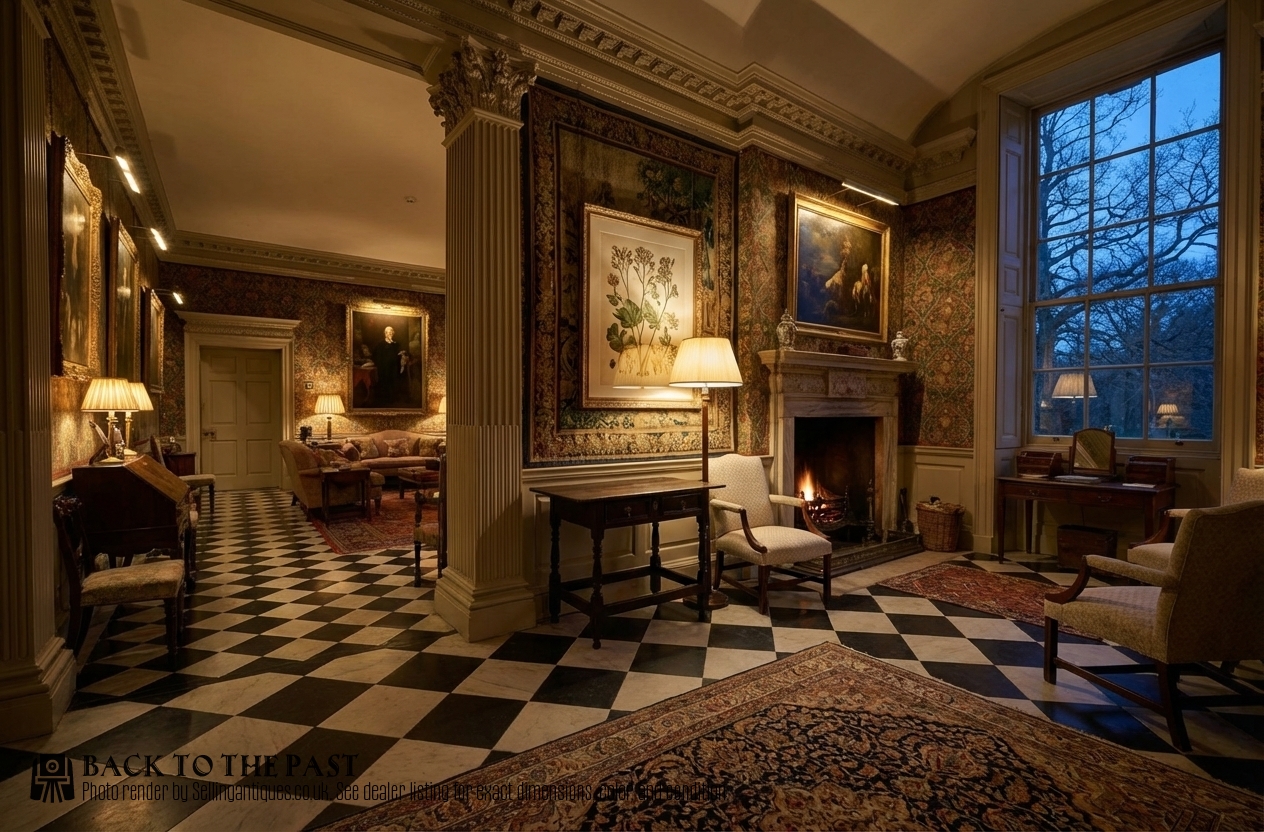
Identifying your 17th century oak desk
When you search for a 17th century oak desk, you are looking at early English writing furniture, side tables, and desk boxes built during periods such as Jacobean, Charles II, Carolean, and William and Mary. These functional pieces served the households of merchants and gentry for sorting papers, storing correspondence, and general writing tasks.
The versions you are most likely to meet on this page and in the archive are sturdy side tables and writing chests made primarily of solid timber. They span the seventeenth century, showing the transition from heavy joined construction to more refined stylistic flourishes like parquetry.
Makers of the era designed these practical items to withstand heavy daily use without losing their architectural dignity. Each surviving example carries the marks of its specific decade, from plain boarded surfaces to decorative geometric patterns.
Materials and construction methods
The primary material found across these listings is solid oak, complemented by occasional walnut accents and brass hardware such as drop handles and escutcheons. Carpenters used seasoned native timber, selecting quarter-sawn boards that revealed the distinctive medullary rays characteristic of quality English work.
Joinery techniques relied heavily on mortise and tenon frames secured with wooden pegs, ensuring the robust stability required for writing and storage. Surfaces often received hand-planing and simple wax finishes, allowing the natural grain of the wood to mature over centuries of handling.
Retail Price Guide 2026
Typical UK retail prices for 17th century oak desk, calculated from the Sellingantiques database of over a million retail prices indexed since 2003. This retail price guide relies exclusively on Sellingantiques data; no external sources or auction records are used, so the figures do not describe the wider market.
Secret compartments inside these old desks occasionally still hide stray seventeenth-century pins and dried ink splatters from forgotten letters.
Judging quality and character
Quality in these early pieces rests upon the integrity of the original timber and the restraint of any later restoration. Tables and desks retain more value when their primary boards, stretchers, and turning remain untouched by heavy modern sanding or wholesale replacement.
The sophistication of the surface decoration also divides standard domestic items from superior examples. Finely executed parquetry, crisp mouldings, and well-preserved brasses elevate a piece beyond basic utility into the realm of accomplished period craftsmanship.
The 17th Century Oak Desk Glossary
- Oak
- A hard, durable native timber used extensively in seventeenth-century English furniture making. Its prominent grain pattern and dense structure made it the default choice for structural integrity.
- Parquetry
- A geometric mosaic of wood pieces used for decorative surfacing on tabletops and drawers. Craftsmen utilised contrasting tones of timber to create intricate patterns.
- Carolean
- The stylistic period spanning the reign of King Charles II, noted for baroque influences and richer carving on domestic furnishings. This style follows the simpler Jacobean aesthetic.
- Side table
- A functional domestic table designed to stand against a wall, frequently utilised for writing or holding household objects in seventeenth-century interiors.
Frequently Asked Questions
How do I spot a true seventeenth-century piece?
Examine the construction joints for hand-cut mortises secured with wooden pegs rather than modern steel screws. The underside of the top boards should show tool marks consistent with early hand-planing.
Check the timber for the natural shrinkage and oxidation that only centuries of age can produce. Genuine examples display consistent wear patterns around the edges where hands and clothing rested.
Where were these writing surfaces used?
These items belonged in the private chambers, libraries, or administrative rooms of substantial houses. Wealthy merchants and landowners utilised them for managing correspondence and estate accounts.
Over generations, their locations shifted from working spaces into principal reception rooms as household layouts evolved. Today they function equally well as accent tables or dedicated writing spots.
Did these pieces always include drawers?
Many surviving side tables and desks feature one or more drawers constructed with hand-cut dovetails. These compartments held ink, quills, sealing wax, and personal documents.
Some simpler variants relied entirely on a flat top surface without under-framing storage. The presence of drawers usually indicates a more sophisticated domestic function.
How should I care for seventeenth-century oak?
Keep the wood away from direct heat sources and extreme humidity fluctuations to prevent the ancient timber from splitting. Regular applications of traditional beeswax nourish the dry surface without building up synthetic gloss.
Dust the grain gently with a soft, dry cloth rather than using wet cleaning agents. Respect the centuries of patina by allowing the natural finish to age gracefully.