


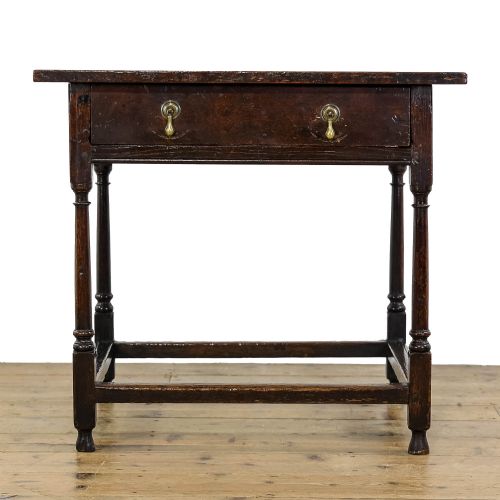


Charles II Side Table
A charles ii side table brings heavy seventeenth-century timber and honest regional joinery straight into a modern room.
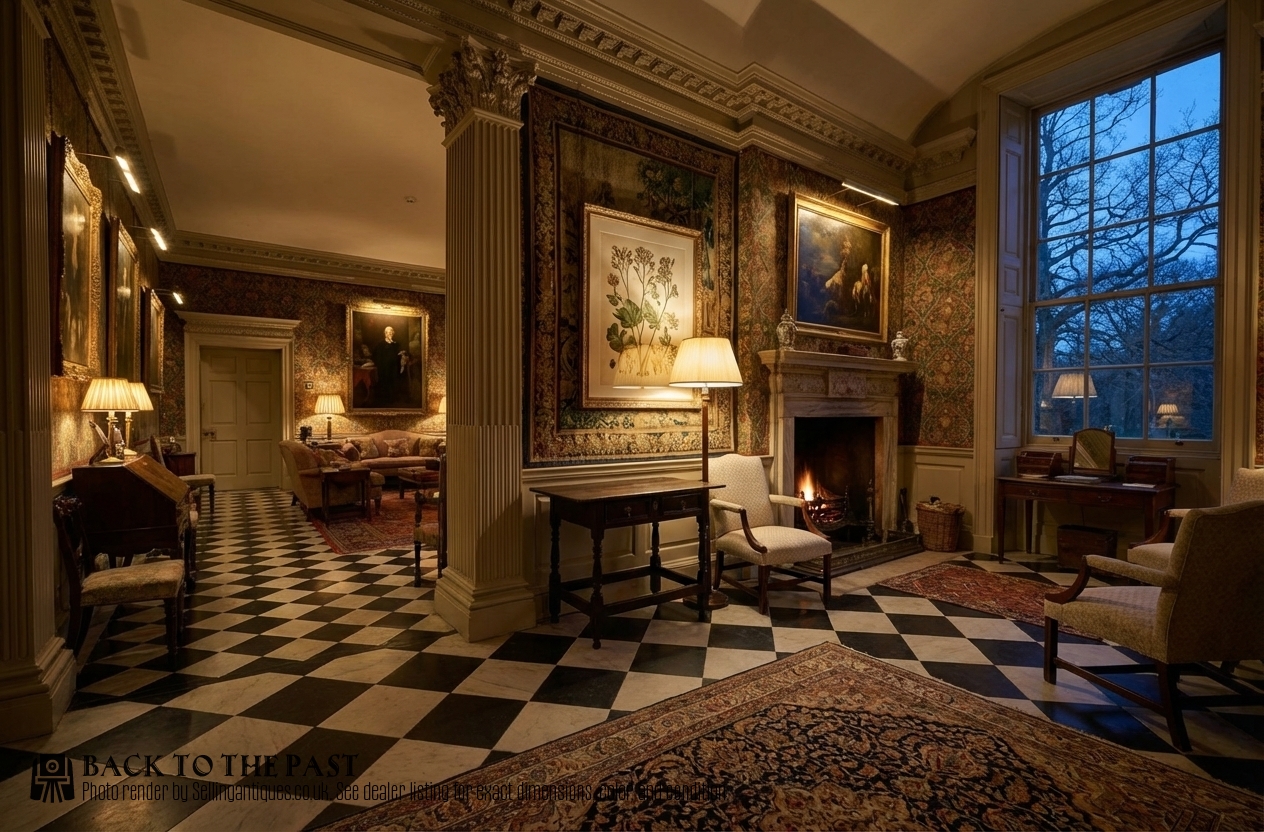
Charles II Side Table
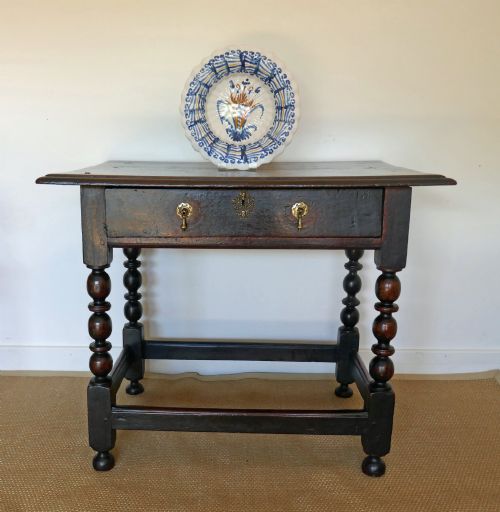
A charles ii side table belongs primarily to the seventeenth century, built during the Carolean and Jacobean eras with sturdy proportions and practical utility. These low rectangular boards and occasional tables served hallways, parlours and chambers for writing, dining or holding lamps.
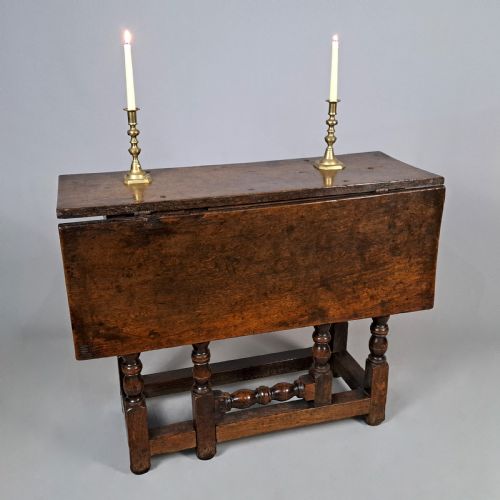
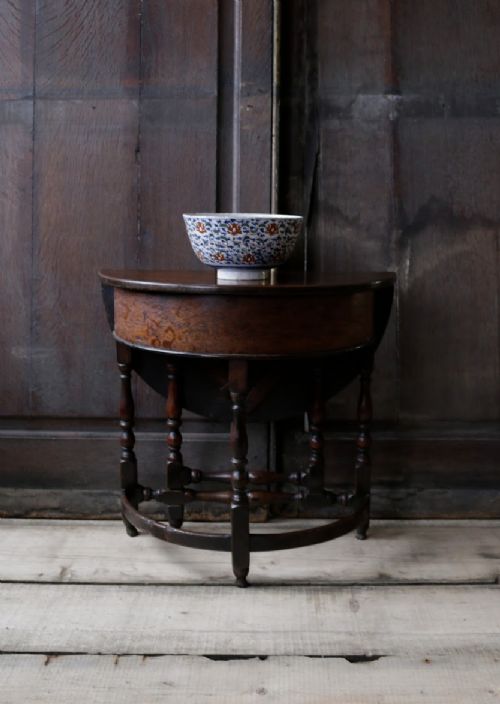
Most examples found here date from the mid-to-late seventeenth century, though occasional later interpretations from the nineteenth and early twentieth centuries appear. The forms range from simple side boards and single-drawer lowboys to drop-leaf gateleg variants and box tables.
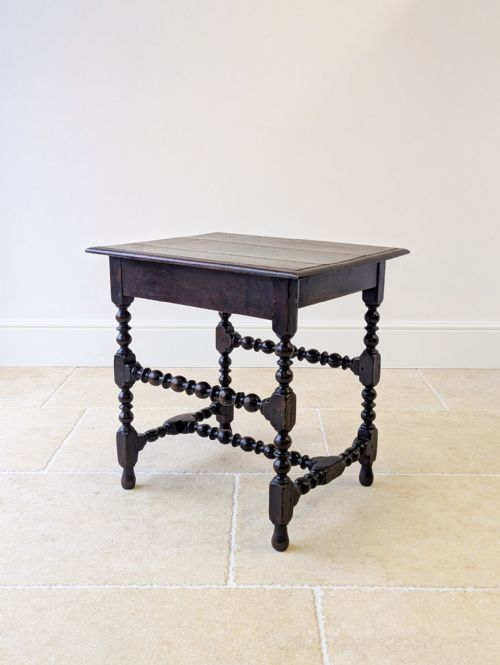
Buyers encounter heavy timber frames supported by robust legs, frequently accented with turned details or straightforward stretchers. The core function remains simple: a solid surface raised on sturdy legs to hold objects in daily domestic use.
How they were made
Makers built a charles ii side table primarily from solid oak, utilising traditional jointing techniques without modern metal fasteners. Timbers were hand-cleaved and planed, showing the natural grain and tool marks of seventeenth-century carpentry.
Structural strength relied on pegged mortise and tenon joints, supplemented by turned uprights such as bobbin legs and straight stretchers. Brass handles and iron fixings appear on drawers and hinges where metalwork was required for function.
Charles II Side Table Retail Price Guide 2026
Typical asking prices for charles ii side table among the pieces listed under this phrase on Sellingantiques today, from the lower quarter to the upper quarter. They describe what is for sale here now, not the wider market.
What varies in quality
The quality of a charles ii side table rests in the integrity of its timber and the depth of its original surface colour. Rich patination developed over centuries separates pieces with untouched aged timber from heavily restored or later constructed examples.
Proportion and execution of turning also define superior pieces, where bobbin legs and stretchers display balanced hand-carving rather than clumsy modern replication. The survival of original drawers, brass fittings and structural pegs elevates the standing of an individual table.
The Charles II Side Table Glossary
- Lowboy
- A small oak table fitted with one or more drawers, originating in the seventeenth century for domestic service. These compact pieces often served as dressing or writing surfaces.
- Bobbin-turned
- A style of leg or stretcher shaped on a lathe to resemble a series of bobbins or spools strung together. This decorative turning is typical of mid-to-late seventeenth-century joinery.
- Gateleg table
- A drop-leaf table featuring hinged flaps supported by swing-out legs that pivot like a gate. This form allowed surfaces to expand or contract according to space.
- Joint stool
- A sturdy wooden stool built with pegged mortise and tenon joinery rather than turned legs inserted into a seat. They functioned as seating or portable platforms in seventeenth-century interiors.
- Patina
- The surface sheen and colour acquired by wood through decades of handling, polishing and exposure to light. Collectors value untouched patination as a marker of genuine age.
Charles II Side Table: Frequently Asked Questions
What is a charles ii side table used for today?
These tables function well as hallway consoles, lamp tables or occasional surfaces in living areas. Their compact proportions fit narrow spaces while providing a solid wooden top.
They also serve as writing desks or decorative side boards in traditional and contemporary interiors alike.
How do I identify a seventeenth-century piece?
Look for heavy solid oak construction joined with hand-pegged mortise and tenon joints rather than modern screws. Tool marks on the underside and natural patination point to period manufacture.
Compare the leg turnings and timber density against known examples from the sixteen-sixties and eighties.
Did these tables always have drawers?
Many seventeenth-century examples were built as simple board tables without drawers, functioning purely with four legs and stretchers. Single-drawer variants, often termed lowboys, also appeared during the same decades.
Both open frame and drawer formats served everyday domestic storage and surface needs.
How should I care for antique oak?
Keep wooden surfaces away from direct heat sources and strong sunlight to prevent the timber from drying and splitting. Regular dusting with a dry cloth maintains the surface.
Apply occasional traditional wax polish to nourish the oak and preserve the deep historic colour.