
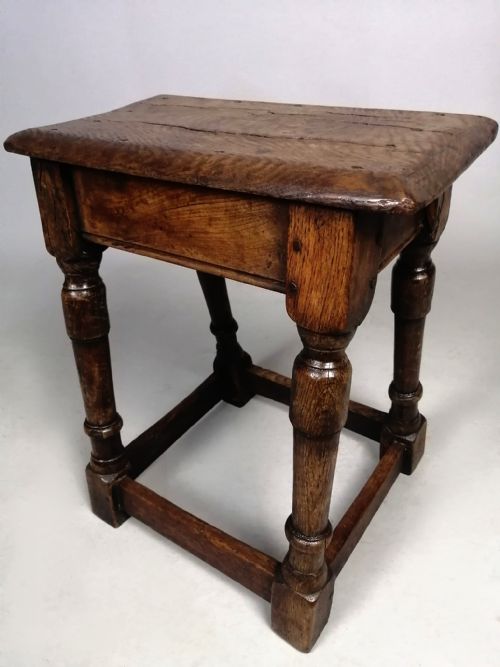


Early Oak Joint Table
An early oak joint table brings sturdy vernacular craftsmanship and centuries of rich timber patination straight into a modern interior.
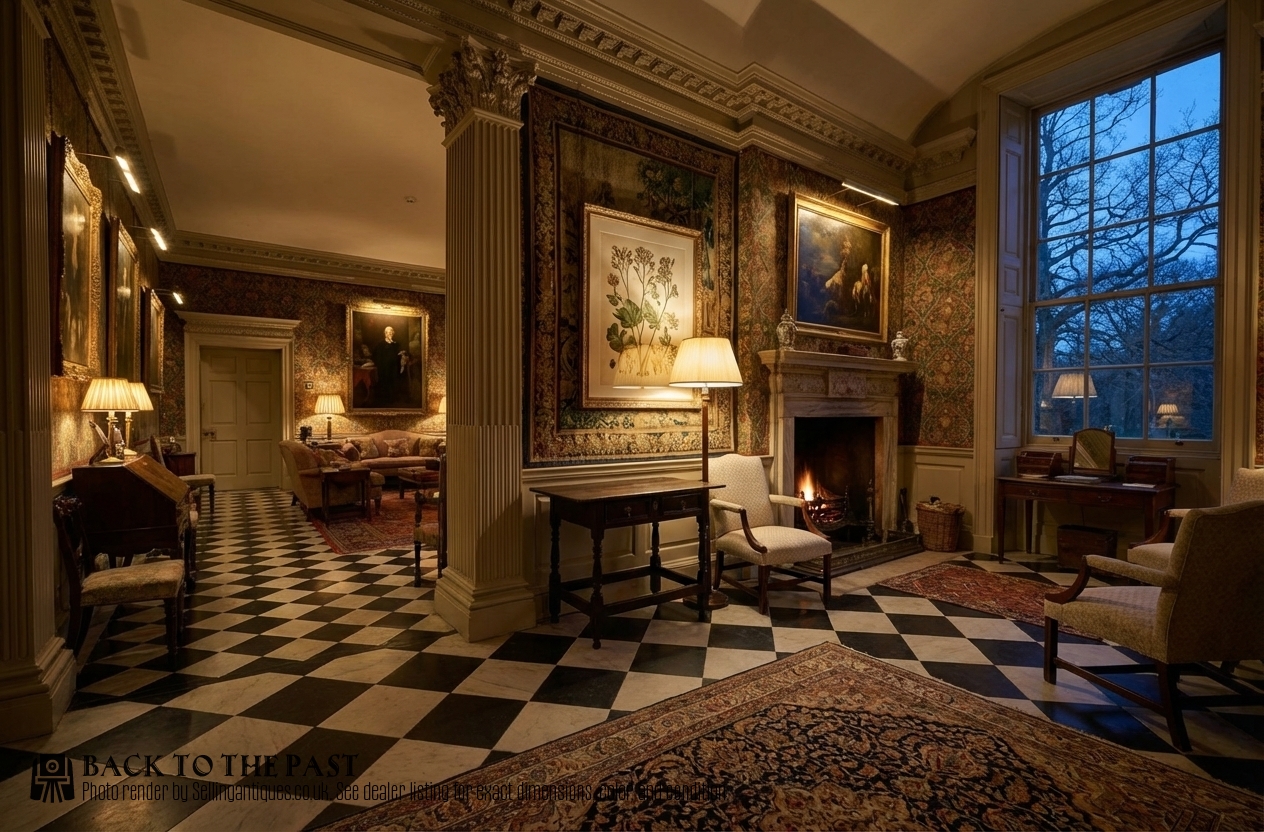
Early Oak Joint Table
An early oak joint table represents heavy timber construction from past centuries, primarily the seventeenth and eighteenth centuries. These items serve domestic purposes as side tables, occasional tables, and occasional seating forms often referred to as joint stools.
The versions met on this page span several distinct periods including the seventeenth century, early eighteenth century, and later revivals into the twentieth century. They display straightforward rectangular forms rooted in English country and Jacobean traditions.
How they were made
Joiners built these pieces using solid oak and elm, sometimes incorporating brass fittings or secondary hardwoods. Timbers were typically cleft and hewn by hand rather than mechanically sawn.
Construction relied on pegged mortise and tenon joints to lock the frame together rigidly without metal nails. Surfaces finished with natural wax polishes over decades of handling.
Some seventeenth-century stools are built so heavily that they likely doubled as emergency steps.
What varies in quality
The distinction between superior examples and simpler pieces lies in the crispness of the timber moulding and the proportion of the frame. Earlier seventeenth-century pieces often display deeper tool marks and more substantial structural mass.
Surface depth and timber figure dictate visual appeal, with richer patination achieved through centuries of use setting apart the best survivors. Later twentieth-century interpretations lack the original surface wear of the earliest periods.
The Early Oak Joint Table Glossary
- Joint stool
- A domestic stool built with mortise and tenon joints by a joiner rather than a carpenter. These items were sturdy enough to stand upon or sit beside.
- Jacobean
- The style of design prevailing during the reign of James the First, characterised by solid construction and geometric carving. It forms a cornerstone of seventeenth-century English furniture.
- Patina
- The surface sheen and colour acquired by wood over long periods of handling and exposure to light. It serves as a visual indicator of age.
- Mortise and tenon
- A joint formed by inserting a shaped projection into a corresponding cavity. This traditional method held frames securely together without glue.
Early Oak Joint Table: Frequently Asked Questions
What is an early oak joint table?
An early oak joint table is a solid timber table constructed using pegged joinery traditions from the seventeenth or eighteenth centuries. These items offer robust surfaces suited for daily use in living spaces.
Such furniture relies on heavy oak and elm construction, embodying early English country and Jacobean styles. Their straightforward proportions make them versatile additions to both traditional and contemporary interiors.
How were these tables used originally?
These tables served various practical household functions, from bedside stands to serving surfaces in domestic rooms. Their sturdy frames allowed them to support heavy household items without wobbling.
Associated joint stools functioned as movable seating or stands for lighting. Their robust build meant they could withstand heavy handling in busy historical households.
How do I live with an antique oak table?
Living with these pieces involves placing them away from direct heat sources and sudden temperature changes. Natural wax polishes help maintain the timber surface against everyday wear.
Their neutral wood tones allow them to sit comfortably beside modern upholstery or contemporary art. Regular dusting with a soft cloth preserves the historic surface patination.
How can I tell the period of an oak table?
Dating relies on observing construction marks, timber species, and joint techniques used in the frame. Earlier seventeenth-century examples display hand-tool signatures and heavier timber scantlings compared to later pieces.
Styles shifted from ornate Jacobean motifs towards simpler early Georgian lines by the seventeen hundreds. Twentieth-century revival pieces show uniform machine sawn timber characteristics distinct from older stock.