


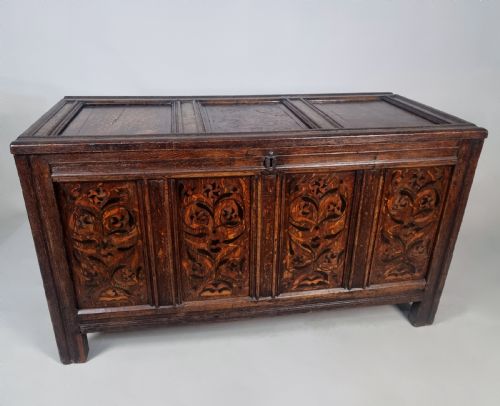
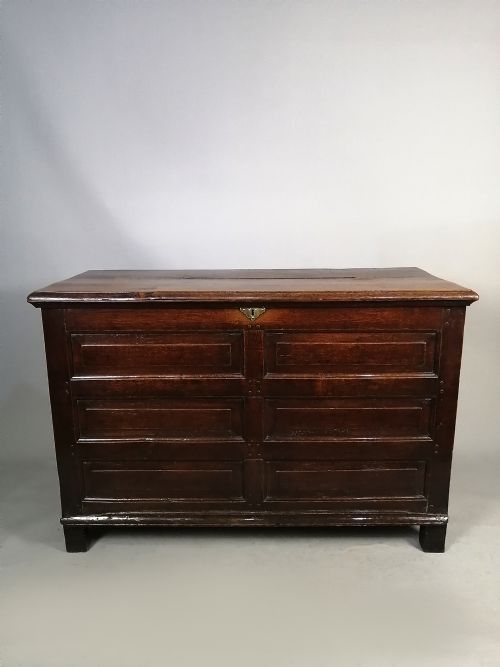
17th Century Oak Box
When you seek a 17th century oak box, you are looking for sturdy timber storage shaped by early English joinery.
What They Are
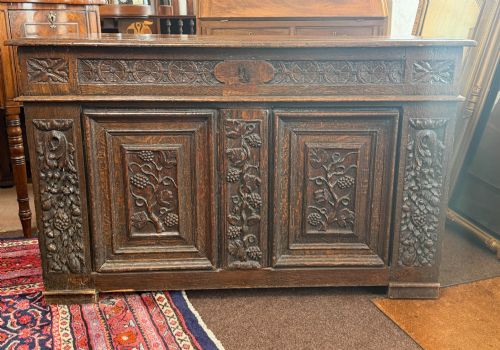
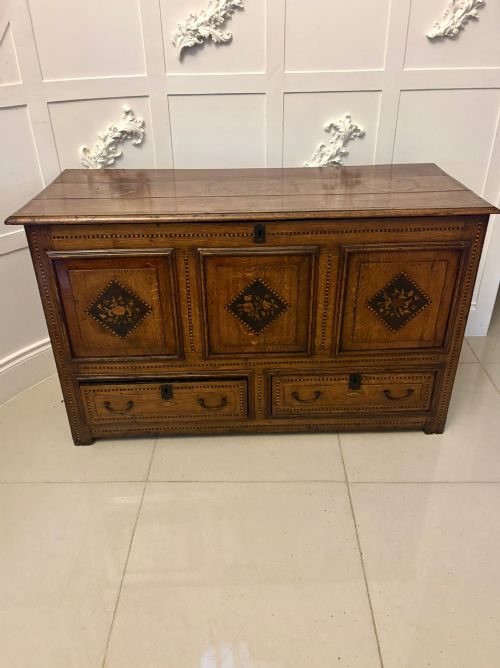
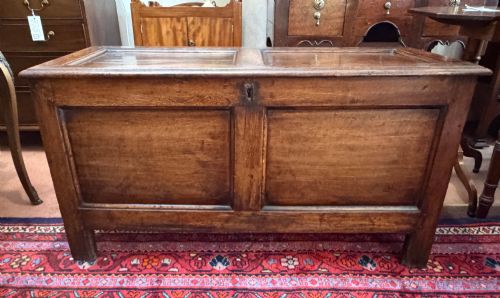
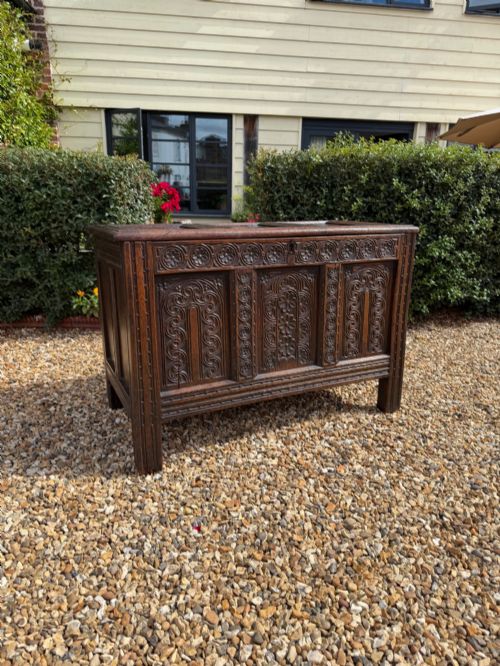
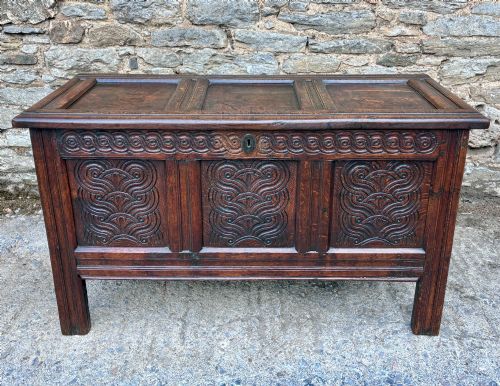
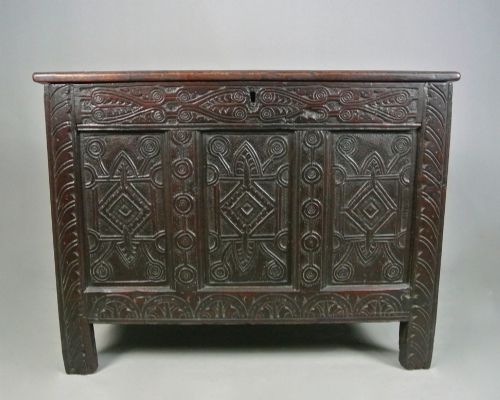
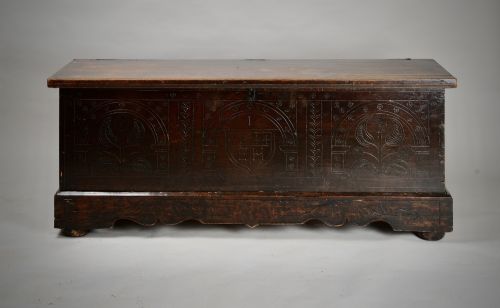
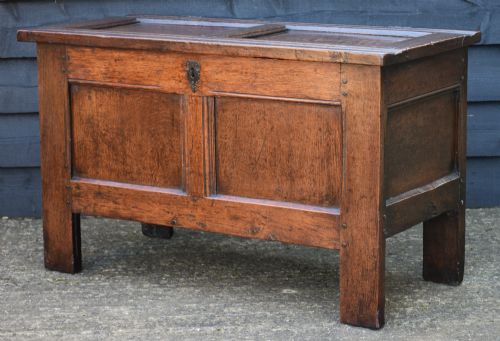
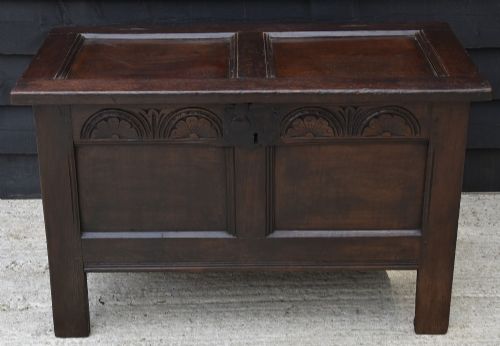
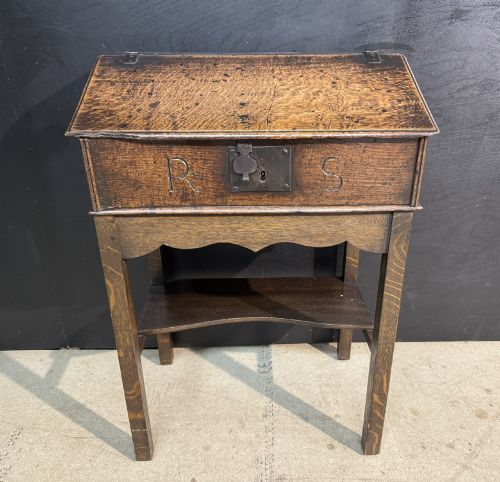
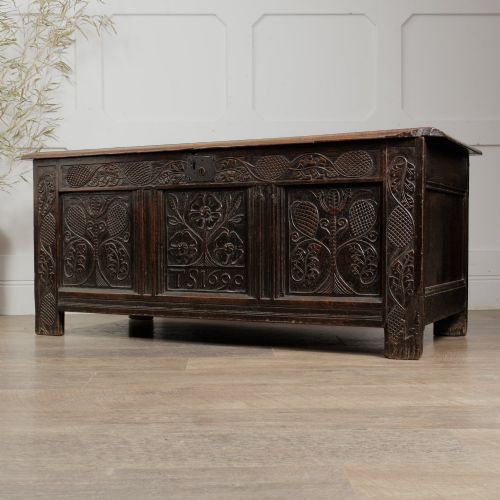
A 17th century oak box serves multiple domestic and ecclesiastical functions, appearing as Bible boxes, writing desks, salt boxes, deed boxes, and travelling strong boxes. Buyers searching this phrase will most frequently encounter bible boxes and small deed boxes, often displaying regional carving.
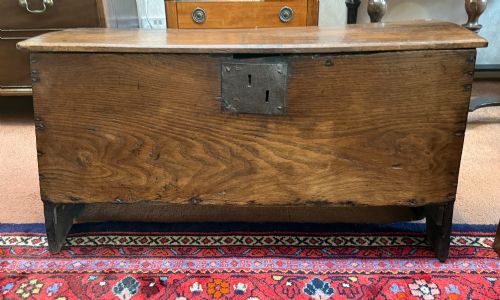
The form spans straightforward six plank construction to panelled and chip carved containers, sometimes mounted on later stands or incorporated into box stools and chairs. Surviving examples reflect the utilitarian needs of domestic and church life in the period.
How They Were Made
Cabinet makers utilised solid oak, occasionally combining it with elm or boxwood for decorative stars, assembling the bodies with pegged joints and six plank methods. Surfaces received hand carving, chip carving, or plain finishes depending on regional workshop traditions.
Hardware consisted of wrought iron or brass, including original hinges, latches, and strapwork that secured the lids of travelling trunks and strong boxes. Traces of early red paint sometimes survive on utilitarian pieces.
Retail Price Guide 2026
Typical UK retail prices for 17th century oak box, calculated from the Sellingantiques database of over a million retail prices indexed since 2003. This retail price guide relies exclusively on Sellingantiques data; no external sources or auction records are used, so the figures do not describe the wider market.
Some sturdy oak boxes doubled as seating furniture, letting owners store documents inside while sitting on the lid.
What Varies in Quality
The distinction between ordinary and superior pieces rests on the depth and crispness of the hand carving, the integrity of the original hardware, and the proportion of replacement timber. Pieces retaining their original surface patination and uncompromised joinery command greater appreciation.
Construction complexity also separates categories, moving from basic joined boards to elaborate panelled assemblies and chip carved surfaces executed by skilled vernacular hands.
The 17th Century Oak Box Glossary
- Bible box
- A small tabletop container designed to hold a large family Bible, frequently fitted with a sloping lid suitable for reading or writing. These boxes often feature carved fronts and were placed on tables or stands.
- Six plank box
- A simple chest construction formed from six individual boards joined edge to edge at the corners, often reinforced with pegged joints. This method represents the earliest and most direct form of box making.
- Chip carved
- A style of ornamentation created by chipping small triangles and geometric patterns out of the solid wood surface with a gouge or knife. This technique appears frequently on vernacular Welsh and English pieces.
- Coffer
- A large, robust chest used for storing valuables, textiles, or documents, secured with heavy iron hardware. Examples range from plain joined structures to deeply carved triple panel fronts.
Frequently Asked Questions
What was a bible box used for?
These boxes held family Bibles and important household documents safely away from dampness and dirt. The sloped lids also provided a stable writing surface for letters and accounts.
Placed on tables or joined stands, they served as portable desks before dedicated writing furniture became common in homes.
How do I identify a six plank box?
A six plank box is constructed from just six pieces of timber: a base, a lid, two sides, a front, and a back. The vertical corner joints are typically butt-joined and secured with wooden pegs.
This straightforward construction method requires minimal joinery and was widely employed for utilitarian storage containers.
What is chip carving on oak?
Chip carving is a decorative technique where geometric patterns are incised directly into the solid timber using small cutting tools. It creates a textured surface of triangles, rosettes, and interlocking bands.
This style appears frequently on regional English and Welsh boxes from the period.
Did these boxes have stands originally?
Most surviving boxes were originally designed to sit on tables, chests, or floors rather than having integrated legs. Many examples found today mounted on stands were adapted during later centuries.
Buyers should examine the joinery where the box meets the stand to determine if the combination is period or a later addition.