
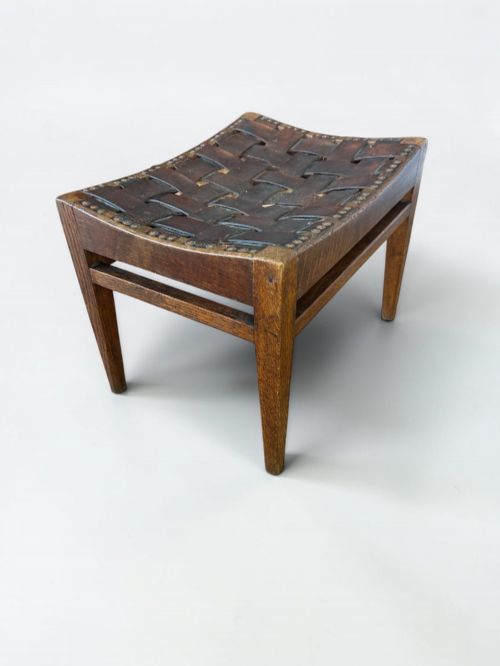
A 2026 Guide by Sellingantiques
Early domestic floors lacked carpets and often let in the cold.
Keeping winter boots raised off the draughty floorboards made a practical difference to comfort.
Notice how polite Georgian drawing rooms frequently required these small pieces to match the fabric and carving of the main seat furniture.
By the Victorian era, overall production numbers spiked to fill middle-class parlours.
Gillows of Lancaster often produced formal matched pairs for their wealthy clients.
Notice the carved mahogany versions Thomas Chippendale supplied to large country houses.
Regional chair bodgers. They turned out countless plain oak bases with no maker mark at all.
The 2026 retail price guide for Antique Foot Stools is drawn from a proprietary archive of over 1.1 million retail prices indexed by Sellingantiques since 2003. This guide relies exclusively on their own internal data; no external sources or auction records are used.
Analysing nearly 25 years of UK antique market history alongside current retail values, the data indicates that typical UK retail prices for Antique Foot Stools range between £300 and £1,100. Entry-level prices generally fall under £300 and premium examples upwards of £1,100.
Overstuffed tops sit directly above the wooden seat rails to offer a soft resting place.
Many eighteenth-century examples sit on plain cabriole or simple turned legs.
Watch for heavy wooden bun feet on the later Victorian beadwork examples.
Early frames rely on basic mortise and tenon joints pegged through for strength.
Screwed corner blocks. Later Georgian makers employed these to handle the pulling tension of tight upholstery.
Look at the inner carcase to spot hand-cut tool marks on the secondary timber.
"Gout stools feature a specific angled surface designed to ease swelling in the legs."
"Hidden compartments. Some frames double as discreet storage boxes for daily sewing supplies."
"Consider the long fender stools. They were built to stretch out in front of the hearth."
Based on almost 25 years of Sellingantiques UK antique market data, Antique Foot Stools appeared 932 times (out of 1,100,000 antiques) which gives it a rarity score of 83/100.
This score measures scarcity within the Sellingantiques archive only and is not a survey of the entire antiques market, so these statistics may not be indicative of the general availability of Antique Foot Stools elsewhere.
Vacuum the fabric gently using a brush attachment. Dust works its way into the weave and breaks down the fibres over time.
Surface dirt often lifts with a dry sponge. Leave wet cleaning to a specialist, as old dyes run easily.
Stripping off the old cover works fine if the top layer is ruined. Keep any original stuffing intact if it holds its shape.
Tacking on new fabric takes some practice. You need to pull the tension evenly so the frame avoids twisting.
Call an upholsterer if the webbing sags. They know how to rebuild the foundation properly.
Leave the legs alone. Cutting them down ruins the proportions.
Adding modern castors rarely works. Extra hardware splits old timber.
Loose joints need taking apart and cleaning. Forcing new glue into a wobbly gap rarely holds for long.
Look for wooden pegs or old nails holding the tenon in place. These must come out before the leg will tap free.
Animal hide glue works best for the repair. It grips bare wood well and allows future dismantling if needed.
Please note: This Antique Foot Stools guide and its associated pricing data are provided for general informational purposes only. It does not constitute formal financial, investment, or appraisal advice and should not be relied upon as the sole basis for any commercial activity, purchasing, or sales decisions. Sellingantiques.co.uk accepts no liability for any actions taken in reliance on this information. Always consult with a qualified professional or independent appraiser.
