


A 2026 Guide by Sellingantiques
John Howard started trading in London around 1820. He opened a cabinet-making workshop before moving into upholstery later in the century.
The firm exhibited at major Victorian exhibitions. By the 1860s they operated from Berners Street, cementing their reputation for comfort.
Royal warrants soon followed. Queen Victoria bought their seating, which secured their place in country houses across Britain.
Lenygon and Morant took over the name in 1935. You will spot different stamped addresses marking this shift in ownership.
George Howard patented the elastic seat in 1866. This invention redefined upholstery by hiding heavy springs within a sleek frame.
Furniture from the early John Howard period focuses on cabinet work. Sofas only became their main output later in the Victorian era.
The Lenygon and Morant period shifted production slightly. They maintained the original shapes but often updated the internal padding techniques.
The 2026 retail price guide for Antique Howard & Sons Sofas is drawn from a proprietary archive of over 1.1 million retail prices indexed by Sellingantiques since 2003. This guide relies exclusively on their own internal data; no external sources or auction records are used.
Analysing nearly 25 years of UK antique market history alongside current retail values, the data indicates that typical UK retail prices for Antique Howard & Sons Sofas range between £3,900 and £17,500. Entry-level prices generally fall under £3,900 and premium examples upwards of £17,500.
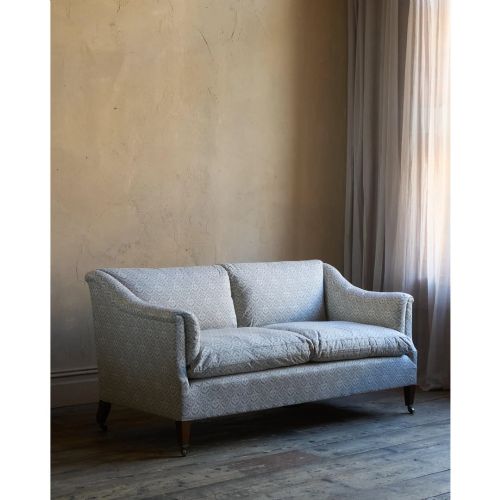
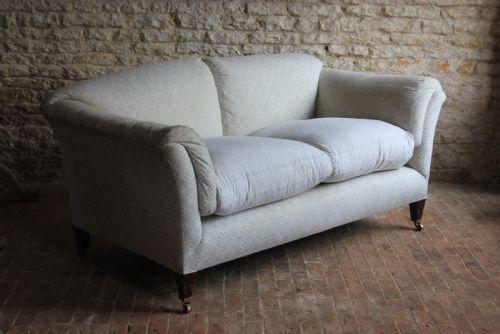
Castors are the primary clue. Turn it over to check the brass wheels, which normally bear the firm's name and a patent stamp.
Check the inside back leg. A stamped number sits there on genuine pieces, alongside the Berners Street address on earlier frames.
The siegfried wire springing system appears on many models. It forms an independent sprung edge that stops the front seat collapsing.
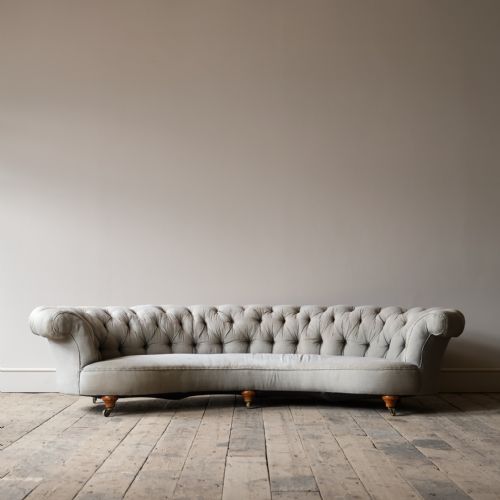
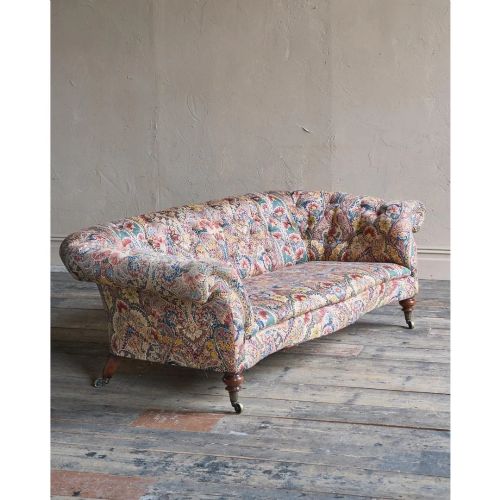
Early Victorian frames sit higher with stiff, buttoned backs. The deep-seated style evolved as drawing room habits relaxed.
Tying the springs by hand takes hours of labour. Craftsmen knotted twine eight ways across the seat to keep everything aligned.
The transition from stitched hair edges to sprung front edges changed the profile. It allowed the cushion to sit flush against the frame.
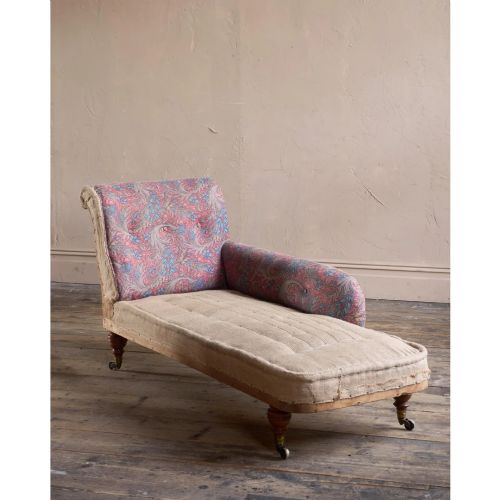
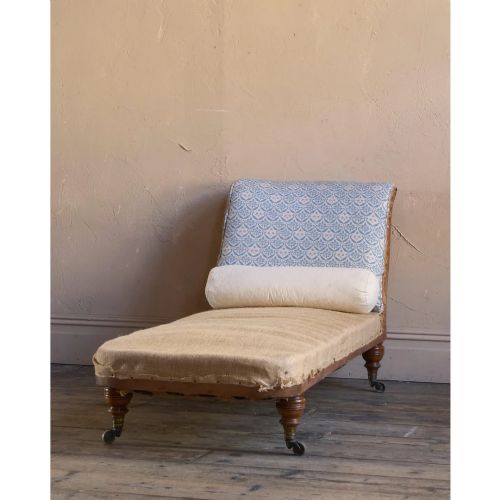
"Many frames were sold in plain muslin. The client then sent the sofa to their own upholsterer to match the room schemes."
"They provided seating for ocean liners. The robust construction suited the rigours of sea travel while keeping passengers comfortable."
"Some back legs have slightly different pitch angles. This subtle slant stops the piece tipping backwards when someone flops into it."
Based on almost 25 years of Sellingantiques UK antique market data, Antique Howard & Sons Sofas appeared 257 times (out of 1,100,000 antiques) which gives it a rarity score of 95/100.
This score measures scarcity within the Sellingantiques archive only and is not a survey of the entire antiques market, so these statistics may not be indicative of the general availability of Antique Howard & Sons Sofas elsewhere.
Replacing a castor alters the stance of the frame. The brass wheels are integral to the Howard design and often carry the patent stamp.
If the wheel is seized, a restorer can often free the pin. Swapping them for generic replacements is rarely recommended as it changes how the sofa sits on the floor.
Velvet works well on these frames. The deep buttoning and tight scrolls can handle heavier cloths, provided the upholsterer understands traditional methods.
The main issue is the tension across the seat. A thick pile fabric needs careful management where it meets the front edge. Modern synthetic velvets sometimes lack the give required for a neat finish.
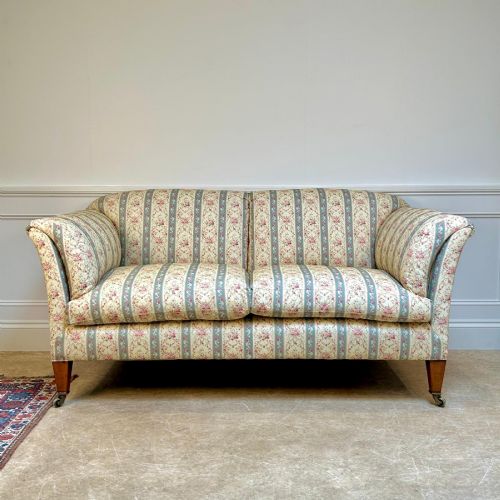
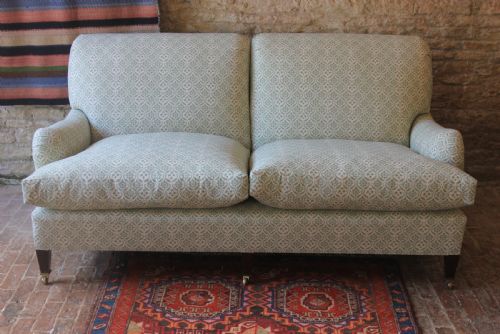
Many antique Howard & Sons sofas wear plain linen or cotton ticking. If you choose velvet, stick to a cotton blend that mimics the drape of historic textiles.
Most back legs are turned from beech. This timber provides structural strength where the frame takes the most strain.
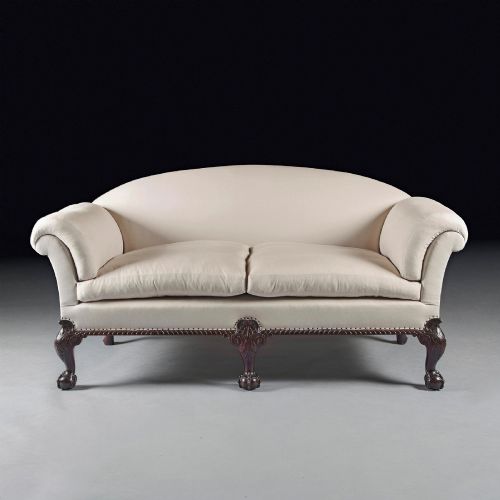
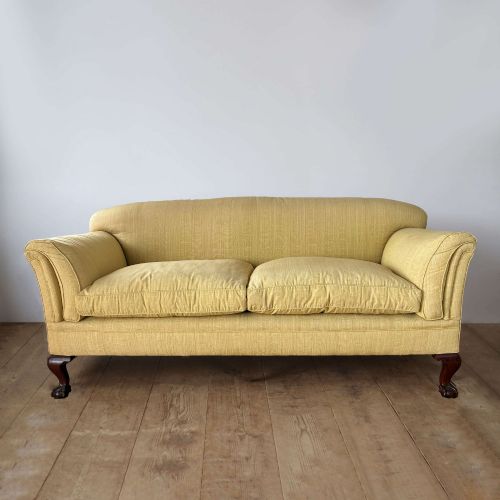
They are usually painted black to blend into the shadows. The front legs get the expensive showcase woods.
That dust often points to active woodworm in the beech frame. The insects bore through the soft sapwood and push the flight holes out near the joints.
Turn the piece over and look for fresh, clean holes in the timber. You can treat the carcase with fluid, but the fabric makes it tricky to reach the inner rails.
Check the webbing while you have it upside down. Damp environments weaken the jute straps and rot the base cloth.
Please note: This Antique Howard & Sons Sofas guide and its associated pricing data are provided for general informational purposes only. It does not constitute formal financial, investment, or appraisal advice and should not be relied upon as the sole basis for any commercial activity, purchasing, or sales decisions. Sellingantiques.co.uk accepts no liability for any actions taken in reliance on this information. Always consult with a qualified professional or independent appraiser.
