


Antique Bergere Sofas
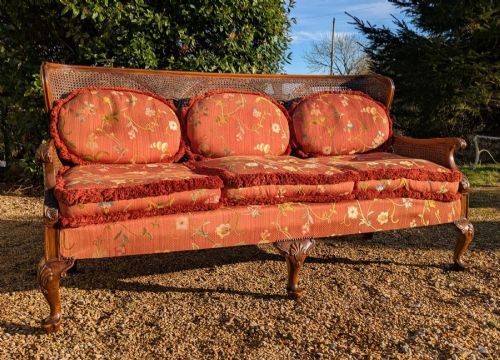
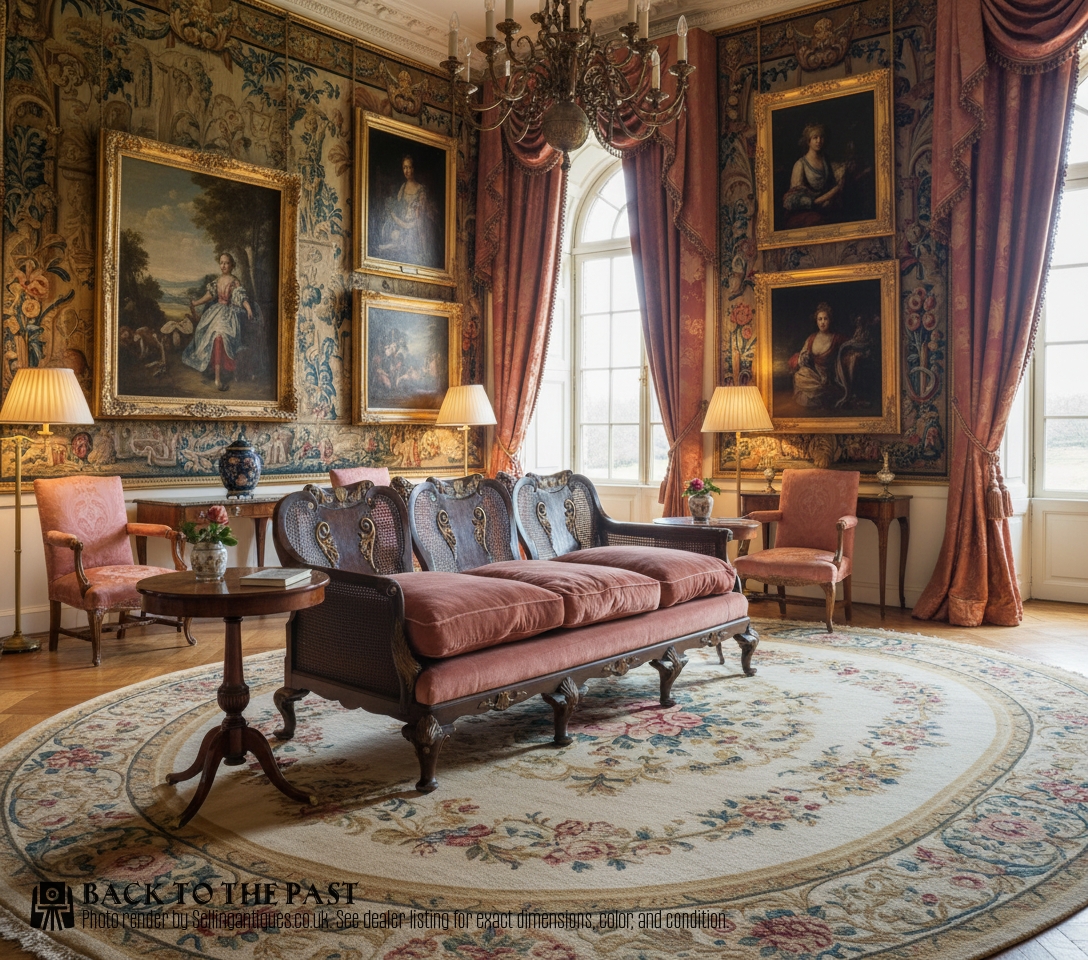
A bergère sofa is a show-wood settee with its back and sides panelled in woven cane rather than upholstered through, fitted with loose cushions, made as a lighter, cooler alternative to a fully stuffed seat.
Antique Bergere Sofas
The name comes from the eighteenth-century French bergère, an enclosed armchair with filled-in sides and a loose squab cushion. It later attached itself to any seat whose back and arms are panelled in cane, and the caned settee with loose cushions became a standard drawing-room and country-house pattern.
On Sellingantiques the form is overwhelmingly a hardwood-framed two- or three-seat settee, English, with walnut named in a little under a third of titles and mahogany in around one in seven. Titles use sofa, settee and couch for the same object, so none of the three implies a different shape.
Dates run from 1860 to 1930, but the weight sits in the first third of the twentieth century: the 1910s, 1920s and 1930s each carry a dozen or so listings, with the Edwardian caned settee the single largest group. Nineteenth-century examples are a genuine minority, and some listings fall back on century- or reign-wide labels rather than a year.
Two other strands turn up throughout. French carved and Louis-style frames, sometimes titled canapé, account for roughly one in six. And nearly a quarter of listings are not a sofa alone but a three-piece lounge suite, the settee with two matching armchairs, so this form arrives in company as often as on its own.
What Sets Them Apart
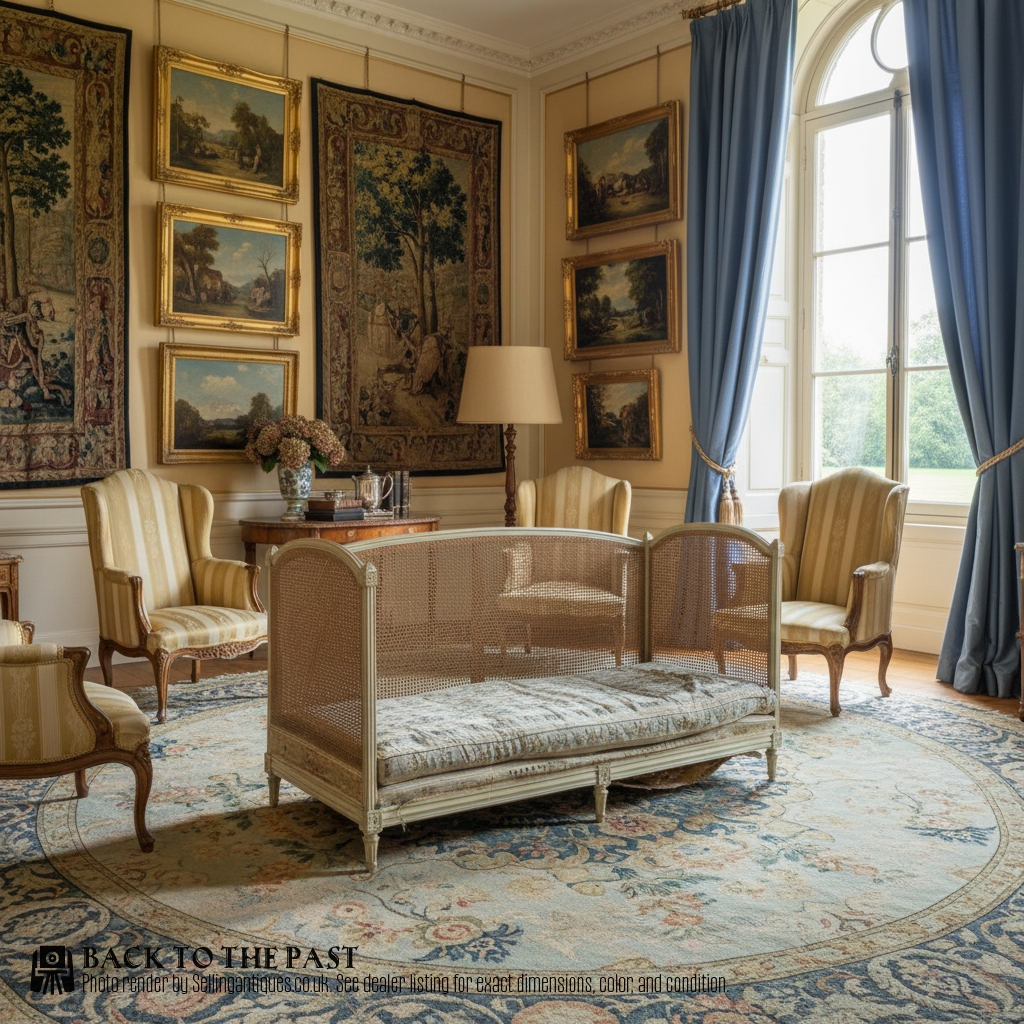
Timber does most of the separating. Burr walnut, rosewood, satinwood, satin birch and light walnut all cluster in the upper half of the range, while plain mahogany and frames left unspecified in the description sit at the foot. On a bergère the show wood is most of what you see, so figure counts for more than it would on an upholstered sofa.
Decoration is the second axis. Carving is named in around one title in six, and carved frames sit above the mid-range against the undecorated bergère couch at the bottom. Lacquered, painted and chinoiserie surfaces are a small recurring minority, around half a dozen listings, and they land almost entirely in the top third.
Completeness and scale then do the rest. A settee with its two matching armchairs generally sits higher than the same settee alone, though a plain three-piece suite can still sit near the bottom. Three-seaters and the larger frames rank above two-seaters, and the outsized one-offs, a four-seat back bench, a sofa doubling as a day bed, sit high.
Antique Bergere Sofas Retail Price Guide 2026
Typical UK retail prices for bergere sofas, calculated from the Sellingantiques database of over a million retail prices indexed since 2003. This retail price guide relies exclusively on Sellingantiques data; no external sources or auction records are used, so the figures do not describe the wider market.
Bergere sofas have been listed on Sellingantiques since 2011, seventy-one of them so far.
The Antique Bergere Sofas Glossary
- Bergère
- Seat furniture with the back and sides filled in, here almost always with woven cane, and loose cushions on top rather than fixed upholstery.
- Double caned
- Cane on both faces of the panel, so the frame reads as finished from behind as well as from the front.
- Show wood
- The exposed polished frame. On a caned settee it accounts for most of the visible surface, which is why timber and figure carry so much weight.
- Lounge suite
- The settee sold with its two matching armchairs. Also written as three piece suite, and it covers about a quarter of the listings.
- Canapé
- The French word for a settee, used on Louis XV style frames. Louis XV means cabriole and curved; Louis XVI means straight and tapered.
- Burr walnut
- Figured veneer cut from a burr growth on the tree, named on several of the Art Deco examples.
Antique Bergere Sofas: Frequently Asked Questions
How many bergère sofas come up each year?
Only about six are listed on Sellingantiques in a year, from an archive of 71.
Yet 38 different dealers have handled one. It is a form almost every dealer meets once and almost none stocks twice.
Is a bergère settee the same as a bergère sofa?
Yes. Sofa, settee and couch are used interchangeably across these titles for the same object.
Settee appears in roughly a quarter of them and couch in around one in nine. None of the three points to a different form or a different period.
What period do most of them date from?
The dated field runs 1860 to 1930, with the weight firmly in the first third of the twentieth century. The 1910s, 1920s and 1930s each carry about a dozen listings.
Nineteenth-century examples are a minority, a handful each in the 1860s, 1880s and 1890s. Fifty-five of the 71 listings carry a clean year; the rest use labels like 19th Century, Edwardian or Victorian.
Are they French or English?
The dominant form is English, and the largest single group is the Edwardian or early twentieth-century caned settee.
French appears in around one in six titles, mostly carved and Louis-style frames, sometimes called canapé. Anything beyond those two origins is scarce: two Swedish examples and one Japanese lacquer suite across the whole archive.
Which makers are found on these frames?
None. A scan of all 71 listings turned up no stamped, labelled or attributed maker at all.
These sell on timber, frame pattern, decoration and whether the settee comes with its matching chairs.
Do they usually come with matching armchairs?
Often. Nearly a quarter of listings are a suite rather than a single seat, the settee with two matching armchairs.
The terms used are lounge suite and three piece suite. Sizes for the settee itself are given as two seater or three seater, with one four-seat example in the archive.