
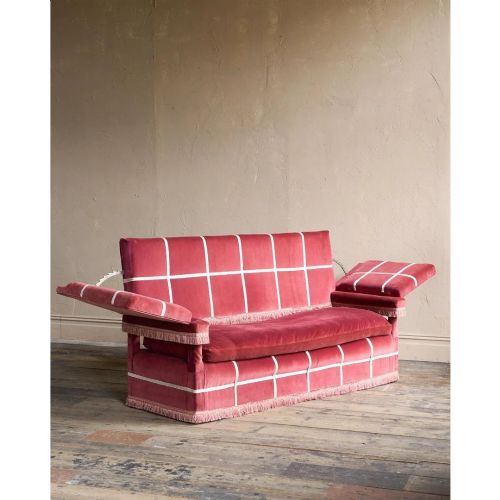
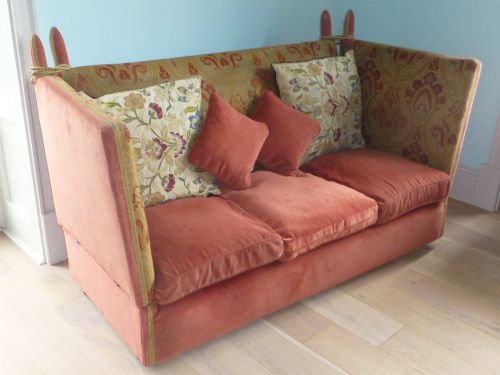


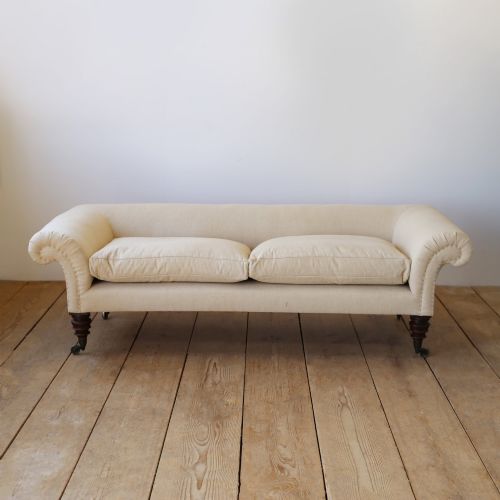


Antique Drop Arm Sofas
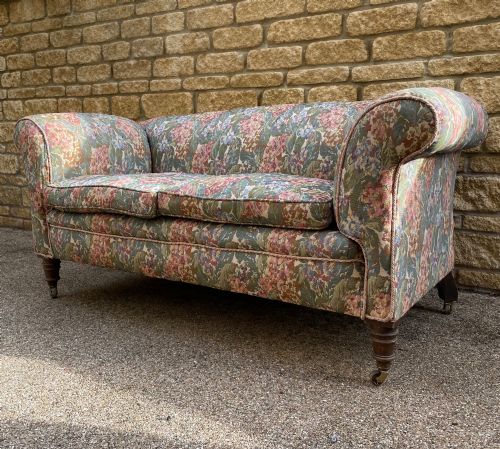
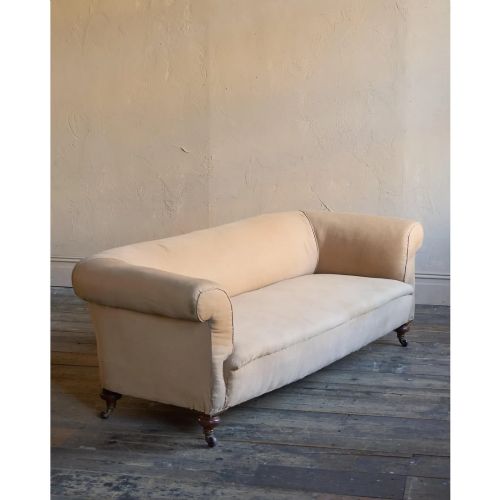
A drop arm sofa is an upholstered two- or three-seater with one or both arms hinged or ratcheted so they can be lowered flat with the seat, turning the end into a day-bed.
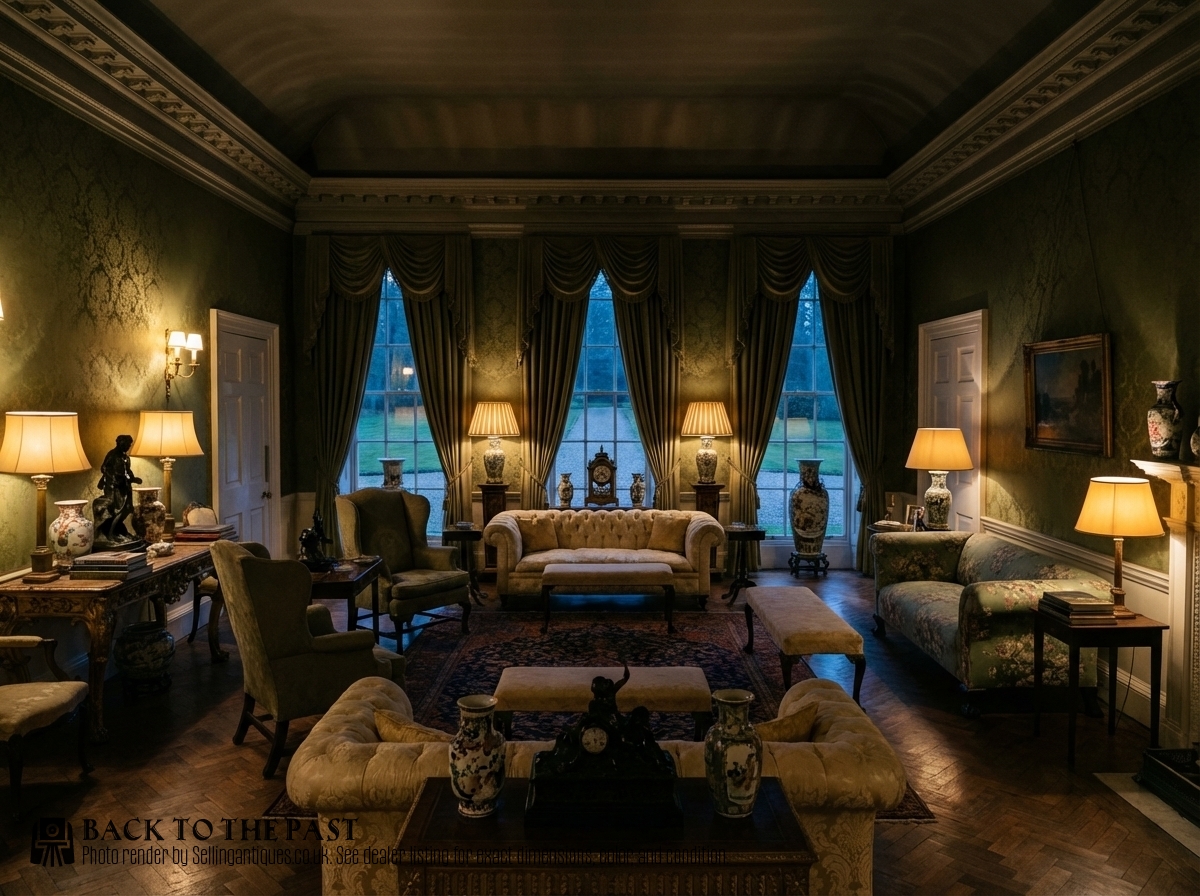
Antique Drop Arm Sofas
The form belongs to the late nineteenth and early twentieth century, when hinged or ratcheted arms were fitted to upholstered sofas so one end could be let down and the sofa used as a reclining couch. The dealers' own dating on Sellingantiques runs from 1880 to 1920, and no further.
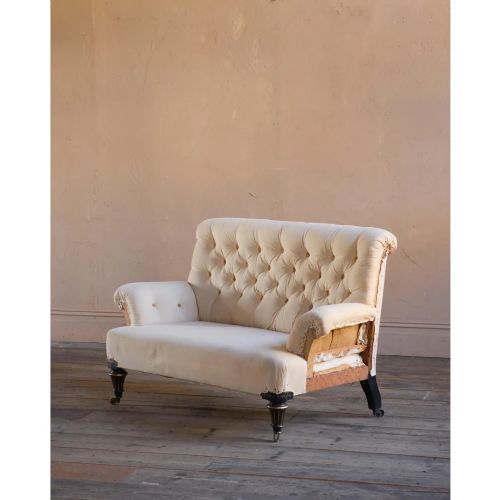
The Chesterfield idiom dominates the way these are described: deep-buttoned, scroll-armed, and named as such in a third of all titles. Edwardian and Victorian labels are about equally common, and where a seat count is stated it is nearly always two seats. A single three-seater has passed through.
A smaller run of Knole sofas sits alongside them, with high backs and arms tied to the back posts by cords or braid rather than swung on a hinge. The idea is older than the period, revived in it. Four have appeared, in claret velvet, gold damask and plain upholstery.
Below those come the small cottage and country sofas, four titles calling the sofa simply small, and a pair described as country house sofas. Coverings named in titles are leather, in green and tan, then velvet and damask. Turned legs are the leg form that gets named.

Where The Range Splits
Covering does most of the work. Leather is named in seven titles and all of them sit in the upper half of the range; the velvets and the gold damask carry the Knoles at the top. Where the fabric goes unnamed, or is described plainly, the sofa sits lower.
Then there is the difference between a finished sofa and a frame. Listings offered for recovering or for reupholstery sit at the bottom and lower-middle, while phrases like original covered turn up higher. Scale pulls the same way: the small cottage sofas cluster at the cheap end, the large deep-seated three-seaters above them.
Form and attribution finish it. The Knole sofas and the country house sofas take the highest positions, and only two listings in the whole archive attach a workshop name or a house style to the piece. Both sit near the top, which tells you how little that kind of claim appears at all.
Antique Drop Arm Sofas Retail Price Guide 2026
Typical UK retail prices for drop arm sofas, calculated from the Sellingantiques database of over a million retail prices indexed since 2003. This retail price guide relies exclusively on Sellingantiques data; no external sources or auction records are used, so the figures do not describe the wider market.
Leather is the named covering in seven drop arm sofa titles on Sellingantiques, against two velvets and one damask.
The Antique Drop Arm Sofas Glossary
- Drop arm, drop end
- An arm hinged or ratcheted so it lowers level with the seat. Both spellings turn up in titles, and they mean the same thing.
- Drop arm mechanism
- The hinge, ratchet or catch holding the arm up or letting it down. Named outright in one title only; elsewhere the working part is left implied.
- Chesterfield
- The deep-buttoned, scroll-armed upholstered sofa. The commonest descriptor in this category and the default way the form gets written up.
- Knole, also spelled knowle
- A sofa with a high back and hinged arms held to the back posts by cords or braid. Both spellings appear.
- For recovering, for reupholstery
- Sold as a frame to be covered again rather than as finished upholstery. Sits opposite original covered, the dealer's claim that the fabric is the one the sofa left the workshop with.
- Settee
- Used interchangeably with sofa in these titles, so it tells you nothing about size or shape.
Antique Drop Arm Sofas: Frequently Asked Questions
How often do drop arm sofas come up?
Only about three a year are listed on Sellingantiques, spread across twenty-six different dealers. Almost nobody carries two.
That scatter is worth knowing. The category is not the stock-in-trade of any one specialist, it turns up as a single piece among a dealer's general furniture.
What period are these sofas from?
The dated field the dealers fill in spans forty years, 1880 to 1920. Edwardian and 1900s together make the largest block.
Twelve of the thirty-eight listings carry a clean year. The rest sit under looser labels such as 19th Century or Victorian, which place a third of the archive only roughly.
Why are so many called Chesterfields?
The Chesterfield idiom accounts for a third of all titles, making it the standard way this form gets described. Deep buttoning and scroll arms are what the word carries.
Titles run both ways round: drop arm chesterfield style, Chesterfield drop-arm. The drop arm is treated as a feature of the Chesterfield rather than a type of its own.
Is a Knole sofa the same thing?
Not quite. A Knole has a high back with arms held to the back posts by cords or braid, rather than an arm on a hinge or ratchet.
Four have passed through, in claret velvet, gold damask and plain upholstery, and between them they take the whole top of the range.
What coverings turn up on these?
Leather is the named covering in seven titles, green, tan and unspecified. Velvet appears twice, damask once.
Most other listings leave the fabric out of the title altogether, and those sit lower in the range than the leather ones.
Do these sofas come in one-seat sizes?
No. Where a seat count is given it is nearly always two, with a single three-seater in the archive.
Four separate listings describe the sofa only as small, usually as a cottage or country sofa. At the other end sit the large deep-seated Chesterfields.