





Antique Leather Sofas
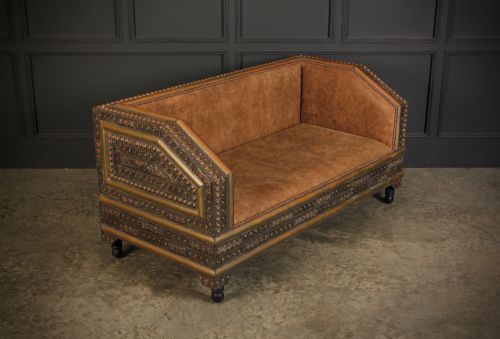
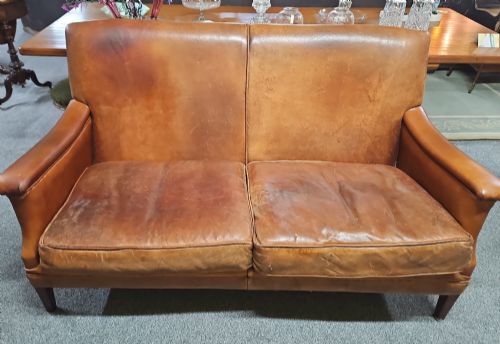
A full-length leather-covered seat, from two-seater settees to very large three-seaters and corner forms, made for libraries, halls, clubs and offices where a wipeable hide seat took heavy use.

Antique Leather Sofas
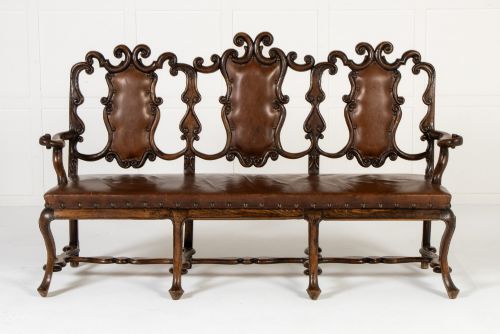
Almost half the category answers to one word. "Chesterfield" appears in 146 of the 294 titles on Sellingantiques, more than twice as often as any other form term. The rest are called sofas, settees, couches, club sofas, chaise longues, settles and hall seats, and settee tends to be the word chosen for framed, show-wood pieces.
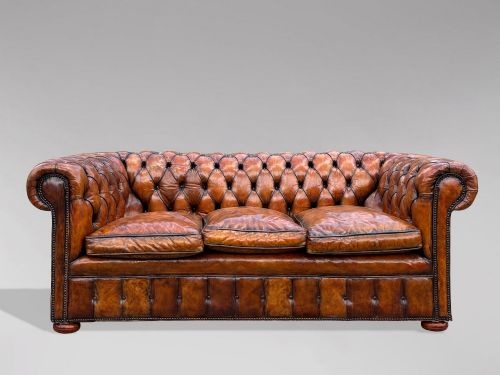
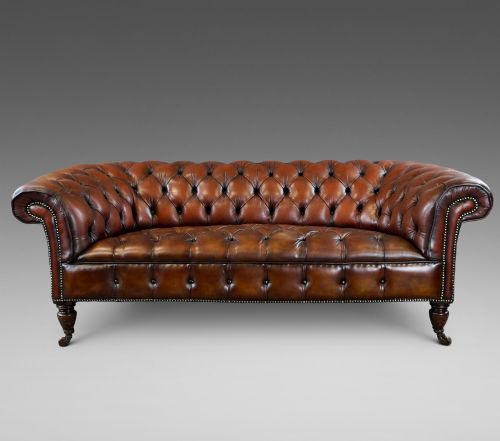
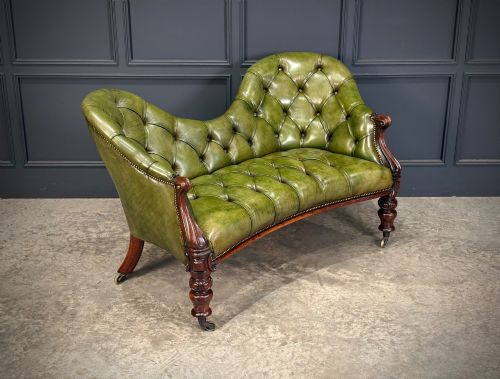
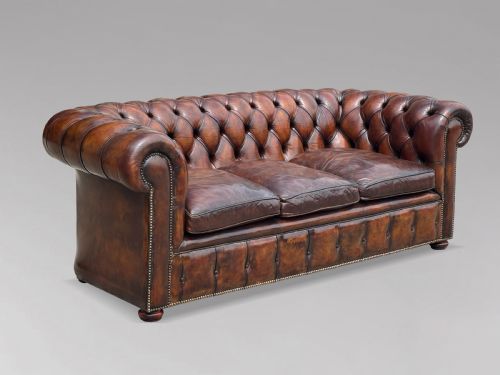
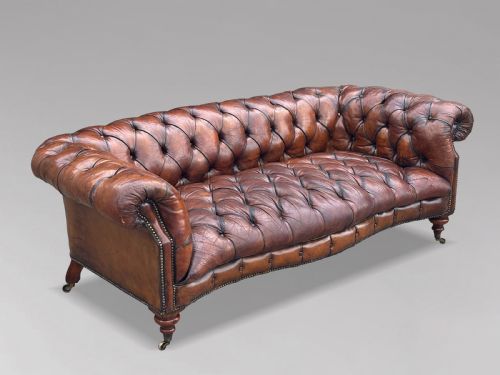
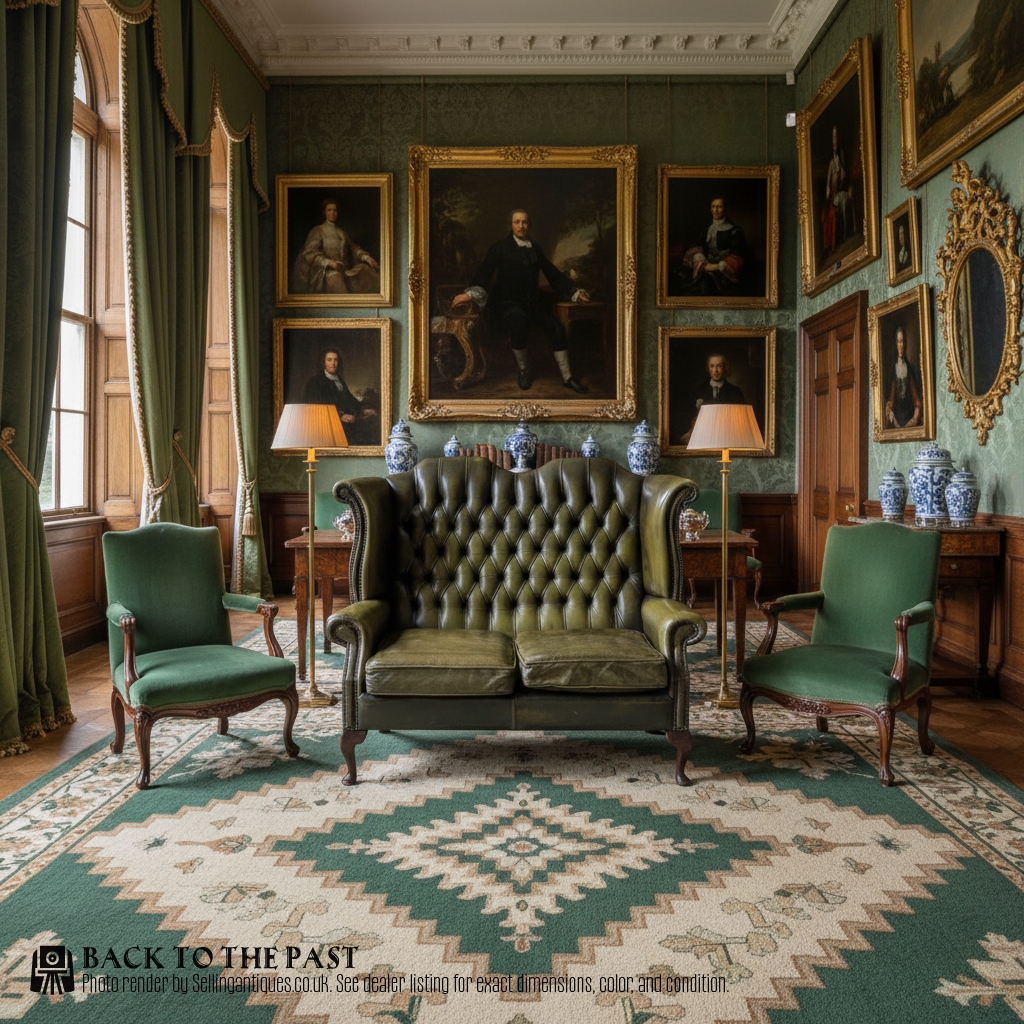
The form a buyer meets most often is a deep-buttoned brown chesterfield of 19th-century or inter-war date. Buttoning is the surface treatment named most, in 45 titles, of which 31 say "deep buttoned". Colour is named in only a minority of listings, brown ahead of green, so the shade is often left unstated.
Dating splits two ways. Nearly a third of the category is dated by reign or century rather than year, with 45 listings saying only "19th Century" and 39 only "Victorian". Where a year is given it clusters in the 1930s, 1920s and 1910s, with the 1880s and 1900s behind. The whole dated field runs 1800 to 1960.
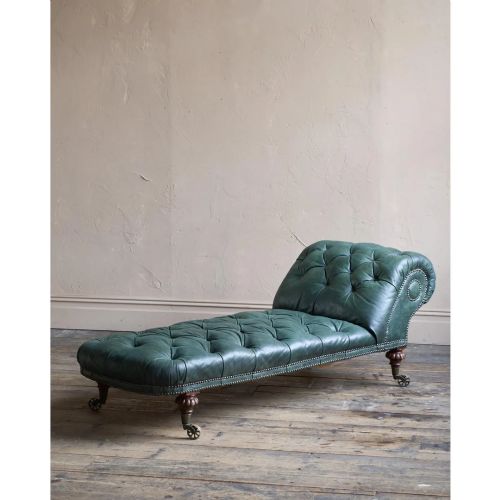
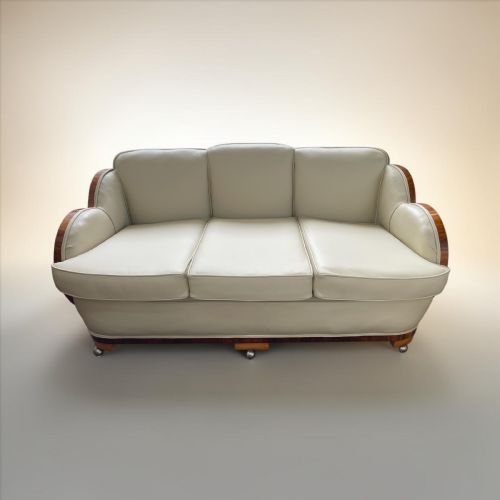
Beyond the chesterfield sit smaller pockets. Victorian and 19th-century sofas with a named show-wood frame make up roughly a sixth, mahogany and walnut between them accounting for most of the named timber. Chaise longues take about one in twenty. Club and drop-arm sofas with a few Art Deco pieces make up roughly a tenth, and a run of 23 Swedish leather sofas sits entirely in the sold archive.
Range And Reach
A name carries the top of the range. Every sample at the highest end has a firm or a workshop attribution in the title, one of them described as "Fully Stamped", while the several hundred pounds end names nobody at all. Attribution and a stamp are not the same thing, and titles here say which they mean.
After that it is timber and buttoning. Walnut, mahogany and rosewood recur through the upper samples, and frame timber is named in fewer than one title in five, so a named show wood is itself a signal. "Deep buttoned" runs through the middle and upper end; the plainest listings at the bottom say only "leather sofa". Size pulls the same way, with "large" and a stated seat count concentrated higher up.
Leather condition works at both ends, and listings state it either way. Some are sold in untouched original leathers, some as restored and reupholstered, some finished in hand dyed leathers. A handful sit unfinished, restored and awaiting dye or offered as raw leather to be hand dyed to a chosen colour, and that state appears only at the top of the range.
Antique Leather Sofas Retail Price Guide 2026
Typical UK retail prices for leather sofas, calculated from the Sellingantiques database of over a million retail prices indexed since 2003. This retail price guide relies exclusively on Sellingantiques data; no external sources or auction records are used, so the figures do not describe the wider market.
One-offs from the archive include a hooded porters sofa, a swivel conversational sofa, a bothy-type sofa and a miniature apprentice three-piece suite.
The Antique Leather Sofas Glossary
- Chesterfield
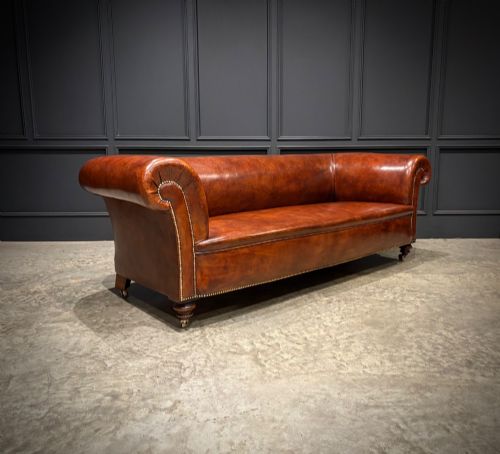
- The deep-seated, roll-armed leather sofa named in 146 of 294 titles, usually with arms level with the back.
- Deep buttoned
- Upholstery drawn down at regular points into diamond pleats. Thirty-one titles specify it; another fourteen say only "buttoned" or "button back".
- Button back
- Buttoning confined to the back rather than the seat as well, as in "2 seat button back leather sofa".
- Drop arm
- An arm hinged or built to lower, letting the sofa serve as a daybed. Eight titles use it, including double drop-end chesterfields.
- Show wood
- Exposed frame timber. Mahogany leads at 18 titles, walnut 16, oak 8, with rosewood and palisander in the samples.
- Moustache back
- A French club-sofa back with a shallow double curve. It appears twice in the samples and nowhere else.
Antique Leather Sofas: Frequently Asked Questions
What makes a sofa a chesterfield?
The term covers a deep-seated, roll-armed leather sofa with arms usually level with the back. On Sellingantiques it accounts for 146 of 294 titles, so it is the default form of the category.
Buttoning often comes with it. Fifteen titles pair the two words directly as "buttoned chesterfield", though plenty of chesterfields are listed with no surface treatment named at all.
How old are these sofas?
The dated field runs from 1800 to 1960, with 178 of the 294 listings carrying a clean year. Where years are given they gather in the 1930s, 1920s and 1910s, then the 1880s, 1900s, 1890s and 1870s.
Much of the rest is dated by reign or century. Forty-five listings say only "19th Century", thirty-nine only "Victorian" and sixteen "Edwardian", so nearly a third of the category carries no year.
Is the leather usually original or replaced?
Both turn up, and titles tend to say which. Some read "in Un-touched Original Leathers" or "Original un-restored Leather Chesterfield Sofa"; others read "RESTORED AND REUPHOLSTERED" or "fully restored in our hand dyed leathers".
A few sit between the two, described as raw leather to be hand dyed to the buyer's chosen colour. That unfinished state appears only among the higher-priced samples.
What colours do these come in?
Brown leads where colour is named, at 21 titles, with green next at 12. Burgundy, olive, black, tan, chestnut, aubergine and amethyst each show up in the samples.
Most listings say nothing about shade, so the photographs do that work rather than the title.
Why are Swedish leather sofas listed separately?
They form a distinct pocket of 23 titles, running as "Antique Swedish Leather Sofa" and "Antique Swedish Leather Chesterfield Sofa", and they sit entirely in the sold archive.
The group also holds shapes found nowhere else in the samples: a Banana Sofa, a Bergere Sofa and a Fluted Back Sofa.
Which unusual forms turn up in this category?
Alongside the chesterfields, single oddities appear once each: a hooded porters sofa, a swivel conversational sofa, a corner sofa, a window seat, a bothy-type sofa and a slipper-style settee.
One miniature apprentice three-piece suite also sits in the archive. Chaise longues are more regular at 17 titles, spelled both "longue" and "lounge" in roughly equal measure.