
Antique Chesterfields
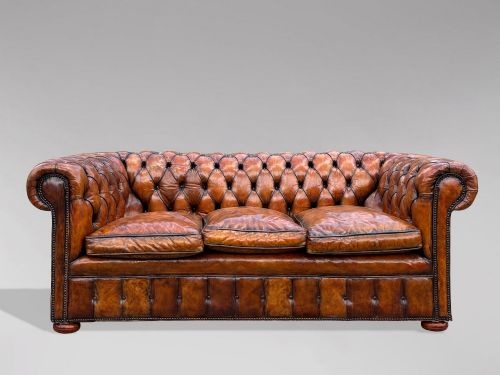
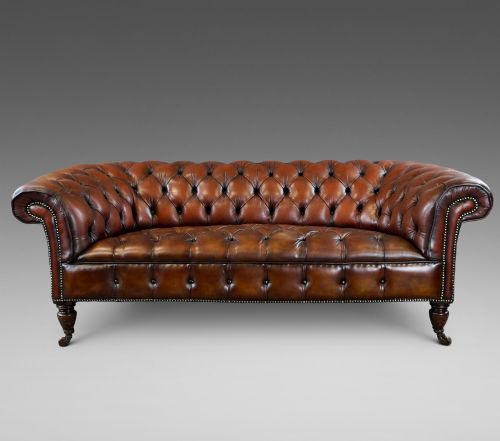
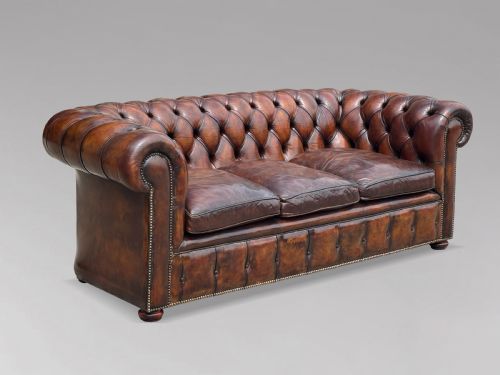
A deep-buttoned sofa with a rolled back and arms of even height, made in Britain from the 19th century as seating for libraries, clubs and country houses.
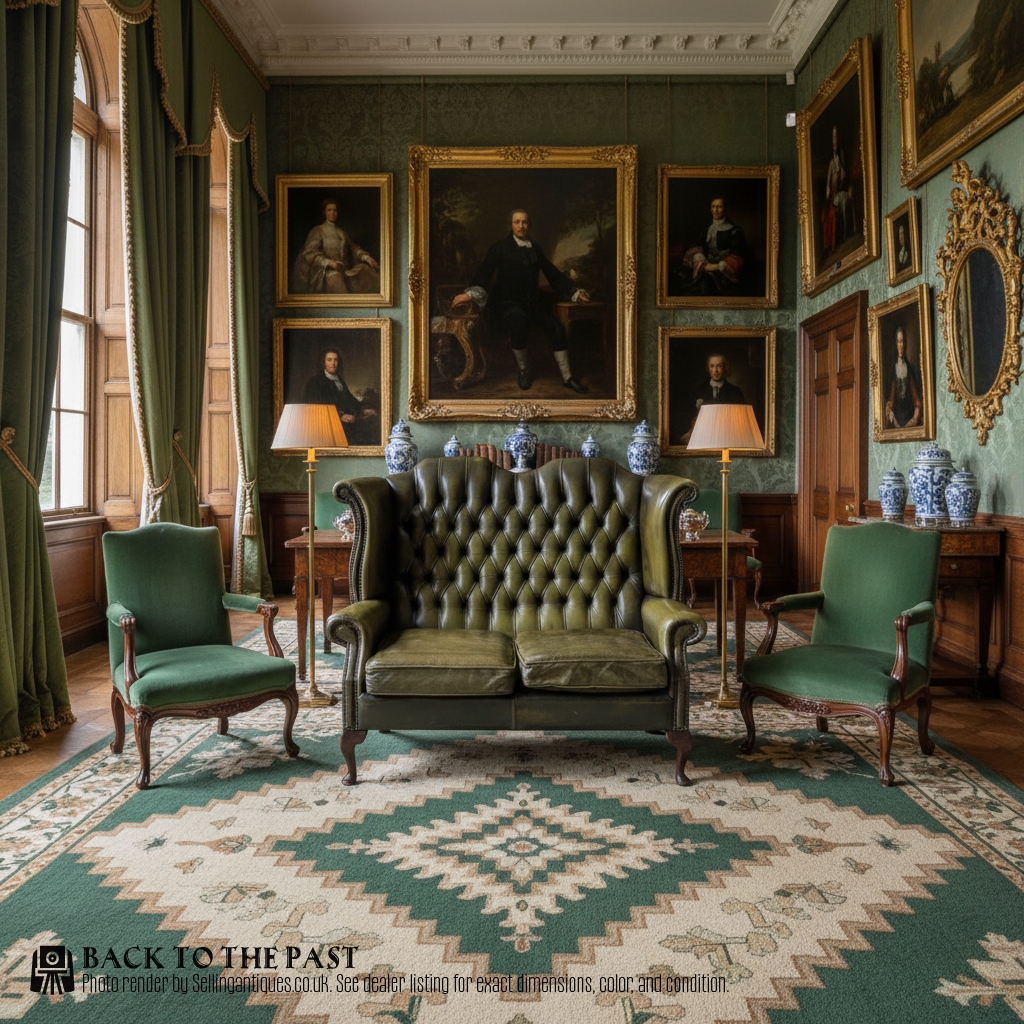
Antique Chesterfields
The form emerged in Britain in the 19th century and carried on largely unchanged into the 20th. What you'll meet on Sellingantiques is overwhelmingly Victorian or later, British, and covered in leather or fabric. Titles rarely say much more than period, size, colour of covering and now and then a maker.
Of 440 titles, 324 use the word sofa, 205 say Victorian and 145 say leather. Settee appears 34 times and couch eight, so the same object is being sold under three names. Buttoning gets named in only 46 titles, 30 of those as 'deep buttoned', which tells you it's assumed rather than advertised.
Dating is loose. Only 227 listings carry a clean year, and 102 say simply 'Victorian' with 82 '19th Century' - read those as a sixty-year window rather than a decade. The 1880s and 1890s are the centre of gravity, with a real 20th-century tail through the 1900s to the 1930s. A 'c1880' in a title is the dealer's estimate.
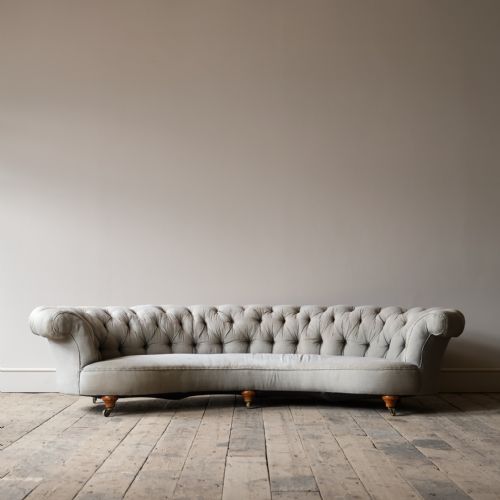
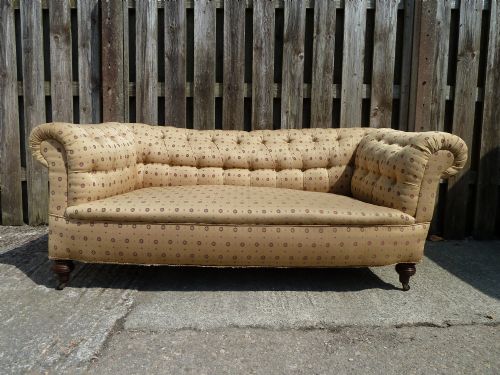
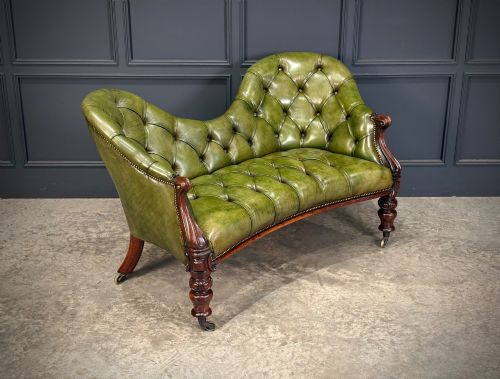
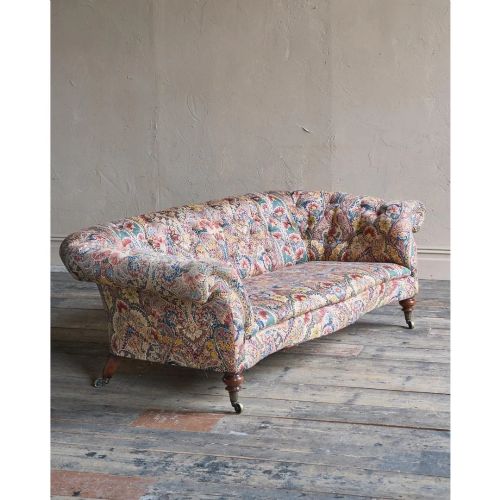
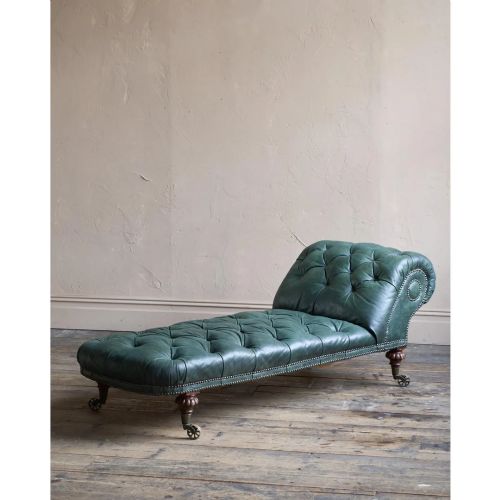
The archive splits between finished pieces and frames offered plainly for recovering or restoration. Around a third of titles name leather, close to half of current stock; roughly one in ten are fabric - velvet, calico linen, damask, wool, heavy cotton. Drop-arm and drop-end variants make up about four in a hundred, and curved, crescent and chaise forms appear only a handful of times.

Top And Bottom
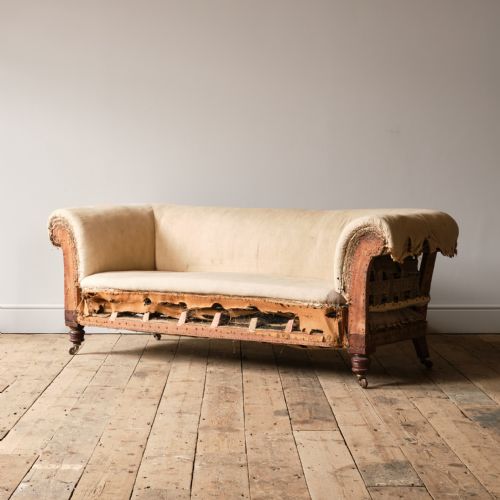
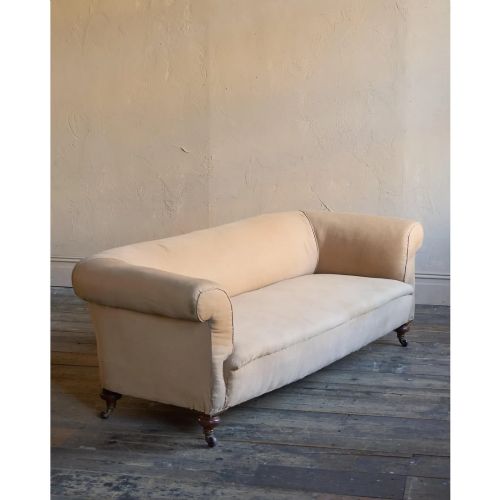
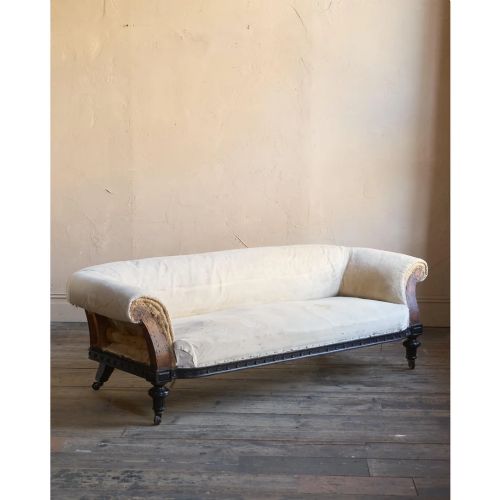
Finish does most of the work. Titles shouting FOR RECOVERING, FOR RESTORATION or FOR REUPHOLSTERY sit at the bottom of the range, sold as a frame in its old covering with the work still to come. NEWLY UPHOLSTERED, FULLY RESTORED and hand-dyed leathers sit in the upper middle and above.
A named firm pushes higher than anything else. The top of the archive carries Howard & Sons, Hampton & Sons, Gillows, C. Hindley & Sons and Holland & Sons, while unnamed Victorian sofas fill the bottom. Leather generally outruns fabric, with velvet, calico, wool and damask concentrated lower down.
Then scale and shape. 'Large' turns up in 44 titles against 12 that say small or petite, and the loose superlatives - 7ft, 250cm, HUGE, unusually large - cluster at the top. Crescent and curved examples, a corner sofa and one swivel conversational sofa appear once or twice each, and they sit high.
Antique Chesterfields Retail Price Guide 2026
Typical UK retail prices for chesterfields, calculated from the Sellingantiques database of over a million retail prices indexed since 2003. This retail price guide relies exclusively on Sellingantiques data; no external sources or auction records are used, so the figures do not describe the wider market.
Leather colours named in chesterfield titles on Sellingantiques run to aubergine, amethyst, British racing green, cigar brown and ox blood.

Howard & Sons·Hampton & Sons·Gillows·C. Hindley & Sons·Holland & Sons
The Antique Chesterfields Glossary
- Deep buttoned
- Upholstery pulled down into a diamond grid by buttons. Named in 30 titles, often as the selling point rather than an incidental detail.
- For recovering
- Sold as a frame with its old covering still on it, the re-upholstery left to the buyer. Sits alongside 'for restoration' and 'for reupholstery' in the same run of titles.
- Newly upholstered
- Recovered by or for the dealer before sale. Fifteen titles say so outright, and another handful say restored or fully restored.
- Hand dyed
- Leather coloured after fitting rather than bought pre-finished. Eleven titles use it, almost all of them current stock.
- Hide
- Leather, used interchangeably with it in titles. 'Red Hide Chesterfield' is the sort of phrasing you'll see.
- Drop arm, drop end
- An arm hinged or built to fold down, turning one end into a day-bed. Eighteen titles, including one double drop-end.
Antique Chesterfields: Frequently Asked Questions
Are chesterfields always leather?
No. Leather is named in 145 of 440 titles and takes up close to half of current stock, so it's the covering you'll see most.
Fabric runs to roughly one in ten titles: velvet, calico linen, damask, grey wool, heavy cotton. One 1930s piece was recovered in car leather.
What does a chesterfield sofa look like?
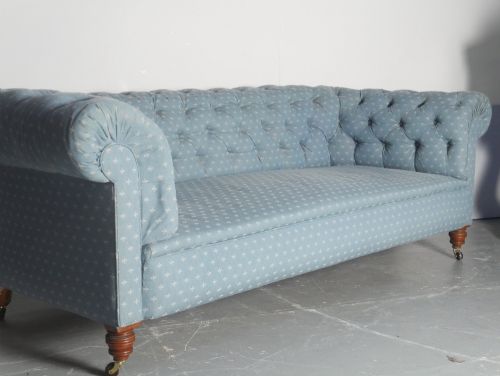
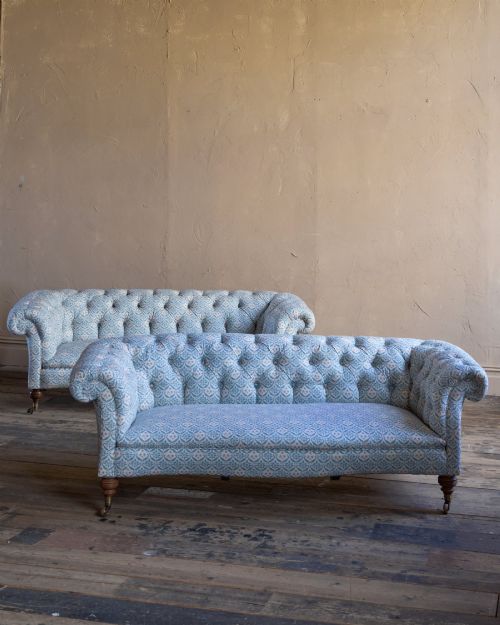
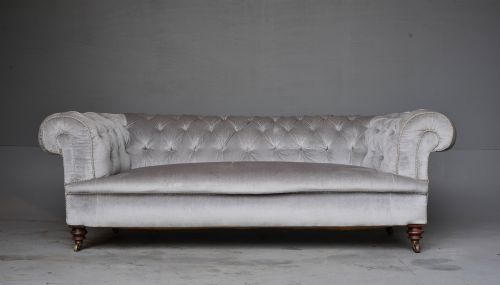
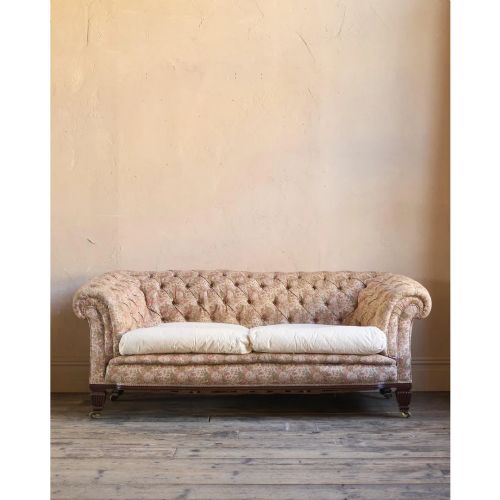
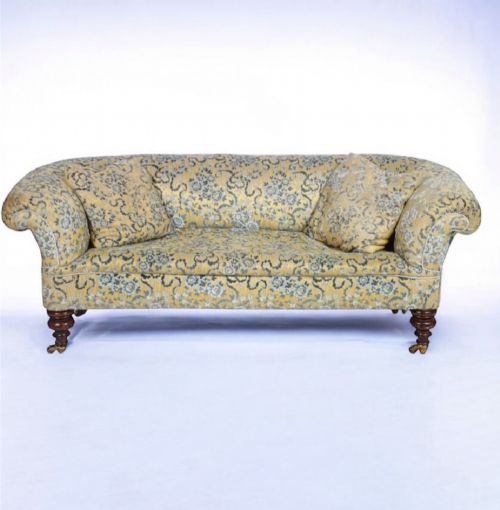
A rolled back with arms of even height, the seat and back pulled down into buttoning. Scroll or roll arms get named now and then in place of the plain description.
Legs, where they're described at all, are turned with brass cappings and casters.
How old are most of them?
The dated field spans 1800 to 1960. The 1880s and 1890s are where the weight sits, with 69 and 34 listings respectively.
There's a substantial 20th-century tail: 30 in the 1930s, 23 in the 1900s, 20 in the 1910s, 16 in the 1920s and a dozen flagged Edwardian. The earliest firmly dated pieces are given as 1850 and 1860.
Which makers turn up on the label?
Howard & Sons is the name that appears most often, and the only one to sit at the very top of the range, including two crescent-shaped examples dated c1850 and c1860.
Hampton & Sons, Gillows, C. Hindley & Sons and Holland & Sons each turn up with a small number of dealers. Names come stamped, labelled or simply attributed, and the great majority of chesterfields carry no name at all.
Were chesterfields made outside Britain?
The archive is British almost throughout. The one exception is a small run of Swedish leather chesterfields, with 'swedish' in eight titles.
No other origin is named.
Why are some sold as frames?
A visible minority of listings are offered plainly for recovering, for restoration or for reupholstery, with the old covering still on the frame.
These cluster at the bottom of the range. Some dealers instead offer reupholstery included, or leather to be hand dyed a colour of choice.
Around 44 chesterfields are listed a year on Sellingantiques across 85 dealers, so both routes are always in stock somewhere.