

Antique Settees
A settee is a seat built for two or more people, upholstered over a wooden frame, made for drawing rooms and reception rooms rather than single fireside use.
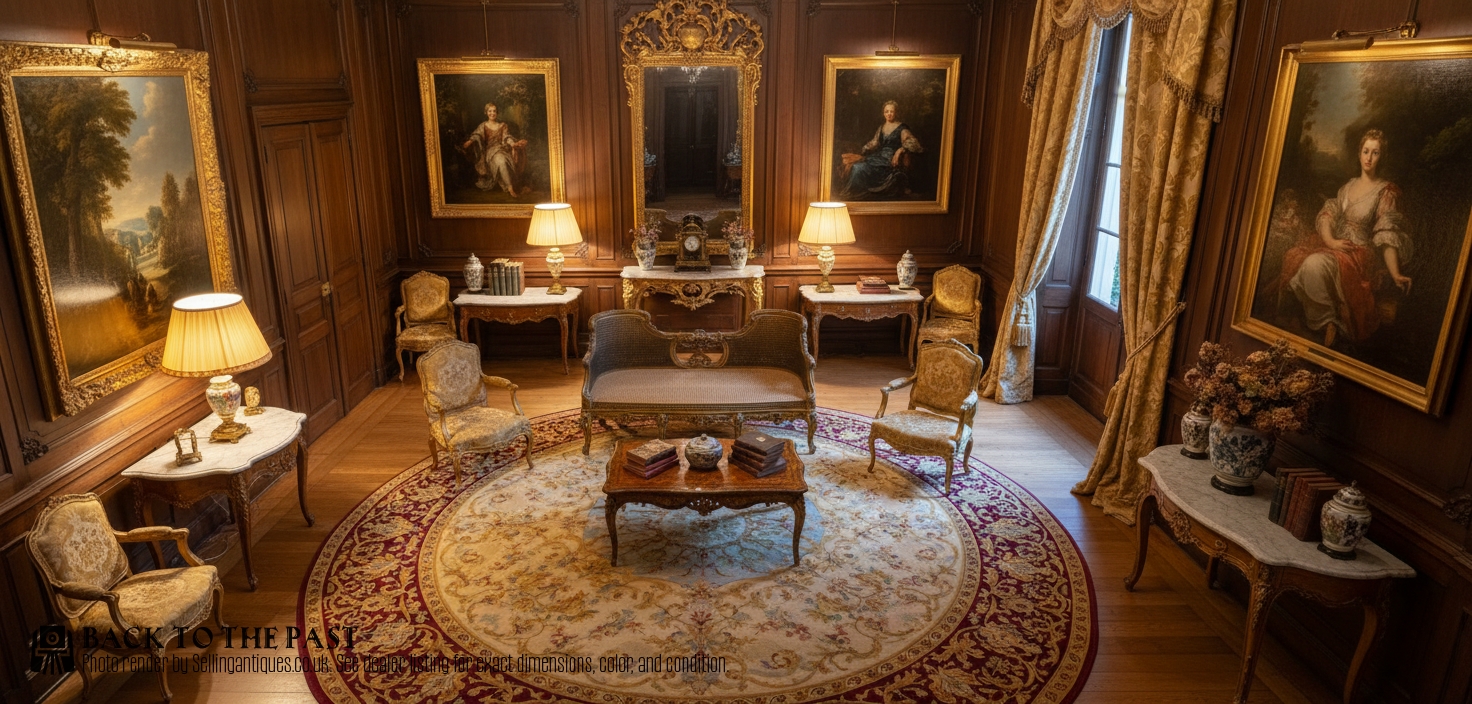
Antique Settees
Three words do the same job in this category. Sofa appears in 433 titles, settee is the heading itself, couch in 84, and a fair number of listings stack all three together. Size is given by seat count instead, with two and three seaters the usual statement.
The form grew out of the settle and the joined bench in the seventeenth and eighteenth centuries, as seating for more than one person in a reception room. Sprung and deep-stuffed construction spread in the nineteenth century, which is when the sofa, the chaise longue and the buttoned chesterfield all settled into the shapes people recognise now.
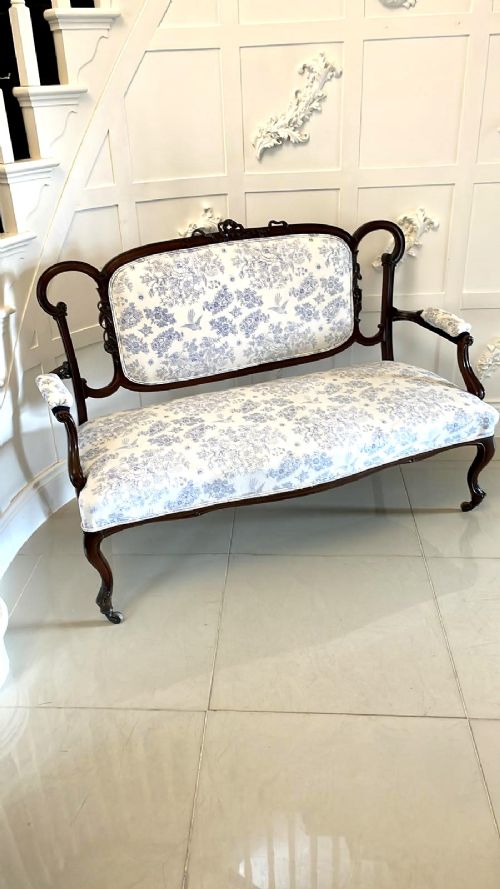
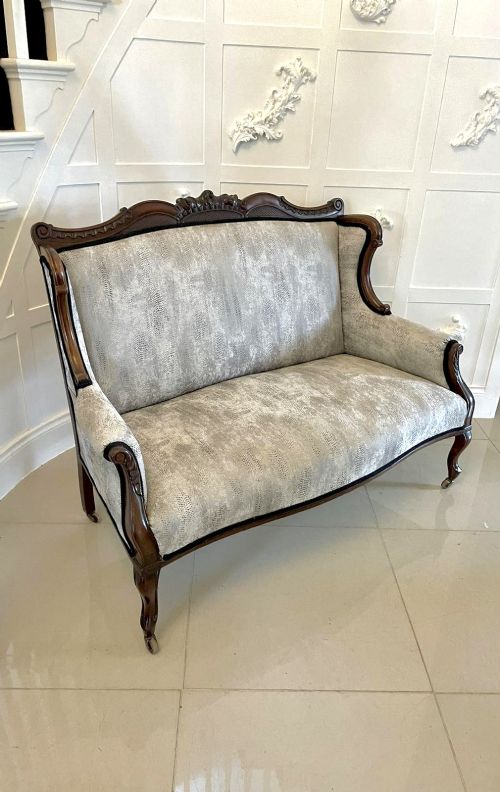
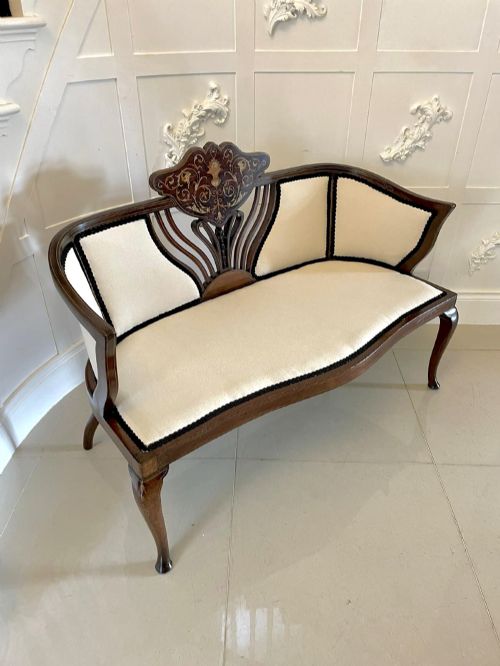
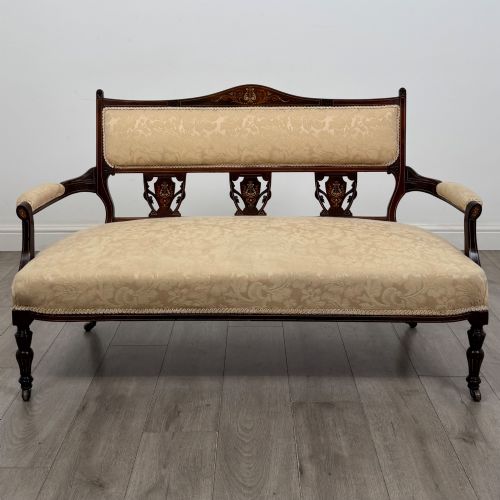
The one you are most likely to meet is a two-seater show-wood settee of the late Victorian or Edwardian decades: mahogany frame, exposed and polished, often inlaid. Mahogany runs to 300 titles and walnut to 178, with rosewood behind them. Victorian is the commonest period label, Edwardian next.
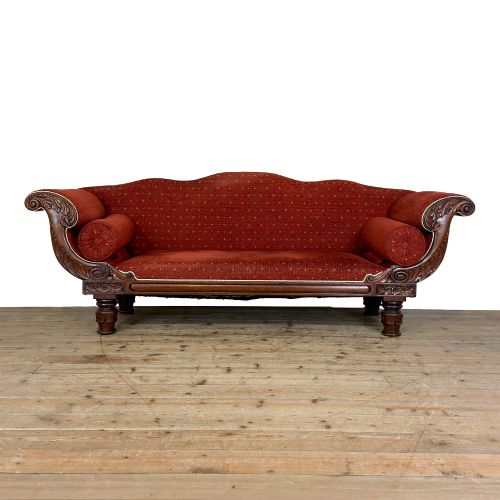
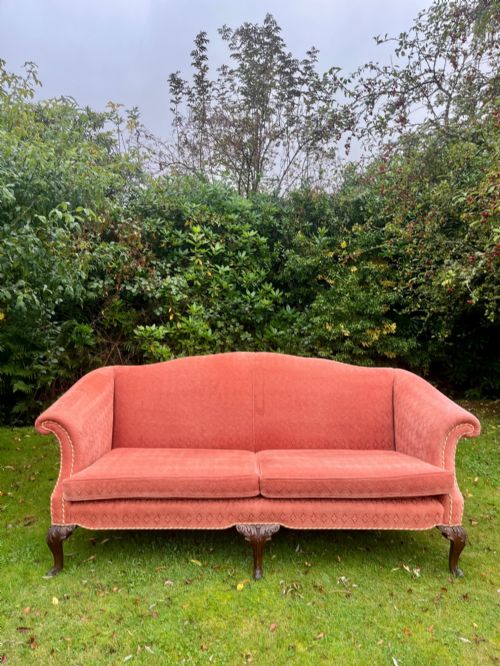
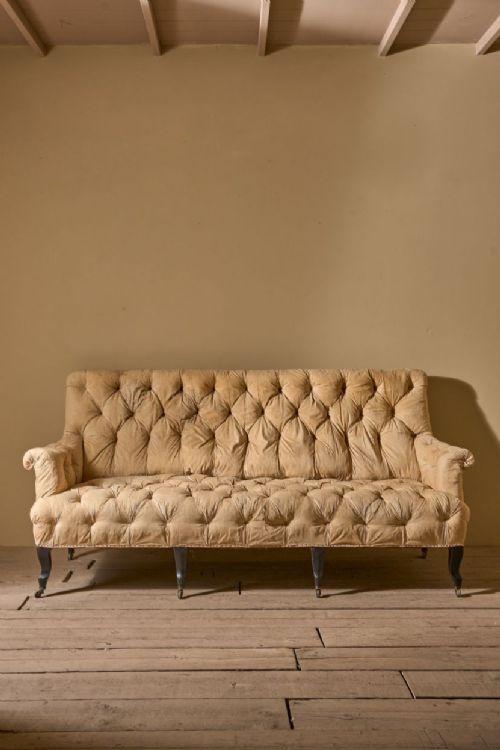
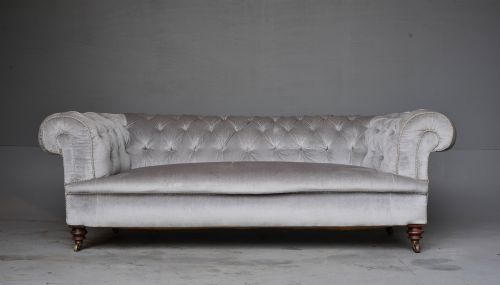
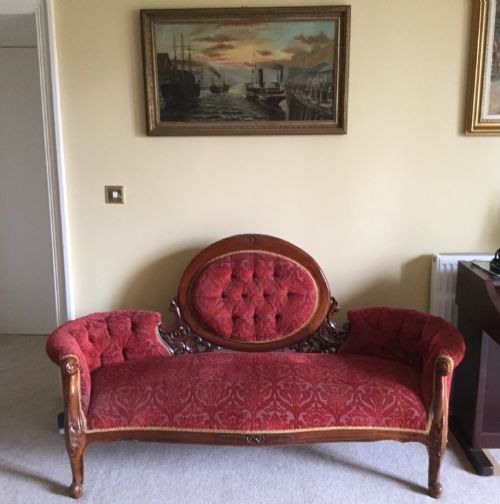
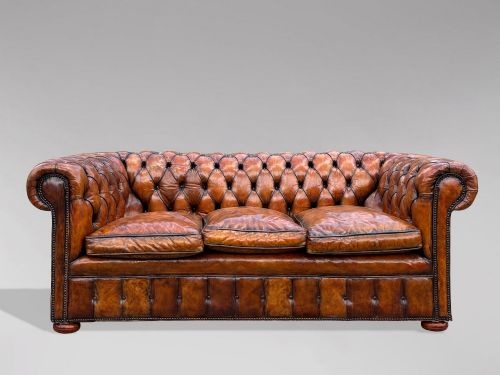
Around the middle sit carved walnut Victorian frames and chaise longues, leather chesterfields and buttoned club sofas, and French and Continental frames listed as canapé, bergère, giltwood or painted. Chair-back and camel-back settees in Georgian taste form a smaller but steady run. Dating is loose: the single commonest entry in the archive is the bare phrase 19th Century, used 211 times.
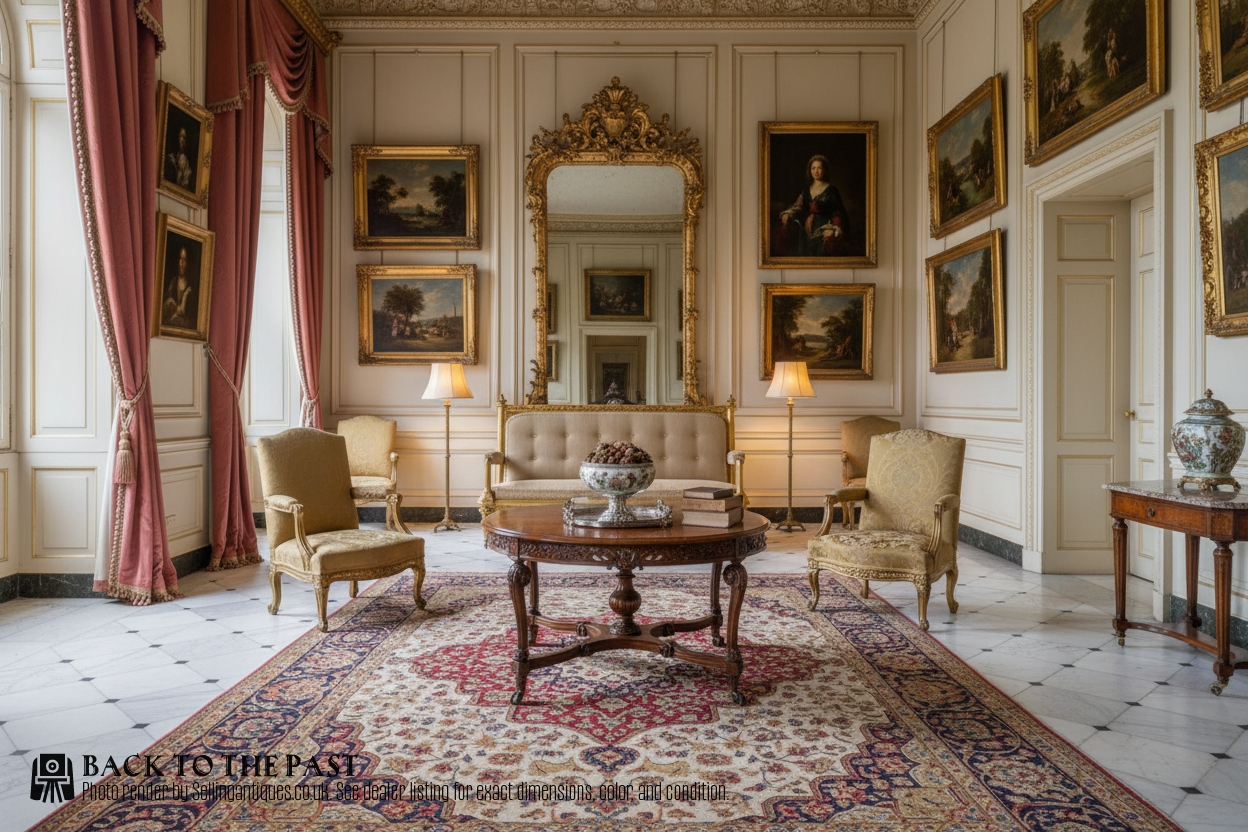
Where The Range Splits
A name in the title lifts a settee further than anything else. Nearly every sample in the highest reaches carries a workshop or retailer, and the word 'sons' sits in 29 titles. At the other end are pieces described simply as settee, drop end settee or upholstered, with no timber named at all.
After that it's the frame and how much of it shows. Walnut, rosewood and carved show-wood frames sit above plain upholstered ones, and depth of decoration follows the same line: carving appears in 124 titles, inlay in 137, with marquetry and seaweed inlay at the top of that run. The plainest listings name no decoration whatever.
Age and scale pull in the same direction. Eighteenth-century, George II and George III and Italian neoclassical pieces sit high, while 1900s and Edwardian inlaid examples fill the lower and middle ground. Pairs of settees, three-piece and five-piece salon suites and wide country house frames all sit disproportionately high.
Antique Settees Retail Price Guide 2026
Typical UK retail prices for settees, calculated from the Sellingantiques database of over a million retail prices indexed since 2003. This retail price guide relies exclusively on Sellingantiques data; no external sources or auction records are used, so the figures do not describe the wider market.
Naming is loose on Sellingantiques: sofa appears in 433 settee titles and couch in 84, and some listings stack all three words together.
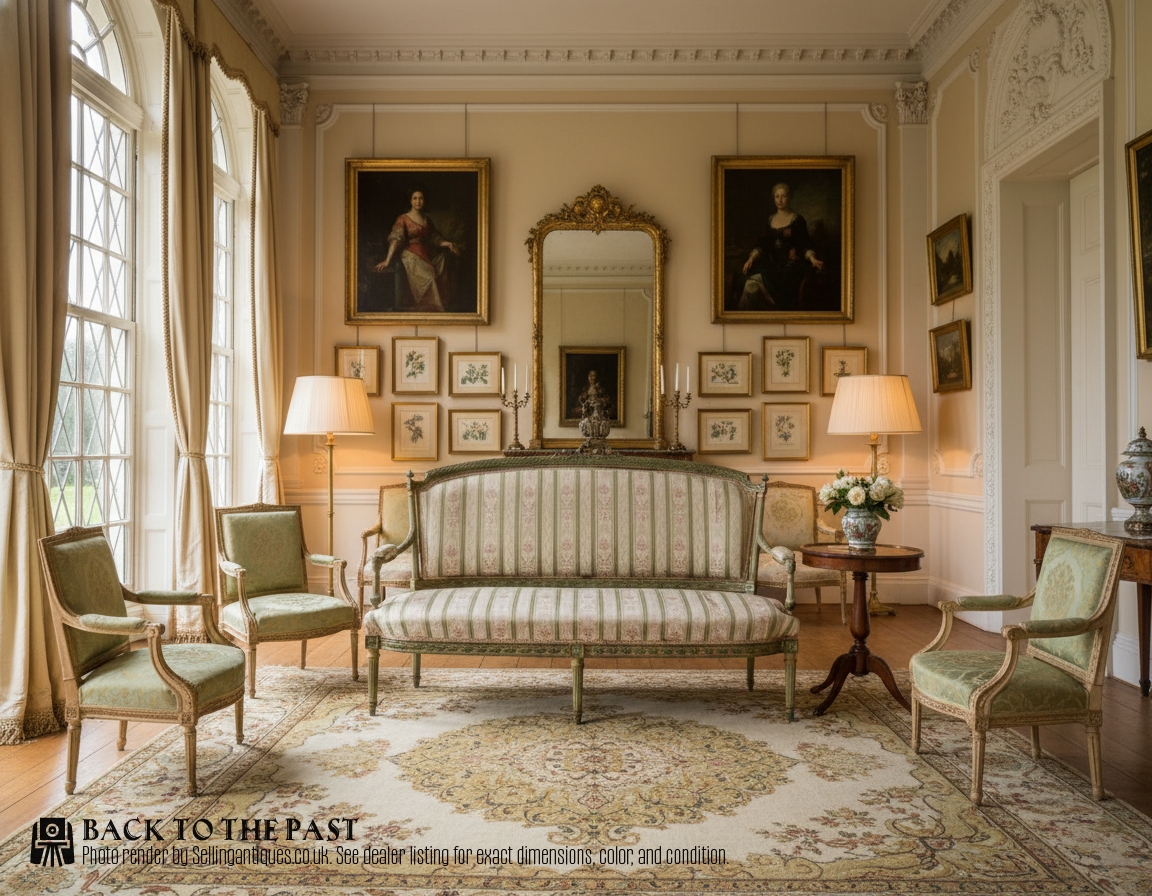
The Antique Settees Glossary
- Show wood
- Frame timber left exposed and polished rather than covered by the upholstery. Titles write it as show wood, showood or show frame.
- Seater
- The seat count, and the usual size statement in this category. It's in 108 titles, most often as two seater or three seater.
- Chesterfield
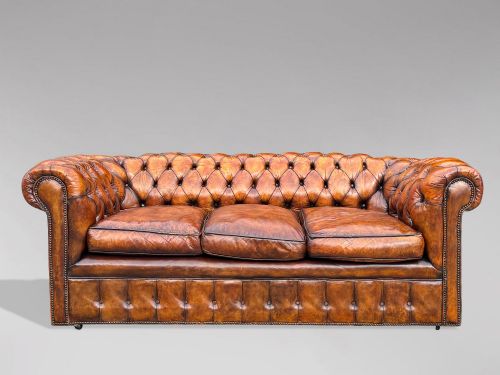
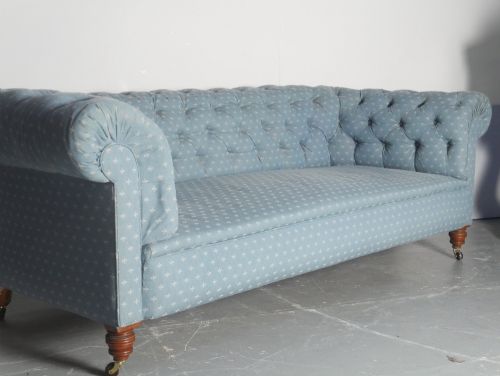
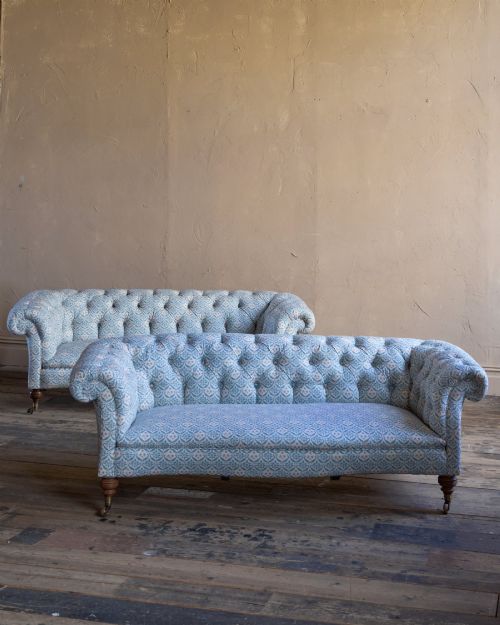
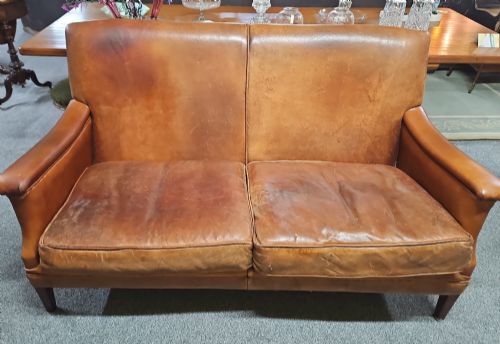
- Deep-buttoned sofa, usually leather, with arms level or near level with the back. It accounts for 78 titles, and the type is rising in live stock.
- Chaise longue
- Single-ended day couch with a raised back at one end. Thirty-four titles use it, sometimes shortened to chaise or given as récamier.
- Chair back settee
- A settee whose back is built as two, three or four joined chair backs. Twin back and triple back are the same idea under other names.
- Canapé
- The French word for a settee, used for French frames alongside terms like bergère, the enclosed-sided and often caned seat.
Antique Settees: Frequently Asked Questions
What's the difference between a settee and a sofa?
In this category, nothing consistent. Dealers use settee, sofa and couch interchangeably, and some listings run all three words together in one title.
Sofa is the commonest of the three, in 433 titles. Couch appears in 84. If you're searching, it pays to try each word.
Which timbers turn up most often?
Mahogany leads, in 300 titles, followed by walnut at 178 and rosewood at 65. The timber usually does the identifying work in the title, alongside the reign.
Mahogany frames are often inlaid, and 'inlaid mahogany' is a recurring pairing. Carved walnut is the note struck by the Victorian framed settees and chaise longues.
How old are most antique settees for sale?
The dated field runs from 1750 to 1960, but the weight sits between 1850 and 1920. The 1900s is the biggest decade bucket, then the 1880s, the 1910s and the 1890s.
Only about half the listings give a clean year. Many are placed by reign instead, with 211 saying only 19th Century and 115 only Victorian.
Eighteenth-century pieces exist but form a thin tail.
Are French settees common on Sellingantiques?
French frames are a solid slice of the category, with 'french' in 157 titles and 'louis' in 50. They appear as canapés, bergères, giltwood and painted frames.
Other origins turn up in ones and twos: Italian, Swedish, Dutch, Danish, Spanish, Austro-Hungarian, Biedermeier, Anglo-Indian and Venetian among them.
Do settees come with matching chairs?
Yes, and salon suites are a recurring format. Twenty-nine titles use the word salon, with three-piece and five-piece suites appearing.
Pairs of settees also come up. Those larger lots sit high in the sampled range, above single seats.
What unusual settees have been listed?
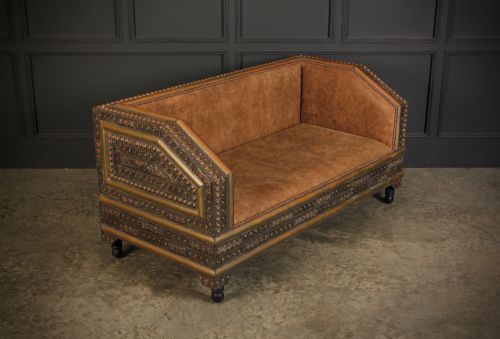
The oddities are properly odd. A horn settee, a porcupine sofa, a Viennese enamel-mounted sofa and an Islamic settee with boulle inlay have each appeared once.
Others include a Japanese lacquered settee, a Provençal oak, ash and rush radassier, and an Indian carved teak floor seat. Children's settees are scarce: two in the whole sample.