

Victorian Sofas
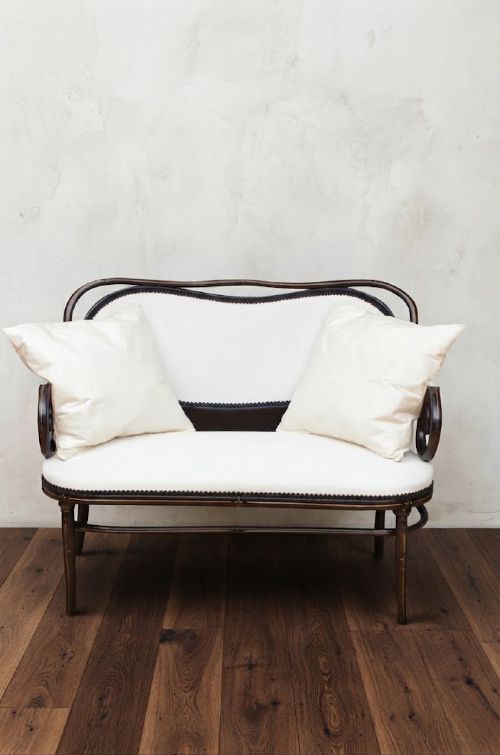
A long upholstered nineteenth-century seat for a drawing room, sold under half a dozen names: sofa, settee, couch, chaise longue, chesterfield.

Victorian Sofas
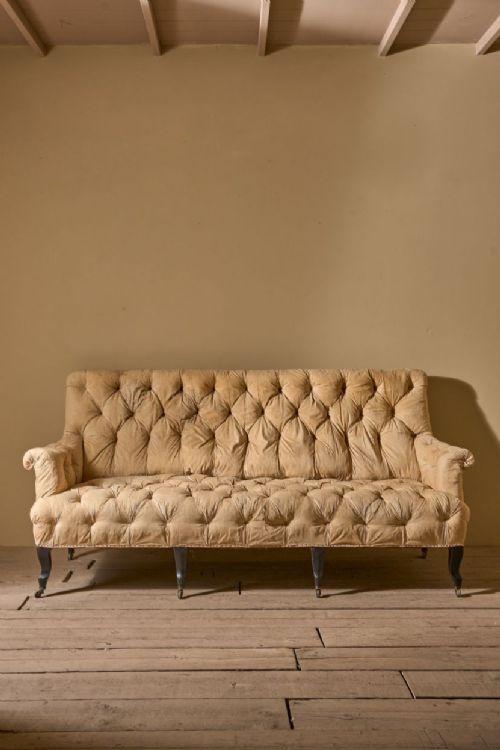
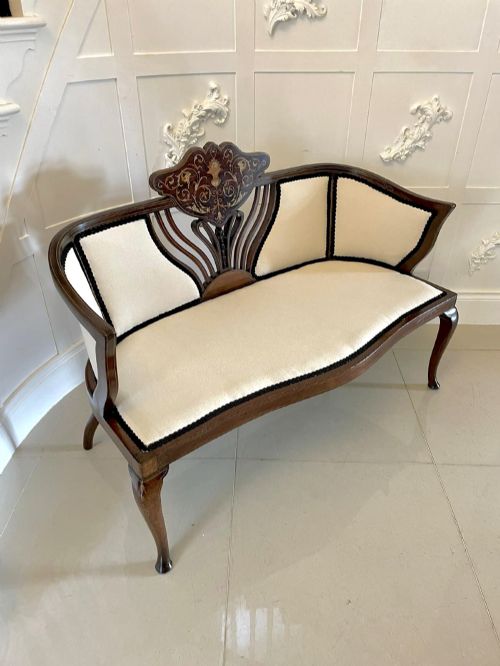
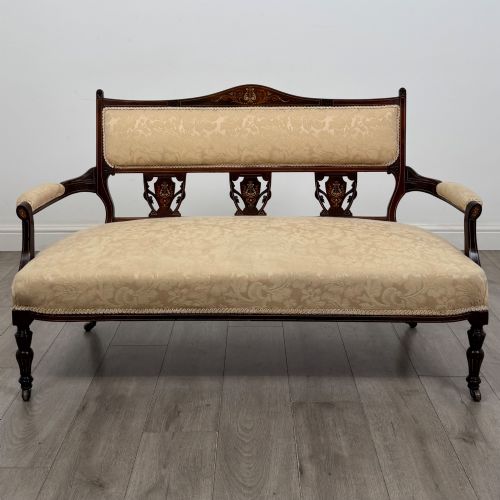
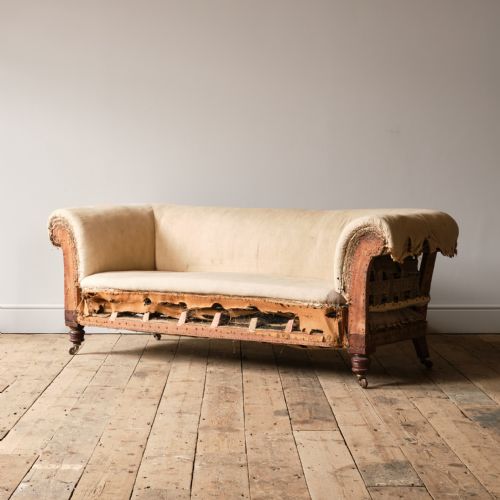
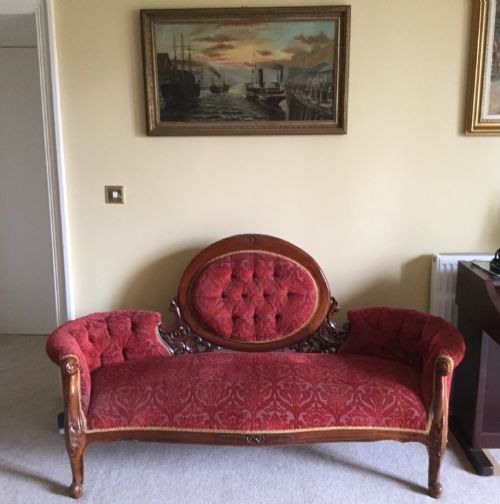
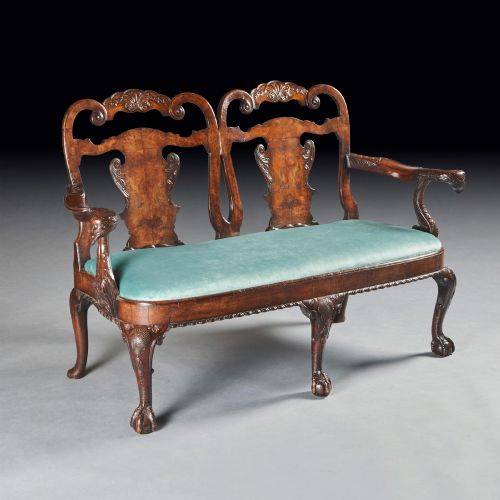
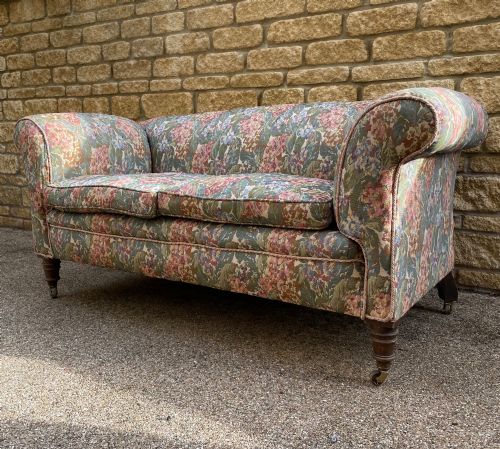
Two mainstreams overlap. Show-wood pieces are named for their timber, with the polished frame left visible around the upholstery: mahogany runs through 229 titles, walnut 196, rosewood 81, oak a distant 23. Fully upholstered pieces are named instead for their shape or covering, chesterfield or button back or leather.
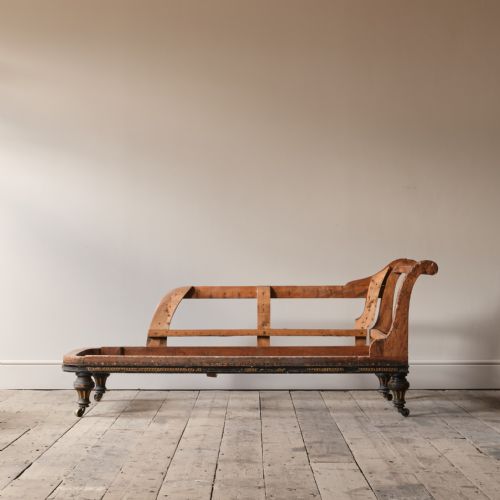
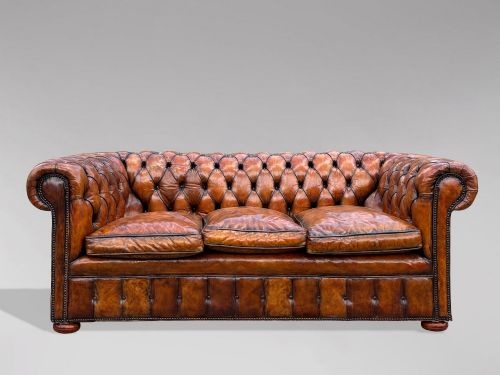
Chaise-type pieces lead on terms. `Chaise` appears in 259 titles, `chaise longue` in 194 and `chaise lounge` in another 51, and these are usually described by frame timber and by whether they are single ended or double ended. Chesterfields follow at 226 titles, often deep buttoned, often in leather.
Naming is unsettled across the whole category. Settee turns up in 235 titles and couch in 64, largely as alternative words for the same show-wood sofa. Around the edges sit suites, window seats, hall benches, Knole sofas and conversation seats, where sitters face in different directions.
The dated field is dominated by the plain label Victorian, on 453 listings, with a further 118 given only as 19th Century. Where a decade is stated the 1880s lead by a wide margin. Edwardian and 1920s pieces are trace presences, so this is nineteenth-century upholstery rather than later.
Top And Bottom
A workshop name is what separates the top of the range from everything else. At the highest-priced end of the sampled listings, pieces carry a named maker or a named pattern; no other single factor lifts a sofa as reliably. Those names come from the wording of individual titles, not from anything the category shares.
Below that, covering and carving do the work. Leather chesterfields sit in the upper half, plain fabric ones lower down. Carved walnut and rosewood settees, and inlaid frames, run ahead of plainly framed pieces. Scale counts too: `large`, `seater` and `country house` cluster upward, and stated sizes like 7ft or 2.6m surface only at that end.
Upholstery as stated in the title sets the floor. Titles reading newly upholstered or restored sit higher; titles reading for recovering, for reupholstery or restoration project sit at the very bottom of the sampled range. The frame is the same object either way, but the description shifts where it lands.
Victorian Sofas Retail Price Guide 2026
Typical UK retail prices for victorian sofas, calculated from the Sellingantiques database of over a million retail prices indexed since 2003. This retail price guide relies exclusively on Sellingantiques data; no external sources or auction records are used, so the figures do not describe the wider market.
Mahogany is named in 229 Victorian sofa titles on Sellingantiques, walnut in 196 and rosewood in 81, with oak a long way back.
The Victorian Sofas Glossary
- Chaise longue
- A long seat with one raised end, meant for reclining rather than sitting upright; 51 titles spell it chaise lounge instead.
- Chesterfield
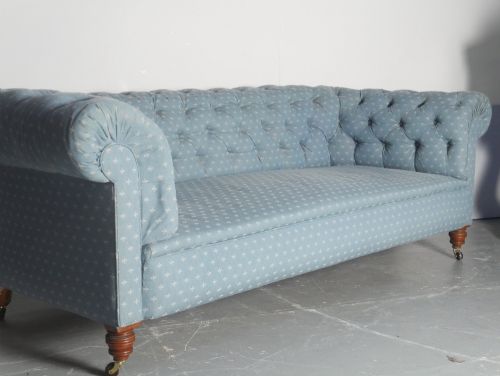
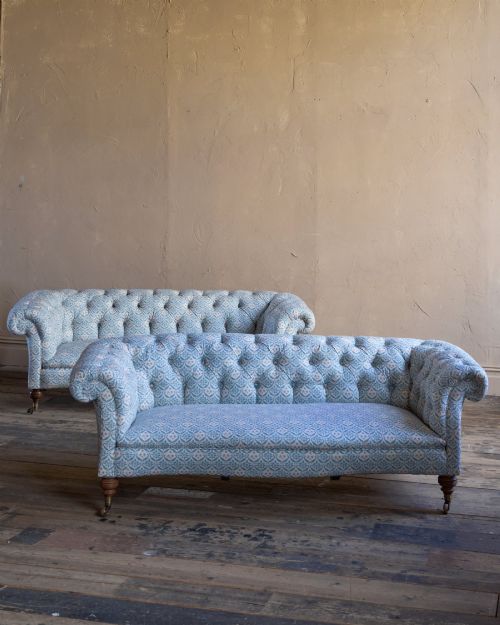
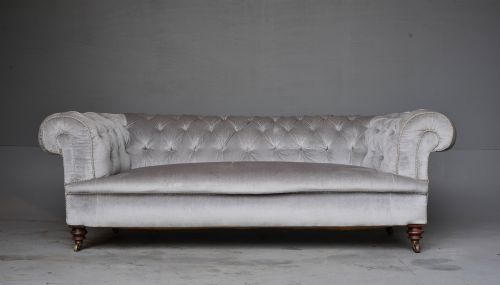
- A fully upholstered sofa with arms level or nearly level with the back, usually deep buttoned.
- Show frame
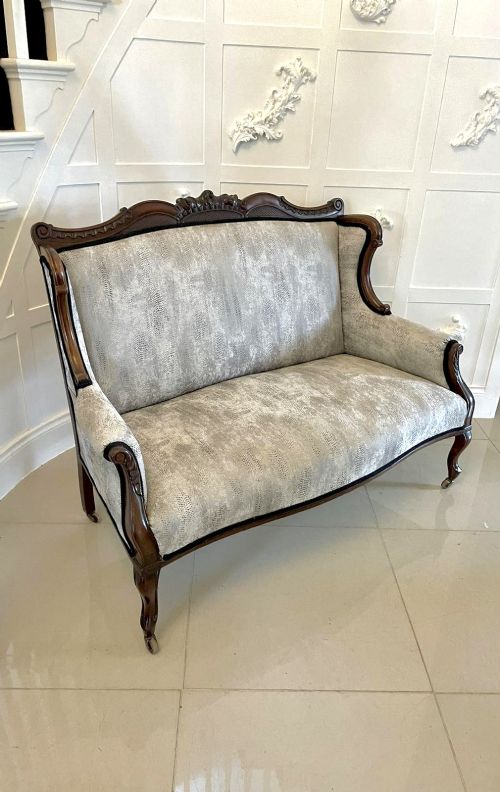
- A frame where the polished timber is deliberately left visible around the upholstery, also written show wood.
- Single ended / double ended
- Whether the piece has one raised end or two, the usual dividing line between chaise and sofa forms.
- Button back
- Upholstery drawn down at intervals with covered buttons, giving a dimpled surface; deep buttoned says the same thing.
- Spoon back
- A back with a concave curve, used in several chaise and settee titles. Cameo back means an oval upholstered panel framed in show wood.
Victorian Sofas: Frequently Asked Questions
What is the difference between a sofa and a settee?
In practice, nothing. Dealers use sofa, settee and couch for the same long upholstered seat, and settee alone appears in 235 titles on Sellingantiques against 64 for couch.
The useful distinction is elsewhere: whether the frame timber shows, and whether the piece has one raised end or two.
Why do some listings say chaise lounge?
It's a common alternative spelling. Of the 259 titles using chaise, 194 read chaise longue and 51 read chaise lounge.
Both describe the same thing: a long seat with one raised end for reclining. Day bed and daybed also turn up for the form.
Which timbers do show-wood frames use?
Three dominate. Mahogany appears in 229 titles, walnut in 196 and rosewood in 81.
Oak is a distant fourth at 23. Ebonised frames, stained and polished black and often with gilt lines, run through the Aesthetic-influenced pieces.
How precisely are these dated?
Loosely, for the most part. More than half the archive carries no year at all: 453 listings are labelled simply Victorian and 118 only 19th Century.
Where decades are given, the 1880s lead with 158 listings, ahead of the 1860s, 1890s, 1850s and 1870s. The clean-year field spans 1800 to 1930, but the weight sits mid to late nineteenth century.
Are chesterfields always leather?
No. Leather appears in 82 titles and leather chesterfield in 30, so a good many chesterfields are listed in fabric or velvet instead.
What the name signals is the form: arms level or nearly level with the back, and buttoning drawn deep into the upholstery.
What unusual forms turn up in this category?
Beyond the mainstream, window seats, hall benches, settles and conversation seats appear at the fringes, the last with sitters facing different ways.
One-offs include a miniature ebonised chaise, a bath tub chaise, an Anglo-Indian carved sofa, an Austro-Hungarian shell-shaped sofa, a swivel conversational sofa and a chaise with concealed storage.
Country-house framing is its own sub-language, used in 47 titles, taking in Knole sofas and a billiard-room sofa.