


Antique Camelback Sofas
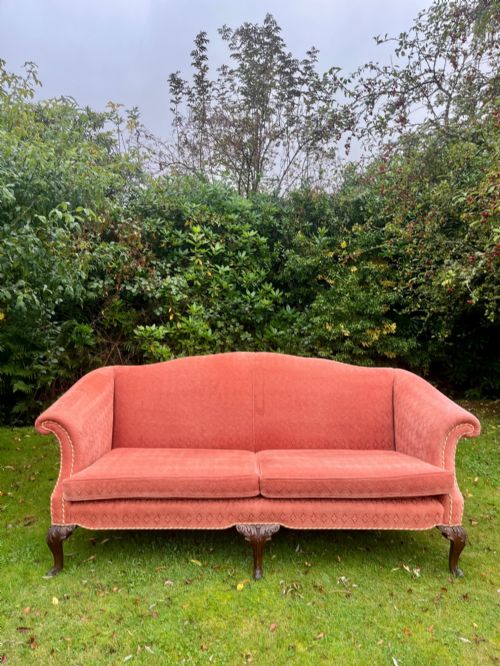
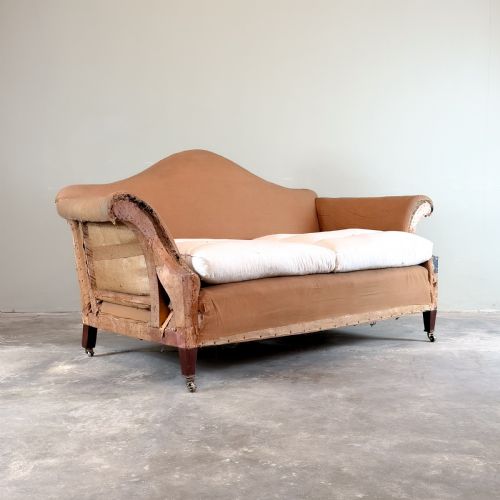
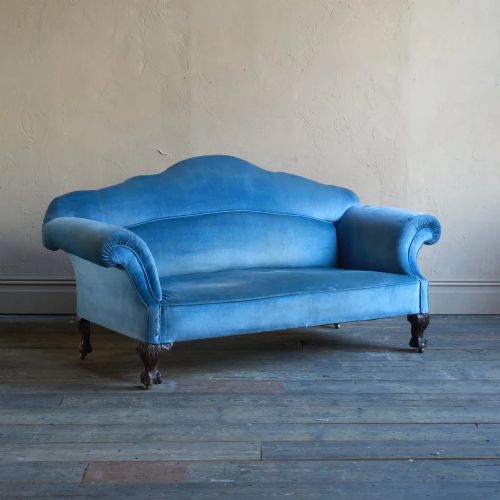
An upholstered settee with a humped, serpentine top rail and exposed carved show-wood legs, made for the formal English drawing room.
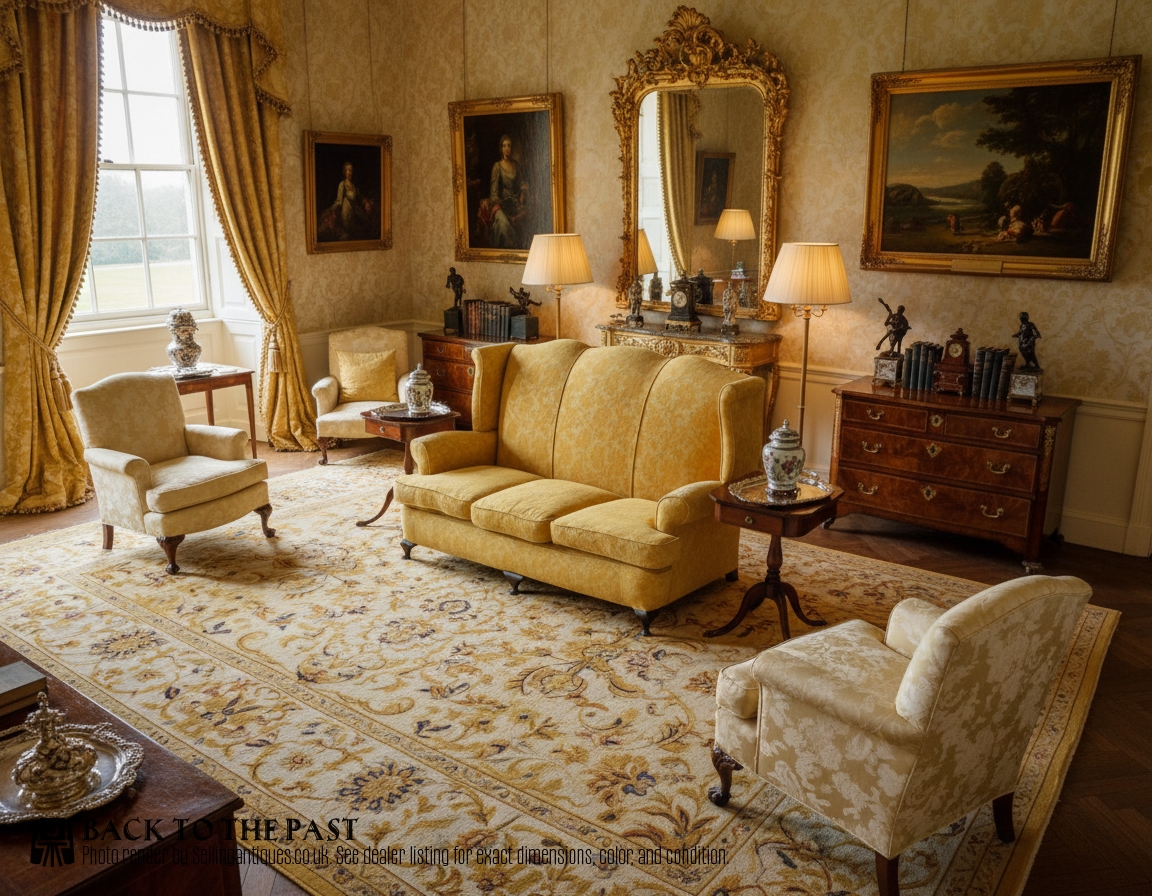
Antique Camelback Sofas
The name comes from the back rail, which rises in one or more humps above the upholstery. The form came into English drawing-room furniture in the middle of the 18th century, when upholstered seat furniture was made in matched sets for formal rooms, and it was revived again and again from the later 19th century onward as Georgian taste returned.
What you are most likely to meet on Sellingantiques is a mahogany camel-back settee in 18th-century English taste, made later than the taste it copies. Of twenty-three listings, three sit in the 18th century, eight in the 19th, and nine between the 1900s and the 1940s. Serpentine fronts are common, and carved show-wood legs are part of the look.
The word "camel" appears in only a third of titles. The rest arrive as settees or sofas, with the shape carried by a style name instead: Chippendale style, Hepplewhite style, George III style, Queen Anne style. That style name describes the design idiom rather than the date of making, and one sofa dated 1940 is still catalogued as George III style.
Beyond the single pieces, two listings offer settees in pairs, one a pair of 19th-century settees and one a pair of Chippendale revival settees. English or English-taste work dominates; a single Swedish sofa is the only Continental entry in the sample. Mahogany is the near-default timber named, with walnut turning up once on an Edwardian Queen Anne style settee.
Where The Range Splits
Date does most of the work. The three listings dated to the 18th century sit in the upper half of the sampled range, with a circa-1770 example and a George III Hepplewhite sofa among the highest single pieces. The revivals, numerous as they are, sit below them, even when the carving is generous and the timber named.
Number matters more than date at the very top. The two pair listings are the two highest entries in the whole sample, which says something about how these sofas were first conceived, as matched furniture for a formal room rather than as single seats.
After that it comes down to what a title can specify. Carved mahogany or carved walnut with a style attribution clusters above pieces titled simply sofa or settee. Scale reads upward too, with large examples flagged as such. And one listing names a house, Bodney Hall in Norfolk, the only recorded provenance in the archive; it sits near the top.
Antique Camelback Sofas Retail Price Guide 2026
Typical UK retail prices for camelback sofas, calculated from the Sellingantiques database of over a million retail prices indexed since 2003. This retail price guide relies exclusively on Sellingantiques data; no external sources or auction records are used, so the figures do not describe the wider market.
Mahogany is the timber named most often in camelback sofa titles on Sellingantiques. Walnut has turned up once, on an Edwardian Queen Anne style settee.
The Antique Camelback Sofas Glossary
- Camel back
- The humped, arched top rail that names the form. Written as one word or two in roughly equal measure across these listings.
- Serpentine
- A shallow S-curve. In these titles it describes the front rail as often as the back.
- Settee
- Used interchangeably with sofa here, sometimes for the shorter or more formal examples.
- Show-wood
- The polished timber left visible on frame and legs, as against the upholstered surfaces.
- Ball and claw
- A carved foot gripping a ball. One listing is sold on the legs alone, titled Antique Sofa with Ball and Claw Legs.
- Georgian proportions
- Dealer shorthand for the lower back and squarer scale of the 18th-century model.
Antique Camelback Sofas: Frequently Asked Questions
How many come up for sale?
About four a year are listed on Sellingantiques, from a pool of sixteen dealers who have handled the form.
Across the whole archive there are twenty-three listings, so the category is a small one that turns over slowly.
Are these sofas usually 18th century?
No. Only three of the twenty-three listings are dated to the 18th century. Six sit in the 19th, and nine fall between the 1900s and the 1940s.
The dated field runs from 1750 to 1940, very nearly two centuries of the same humped back.
Why do titles say Chippendale style or Hepplewhite style?
Those names describe the design idiom, not the maker and not the date. They tell you the pattern the sofa follows.
One piece dated 1940 is still titled George III style, which shows how long the revival ran and how far the label stretches.
What timber are the frames?
Mahogany is the timber named most often in these titles, and it is close to the default for the form.
Walnut appears once, on an Edwardian Queen Anne style settee.
Do camelback sofas come in pairs?
Rarely. Two listings out of twenty-three offer settees in twos, one a pair of 19th-century settees, one a pair of Chippendale revival settees.
Both sit at the very top of the sampled range.
Is the form always English?
Almost. Everything in the sample reads as English or English-taste work, described through Georgian style names.
One Swedish sofa, dated to the 19th century, is the only non-English origin in the archive.