


A 2026 Guide by Sellingantiques

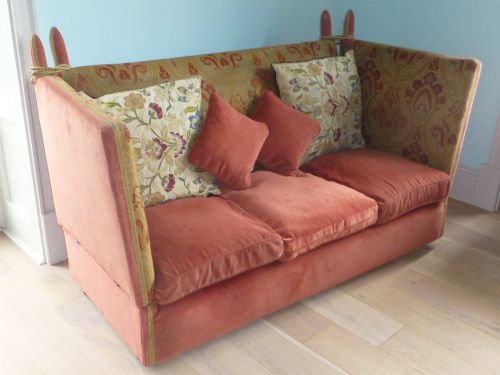
Antique Knole Sofa in Gold Damask
, 19th Century
Priced at £7,995 from Kontrast Antiques
The earliest surviving example still sits at Knole House in Kent. Dating to the early seventeenth century, it was originally a piece of royal furniture.
Look at the evolution over time. These went from formal seats of state to comfortable drawing room staples during the late nineteenth-century revival.
Aristocrats used the tall sides of early Knole sofas to keep the heat in. The wings also offered some privacy from household servants.
Victorian furniture makers brought the style back into fashion. They adapted the rigid seventeenth-century proportions for lounging.
Howard & Sons produced some high-quality antique Knole sofas. Their late nineteenth-century frames often carry a stamped serial number on a back leg.
Maples was another major retailer stocking these drop-arm settees. They supplied heavily upholstered revival pieces to wealthy Edwardian households.
Finding a documented seventeenth-century maker is rare. Most early frames were constructed by anonymous estate carpenters and upholstered by specialist royal workshops.
The 2026 retail price guide for Antique Knole Sofas is drawn from a proprietary archive of over 1.1 million retail prices indexed by Sellingantiques since 2003. This guide relies exclusively on their own internal data; no external sources or auction records are used.
Analysing nearly 25 years of UK antique market history alongside current retail values, the data indicates that typical UK retail prices for Antique Knole Sofas range between £800 and £2,900. Entry-level prices generally fall under £800 and premium examples upwards of £2,900.
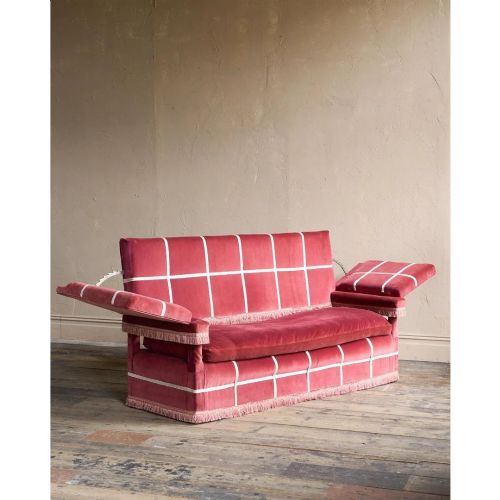
Hinged side arms define an antique Knole sofa. They drop down to form a flat resting surface or angle outwards for comfort.
Large carved finials sit at the back corners. These wooden posts act as anchor points for the heavy ties.
Check the corners. Braided ropes loop around the finials to hold the adjustable sides at your chosen angle.
Frame construction changed drastically. Early versions used pegged mortise and tenon joints, while Victorian revivals adopted glued dowels for speed.
Springing altered the profile entirely. Coil springs added to the seat in the nineteenth century made the base noticeably thicker.
Stuffing materials dictate the seat shape. Traditional horsehair creates a firm edge, whereas later feather cushions offer a softer slumped appearance.
"The dropping sides originally allowed monarchs to rest fully flat. It was a functional design for long periods of holding court."
"Trimmings were once the most valued part of the piece. The metallic threads and complex braids cost more than the timber frame."
"You can adjust the width of the seating area. Dropping the arms slightly creates extra space for wide dresses."
Based on almost 25 years of Sellingantiques UK antique market data, Antique Knole Sofas appeared 71 times (out of 1,100,000 antiques) which gives it a rarity score of 99/100.
This score measures scarcity within the Sellingantiques archive only and is not a survey of the entire antiques market, so these statistics may not be indicative of the general availability of Antique Knole Sofas elsewhere.
Use a soft bristle brush to loosen dry dust from the threads. Vacuuming pulls the fragile fibres apart.
If the metallic threads look dull, leave them alone. Liquid cleaners will soak into the cotton core and rot the rope from the inside.
Yes, early styles maintain that upright posture. The design started as formal seating, not lounging furniture.
Nineteenth-century makers began increasing the seat depth to match changing tastes. If yours feels shallow, it likely follows the stricter seventeenth-century proportions.
Heavy velvets and woven damasks work best on this frame. Thin cottons wear through quickly on the sharp corners and hinged edges.
Keep the fabric weight substantial to support the structure.
Do not force the hinges down. The joints often seize up if they stay tied upright for decades, and pushing them will crack the internal timber frame.
Have an upholsterer open the side panel to check the ironwork. They can oil the hinge pin and ensure the screws still grip the wood securely before you put weight on it.
Please note: This Antique Knole Sofas guide and its associated pricing data are provided for general informational purposes only. It does not constitute formal financial, investment, or appraisal advice and should not be relied upon as the sole basis for any commercial activity, purchasing, or sales decisions. Sellingantiques.co.uk accepts no liability for any actions taken in reliance on this information. Always consult with a qualified professional or independent appraiser.
