

Antique Silver Flatware
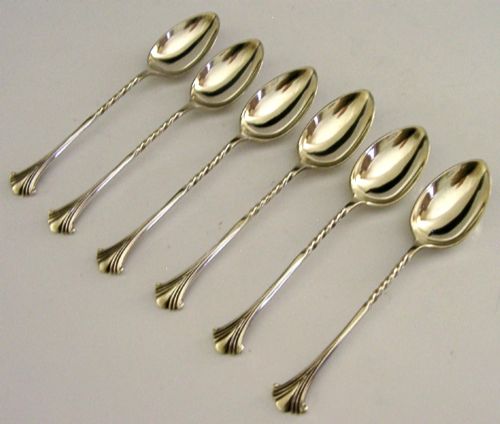
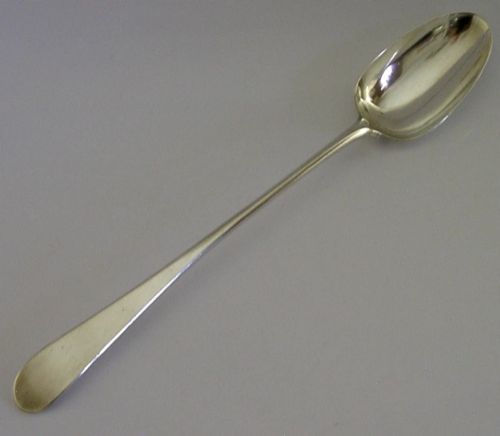
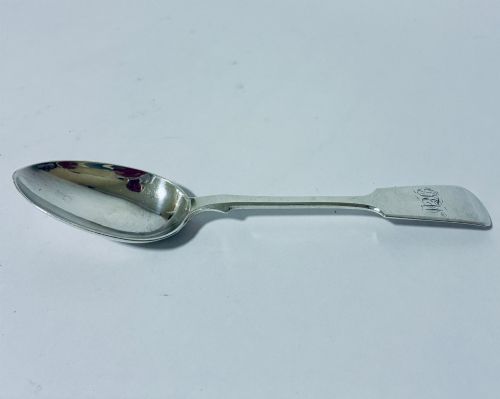
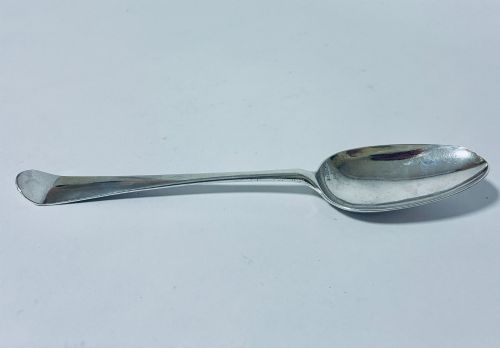
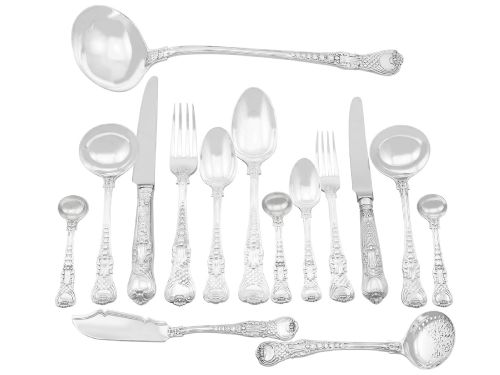
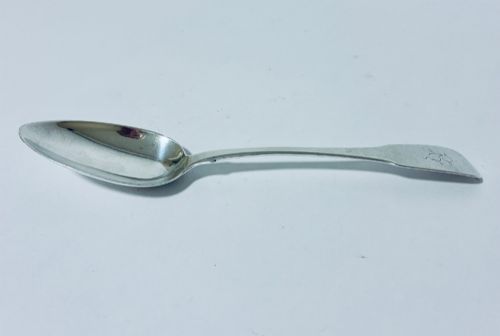
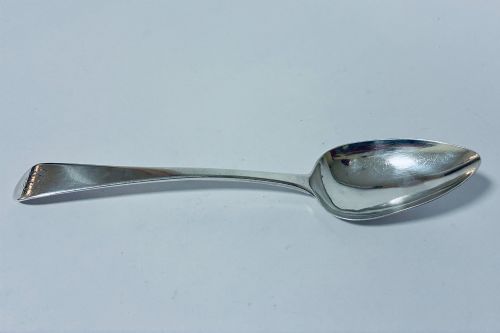
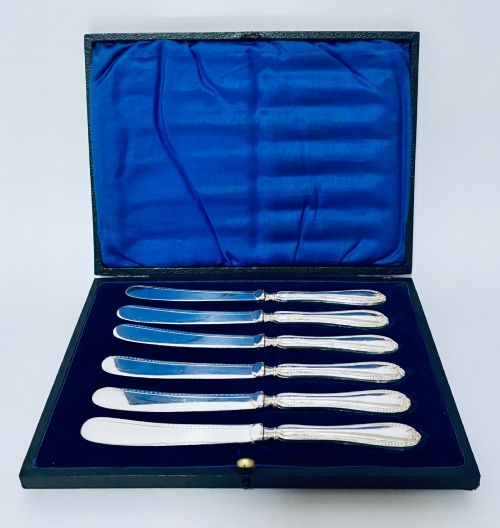
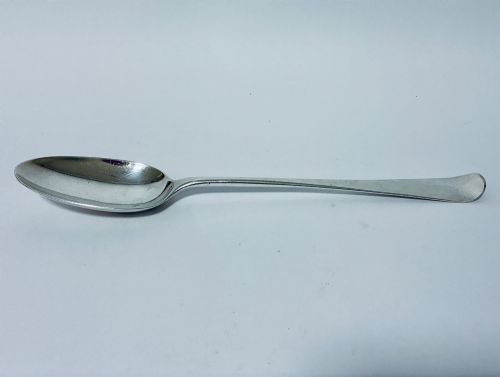
Antique silver flatware is the eating and serving silver of the table - spoons above all, then ladles, forks, tongs, knives, slices and scoops - made for measuring tea, carving fish, lifting marrow or simply getting food from dish to plate.
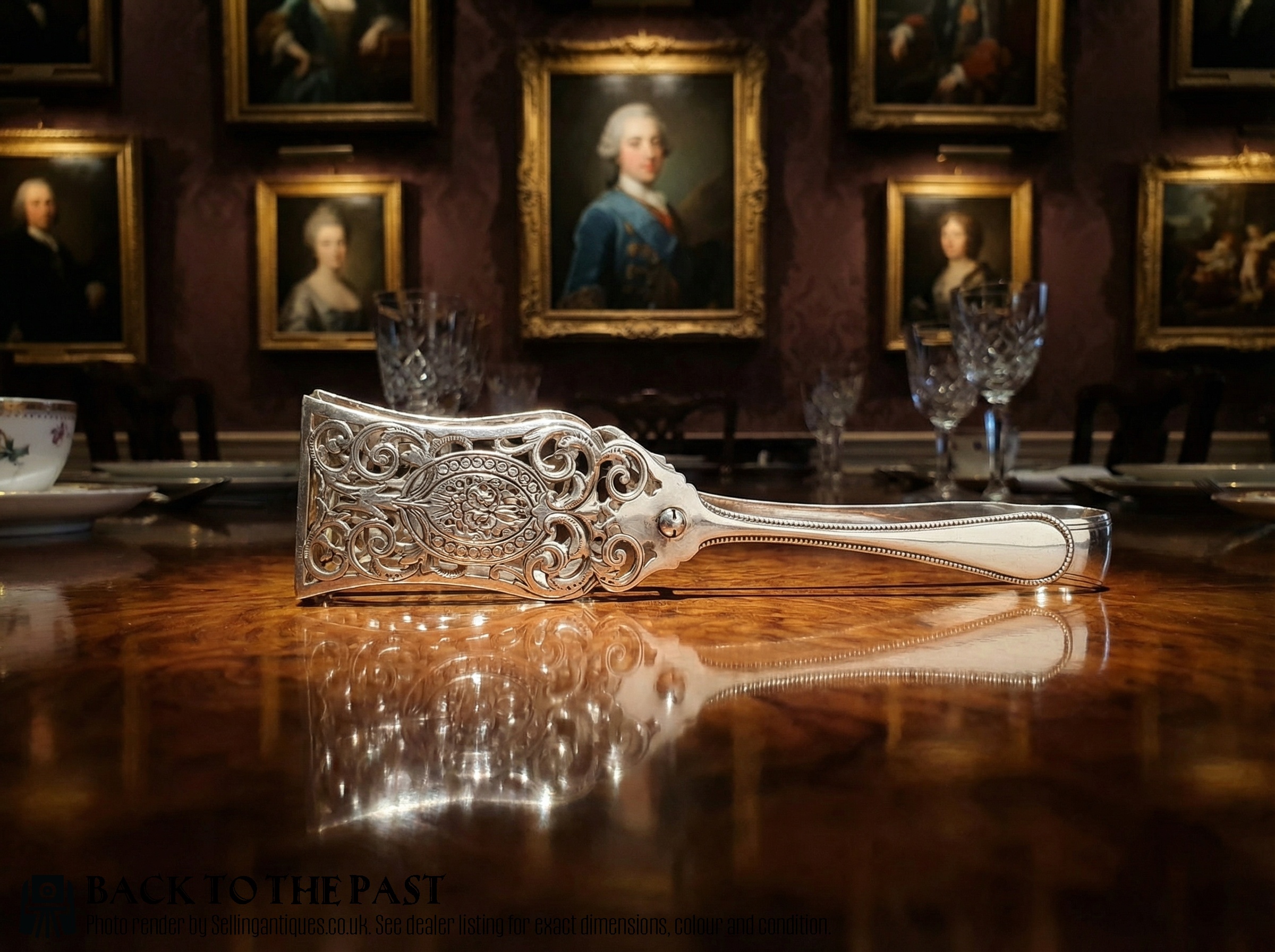
Antique Silver Flatware
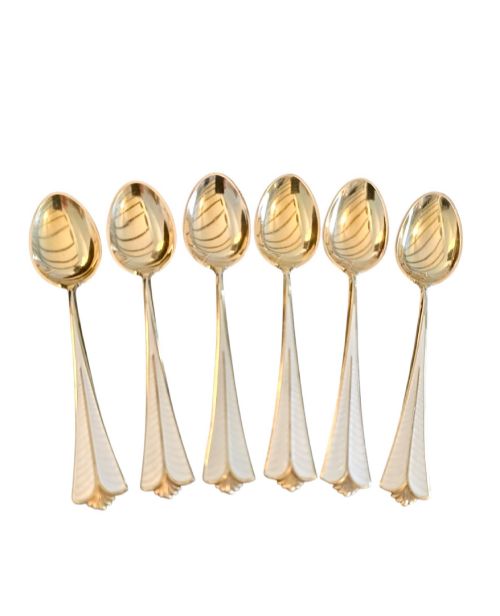
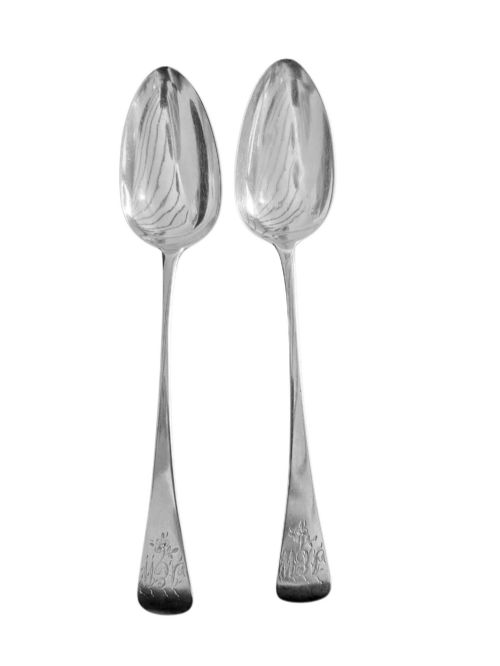
Spoons overwhelm everything else. The words spoon or spoons appear in 165 of 359 titles, while canteen appears in just 12. What you are most likely to be looking at is a single English hallmarked spoon, or a pair of small serving pieces, rather than a full service in a fitted chest.
Silver eating implements have been made in Britain since the medieval period, when a spoon was often a person's only piece of table silver. The matched service of knives, forks and spoons in graded sizes is largely an eighteenth- and nineteenth-century idea, growing alongside more elaborate dining and a run of course-specific tools.
Sterling is the commonest metal word in titles, with solid close behind, though around a fifth of listings are silver plate rather than hallmarked silver, and the metal is stated in the title as often as the form. London is the assay office named most often; Sheffield follows some way behind. Georgian and Victorian dominate the dated field.
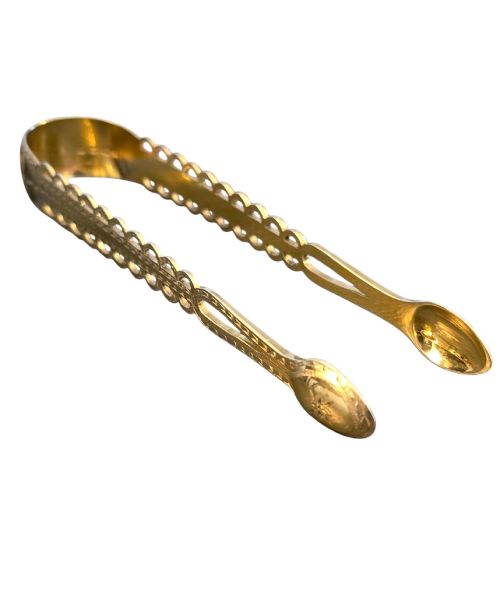
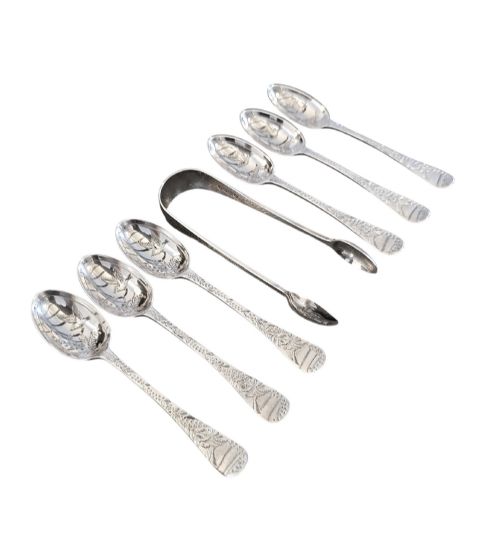
Beyond the plain spoon sit the specialist implements: ladles, sugar tongs, marrow scoops, fish slices and servers, along with stilton scoops, grape scissors, an apple corer and lobster picks. Caddy spoons are a self-contained field at a fair share of titles, and Scandinavian, Continental, Scottish and Irish pieces make a persistent minority showing.
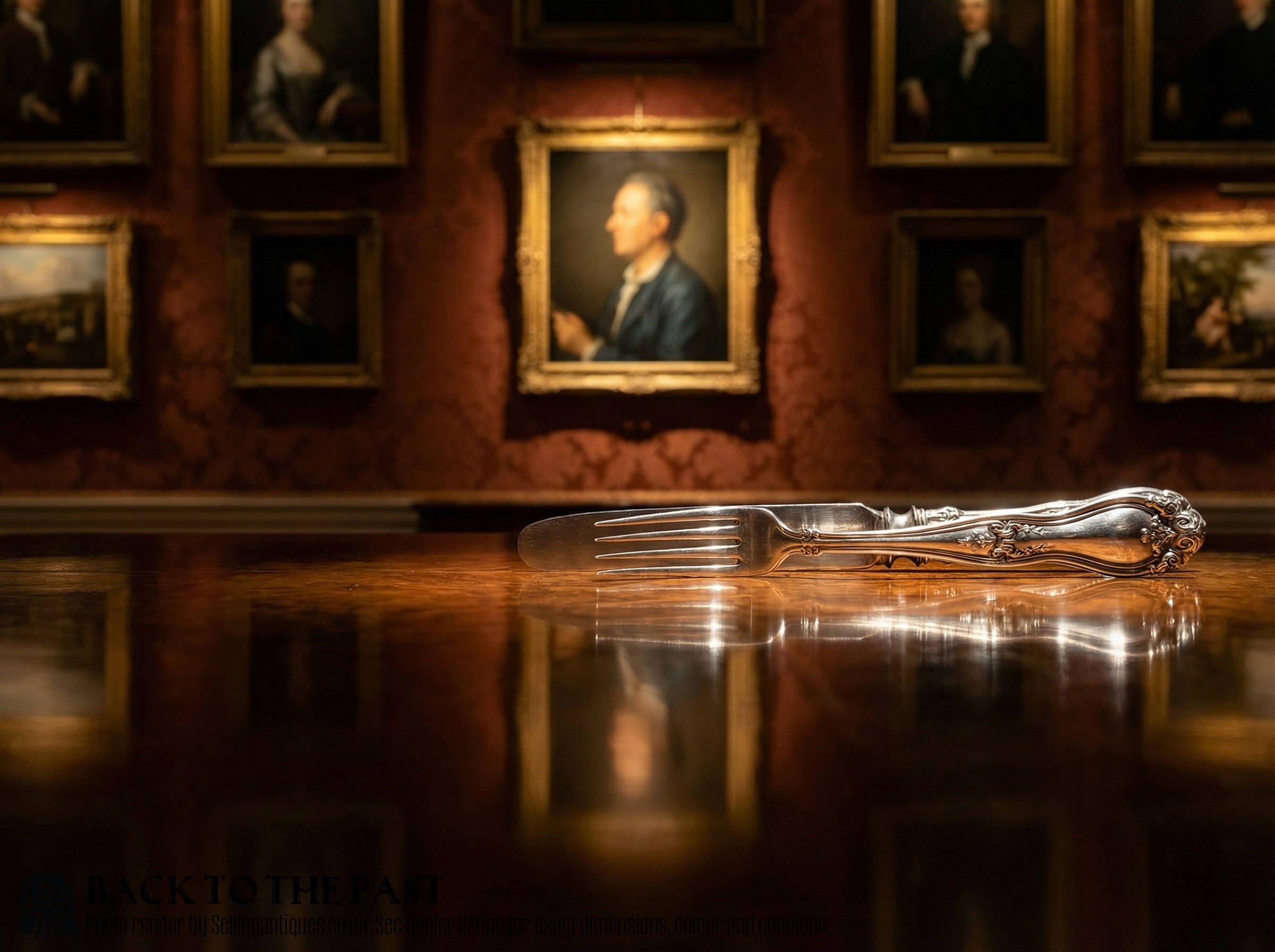
Where The Range Sits
Metal is the first divide. Hallmarked sterling clusters through the upper part of the range, while plated cutlery and plated sets sit largely at the bottom, however large they are. After that comes age: trefid, slip top, seal top and dognose spoons of the late sixteenth to early eighteenth century occupy the highest reaches, and spoons of the 1890s to 1940s the base.
Completeness pushes hard in one direction. Canteens for twelve and services of 79, 118, 154 and 158 pieces stand at the top of the range; single spoons form its floor, with pairs and small matched groups between. That is also why the category reads as inexpensive on average, since single pieces and pairs far outnumber services.
Then the marks and the metal itself. London is the default, so scarce provincial and early regional offices count for more - York, Southampton, Plymouth, Elgin, Arbroath, Inverness and Dundee each surface only once or twice, mostly in the upper half. Stated weight and length work the same way, with the heavy basting and hash spoons and the 476-gram pair of York soup ladles at the top.
Antique Silver Flatware Retail Price Guide 2026
Typical UK retail prices for silver flatware, calculated from the Sellingantiques database of over a million retail prices indexed since 2003. This retail price guide relies exclusively on Sellingantiques data; no external sources or auction records are used, so the figures do not describe the wider market.
18th Century is the period label used most on Sellingantiques for silver flatware, with Georgian next and Victorian third.
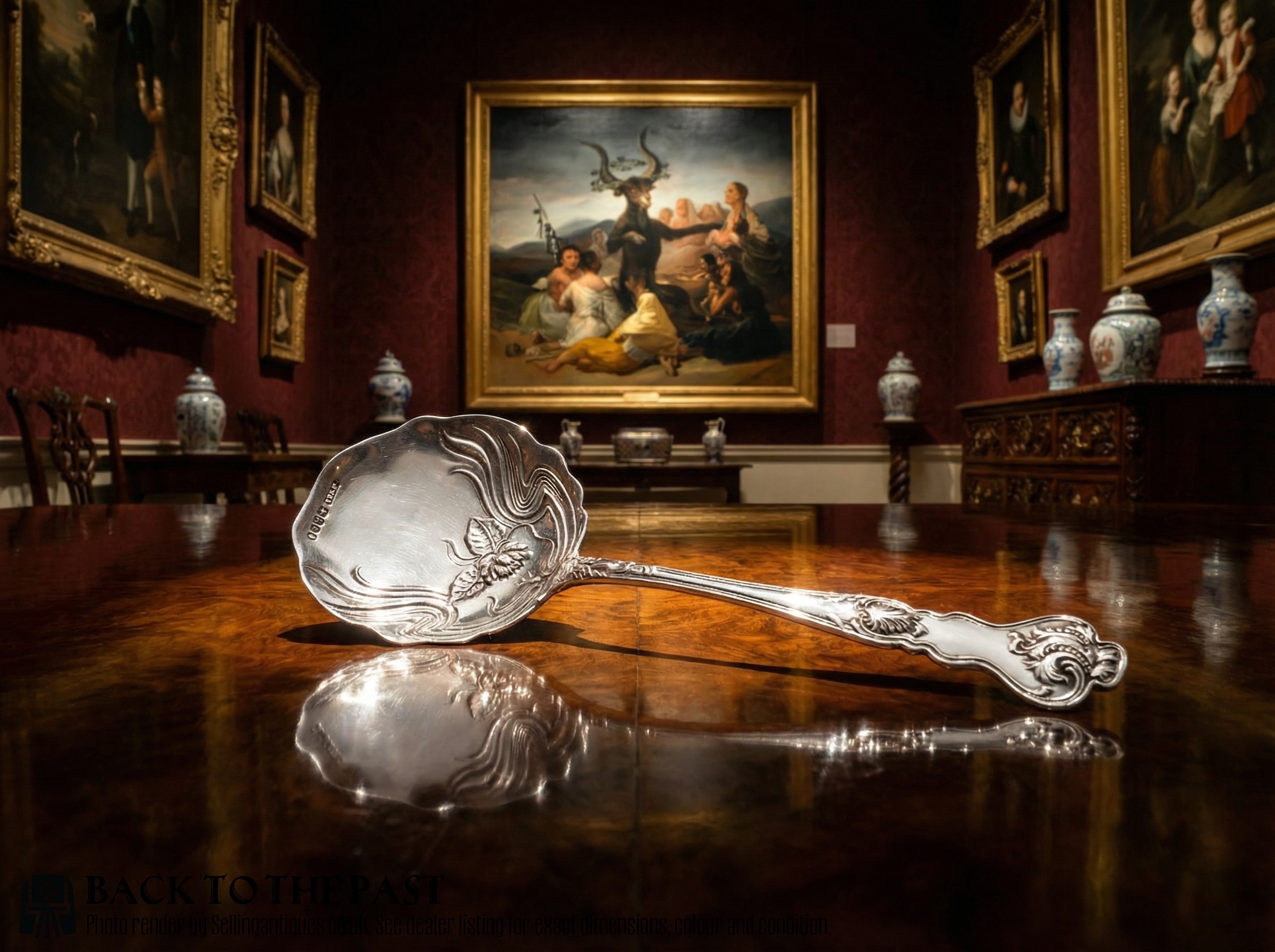
The Antique Silver Flatware Glossary
- Flatware
- The collective term for spoons, forks and serving implements, as against hollow-ware such as jugs and bowls.
- Sterling or solid silver
- Hallmarked silver of standard fineness, set against silver plate in the title. Sterling is the commonest metal word in the category.
- Canteen
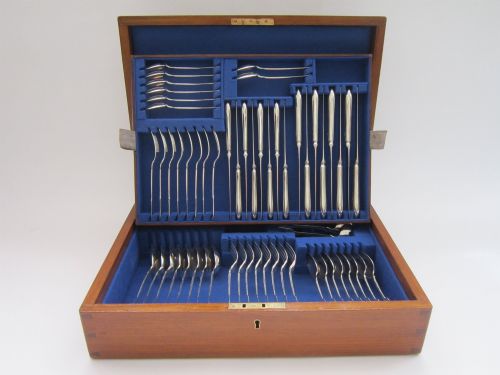
- A full service of cutlery, usually cased or in a fitted chest. Only a small fraction of titles carry the word.
- Caddy spoon
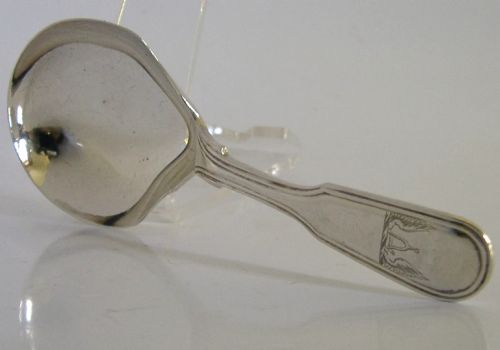
- A short-handled spoon for measuring tea from a caddy, turning up as shovels, vine-leaf and grape bowls, apostle finials and double-struck examples.
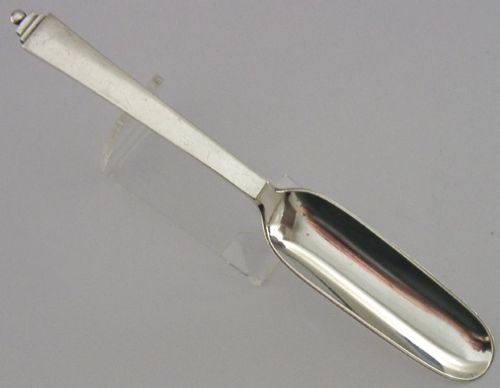
- Marrow scoop
- A narrow implement for getting marrow out of bones, sometimes double-ended with a channel at each size.
- Trefid and dognose
- Two early terminals: the notched three-lobed end of the late seventeenth century, and the wavy end that recurs around 1699 to 1717.
Antique Silver Flatware: Frequently Asked Questions
What kinds of spoons turn up most?
Everything from teaspoons and caddy spoons up to basting, gravy and hash spoons. Single pieces and pairs make up the bulk of what is listed.
The longest recorded are basting and hash spoons of 33cm and 35cm, and a Scottish hash spoon of 252 grams is among the heaviest single pieces named.
Are full canteens common in this category?
No. Canteen appears in only a dozen of 359 titles, and cutlery in a few more. The category is built on single pieces and small matched groups.
When full services do appear they can be large: canteens of 154 and 158 pieces have been offered, with silver-plated sets running to 118 and 52 pieces.
How old is the earliest silver flatware listed?
The dealers' own dated field runs from 1700 to 1960, with 148 listings carrying a clean year. Sampled titles reach further back than that.
A London spoon marked 1577 and an Elizabeth I seal-top of 1585 are the earliest pieces recorded on Sellingantiques, and a run of dates through the 1610s to the 1690s sits behind them.
Which assay offices appear on these pieces?
London is the default and the most often named, with Sheffield some way behind. Exeter, Newcastle, Chester and Glasgow recur.
York, Southampton, Plymouth, Inverness, Dundee, Elgin and Arbroath each appear only once or twice, at the scarce end of the marks.
Is foreign silver flatware listed alongside English?
Yes, as a steady minority. Norwegian 830S, Danish, Swedish, Dutch, German and French .950 pieces all appear, along with Russian niello and cloisonné-enamelled spoons and American sterling.
Scottish and Irish flatware also shows up in reasonable numbers, and provincial Newcastle and Glasgow caddy spoons turn up within that group.
What unusual table implements show up?
Once in a blue moon something outside ordinary dining appears: a game skewer, an apple corer, a roasting fork with a horn mount, a medicine spoon, a mote spoon, lobster picks, grape scissors.
Each of those appears only once or twice across the whole category.
More regular oddities are the stilton scoop, the fish slice and the marrow scoop, which recur often enough to count as standing types.