
A 2026 Guide by Sellingantiques
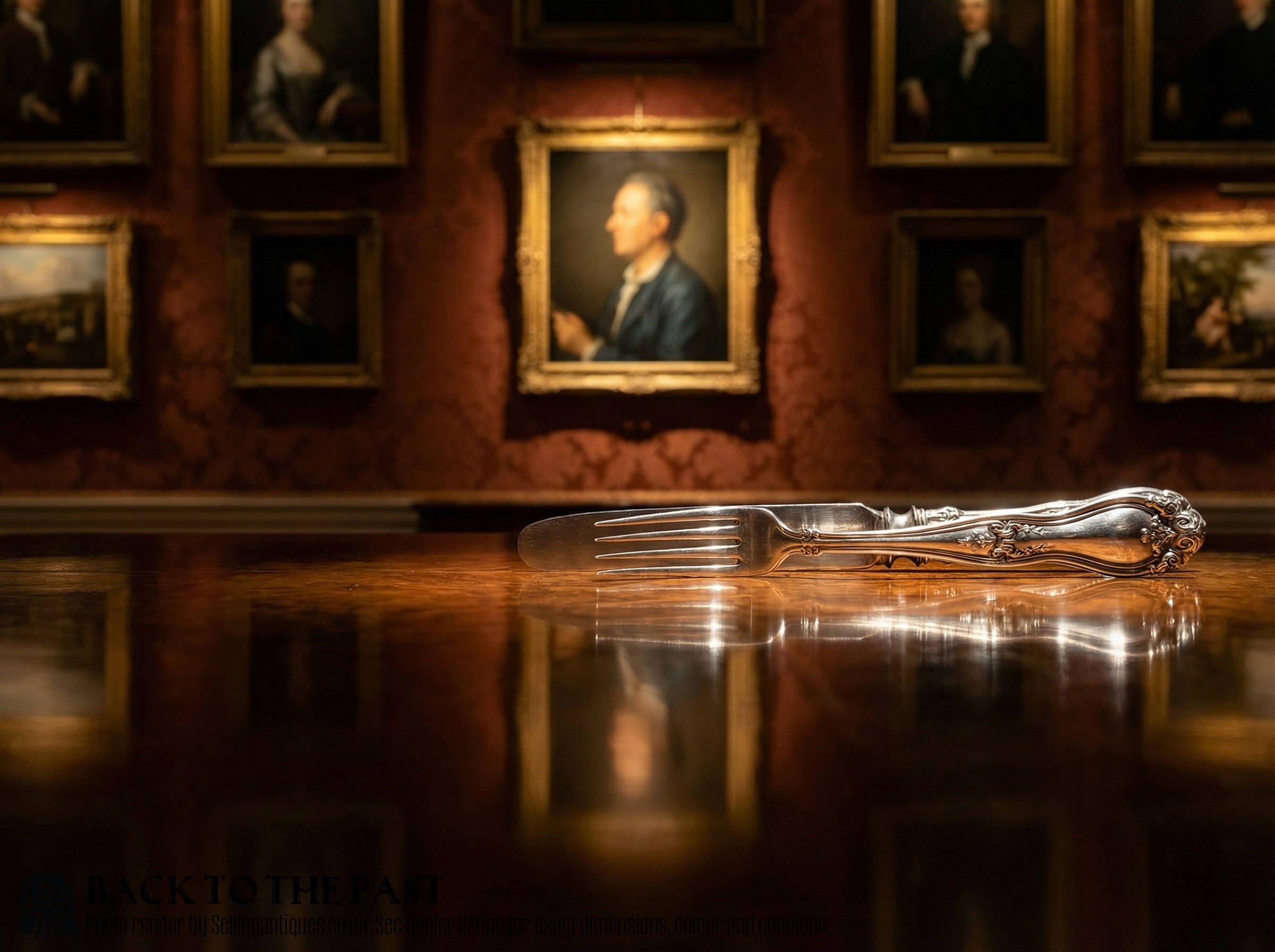
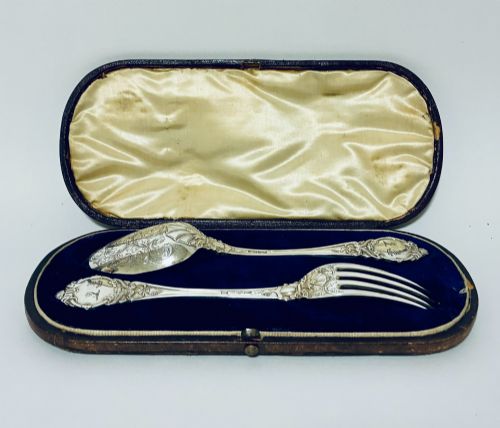
American Sterling Silver Knife and Fork by International Silver Co, 1900
Priced at £150 from TJR Trading
Before the late seventeenth century, most guests brought their own spoon and knife to a meal. Forks were a later addition to the table.
Look at early sets of antique silver cutlery to see how patterns evolved. Matched services only became common during the Georgian period.
Wealthy households needed large canteens by the Victorian era. Courses multiplied, requiring specific pieces for fish and soup.
Hallmarks track this timeline. You'll find date letters and assay office stamps pressed into the stems of almost all English silver.
Paul Storr ran a large workshop in the early nineteenth century. His flatware is heavy and features crisp, detailed casting.
Hester Bateman managed a successful family business in late eighteenth-century London. The Bateman workshop produced large quantities of spoons with bright-cut engraving.
Chawner and Company dominated the Victorian trade. George Adams registered their marks, supplying extensive matched services to retailers across Britain.

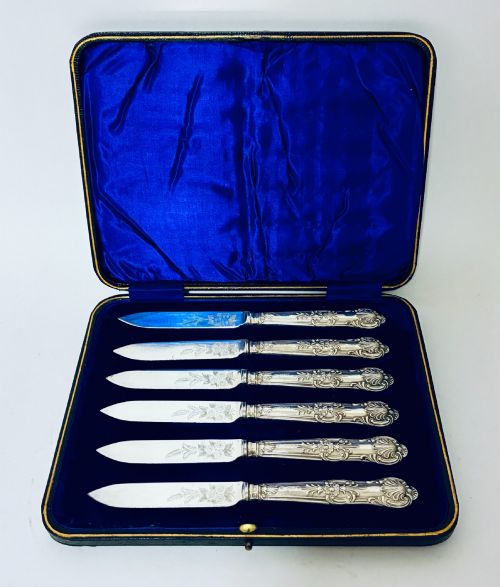
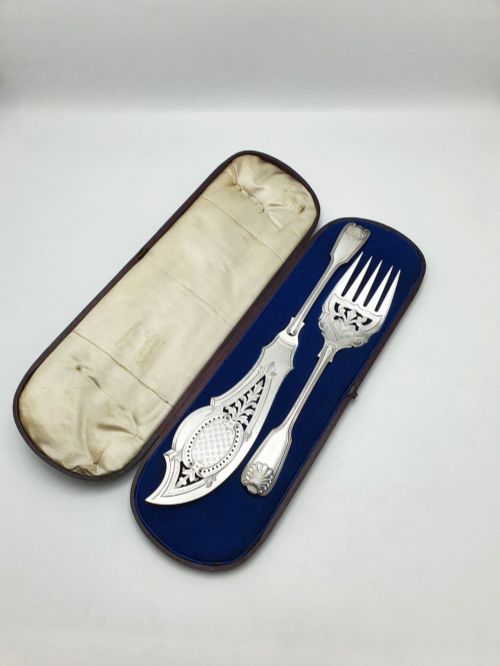
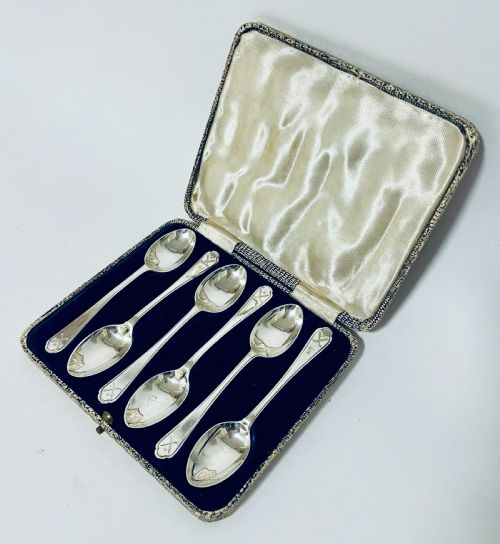
Waring & Gillows Cutlery Set/ Fish Set, Edwardian
Priced at £125 from Sinclairs Antiques and Interiors
The 2026 retail price guide for Antique Silver Cutlery is drawn from a proprietary archive of over 1.1 million retail prices indexed by Sellingantiques since 2003. This guide relies exclusively on their own internal data; no external sources or auction records are used.
Analysing nearly 25 years of UK antique market history alongside current retail values, the data indicates that typical UK retail prices for Antique Silver Cutlery range between £200 and £6,800. Entry-level prices generally fall under £200 and premium examples upwards of £6,800.
Heavy gauge metal indicates good quality antique silver cutlery. Pieces should feel substantial in the hand rather than thin or flimsy.
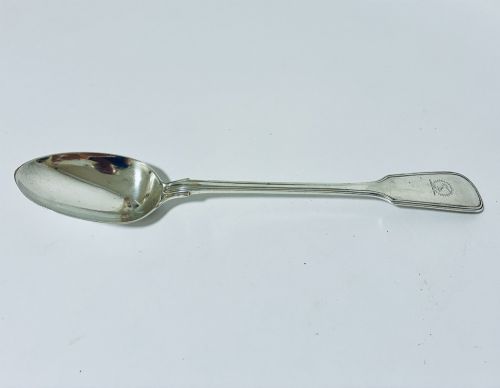
Crests or monograms often sit on the terminal. Engraved initials tell you a piece belonged to a specific family.
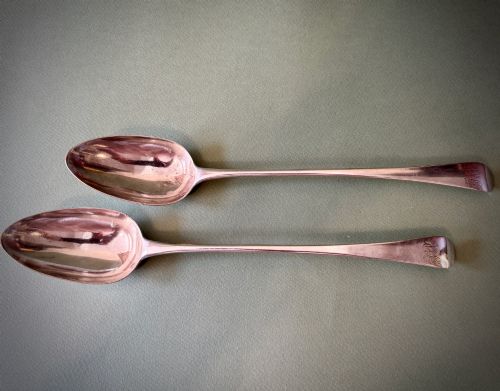
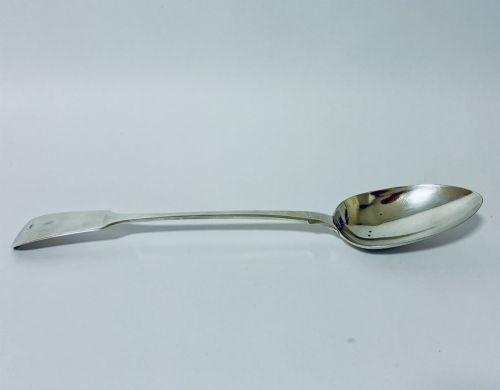
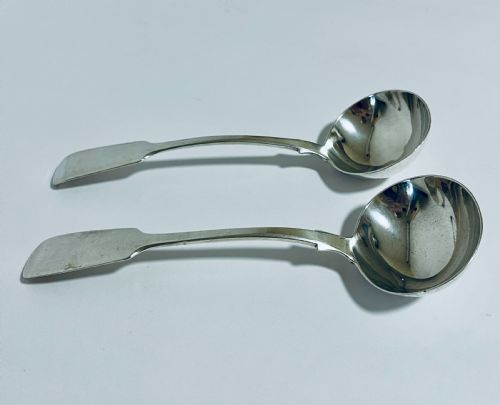
Pattern designs dictate the outline of the stem. Common styles include Old English, Fiddle, and King's, each shaping the handle differently.
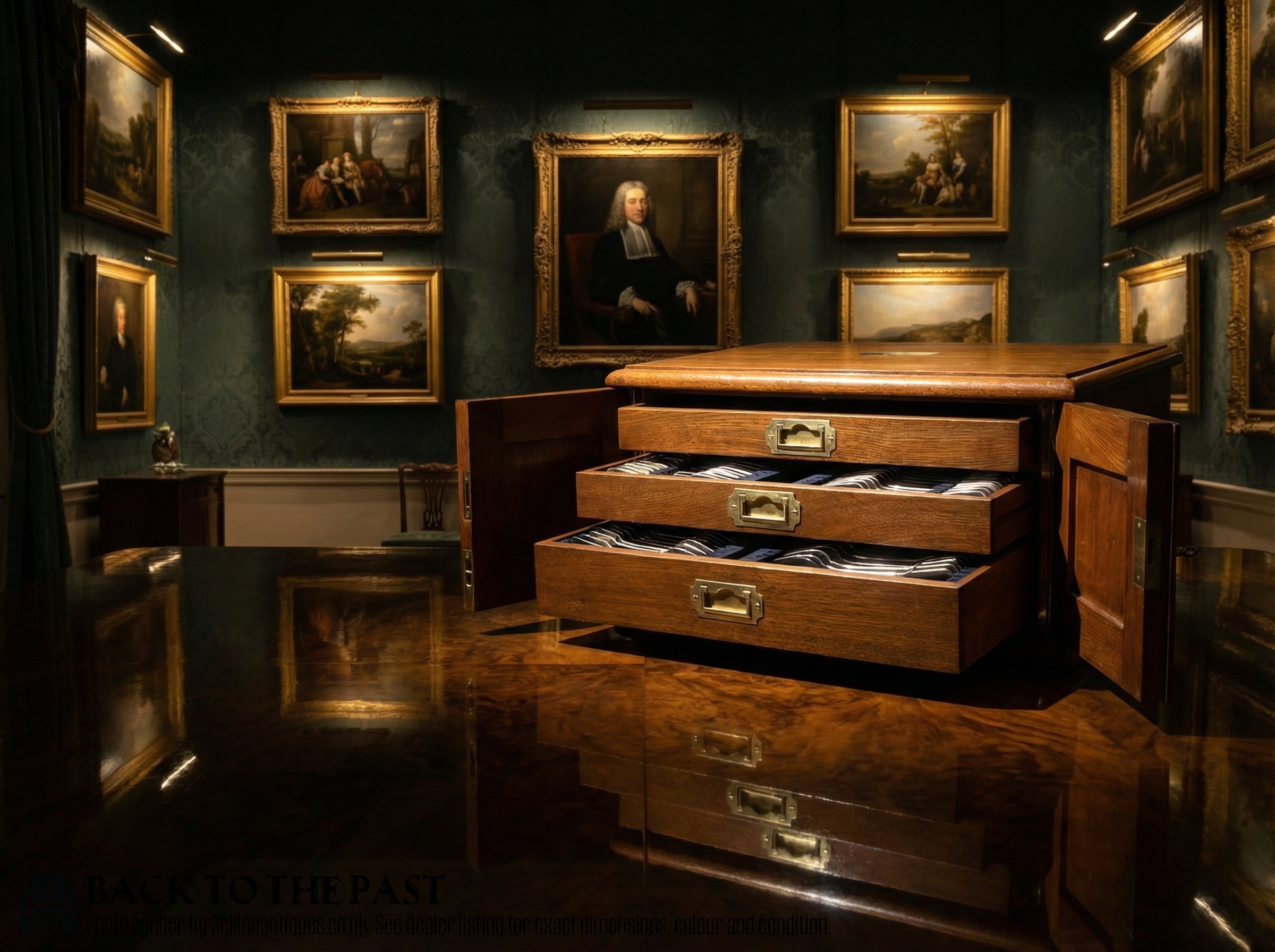
Antique Victorian Sterling Silver Canteen of Fiddle Pattern Cutlery, 1800
Priced at £10,500 from S & A Marsh
Early spoons were hand-forged from a single cast ingot. A silversmith hammered the metal flat on an anvil to shape the bowl and stem.
Industrialisation introduced the drop stamp. Factories in Sheffield and Birmingham used mechanical presses to stamp out identical patterns at speed.
Hand-chased details soften the edges of stamped designs. Craftsmen used small punches to sharpen the ridges on shells and threads after the pressing stage.
"Mustard spoons have gold washing inside the bowl. The gilding stops the acidic mustard from tarnishing the silver."
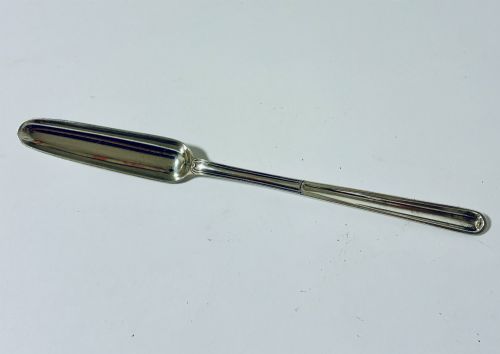
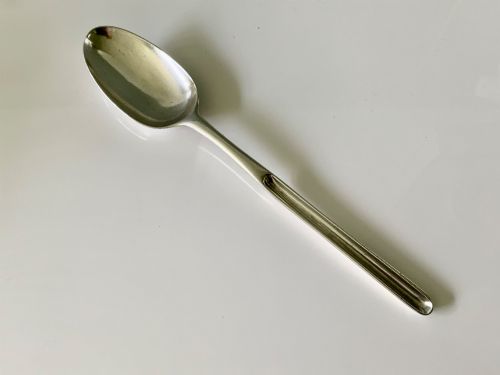
"Marrow scoops were essential dining tools. Diners used the long, narrow channels to extract bone marrow during Georgian meat courses."
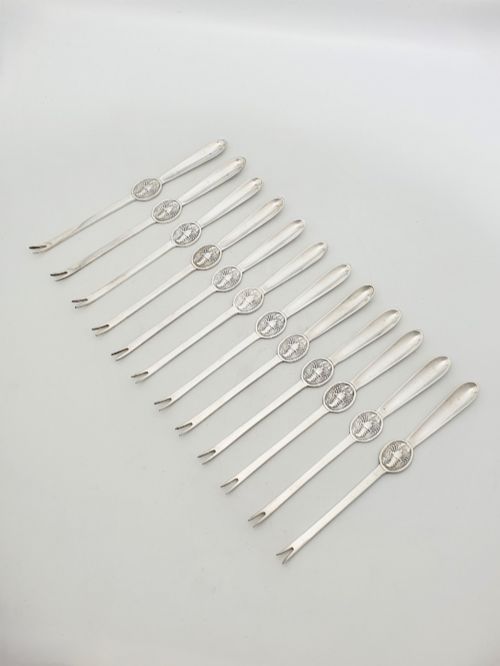
"Small serving tools exist for specific dishes. You can find dedicated pieces for serving Stilton cheese and asparagus."
Based on almost 25 years of Sellingantiques UK antique market data, Antique Silver Cutlery appeared 1452 times (out of 1,100,000 antiques) which gives it a rarity score of 75/100.
This score measures scarcity within the Sellingantiques archive only and is not a survey of the entire antiques market, so these statistics may not be indicative of the general availability of Antique Silver Cutlery elsewhere.
It isn't a good idea. The heat and detergents cause damage over time, especially to older pieces with hollow handles or bone components.
Wash them by hand in warm soapy water instead. Dry them straight away with a soft cloth to stop water spots forming on the surface.
Harlequin sets are common. People often built up their canteens slowly over generations, adding half a dozen spoons here or a set of forks there as the family grew.
Many dealers actually put these mixed sets together on purpose. A table set with different patterns from different makers looks striking and stops a formal dinner setting from feeling stiff.
Use them every day and they'll rarely need polishing. Regular handling stops the tarnish from taking hold in the first place.
If they sit in a drawer for months, give them a gentle wipe with a silver cloth before use.
You likely have a caddy spoon or a salt spoon. Caddy spoons have broad, sometimes shell-shaped bowls to scoop dry tea leaves out of a caddy before brewing.
Salt spoons are even smaller. They were made to sit inside open salt cellars, allowing diners to sprinkle a tiny pinch of salt over their food.
Sifter spoons also turn up with pierced or bumpy bowls. These held sugar and let the fine grains fall through the holes onto fresh fruit.
Please note: This Antique Silver Cutlery guide and its associated pricing data are provided for general informational purposes only. It does not constitute formal financial, investment, or appraisal advice and should not be relied upon as the sole basis for any commercial activity, purchasing, or sales decisions. Sellingantiques.co.uk accepts no liability for any actions taken in reliance on this information. Always consult with a qualified professional or independent appraiser.
