


A 2026 Guide by Sellingantiques
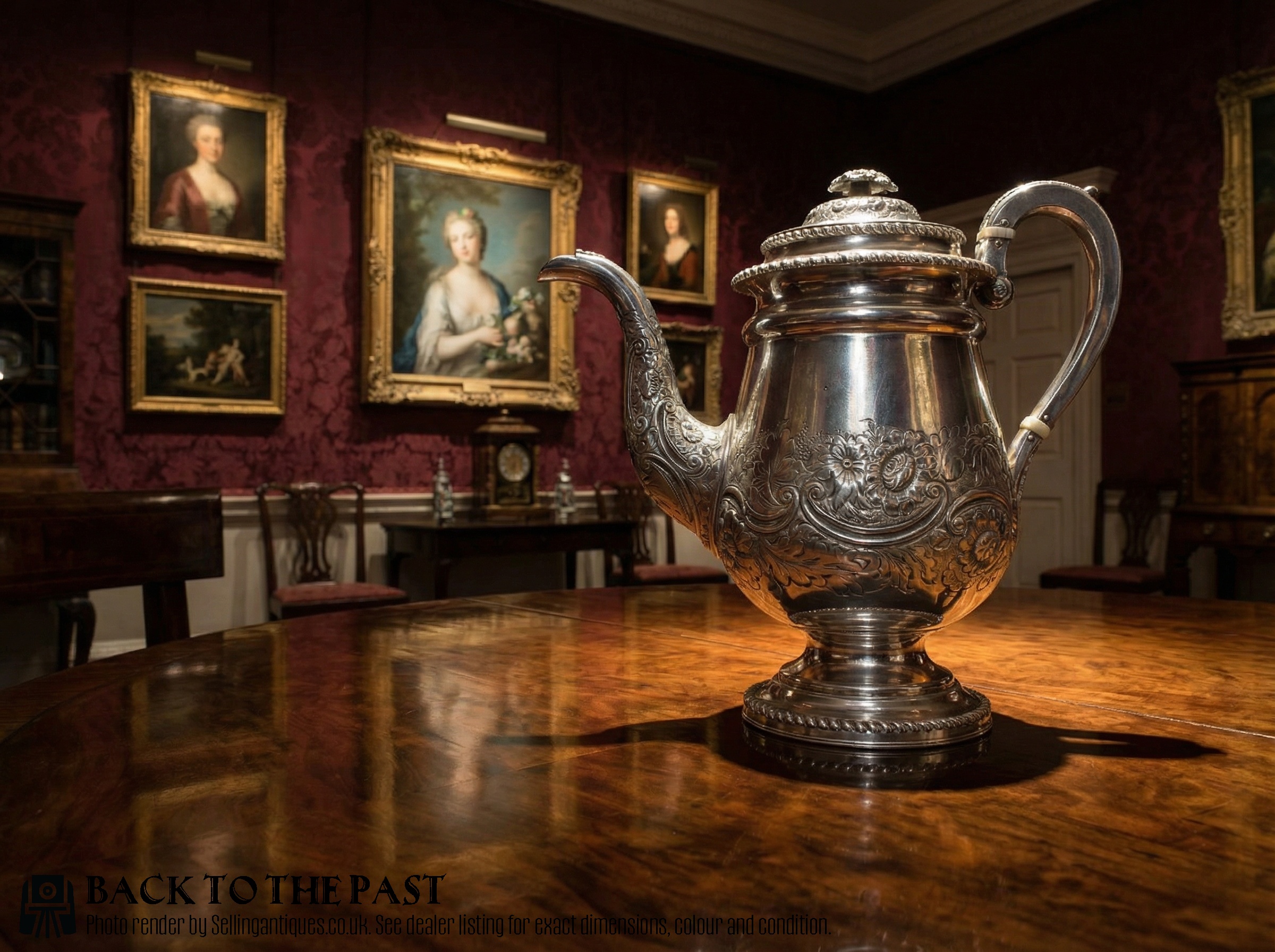
Antique Coffee Pot, English, Old Sheffield, Silver Plate, Tea Kettle, Regency, Regency
Priced at £895 from London Fine Antiques
Early antique silver coffee pots date to the late seventeenth century. London coffee houses drove the initial demand.
Notice how the shape shifts over decades. The first examples were straight-sided cones.
By the Georgian period, bulbous baluster forms became standard. Tea drinking was popular, but coffee needed a taller vessel to keep the grounds at the base.
Silversmiths adapted to changing tastes. Rococo brought heavy embossing, while Neoclassical periods returned to smooth, urn-like outlines.
Paul de Lamerie produced heavily chased rococo examples during the mid-eighteenth century. His workshop defined the ornate London style.
Hester Bateman ran a successful family firm later in the same century. They turned out elegant, thinner-gauge silver vessels with beaded edges.
Regional assay offices had their own masters. John Langlands worked in Newcastle and supplied the northern market with stout, practical pots.
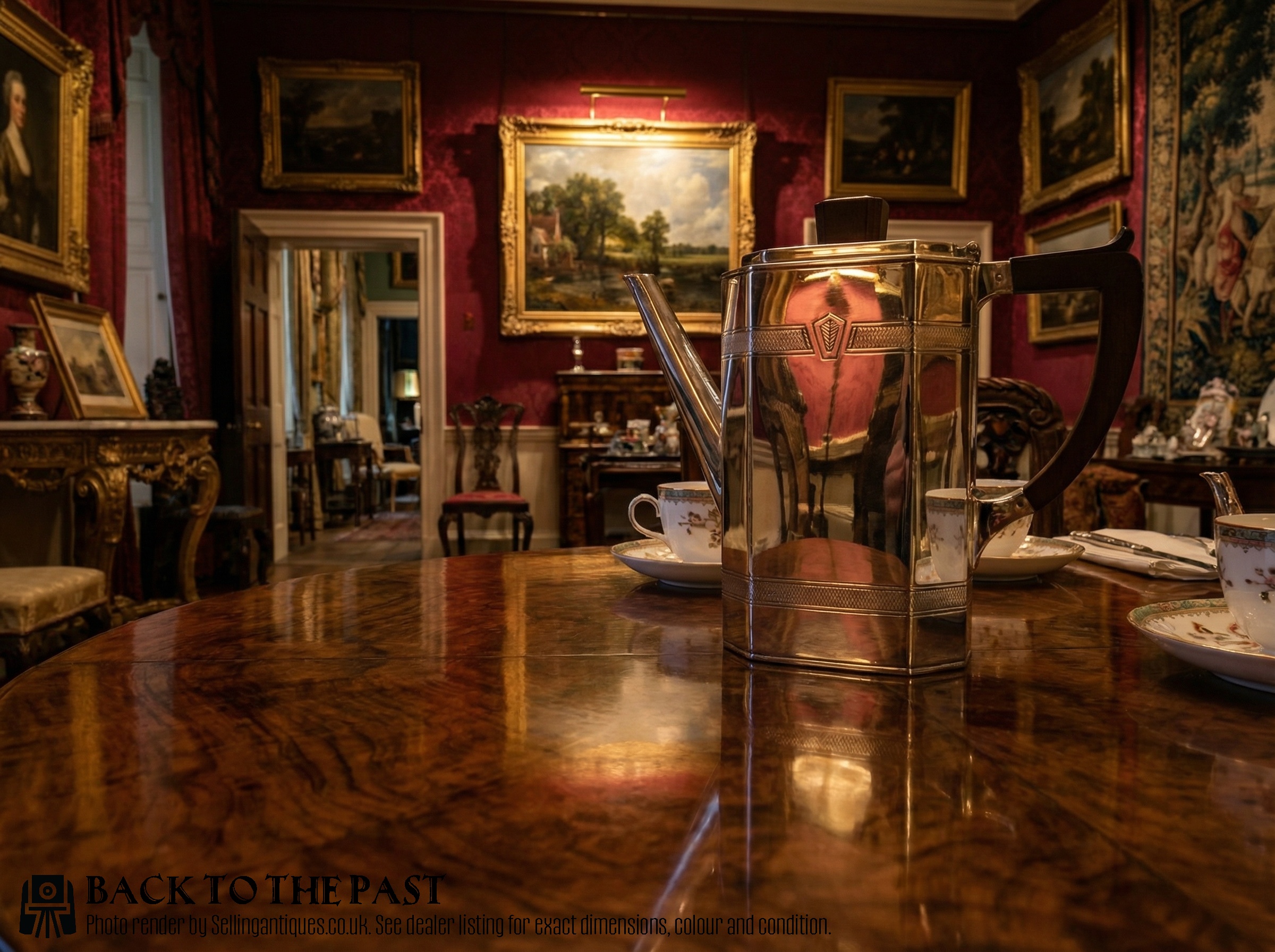
Superb Solid Silver Art Deco Coffee Pot Made by Birmingham Silversmiths Company., 1940
Priced at £1,275 from Serpentine Antiques
The 2026 retail price guide for Antique Silver Coffee Pots is drawn from a proprietary archive of over 1.1 million retail prices indexed by Sellingantiques since 2003. This guide relies exclusively on their own internal data; no external sources or auction records are used.
Analysing nearly 25 years of UK antique market history alongside current retail values, the data indicates that typical UK retail prices for Antique Silver Coffee Pots range between £500 and £2,500. Entry-level prices generally fall under £500 and premium examples upwards of £2,500.
The spout always mounts high on the body. This placement stops the grounds pouring out into the cup.
Check the finial on top of the domed lid. It gives you a grip to open the pot and often matches the handle material.
A domed foot or flat base provides stability. Tall vessels easily tip over when full of hot liquid.
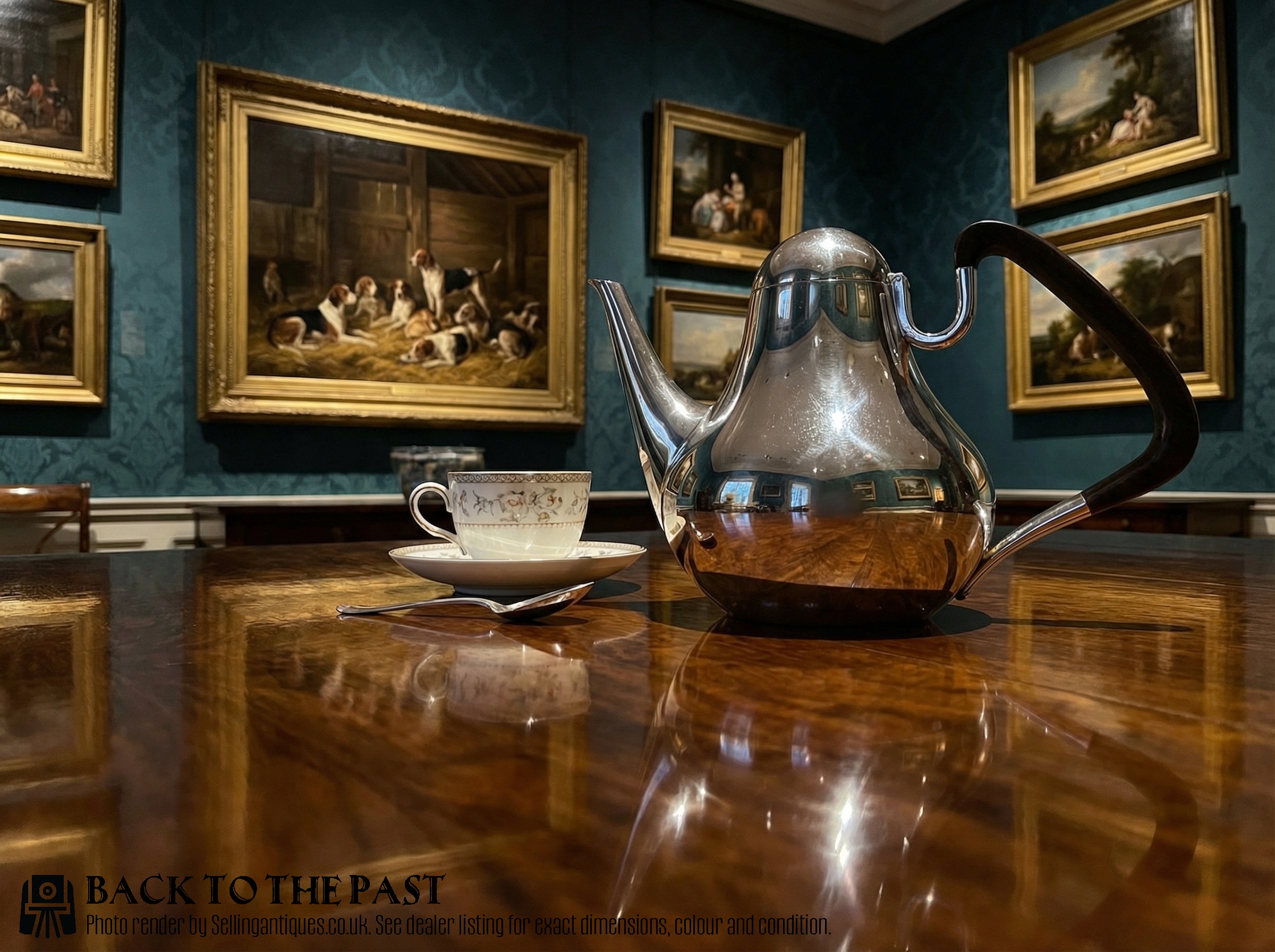
Georg Jensen Silver Coffee Pot, 1950
Priced at £4,650 from The Silver Cabinet
Silversmiths raised the main body from a single flat sheet. Repeated hammering over an anvil formed the tall shape.
Seams are sometimes visible on earlier antique silver coffee pots. The maker folded a sheet into a cone and soldered the edge.
Casting was reserved for heavy decorative elements. Spouts and feet were cast in sand moulds before being soldered to the main body.
"The earliest handles were mounted at a right angle to the spout. This made pouring easier when seated beside a low table."
"Many Georgian examples feature an engraved family crest. It adds a direct link to the specific household that originally commissioned the piece."
"Silver retains heat well. A solid pot keeps the contents warm for much longer than ceramic equivalents."
Based on almost 25 years of Sellingantiques UK antique market data, Antique Silver Coffee Pots appeared 742 times (out of 1,100,000 antiques) which gives it a rarity score of 86/100.
This score measures scarcity within the Sellingantiques archive only and is not a survey of the entire antiques market, so these statistics may not be indicative of the general availability of Antique Silver Coffee Pots elsewhere.
Yes, they function well for serving hot drinks today. The metal is stable and heat-resistant, provided the interior is clean. Boiling water will not damage the silver.
You just need to ensure the wooden handle is secure before filling it. A loose handle can be dangerous when pouring boiling liquids.
The dark staining inside is standard. Coffee oils build up over decades of use and bond to the surface. It does not harm the silver.
You can wash the inside with warm soapy water and a soft cloth. Avoid using harsh abrasives, as scratching the interior makes it harder to keep clean in the future.
Leave stubborn dark marks alone. Most collectors expect to see them on a piece of age.
That is a steam vent. It prevents pressure from building up inside the vessel when it holds boiling liquid. Without it, the steam might force the lid open or disrupt the pour.
You will find these vents on many forms of covered domestic silverware.
Plain surfaces were common on the earliest conical examples. Mid-eighteenth-century tastes shifted towards heavy floral decoration. The trade calls this embossed work repoussé.
Plain styles returned during the Neoclassical period. Silversmiths mirrored the restrained tastes of late Georgian architecture, creating smooth, unornamented urn shapes.
A plain surface does not automatically mean an early date. Tastes swung back and forth across the centuries.
Please note: This Antique Silver Coffee Pots guide and its associated pricing data are provided for general informational purposes only. It does not constitute formal financial, investment, or appraisal advice and should not be relied upon as the sole basis for any commercial activity, purchasing, or sales decisions. Sellingantiques.co.uk accepts no liability for any actions taken in reliance on this information. Always consult with a qualified professional or independent appraiser.
