


A 2026 Guide by Sellingantiques

Pair of Antique George III Silver Wine Coasters, Georgian
Priced at £1,480 from The Silver Cabinet
Before the mid-eighteenth century, servants poured wine from sideboards. Guests started passing decanters around the table themselves.
That shift required protection for bare mahogany. Antique silver coasters emerged to catch the drips and slide easily.
Early Georgian ones often took the form of deep, pierced baskets. Later iterations dropped in height.
Look at the transition to matching pairs and sets of four. Large dining sets demanded uniform table settings by the Regency period.
Use declined when dining habits shifted again toward tablecloths. The sliding function lost its purpose on heavy linen.
Hester Bateman produced pierced antique silver coasters during the late eighteenth century. Her workshop favoured bead borders and bright-cut engraving.
Matthew Boulton stamped many fine examples in Old Sheffield Plate. His Birmingham factory mastered heavy, die-stamped borders.
Robert Hennell often worked with his son David. They supplied well-executed neoclassical designs to the London trade.
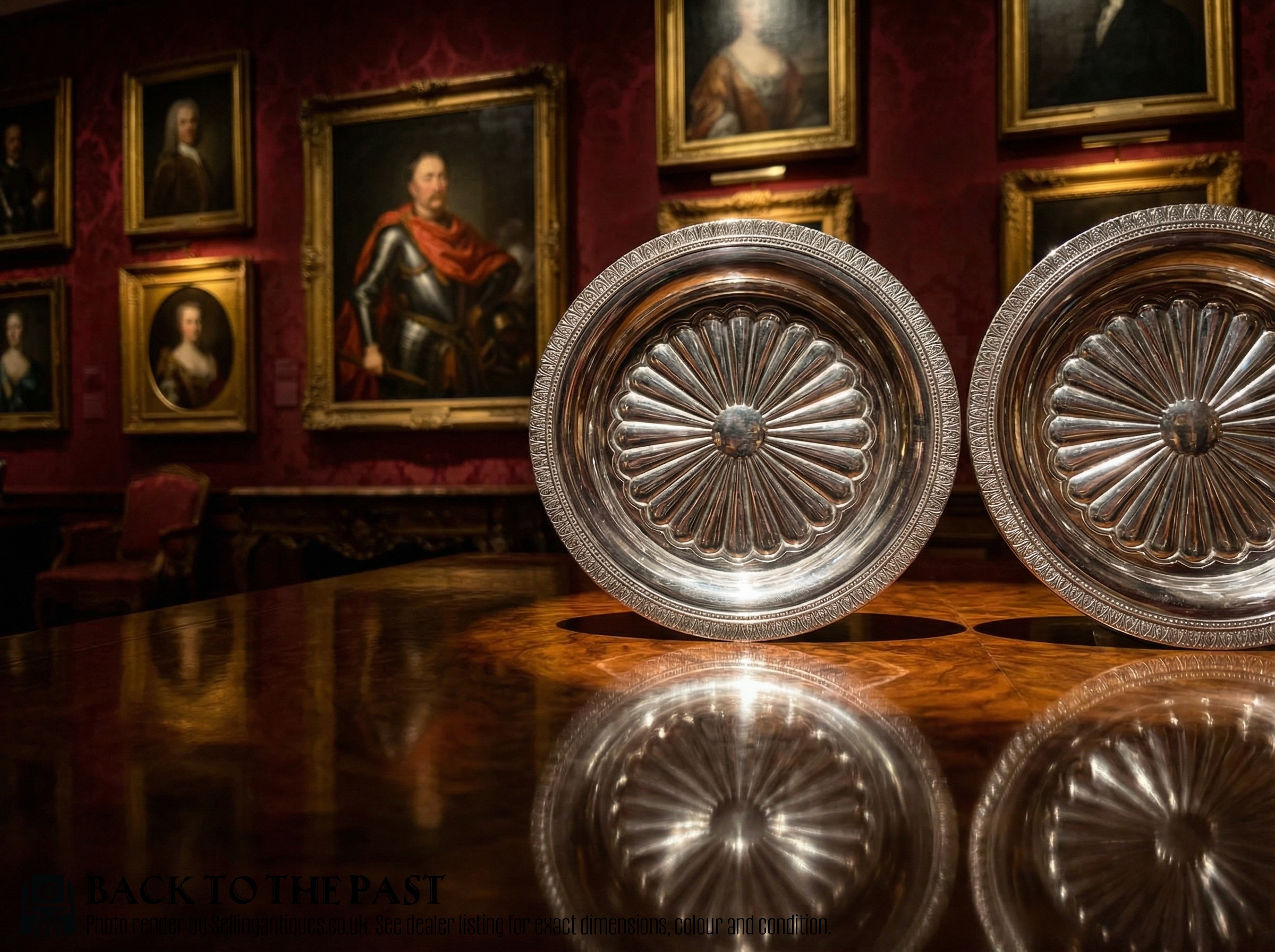
Wine Coasters by Christofle, France C1920, 1920
Priced at £160 from Honey Tilley Antiques
The 2026 retail price guide for Antique Silver Coasters is drawn from a proprietary archive of over 1.1 million retail prices indexed by Sellingantiques since 2003. This guide relies exclusively on their own internal data; no external sources or auction records are used.
Analysing nearly 25 years of UK antique market history alongside current retail values, the data indicates that typical UK retail prices for Antique Silver Coasters range between £200 and £1,600. Entry-level prices generally fall under £200 and premium examples upwards of £1,600.
Central bosses often sit in the middle of the wooden base. These silver discs sometimes bear engraved crests or initials.
Galleries feature intricate piercing or heavy applied borders. The rims catch the light and frame the decanter base.
Look for the hallmarks. Silversmiths stamped them near the lower rim or hidden within the pierced decoration.
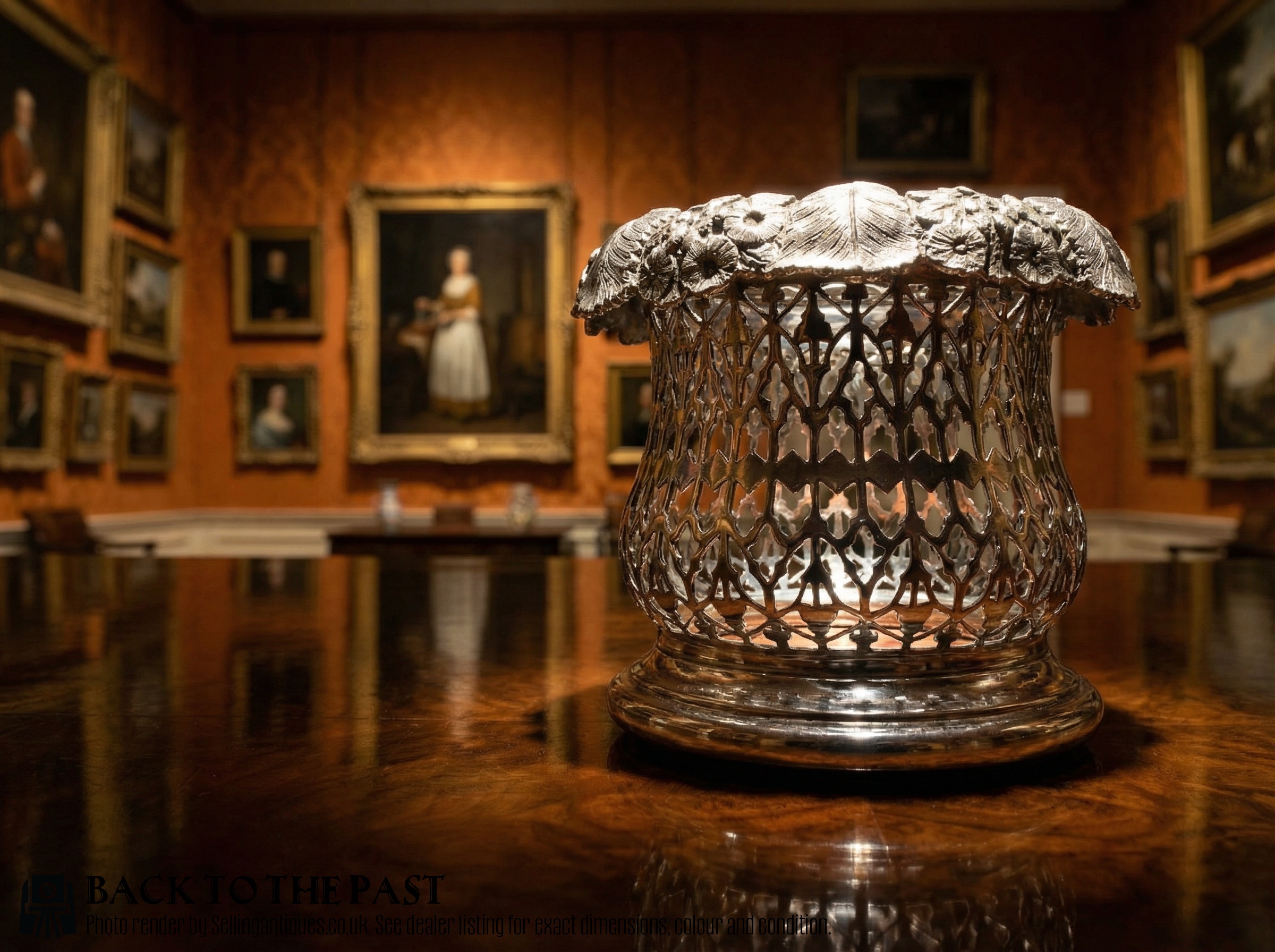
Antique Bottle Coaster, English, Silver Plate, Decorative Drinks Rest, Victorian, Victorian
Priced at £895 from London Fine Antiques
Early silversmiths cut the openwork patterns by hand using a piercing saw. It took considerable time to file the edges smooth.
Rollers later stamped out bands of silver. Workshops soldered these repeating strips together to form the circular sides.
Notice the wooden bases. Turners shaped them on a lathe with concentric rings to grip the bottom of the glass.
"Carriage coasters exist for travelling. They have higher sides to keep the bottles upright over rough roads."
"Some bases unscrew. This allowed the owner to clean the silver without getting the wooden part wet."
"A few Georgian workshops added small silver wheels. These rolling versions are highly sought after today."
Based on almost 25 years of Sellingantiques UK antique market data, Antique Silver Coasters appeared 1116 times (out of 1,100,000 antiques) which gives it a rarity score of 80/100.
This score measures scarcity within the Sellingantiques archive only and is not a survey of the entire antiques market, so these statistics may not be indicative of the general availability of Antique Silver Coasters elsewhere.
Most antique silver coasters were made for standard Georgian decanters. These tended to have broader bases than standard modern wine bottles.
You can easily use them for wine. Just measure the internal diameter of the wooden base to ensure your preferred bottle will sit flat.
Yes, replacing the baize is standard maintenance. It doesn't harm the piece.
Use traditional green wool baize and a reversible adhesive.
Treat the turned mahogany base like any other piece of period furniture. Wipe away dust and drips with a dry cloth after use.
Applying a light coat of traditional beeswax every few months keeps the wood fed. Never immerse the coaster in water, as the wood will swell and split.
That head is the duty mark. It indicates the silversmith paid the required tax to the Crown when the piece was assayed.
This stamp was introduced during the reign of George III. It helps narrow down the production date of your antique silver coaster.
Please note: This Antique Silver Coasters guide and its associated pricing data are provided for general informational purposes only. It does not constitute formal financial, investment, or appraisal advice and should not be relied upon as the sole basis for any commercial activity, purchasing, or sales decisions. Sellingantiques.co.uk accepts no liability for any actions taken in reliance on this information. Always consult with a qualified professional or independent appraiser.
