
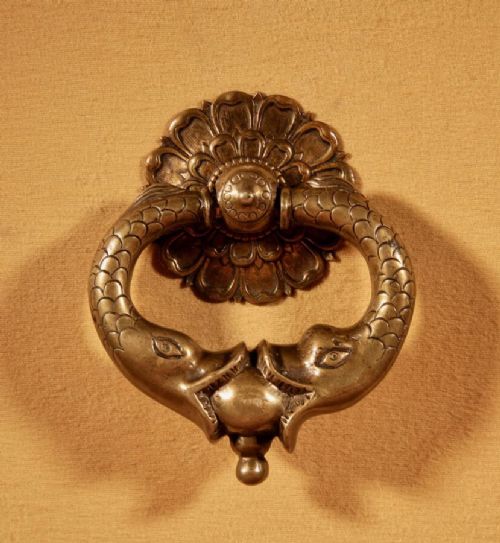


A 2026 Guide by Sellingantiques
Early domestic doors relied on simple wooden latches and leather straps before metal became common.
Look for the shift from surface-mounted rim locks to mortice locks hidden inside the timber. This happened gradually through the eighteenth and nineteenth centuries.
Victorian foundries mass-produced antique door hardware, shipping matched sets of knobs and escutcheons across the empire.
Decorative finger plates arrived to protect French-polished doors from dirty hands.
Changes in room status dictated the hardware. Grand reception rooms got brass or glass, while servants' quarters kept plain iron or wood.
Kenrick & Sons operated out of West Bromwich. They cast high-quality iron hardware throughout the nineteenth century.
Carpenter & Co focused on rim locks. Their brass maker's plaques sometimes survive on the main lock casing.
Look out for Tonks. This Birmingham firm stamped a sunburst trade mark on their brass hinges and fittings.
The 2026 retail price guide for Antique Door Hardware is drawn from a proprietary archive of over 1.1 million retail prices indexed by Sellingantiques since 2003. This guide relies exclusively on their own internal data; no external sources or auction records are used.
Analysing nearly 25 years of UK antique market history alongside current retail values, the data indicates that typical UK retail prices for Antique Door Hardware range between £400 and £2,900. Entry-level prices generally fall under £400 and premium examples upwards of £2,900.
Spindles connect the knobs through the door. Earlier ones thread directly into the knob base, secured by a tiny grub screw.
Escutcheons protect the keyhole from clumsy key strikes. Some incorporate a swinging drop cover to block draughts.
Rim locks sit squarely on the door surface. They often feature brass keeps and heavy iron cases.
Sand casting was standard for brass fittings. Molten metal poured into sand moulds left a slightly textured back surface that makers rarely polished.
Blacksmiths forged early iron pieces by hand. You will spot hammer marks and irregular edge profiles on these thumb latches.
Machine stamping arrived later, pressing flat sheets of brass into hollow knobs. These are lighter and lack the solid heft of cast examples.
"Many Victorian brass door knobs unscrew into two halves. This allowed servants to polish the metal without smudging the door paint."
"Symmetrical keyholes on rim locks mean they are reversible. You can mount the same lock on either a left-hand or right-hand opening."
"Glass knobs capture and reflect natural light. Makers cut complex facets into the surface to brighten dark entrance halls."
Based on almost 25 years of Sellingantiques UK antique market data, Antique Door Hardware appeared 466 times (out of 1,100,000 antiques) which gives it a rarity score of 91/100.
This score measures scarcity within the Sellingantiques archive only and is not a survey of the entire antiques market, so these statistics may not be indicative of the general availability of Antique Door Hardware elsewhere.
Yes, but you usually need an adapter. Modern pre-drilled doors have larger holes than antique roses were designed to cover.
Spindles are another factor. Antique threaded spindles are often a different thickness to modern metric locks, so you might need a specialist sleeve to make them turn smoothly.
Remove them from the door first. Take out the fixing screws carefully, as old iron slots strip easily.
Boil the metal parts in water with a bit of washing soda. The heat softens the old gloss layers, letting you peel the paint away in sheets rather than scraping at the iron.
Dry them thoroughly straight away. Leaving bare cast iron wet invites surface rust within hours. Finish with a light coat of microcrystalline wax.
They often function perfectly after a clean. The internal mechanics are simple and rely on thick brass or iron levers.
Springs are the usual failure point. If the latch sags, a locksmith can usually forge and fit a replacement steel spring to bring it back to life.
Timber latches belong on cottage doors. Wood was standard for secondary rooms long after metal became cheap, so keeping it retains the character of the space.
Hide glue works well for internal timber splits. Work it into the crack and clamp it tight overnight. It holds strong and sits right with the period of the piece.
Avoid swapping to iron unless the wood is missing chunks. A repaired original latch tells the history of the house better than a metal replacement.
Please note: This Antique Door Hardware guide and its associated pricing data are provided for general informational purposes only. It does not constitute formal financial, investment, or appraisal advice and should not be relied upon as the sole basis for any commercial activity, purchasing, or sales decisions. Sellingantiques.co.uk accepts no liability for any actions taken in reliance on this information. Always consult with a qualified professional or independent appraiser.
