
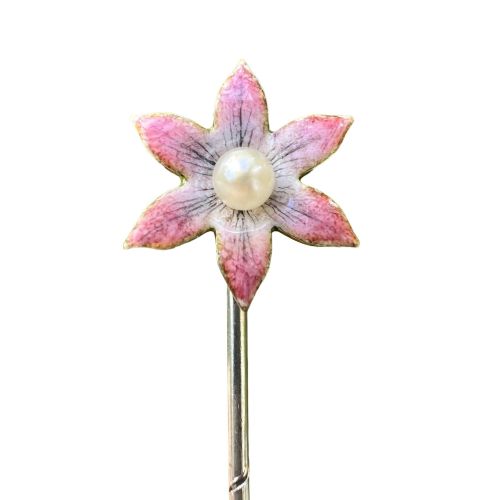
A 2026 Guide by Sellingantiques
Wealthy gentlemen started using these to secure their cravats in the late eighteenth century.
By the Victorian era, wearing an antique tie pin became a standard daily habit for the middle classes.
Sport and novelty themes grew popular. They appear often on informal daywear pins from the Edwardian period.
Turn of the century dress codes. These often dictated which motifs suited day or evening wear.
Consider the modern flat necktie. Its rise eventually shifted demand towards the spring-loaded tie clip.
Retailers like Liberty & Co sold distinct enamelled antique tie pins during the Arts and Crafts movement.
Fabergé produced complex examples for the Russian market. They often feature guilloché enamel and precious stones.
Trade relied heavily on anonymous manufacturing jewellers. Most operated in the workshops of Birmingham and London.
The 2026 retail price guide for Antique Tie Pins is drawn from a proprietary archive of over 1.1 million retail prices indexed by Sellingantiques since 2003. This guide relies exclusively on their own internal data; no external sources or auction records are used.
Analysing nearly 25 years of UK antique market history alongside current retail values, the data indicates that typical UK retail prices for Antique Tie Pins range between £200 and £1,300. Entry-level prices generally fall under £200 and premium examples upwards of £1,300.
The finial or head is the visual draw. These range from simple gold knots to elaborate micromosaic plaques.
Notice the shaft. Many have a twisted or spiralled section halfway down to grip the silk fabric.
Removable safety protectors sit at the sharp base. These small metal clutches prevent the pin backing out.
Jewellers often drew the stems by pulling gold wire through a steel plate until it reached the right gauge.
Hand-chasing was used to shape the intricate animal heads found on sporting antique tie pins.
Examine the joint. The finial was usually hard-soldered directly to the top of the shaft.
"Mourning pins were sometimes distributed to close friends and family members at nineteenth-century funerals."
"Miniature portraits painted on ivory or enamel were worn as discreet tokens of affection."
"Sporting gentlemen often wore pins depicting their specific breed of hound or a favoured game bird."
Based on almost 25 years of Sellingantiques UK antique market data, Antique Tie Pins appeared 163 times (out of 1,100,000 antiques) which gives it a rarity score of 97/100.
This score measures scarcity within the Sellingantiques archive only and is not a survey of the entire antiques market, so these statistics may not be indicative of the general availability of Antique Tie Pins elsewhere.
Many people wear them on the lapel of a tailored jacket rather than in a necktie. They work well as small brooches on heavy wool coats.
Always use a clutch at the sharp end. Pushing the pin through a dense fabric requires care to avoid bending the stem.
That small chain acts as a secondary safety device. It typically has a tiny T-bar or ring at the loose end.
You pass the main pin through the tie, then push the T-bar through a nearby buttonhole. If the main stem slips out of the silk, the chain catches the piece before it falls.
A competent jeweller can cut down a gold shaft and reshape the point.
It alters the original proportions but makes the piece more wearable if you plan to use it on a shallow lapel instead of a thick cravat.
Woven hair was a standard feature in nineteenth-century sentimental and mourning jewellery.
The compartment usually sits flush behind the finial. It allowed the wearer to keep a physical reminder of a loved one close to them without it being visible to the public.
These glazed sections need to be kept dry to prevent the hair from deteriorating.
Please note: This Antique Tie Pins guide and its associated pricing data are provided for general informational purposes only. It does not constitute formal financial, investment, or appraisal advice and should not be relied upon as the sole basis for any commercial activity, purchasing, or sales decisions. Sellingantiques.co.uk accepts no liability for any actions taken in reliance on this information. Always consult with a qualified professional or independent appraiser.
