

A 2026 Guide by Sellingantiques
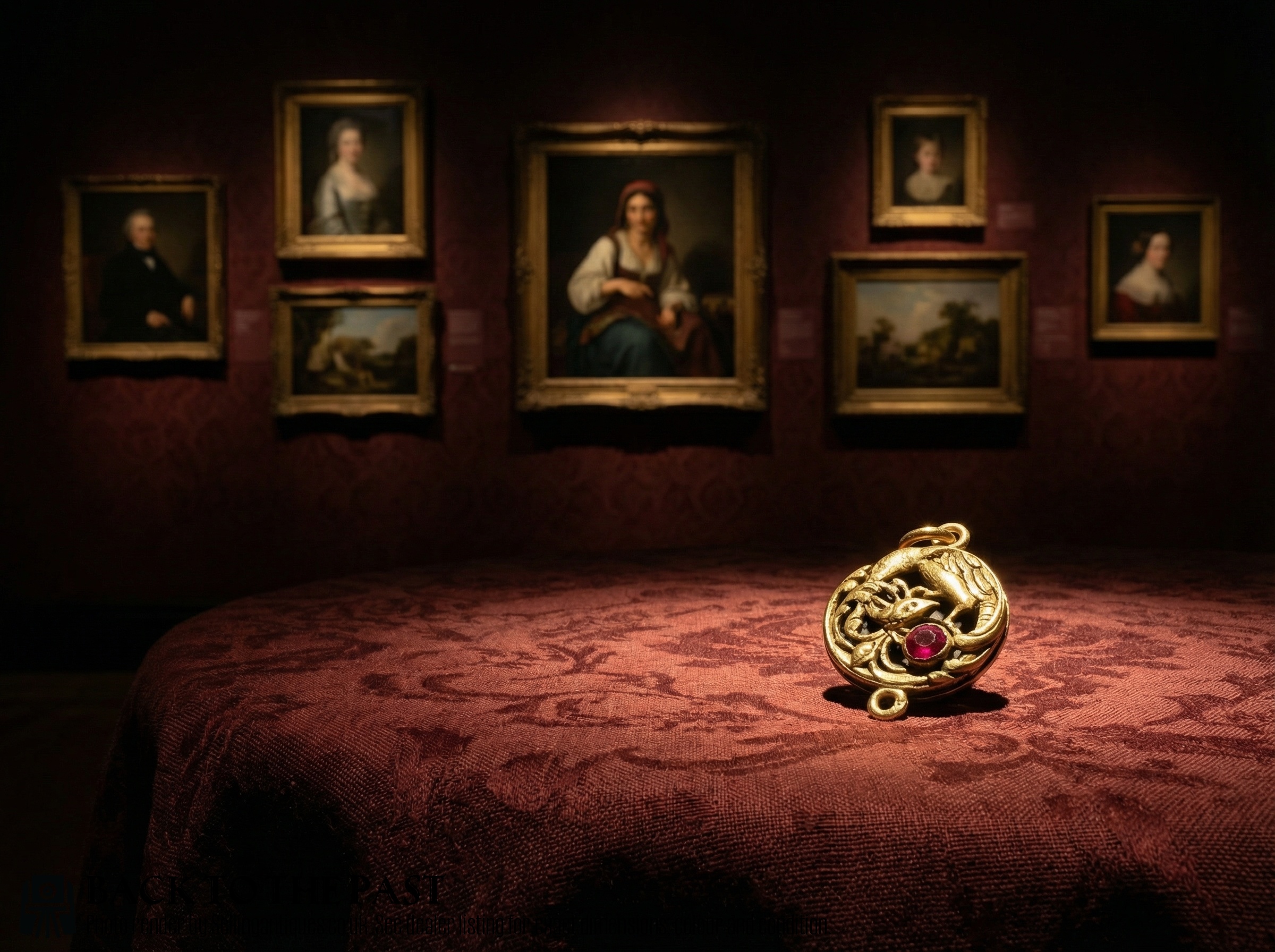
French Art Nouveau Griffon Chimera 18 Karat Yellow Gold Ruby Charm Pendant, 1880
Priced at £1,650 from ShinyPrettyThings Ltd
Georgian examples often doubled as mourning jewellery. You find a lot containing woven hair beneath a rock crystal cover.
Look for the shift during the Victorian period. Antique pendants got heavier and frequently incorporated symbolic motifs like snakes or anchors.
Edwardian workshops favoured light, openwork designs. Platinum started replacing silver, allowing jewellers to create the delicate garland styles that defined the era.
Guard chains worn long over the bodice. Standard practice for suspending them throughout the nineteenth century.
Art Deco changed the silhouette entirely by introducing strict geometry and stepped outlines.
Carlo Giuliano operated in late nineteenth-century London. His workshop produced elaborate neo-Renaissance antique pendants heavily reliant on polychrome enamel and seed pearls.
René Lalique moved the form toward art glass and horn. His turn-of-the-century Parisian workshop shaped the Art Nouveau silhouette.
Most surviving examples carry no maker's mark at all. The provincial jewellery trade relied on anonymous workshops supplying retail jewellers across the country.
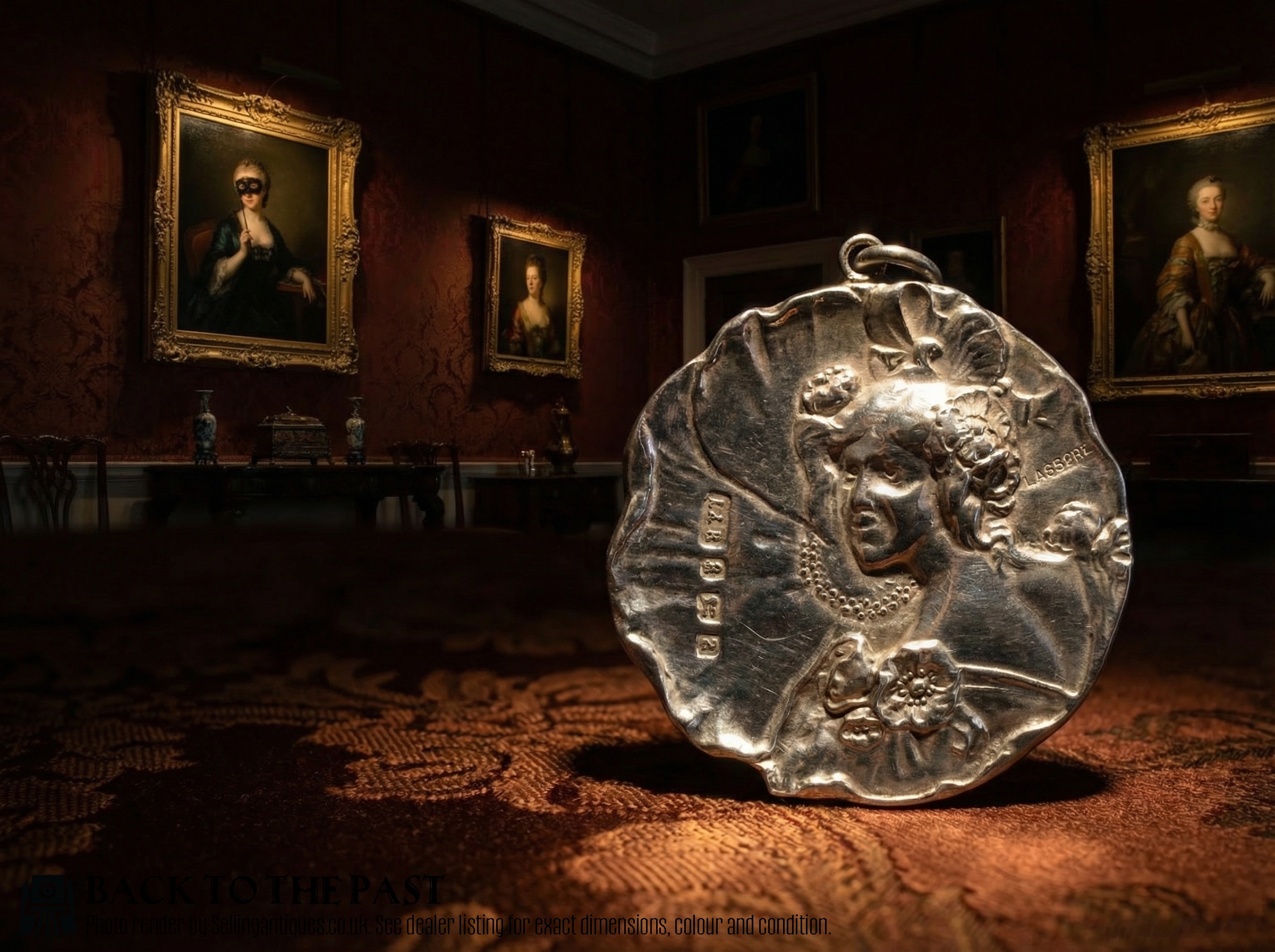
Antique Art Nouveau Portrait Sterling Silver Pendant - Dated 1900, 1900
Priced at £185 from Lancastrian Jewellers
The 2026 retail price guide for Antique Pendants is drawn from a proprietary archive of over 1.1 million retail prices indexed by Sellingantiques since 2003. This guide relies exclusively on their own internal data; no external sources or auction records are used.
Analysing nearly 25 years of UK antique market history alongside current retail values, the data indicates that typical UK retail prices for Antique Pendants range between £300 and £2,700. Entry-level prices generally fall under £300 and premium examples upwards of £2,700.
The bale is the uppermost loop. This attachment point often carries its own decorative engraving or small set stones.
Removable brooch fittings turn up on the reverse. A dual-purpose mechanism allowed the piece to pin directly to a dress.
Articulated drops add movement at the base. Small pearls or briolette-cut gems suspend freely from the main body.
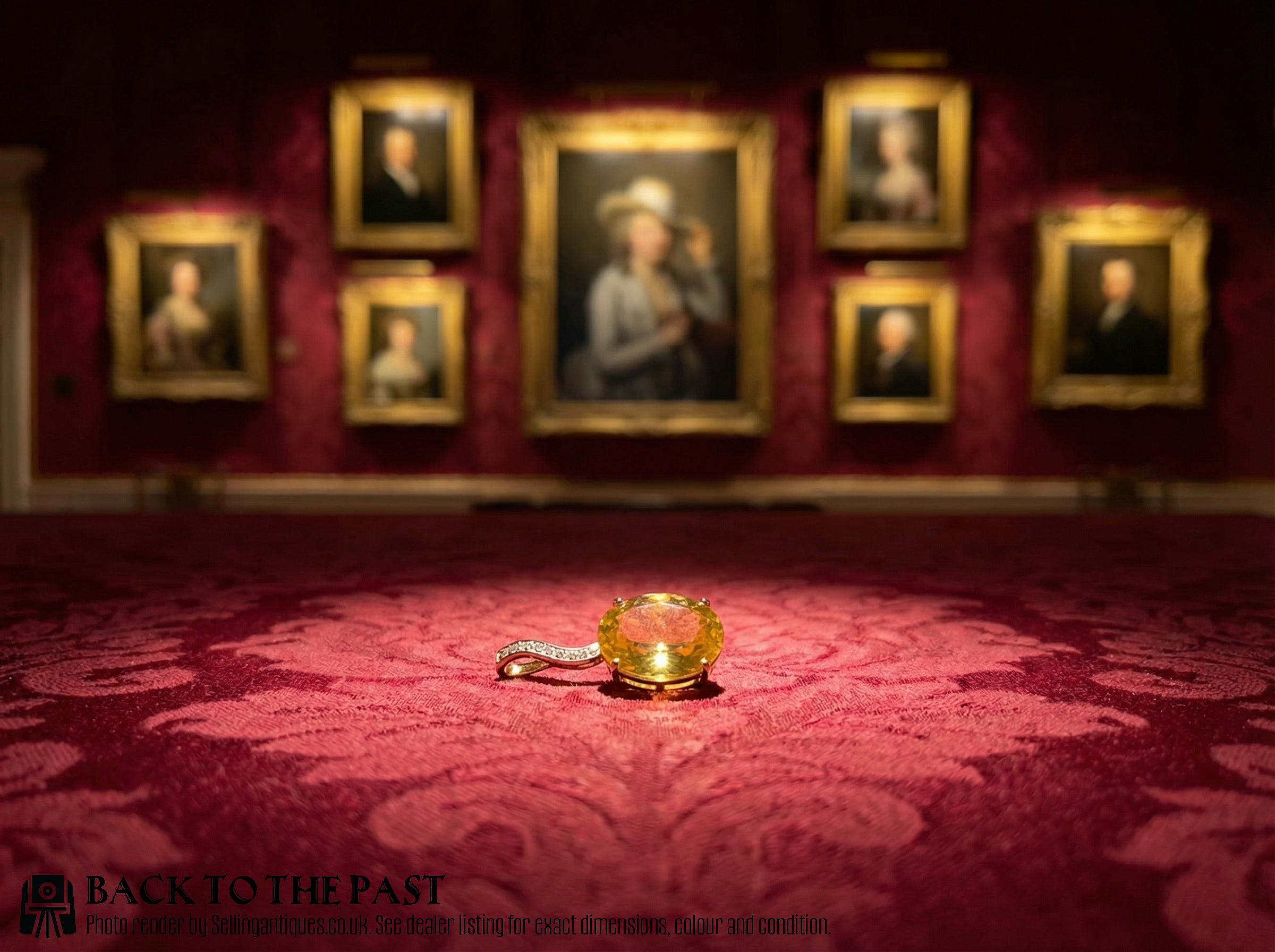
9ct Gold Diamond & Large Yellow Quartz Drop Pendant, 1960
Priced at £120 from AgAu Jewellery
Bench jewellers carved early settings directly from gold sheet. They pierced out complex fretwork entirely by hand using fine saw blades.
Platinum fabrication required much hotter torches. Once the oxyhydrogen blowpipe became standard, workshops could draw the metal into fine wires for Edwardian lace-like designs.
Cast components grew common later. Pouring molten metal into moulds sped up production compared to forging and assembling every individual collet.
"Many were originally part of larger parures. A central drop could often be unhooked from a bulky necklace to wear simply on a ribbon."
"Hidden compartments held solid perfume. Tiny vinaigrette sections allowed the wearer to carry a pleasant scent discreetly."
"Portrait miniatures were painted on ivory slices thinner than a fingernail. The artists worked with single-hair brushes to achieve the required detail."
Based on almost 25 years of Sellingantiques UK antique market data, Antique Pendants appeared 9519 times (out of 1,100,000 antiques) which gives it a rarity score of 15/100.
This score measures scarcity within the Sellingantiques archive only and is not a survey of the entire antiques market, so these statistics may not be indicative of the general availability of Antique Pendants elsewhere.
The metal wraps entirely behind the gemstone. There is no opening at the rear.
Jewellers placed a layer of metal foil inside. This bounced light back up through the stone.
That glass window is a locket compartment. Putting hair in jewellery was a common sentimental tradition throughout the Georgian and Victorian eras. People wore it to keep a physical reminder of a loved one close to the body.
It is often associated with mourning, but hair was just as frequently exchanged as a token of friendship or romantic love. The braider would work the strands over a special table before the jeweller sealed the woven result beneath the crystal bezel.
You need to treat paste with care. It's essentially lead glass and will scratch much faster than a diamond or sapphire if worn daily.
Water is the bigger problem. Most paste is set over foil in a closed back. If moisture gets behind the glass, it tarnishes the foil and dulls the stone.
Yes, that's normal. Antique gems were cut by hand under different lighting conditions. They focused on making the stone sparkle by candlelight rather than under modern halogen bulbs.
The cuts themselves are deeper and less uniform. Early faceted coloured stones have fewer facets than modern brilliant cuts, drawing the eye inward rather than throwing light out.
Over decades, everyday dust also works its way under the prongs. A gentle clean by a jeweller might lift the colour, but it will rarely match a laser-cut modern gem.
Please note: This Antique Pendants guide and its associated pricing data are provided for general informational purposes only. It does not constitute formal financial, investment, or appraisal advice and should not be relied upon as the sole basis for any commercial activity, purchasing, or sales decisions. Sellingantiques.co.uk accepts no liability for any actions taken in reliance on this information. Always consult with a qualified professional or independent appraiser.
