
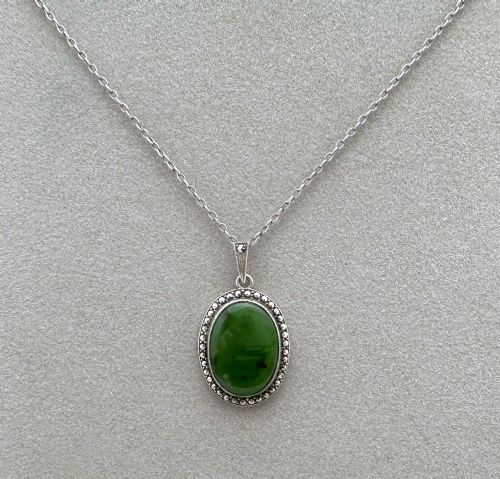
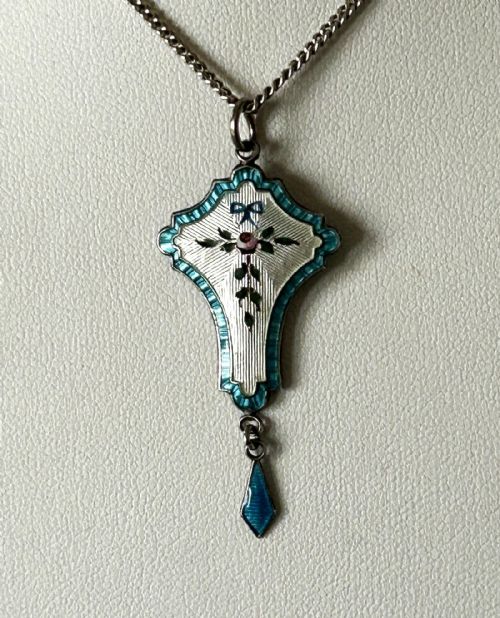


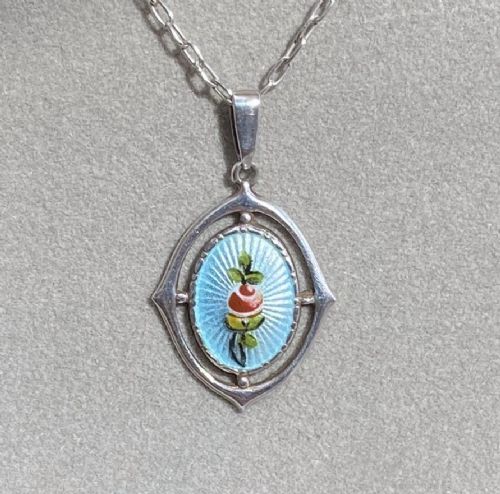
A 2026 Guide by Sellingantiques
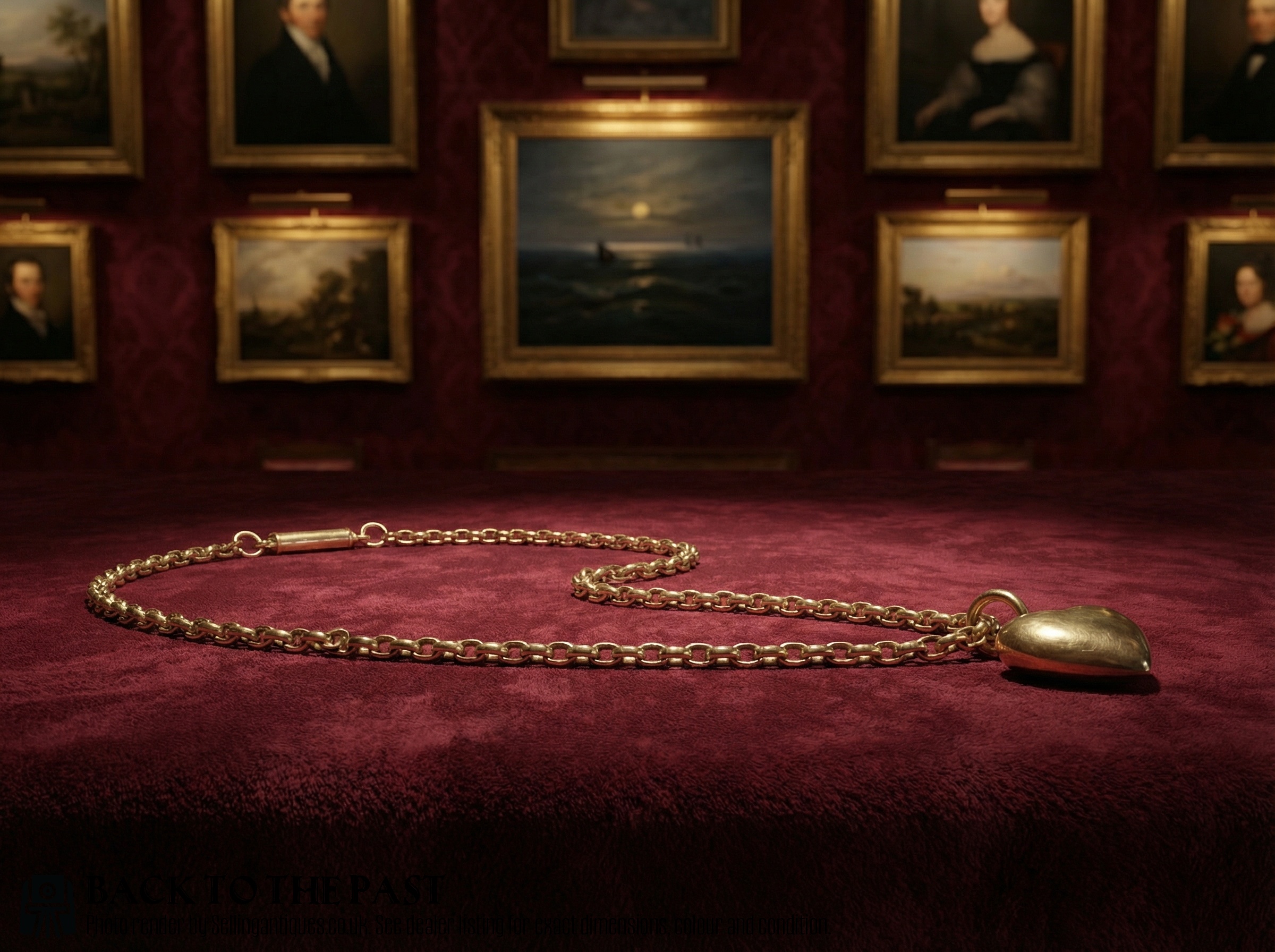
Ine 9ct Gold Necklace with Heart Pendant, 1930
Priced at £425 from Abersoch Antiques
Georgian examples often feature closed-back settings enclosing foil-backed gems to enhance their colour by candlelight.
Look at the lengths, as they changed with fashions. Chokers became popular when high necklines dropped during the Edwardian period.
Cameo carving saw a huge revival in the nineteenth century, sparked by archaeological discoveries in Italy.
Mourning jewellery emerged as a major category. Weeping willows and woven hair were standard motifs after Prince Albert died.
Castellani worked in Rome during the nineteenth century. They produced archaeological revival pieces using ancient granulation techniques.
Liberty & Co defined the British Arts and Crafts movement. Their silver and enamel designs by Archibald Knox remain instantly recognisable.
René Lalique pushed French Art Nouveau forwards. He combined horn, glass and enamel rather than relying strictly on precious gemstones.
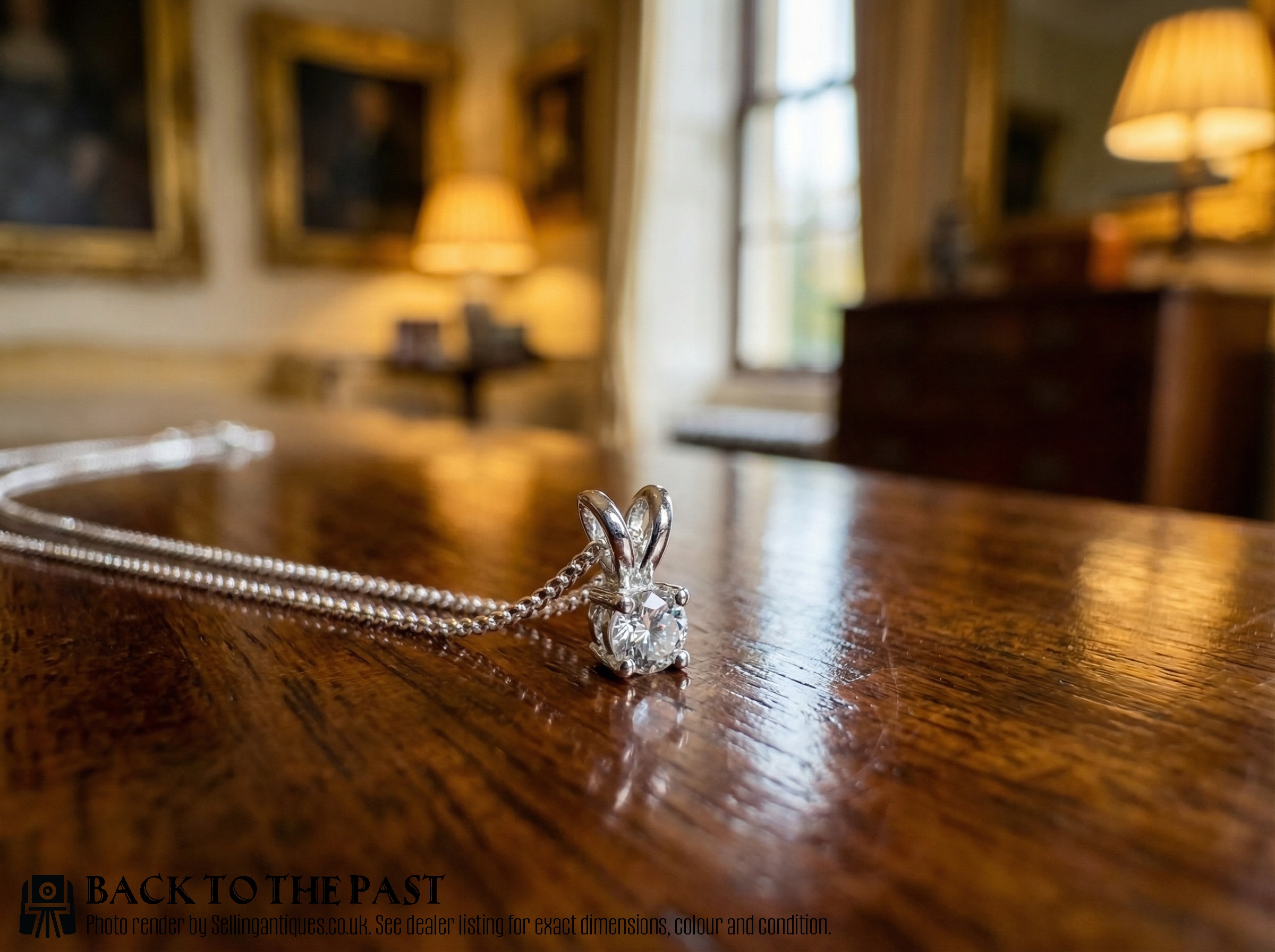
9ct White Gold Diamond (0.10ct) Solitaire Pendant Necklace, 1950
Priced at £325 from AgAu Jewellery
The 2026 retail price guide for Antique Necklaces is drawn from a proprietary archive of over 1.1 million retail prices indexed by Sellingantiques since 2003. This guide relies exclusively on their own internal data; no external sources or auction records are used.
Analysing nearly 25 years of UK antique market history alongside current retail values, the data indicates that typical UK retail prices for Antique Necklaces range between £300 and £3,000. Entry-level prices generally fall under £300 and premium examples upwards of £3,000.
Barrel clasps and simple hook-and-eye closures on the earlier antique necklaces.
Check the articulation. Good fringes and drops hinge smoothly without catching on the adjacent elements.
Removable pendants are a frequent detail. Many elaborate Victorian examples break down into smaller wearable sections.
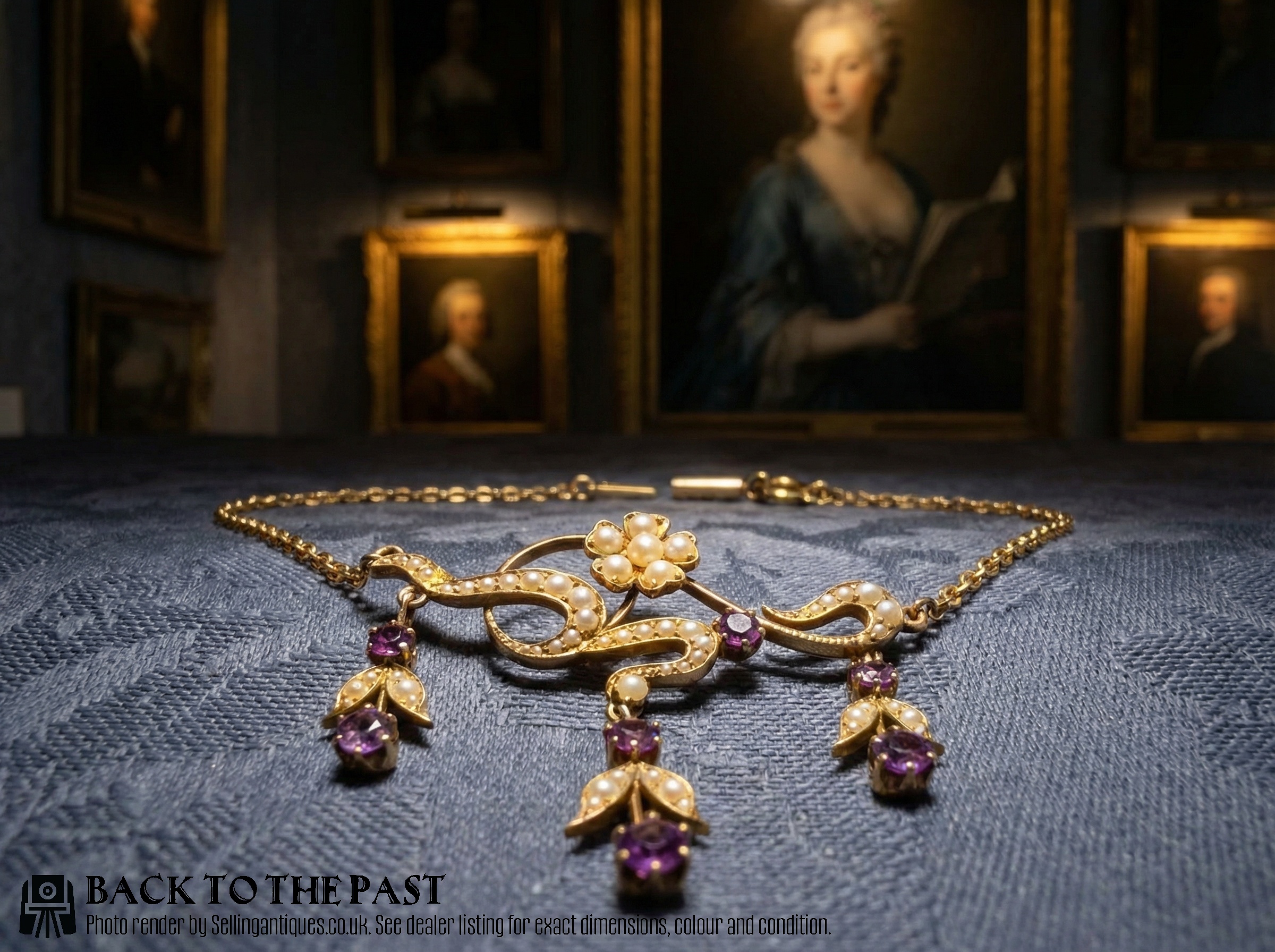
Amethyst and Seed Pearl Necklace in 15 Carat Gold with Fitted Case, 1910
Priced at £1,400 from Diamonds4you
Early stone cutting was done by hand. The resulting rose cuts have flat bottoms and faceted domes with irregular outlines.
Platinum allowed for delicate lace-like structures in Edwardian jewellery. The metal was strong enough to support diamonds with minimal visible setting.
Engine-turning lathes created precise geometric patterns beneath the enamel on late nineteenth-century pieces.
"Many antique necklaces feature hidden compartments behind the main pendant, designed to hold a miniature portrait or a lock of hair."
"Seed pearls were often strung on white horsehair. This natural fibre provided great strength and a natural curve that draped smoothly."
"Day-to-night designs offer great versatility. A complex evening necklace can convert into a simpler daytime brooch and a pair of earrings."
Based on almost 25 years of Sellingantiques UK antique market data, Antique Necklaces appeared 5487 times (out of 1,100,000 antiques) which gives it a rarity score of 33/100.
This score measures scarcity within the Sellingantiques archive only and is not a survey of the entire antiques market, so these statistics may not be indicative of the general availability of Antique Necklaces elsewhere.
Warm water and a soft cloth will handle most surface dirt. Don't submerge anything with closed-back stones or foil settings, as water will ruin the backing.
Silver dip is too harsh for antique pieces. A gentle silver polishing cloth works better to lift tarnish without stripping away the patina in the recesses.
Silk threads stretch and rot over the decades. A loose thread is a warning sign that they're about to snap, which risks scattering the beads.
Take it to a jeweller for restringing. They'll knot the silk between each bead to prevent rubbing and ensure you only lose one bead if it breaks again.
Yes, they'll usually add an extension chain to the back.
This modification makes smaller pieces comfortable for modern necklines without altering the main front elements.
Georgian jewellers cut diamonds by hand. They used older styles like rose or mine cuts, which have fewer facets than modern cuts.
These stones were meant to sparkle under candlelight rather than bright electric lighting. Many were also set against metal foils that tarnish over time, darkening the stone.
Please note: This Antique Necklaces guide and its associated pricing data are provided for general informational purposes only. It does not constitute formal financial, investment, or appraisal advice and should not be relied upon as the sole basis for any commercial activity, purchasing, or sales decisions. Sellingantiques.co.uk accepts no liability for any actions taken in reliance on this information. Always consult with a qualified professional or independent appraiser.
