


Antique Diamond Rings
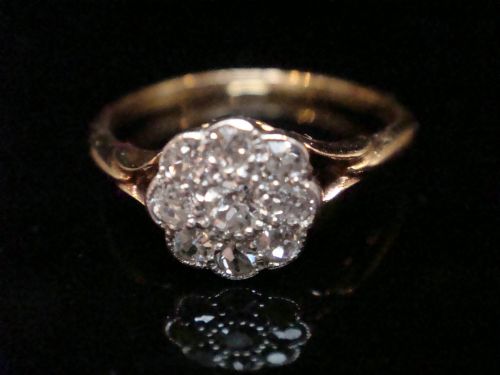
Diamond-set finger rings from the early 19th century to the 1960s, made as betrothal and dress jewels, and dominated on Sellingantiques by interwar clusters and half-hoops in 18ct gold.

What Are Antique Diamond Rings?
A very large group, over five thousand listings, running from about 1800 to 1960. Gold is the usual metal, with 18ct the commonest standard by a wide margin, and platinum turning up in a good number of titles, often as settings on a gold shank marked '18ct & Plat'.
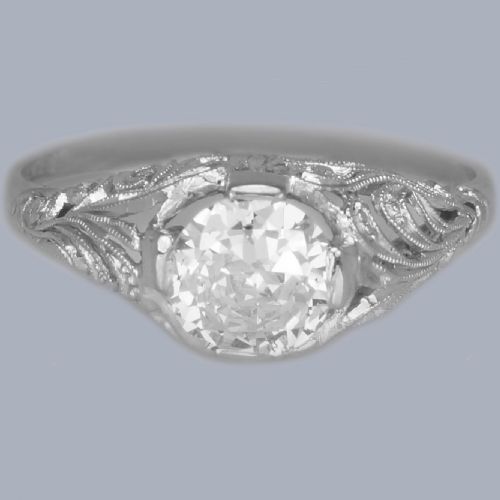
The diamonds are old-fashioned cuts: old cut, old European, old mine, rose cut, and transitional on the later rings. Modern brilliants are not what this category is about. Cutting by eye gives these stones a different look from anything made after the war.
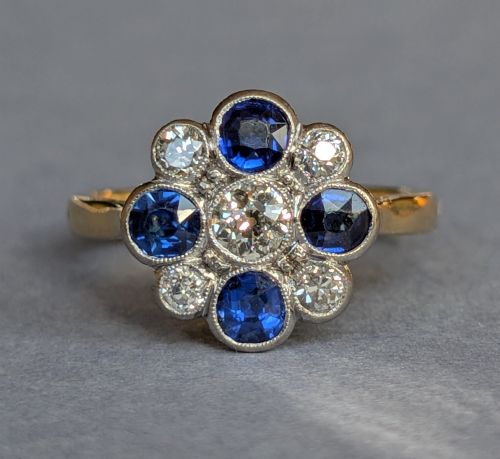
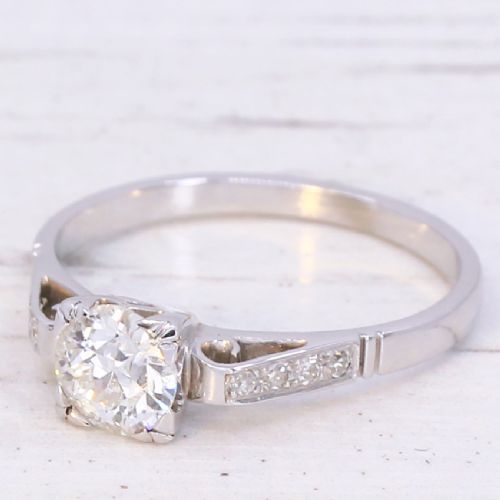
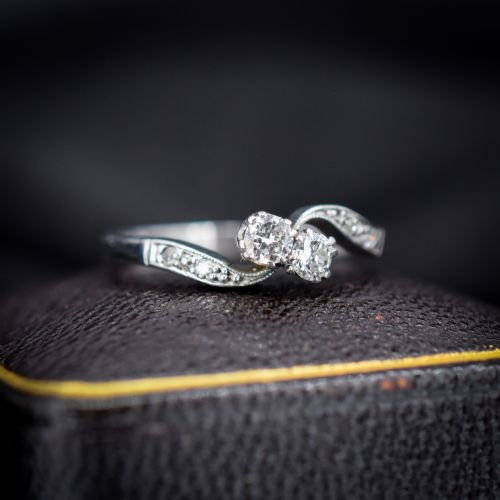
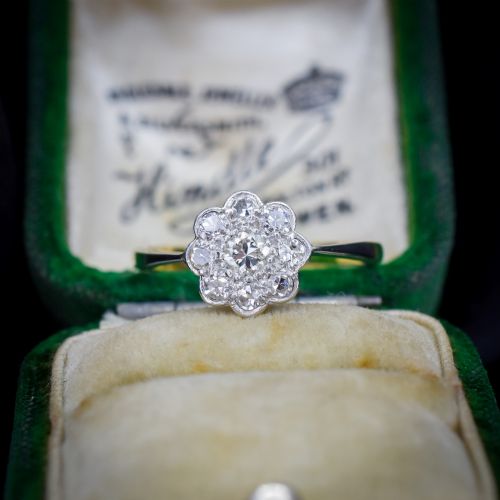
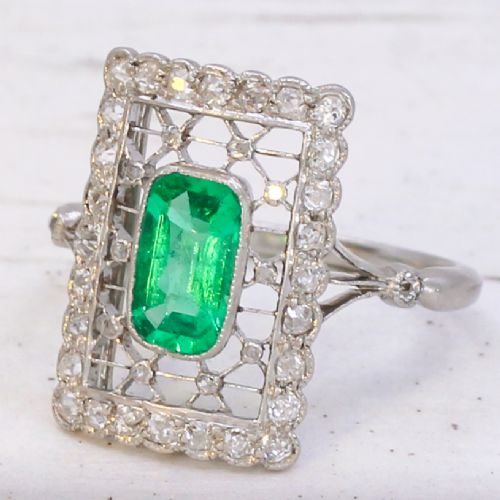
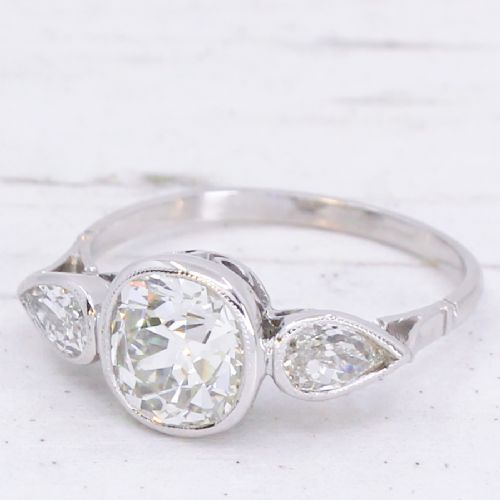
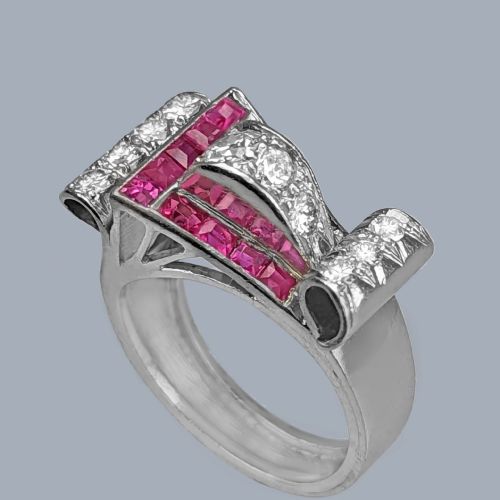
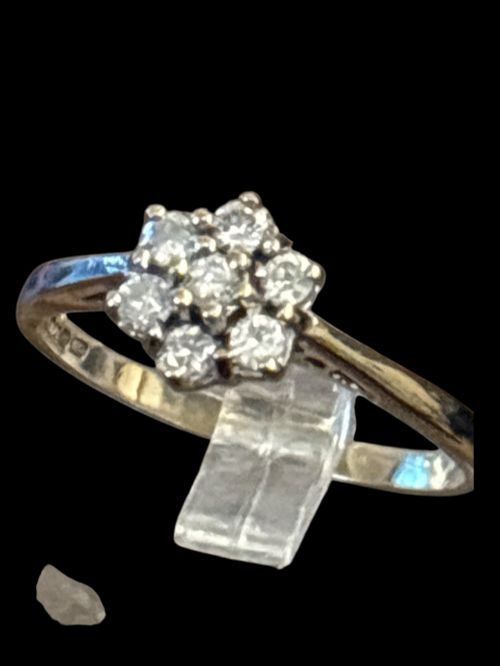
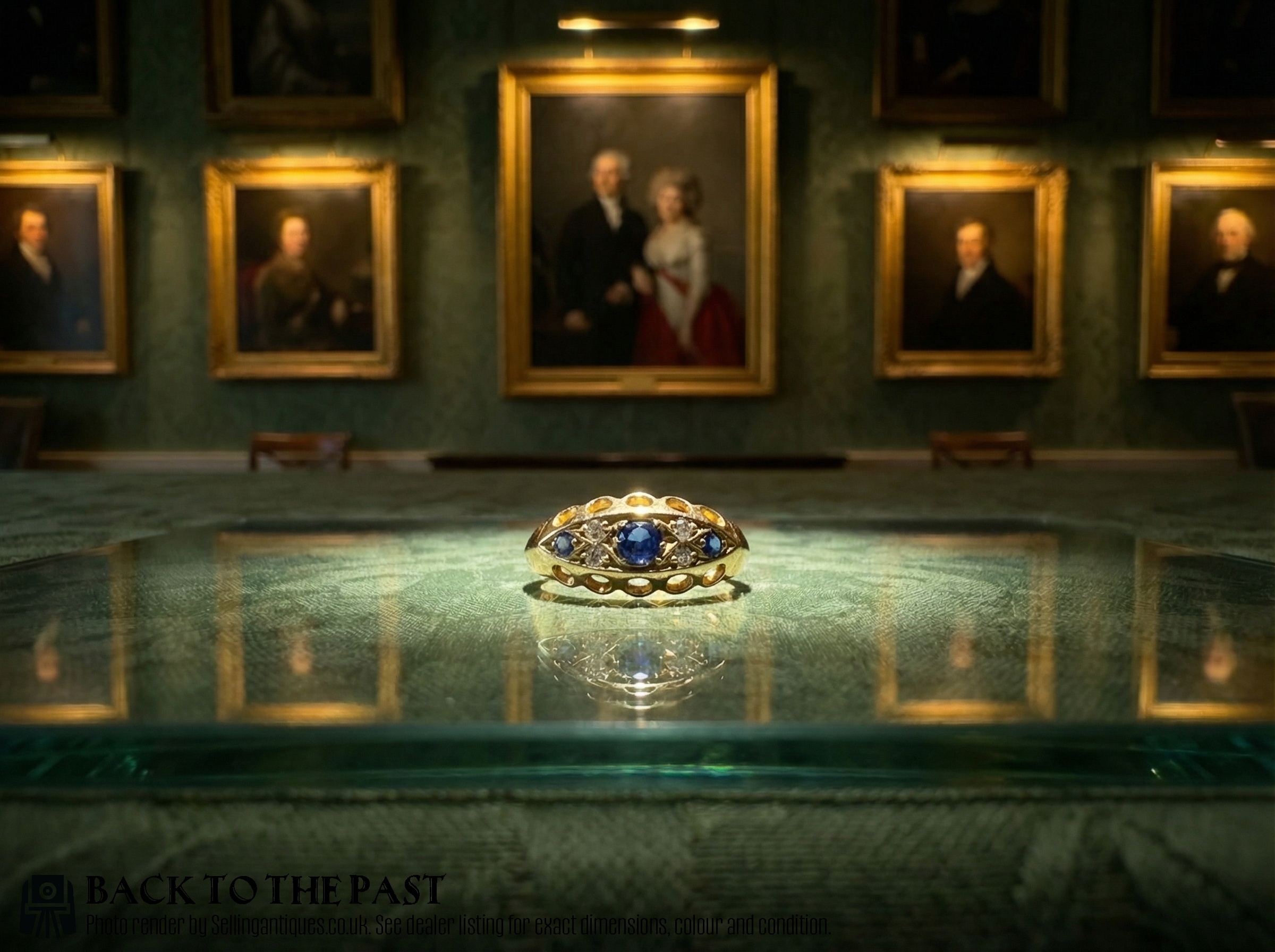
Structurally the field splits into clusters, single-stone solitaires, and multi-stone half-hoops of three or five stones, with eternity bands, gypsy star-set rings and the odd novelty behind them. Clusters are the single commonest layout, in around a fifth of all titles. A coloured stone alongside the diamonds is the norm rather than the exception, and sapphire is its usual companion, ahead of ruby and emerald.
The interwar years carry the category. 'Art Deco' appears in roughly two fifths of titles, and the 1930s alone account for more dated listings than the Victorian, Edwardian and 1890s figures combined. Dating is often era-labelled rather than exact, so a ring may be titled Art Deco while the dated field reads 1910 or 1950. Where a British assay office is quoted the year can be precise, and Birmingham, Chester and London all appear.
What Sets Them Apart
Stated diamond weight does more work than anything else. Carat weight appears in a third of titles, and the range runs from a tenth of a carat up past four carats, with a 4.05ct old pear-cut solitaire and a 4.23ct old-cut target ring at the very top. Price follows the figure closely.
Metal comes next. The 9ct rings sit at the bottom of the range, 18ct is the norm, and rings set wholly in platinum sit well up. Above that, the descriptions start naming things: independent gem reports, colour and clarity grades, and named cuts such as Asscher, old mine, old pear and marquise.
Named gem origin is the real scarcity. Ceylon appears in fewer than ninety titles, and Kashmir sapphire, padparadscha, Colombian emerald and Burmese no-heat ruby surface only once or twice each. Words like unheated, no oil and natural cluster on the higher-priced listings, as do fancy-coloured diamonds in yellow, cognac and brown.
Retail Price Guide 2026
Typical UK retail prices for diamond rings, calculated from the Sellingantiques database of over a million retail prices indexed since 2003. This retail price guide relies exclusively on Sellingantiques data; no external sources or auction records are used, so the figures do not describe the wider market.
The most expensive antique diamond ring ever sold on Sellingantiques was a 4.05 carat old pear cut diamond solitaire in platinum, in May 2019.
The Antique Diamond Rings Glossary
- Old cut
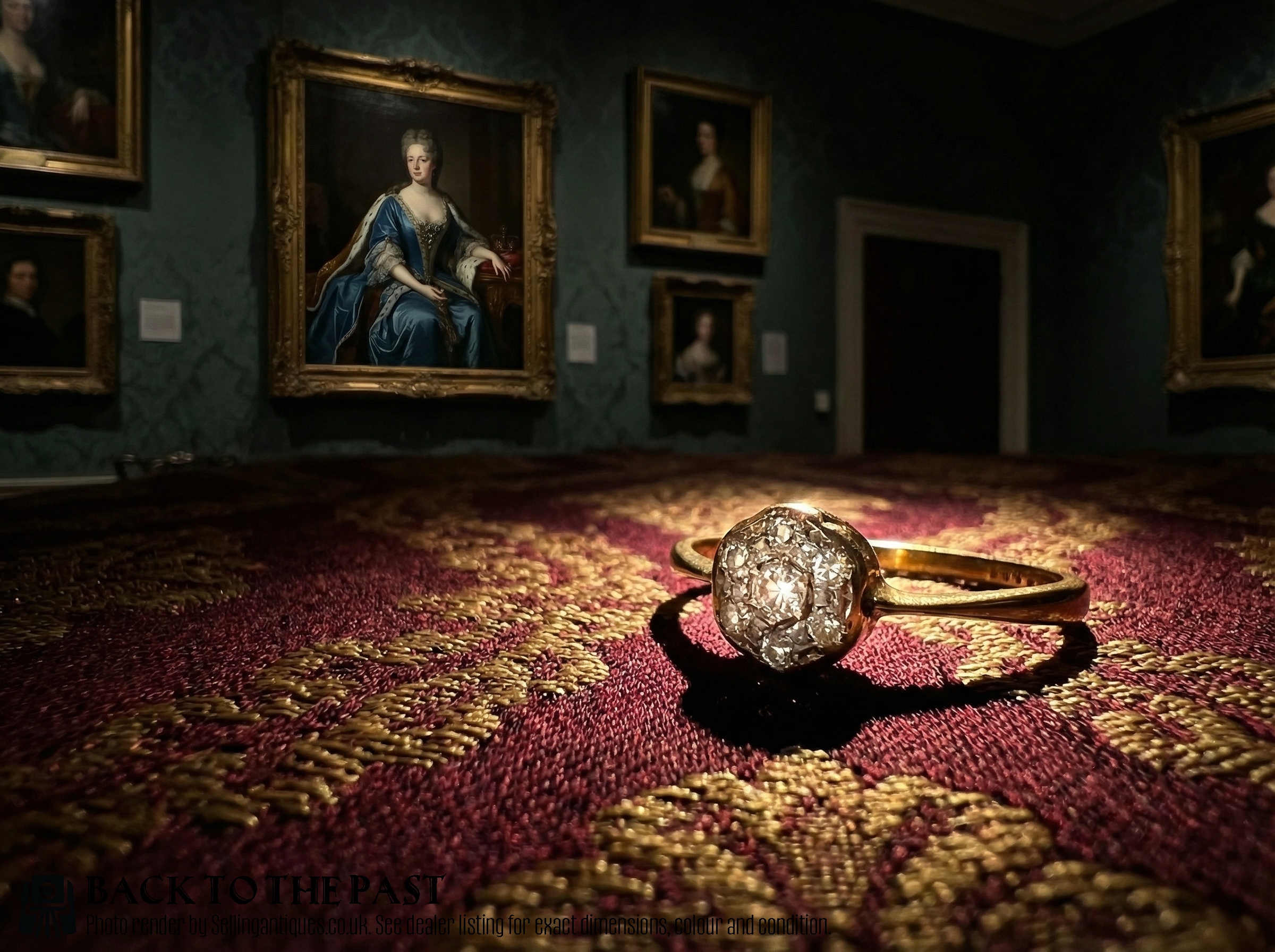
- Pre-modern brilliant cuts with a small table and an open culet, cut by eye rather than to a formula. The commonest diamond in this category, often written as old European cut.
- Cluster
- A central stone ringed by smaller ones. The single most common layout here, with daisy, target, halo, coronet and boat all named as variants.
- 18ct & plat
- A gold shank carrying platinum stone settings, a common interwar construction and often marked as such on the inside of the band.
- Trilogy
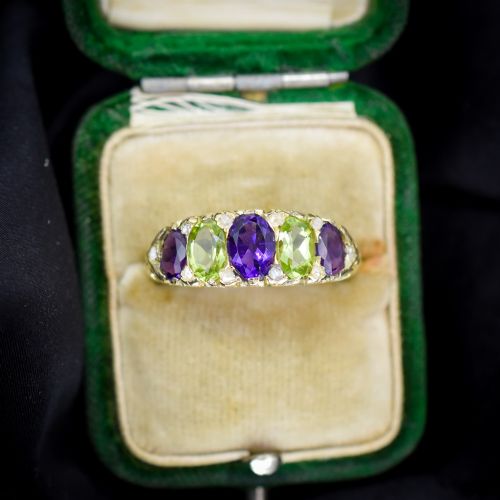
- Three stones in a row across the finger, also listed as three-stone. Its close relation is the five-stone half hoop, a graduated row along the top of the shank.
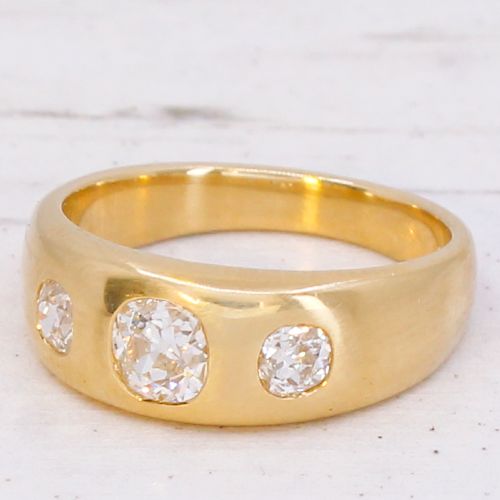
- Gypsy setting
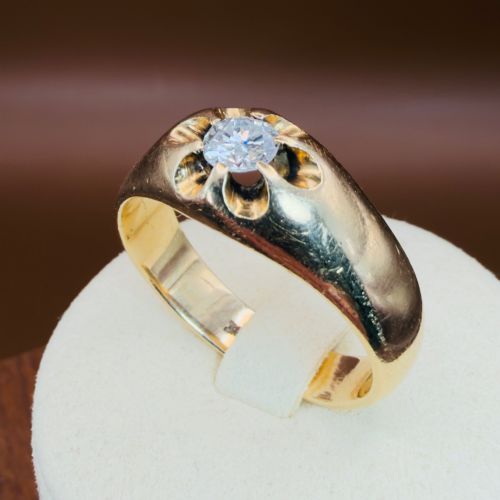
- Stones sunk flush into a heavy band, frequently with star engraving cut around each one. Turns up throughout the Victorian and Edwardian end of the category.
- Rose cut
- A flat-backed diamond with triangular facets rising to a point. Common on earlier rings and on the French thread that runs through the archive.
Frequently Asked Questions
Which period do most of these rings come from?
The interwar years. The 1930s account for the largest block of dated listings, with the 1920s behind them, and the two together make up close to half of everything with a clean year.
After that come the 1950s, Edwardian, 1960s, 1940s and 1910s, then Victorian and the 1890s. The dated field as a whole spans 1800 to 1960.
What metal are antique diamond rings usually in?
Gold, and 18ct more than any other standard. 9ct, 14ct and 15ct all appear too.
Platinum shows up in a large minority of titles, sometimes as the whole ring, more often as the settings on a gold shank. That gold-and-platinum combination is a signature of interwar work.
Why are the diamonds described as old cut?
Because they were cut before modern proportions were standardised. Old cut and old European cut stones have a small table and an open culet, and the facets were judged by eye.
Rose cut stones are flat-backed with triangular facets, and turn up on the earlier rings. Transitional cuts sit between old European and the modern round brilliant, and appear on rings from the 1940s to the 1960s.
Are coloured stones common in this category?
Yes. The great majority of these rings pair diamonds with a coloured gem rather than using diamonds alone.
Sapphire is the usual partner, well ahead of ruby and emerald. Opal, pearl, aquamarine, turquoise, garnet, citrine, amethyst, tanzanite and spinel all appear as well.
Do any makers' names appear on these rings?
No maker or retailer runs through this category. A scan of the descriptions returned nothing that stands as a category-wide name.
What does get quoted is the assay mark. Birmingham, Chester and London all appear in titles, and Chester, an office closed long since, recurs on Edwardian and Victorian pieces.
How many come up for sale each year?
Around 534 antique diamond rings are listed in a year on Sellingantiques, from 64 different dealers. That is one of the broadest dealer bases in the jewellery categories.
The supply is steady rather than seasonal, and clusters, solitaires and half-hoops make up the bulk of it.