

A 2026 Guide by Sellingantiques
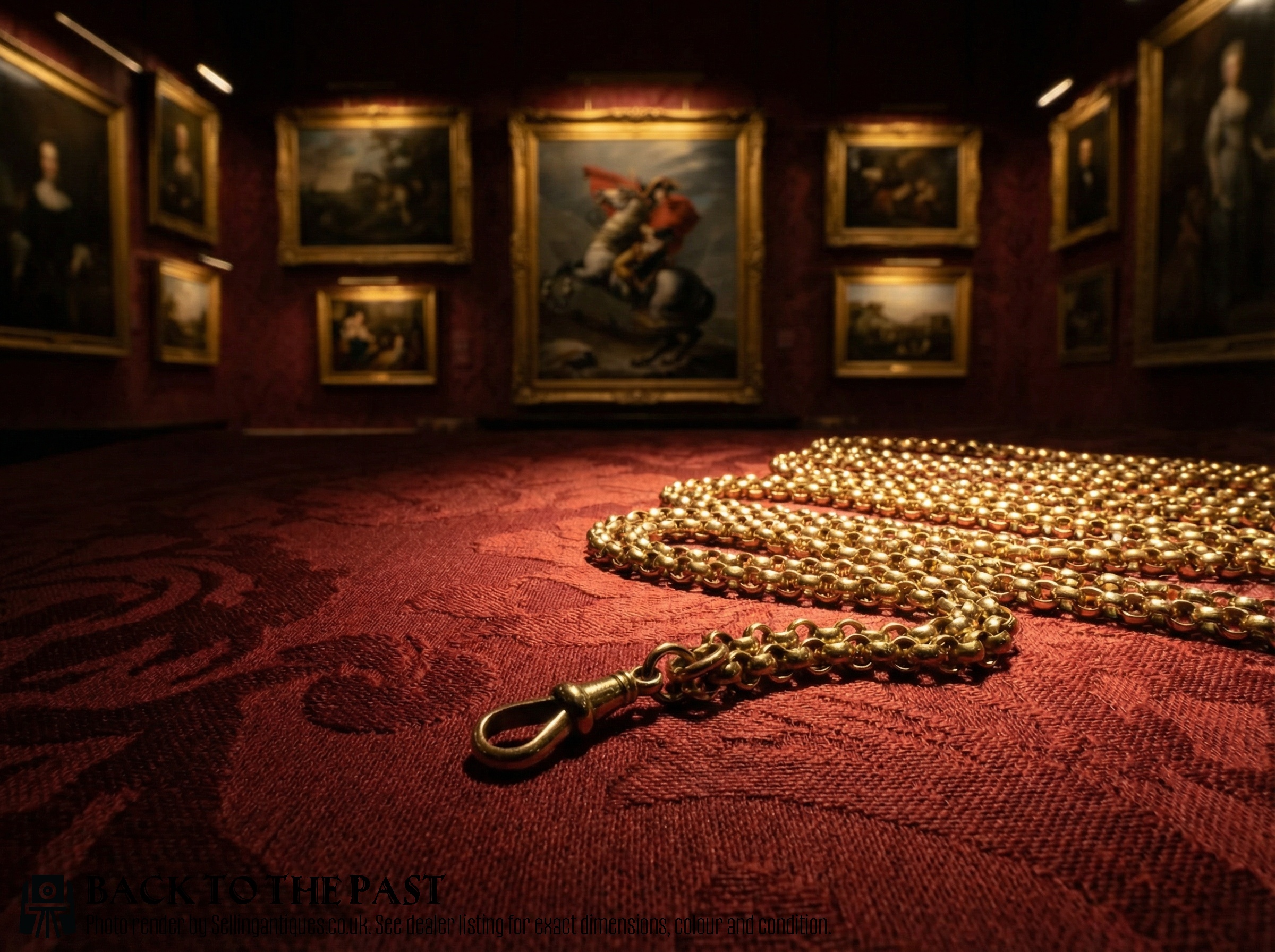
Large Heavy 9ct Gold Belcher Chain 30 Inches Long, 19th Century
Priced at £1,500 from Abersoch Antiques
Early watch chains evolved alongside the first portable timepieces in the seventeenth century.
Georgian gentlemen draped them across their waistcoats. This kept expensive watches secure but highly visible.
Long muff chains became popular later in the nineteenth century for suspending winter hand warmers.
Check the Albert style. Prince Albert popularised a specific T-bar arrangement that drops through a buttonhole, changing how men wore these items.
Note the Birmingham trade. Manton and Mole produced massive quantities of gold watch chains there during the Victorian period.
Charles Green and Son operated from the mid-nineteenth century. They specialised in heavy Albert chains.
Parisian houses like Boucheron crafted intricate long sautoir chains toward the turn of the century, incorporating diamonds and enamel.
The 2026 retail price guide for Antique Chains is drawn from a proprietary archive of over 1.1 million retail prices indexed by Sellingantiques since 2003. This guide relies exclusively on their own internal data; no external sources or auction records are used.
Analysing nearly 25 years of UK antique market history alongside current retail values, the data indicates that typical UK retail prices for Antique Chains range between £200 and £1,800. Entry-level prices generally fall under £200 and premium examples upwards of £1,800.
Swivel dog clips secure the loose ends. These allow the wearer to detach fobs or watches easily.
A T-bar sits centrally on an Albert chain to drop neatly through a waistcoat buttonhole.
Sliding medallions. Adjustable attachments on long guard chains frequently feature seed pearls or small garnets.
Early metal links were individually drawn through a steel plate and then soldered by hand at the bench.
Machine pressing slowly replaced hand fabrication for basic loop shapes during the mid-nineteenth century.
Hair braiding. Artisans wove human hair over shaped wooden moulds to create flexible memorial chains.
"Guard chains can stretch to over sixty inches long. This length allowed a tucked-in watch to reach the eye."
"Victorian jewellers often incorporated hollow links to reduce the weight while keeping a substantial appearance."
"Check the loops. Hallmarks frequently appear on every single link of a heavy pocket watch chain."
Based on almost 25 years of Sellingantiques UK antique market data, Antique Chains appeared 6123 times (out of 1,100,000 antiques) which gives it a rarity score of 29/100.
This score measures scarcity within the Sellingantiques archive only and is not a survey of the entire antiques market, so these statistics may not be indicative of the general availability of Antique Chains elsewhere.
Use a soft toothbrush and warm soapy water for plain gold or silver. Work gently around the clasps.
Dry the metal thoroughly with a soft cloth. Moisture trapped inside hollow sections causes issues.
Women wore these long guard chains looped around the neck, often tucked into a belt. The slide adjusted the loop length across the bodice.
The clip at the base held a small watch or a lorgnette. This arrangement kept essential daily items secure but within easy reach.
Yes, a jeweller can remove links from most basic curb or belcher styles. They cut the metal and solder the clasp back on. It is a standard bench job.
Complex woven pieces present more difficulty. Cutting a snake or rope design often causes the surrounding structure to unravel. You risk ruining the item if the solder flows poorly.
Those marks identify the metal purity and the assay office. They might also include a maker's mark or a date letter.
Victorian pieces often carry stamps on the T-bar and the dog clip. Sometimes you will find small stamps on every individual link of a heavy piece.
Please note: This Antique Chains guide and its associated pricing data are provided for general informational purposes only. It does not constitute formal financial, investment, or appraisal advice and should not be relied upon as the sole basis for any commercial activity, purchasing, or sales decisions. Sellingantiques.co.uk accepts no liability for any actions taken in reliance on this information. Always consult with a qualified professional or independent appraiser.
