
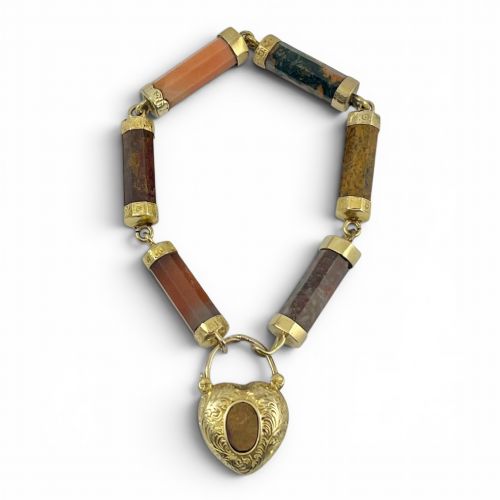


A 2026 Guide by Sellingantiques
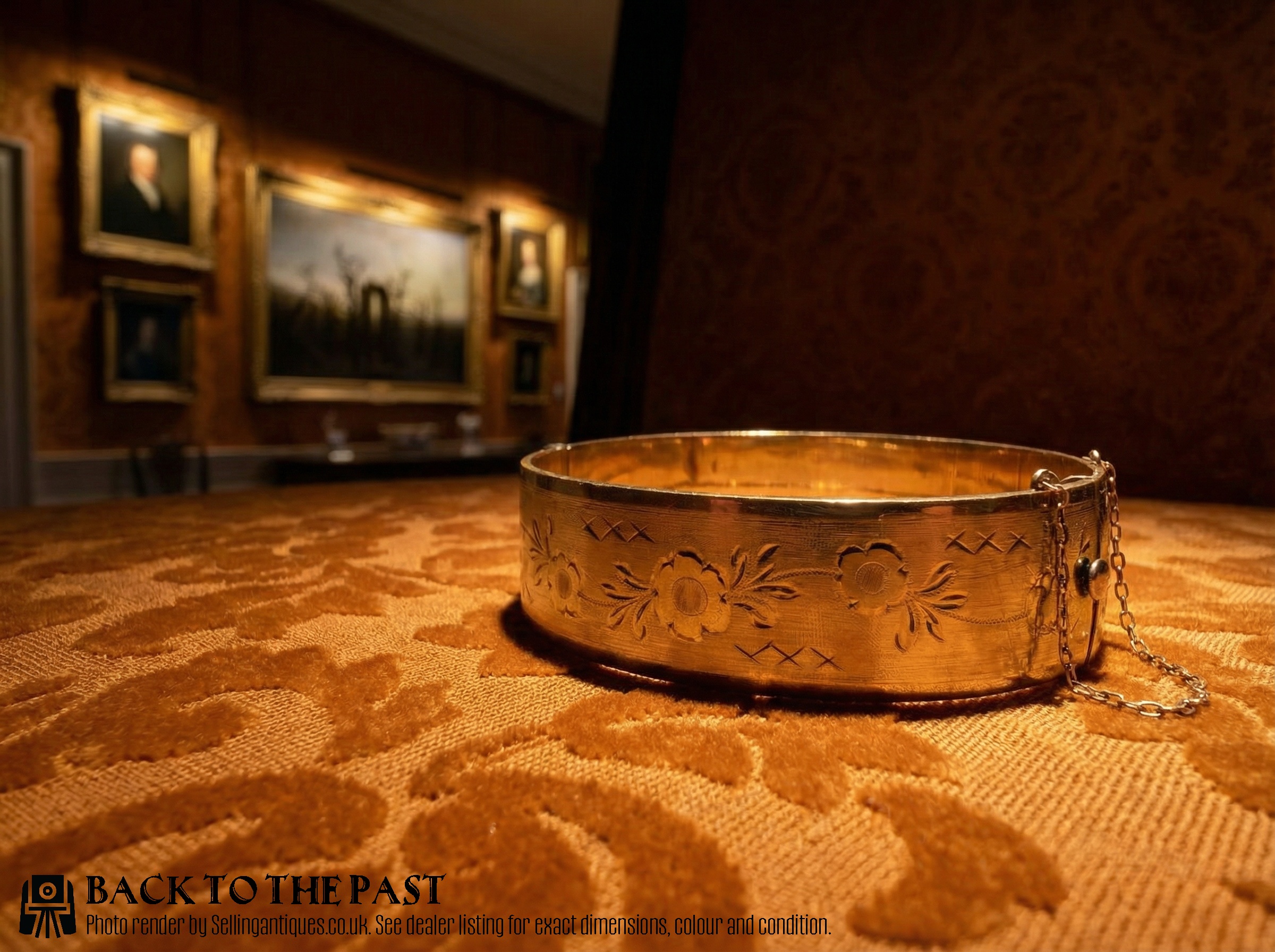
Vintage 9ct Rolled Gold Floral Engraved Bangle, 1960
Priced at £495 from Robert Harris Jewellers
Victorian women wore matching pairs of antique bangles, placing one on each wrist.
Styles shifted dramatically after Prince Albert died in 1861. Mourning jewellery became the standard across Britain, filling the market with dark enamel and Whitby jet.
Look for Etruscan Revival pieces from the 1870s. Jewellers copied archaeological finds from Italy, adding intricate wirework to plain gold bands.
Edwardian tastes favoured delicate, lighter forms. Platinum started replacing heavy gold settings during this later period.
Castellani worked in Rome during the mid-nineteenth century. They produced heavy gold antique bangles using ancient granulation techniques they revived from archaeological sites.
Carlo Giuliano set up a London workshop in 1860. His enamel and gem-set bangles catered to late Victorian high society.
Liberty & Co sold silver bangles from 1875 onwards. Archibald Knox designed many of their Celtic knotwork pieces in the early 1900s.
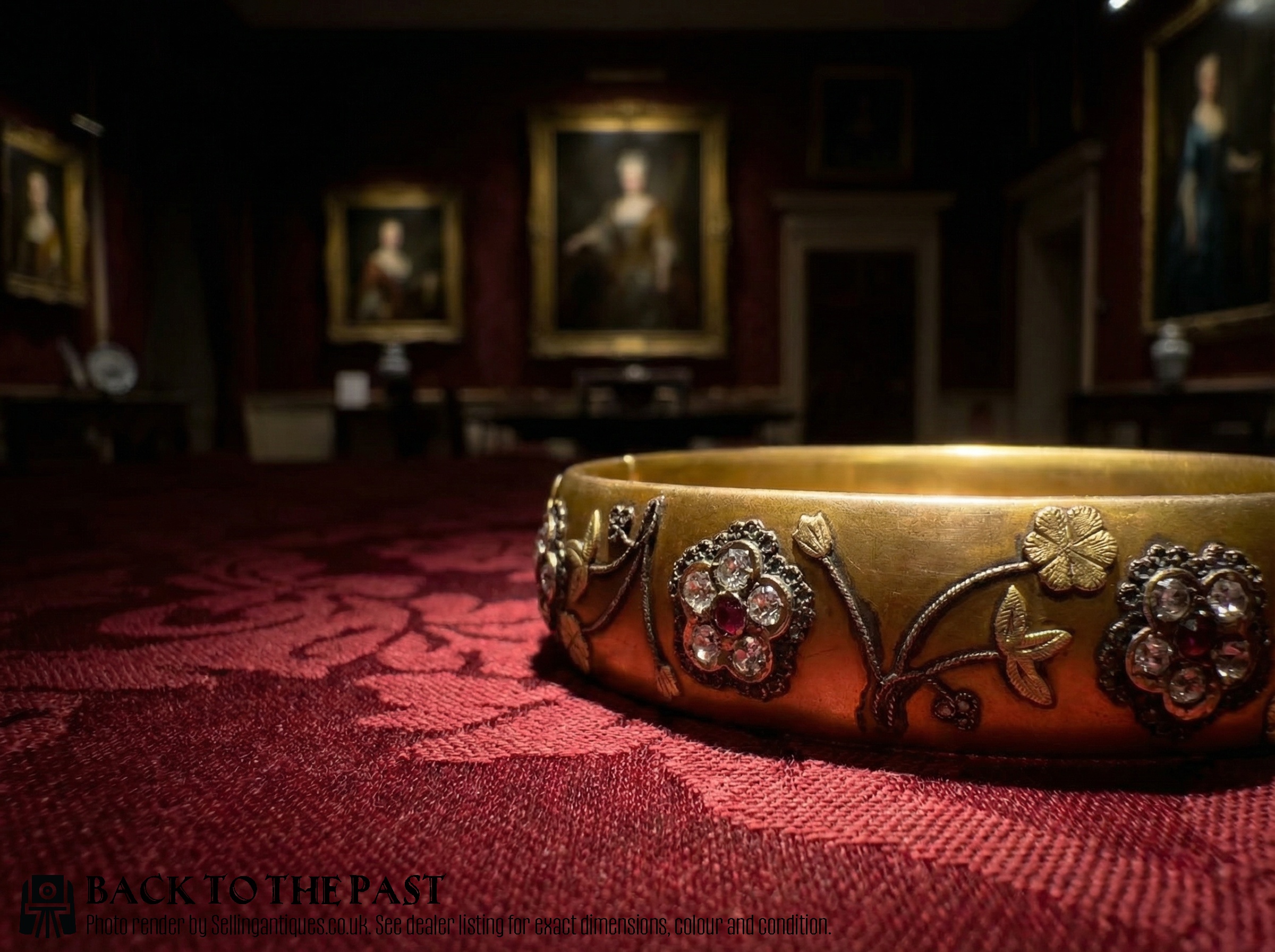
Antique 12ct Gold Filled Floral Paste Bangle Bracelet, Victorian
Priced at £465 from Lancastrian Jewellers
The 2026 retail price guide for Antique Bangles is drawn from a proprietary archive of over 1.1 million retail prices indexed by Sellingantiques since 2003. This guide relies exclusively on their own internal data; no external sources or auction records are used.
Analysing nearly 25 years of UK antique market history alongside current retail values, the data indicates that typical UK retail prices for Antique Bangles range between £300 and £3,800. Entry-level prices generally fall under £300 and premium examples upwards of £3,800.
Oval shapes sit better on the arm. A round bangle spins around, meaning any engraved motif ends up underneath the wrist.
Many feature a concealed push-button clasp. This keeps the outer design continuous and unbroken by bulky catches.
Safety chains are a standard addition to many pieces. They stop the heavy metal band dropping straight to the floor if the main box clasp fails.
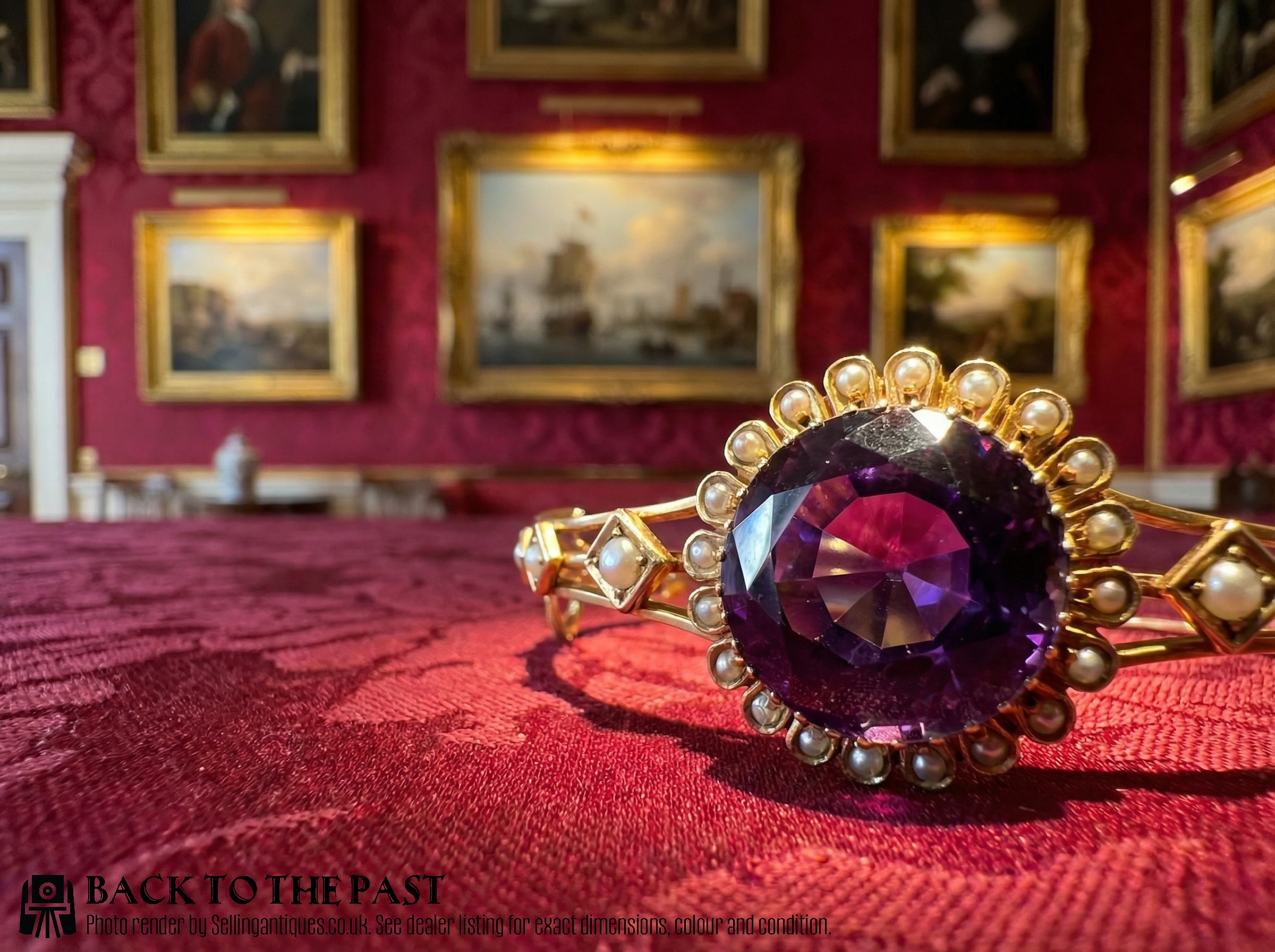
Lovely Amethyst and Pearl Bangle in 9 Carat Gold, Victorian
Priced at £1,299 from Diamonds4you
Early nineteenth-century examples are often hollow. Jewellers stamped flat gold sheets in dies.
Hinge construction improved by the 1880s. Five-knuckle joints replaced crude three-part hinges, preventing the two halves from twisting apart.
Machine-rolled gold became widespread later in the century. A thin layer of gold bonded to brass allowed cheaper mass production.
"Some concealed hidden compartments. A sliding inner panel might reveal a tiny braided lock of hair or a miniature portrait."
"Jewellers sometimes cut old silver coins to fashion bands when raw bullion was scarce."
"Engraved presentation dates often lag behind the manufacturing date. Families bought older stock and added fresh inscriptions for weddings."
Based on almost 25 years of Sellingantiques UK antique market data, Antique Bangles appeared 1153 times (out of 1,100,000 antiques) which gives it a rarity score of 79/100.
This score measures scarcity within the Sellingantiques archive only and is not a survey of the entire antiques market, so these statistics may not be indicative of the general availability of Antique Bangles elsewhere.
Use a soft dry cloth first. Silver dips strip away the dark patina sitting in the engraved recesses. That dark layer gives the pattern depth and character.
If the tarnish is heavy, rub gently with a jeweller's rouge cloth. Wash any residue off with warm soapy water and dry thoroughly. Never leave water inside a hollow hinge.
Hinged bangles are rigid structures. Changing the size distorts the oval shape and ruins the hinge alignment.
Making them larger is rarely possible without compromising the clasp.
Victorian jewellers often used turquoise for small blue accents. It was popular for pavé settings, where multiple gems sit close together. Turquoise frequently decorated snake motifs on nineteenth-century bangles.
Sometimes those stones are glass paste. Jewellers cut glass to imitate turquoise for affordable pieces. A loupe reveals if the surface has the porous texture of turquoise or a smooth glass finish.
A stiff clasp is a good sign. It means the internal spring tongue hasn't lost its tension over the decades. You want firm resistance when pushing the button.
Loose clasps are much more troublesome. If the tongue fails, the bangle might fall open. A jeweller can adjust a tight catch lightly, but replacing a dead spring needs soldering.
Please note: This Antique Bangles guide and its associated pricing data are provided for general informational purposes only. It does not constitute formal financial, investment, or appraisal advice and should not be relied upon as the sole basis for any commercial activity, purchasing, or sales decisions. Sellingantiques.co.uk accepts no liability for any actions taken in reliance on this information. Always consult with a qualified professional or independent appraiser.
