




A 2026 Guide by Sellingantiques
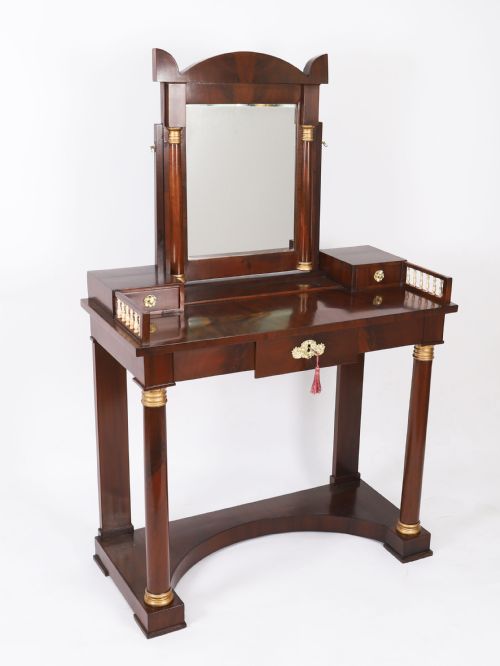
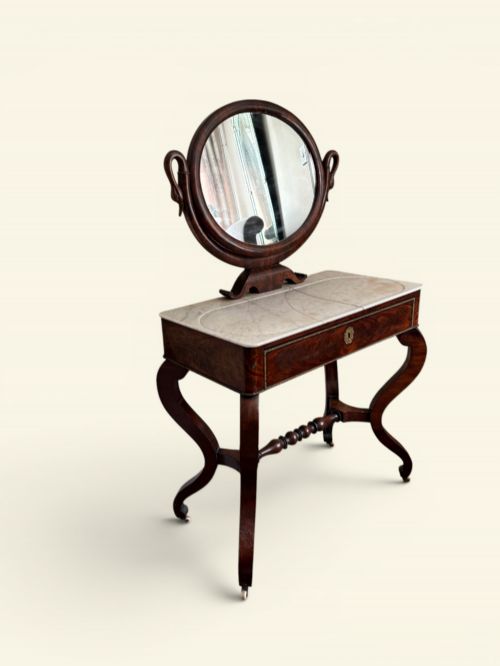
19th Century French Empire Mahogany Dressing Table, 19th Century
Priced at £3,845 from Shackladys Antiques
Provincial antique French tables stayed in the same farmhouse for generations. Built for daily agricultural life.
Look at the shift during the eighteenth century. Parisian workshops started separating rooms by function, creating specialised gaming tables.
Southern makers favoured lighter fruitwoods for their antique French tables. Northern workshops leaned heavily on dense local oak.
Damp stone floors took their toll. Expect to find legs tipped or replaced.
Revolution changed the trade. Guilds dissolved, altering how apprentices trained in the major cities.
Most antique French tables from the provinces carry no maker's mark. Local carpenters built them to traditional regional patterns.
Parisian craftsmen faced different rules. Guild regulations required masters like Jean-Henri Riesener (working 1768-1806) to stamp their veneered tables.
Find stamps underneath the rails. They strike them into the raw wood, often accompanied by the guild's JME mark.
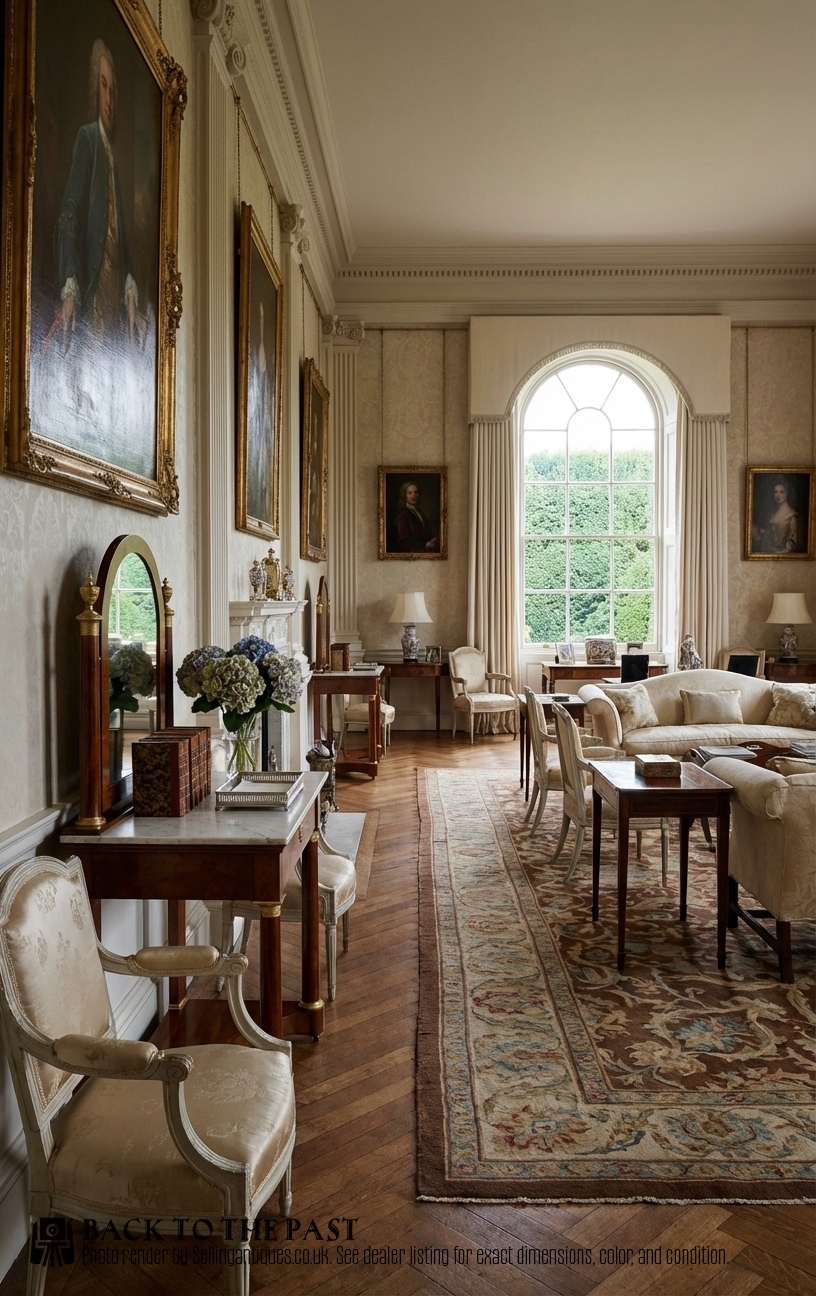
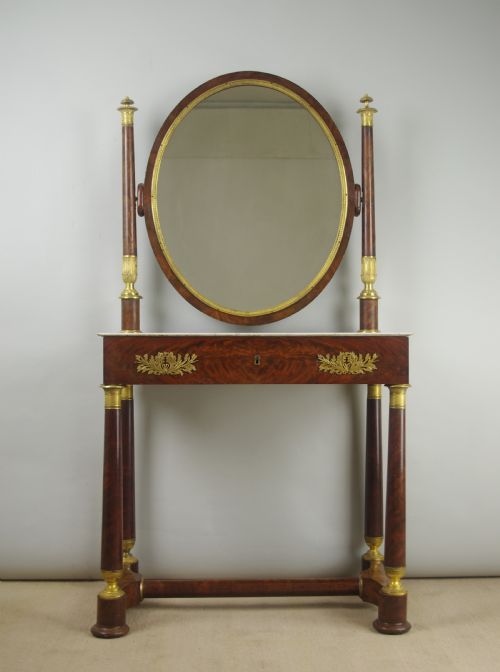
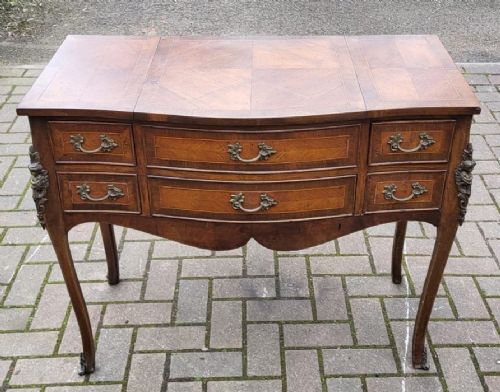
French Ormolu Mounted Empire Dressing Table, 19th Century
Priced at £2,495 from Shackladys Antiques
The 2026 retail price guide for Antique French Tables is drawn from a proprietary archive of over 1.1 million retail prices indexed by Sellingantiques since 2003. This guide relies exclusively on their own internal data; no external sources or auction records are used.
Analysing nearly 25 years of UK antique market history alongside current retail values, the data indicates that typical UK retail prices for Antique French Tables range between £500 and £2,900. Entry-level prices generally fall under £500 and premium examples upwards of £2,900.
Overhanging boarded tops define the farmhouse models. Cleated ends keep those wide boards flat across changing seasons.
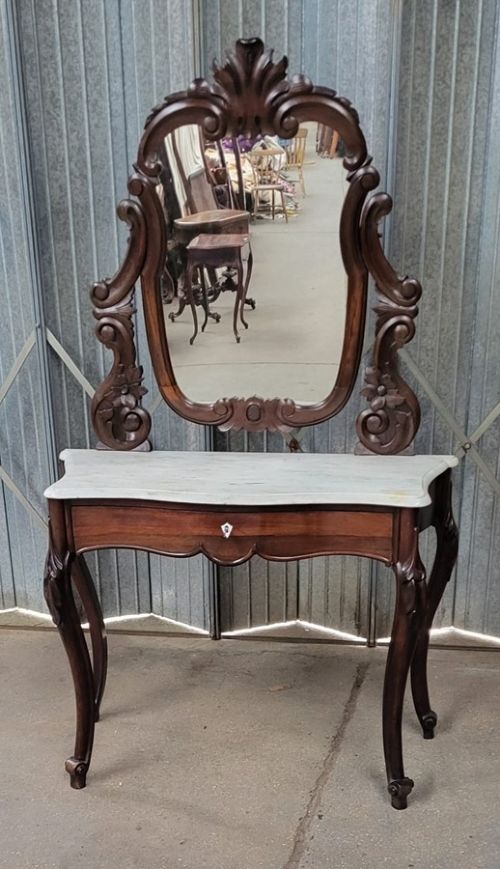
Notice the leg shapes. Cabriole legs dominate the Louis XV period, ending in carved scroll or hoof feet.
Drawers often sit in the frieze. Sometimes you find them at the ends of dining tables rather than the sides.
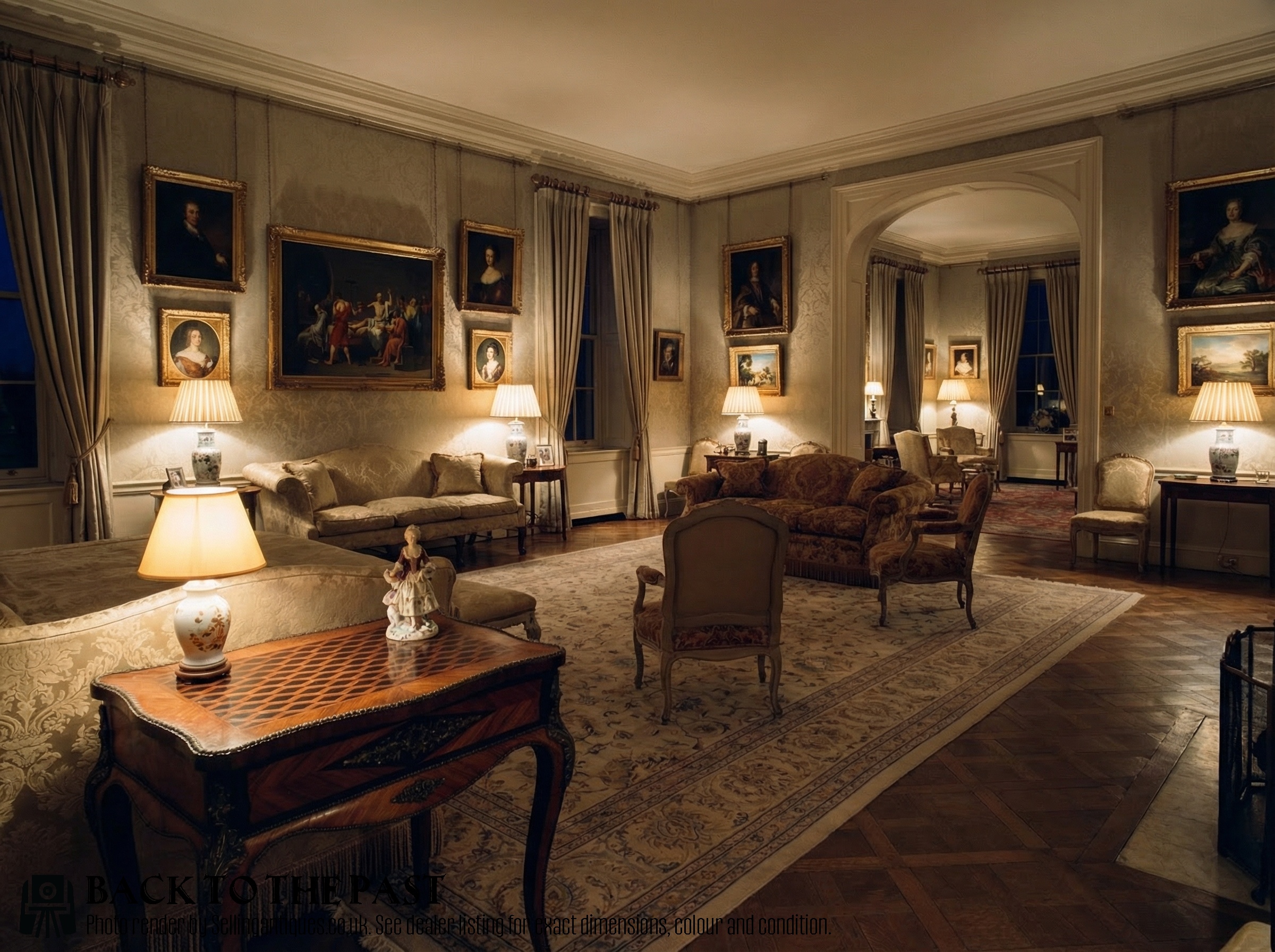
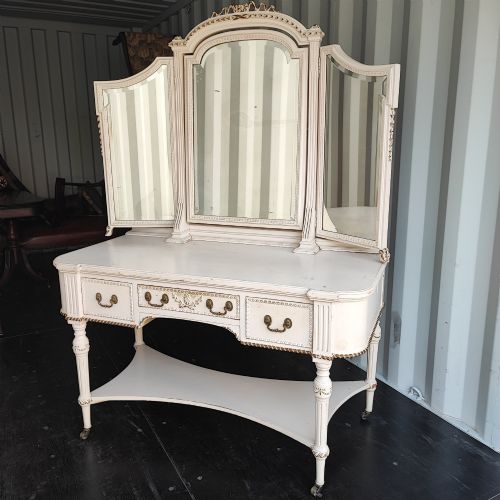
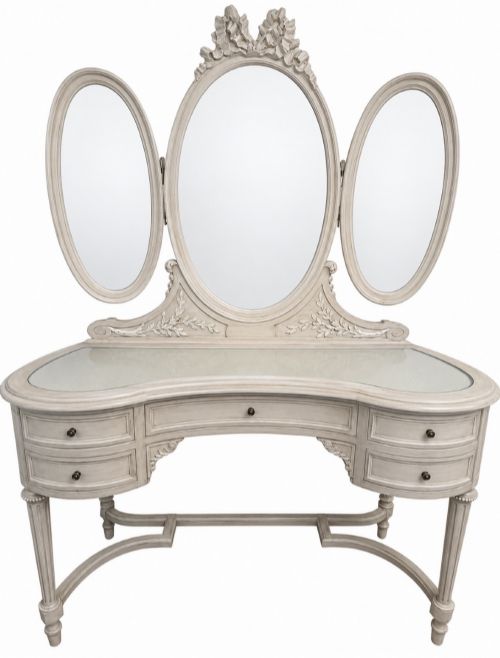
Antique French Work Table / Dressing Table, 1870
Priced at £795 from Merchant House Antiques
Early makers relied on heavy timber sections. Thick oak slabs joined with massive pegged tenons gave lasting stability.
Veneering changed workshop practices. Parisian cabinetmakers glued thin layers of imported wood onto cheaper pine carcases for patterned tops.
Drawer construction evolved. Hand-cut dovetails get finer and much more precise in later urban workshops.
"Many provincial dining tables have a bread slide. A flat board pulls out from the frieze to hold warm loaves."
"Craftsmen sometimes built hidden compartments into the frieze. A false drawer front might conceal a shallow space for papers."
"Regional builders adapted to local climates. They aligned wood grain specifically to allow the table to expand without cracking."
Based on almost 25 years of Sellingantiques UK antique market data, Antique French Tables appeared 94547 times (out of 1,100,000 antiques) which gives it a rarity score of 1/100.
This score measures scarcity within the Sellingantiques archive only and is not a survey of the entire antiques market, so these statistics may not be indicative of the general availability of Antique French Tables elsewhere.
Start with a soft dry cloth to remove dust. Oak has an open grain that traps dirt, so gentle brushing helps dislodge debris without scratching the surface.
Feed the timber occasionally with a good quality beeswax. Apply it sparingly with a rag, leave it to haze, and buff it off. Avoid modern silicone sprays as they leave a stubborn film.
Direct sunlight alters all woods eventually. Cherry tends to lighten and lose some of its red tones when exposed to strong UV light day after day.
You can manage this by drawing the blinds during the brightest hours. Keeping a runner or a tablecloth over the surface also protects the timber, though you should move it sometimes so the top fades evenly.
Country pieces normally have square tapering legs or turned balusters. These sturdy shapes provided solid support for heavy farmhouse tops.
Finer urban tables feature cabriole legs. These curve outward at the knee and taper down to a delicate foot, changing the whole profile of the piece.
Later urban styles shifted to straight, fluted legs. This mirrored the classical architecture popular at the time.
It happens frequently. Central heating dries the air in modern homes, causing old boards to shrink and pull apart at the seams.
They're usually structurally sound despite the gap.
Please note: This Antique French Tables guide and its associated pricing data are provided for general informational purposes only. It does not constitute formal financial, investment, or appraisal advice and should not be relied upon as the sole basis for any commercial activity, purchasing, or sales decisions. Sellingantiques.co.uk accepts no liability for any actions taken in reliance on this information. Always consult with a qualified professional or independent appraiser.
