
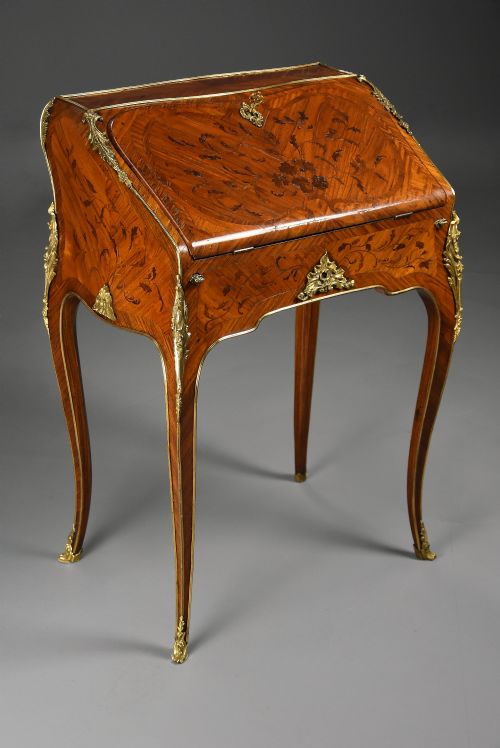


A 2026 Guide by Sellingantiques

19th Century Rosewood Bureau De Dame / Writing Bureau, 19th Century
Priced at £550 from Sinclairs Antiques and Interiors
The earliest forms evolved from simple slope-fronted boxes placed on stands during the late seventeenth century.
By the reign of Louis XV, the antique French bureau became a standalone piece of furniture with integrated drawers.
Cylinder forms gained popularity later in the eighteenth century. They allowed papers to be locked away without clearing the work surface first.
Provincial cabinetmakers simplified complex Parisian designs. You see solid timbers replacing intricate veneers in these regional versions.
Demand grew as letter writing became a daily social requirement among the upper and middle classes.
Jean-François Oeben popularised the cylinder bureau in the mid-eighteenth century. His workshop produced several mechanical variants.
Stamped pieces by Bernard II van Risamburgh often feature distinctive floral marquetry and elaborate gilt bronze mounts.
Regional makers rarely signed their work. A plain solid walnut antique French bureau is usually an anonymous provincial piece.
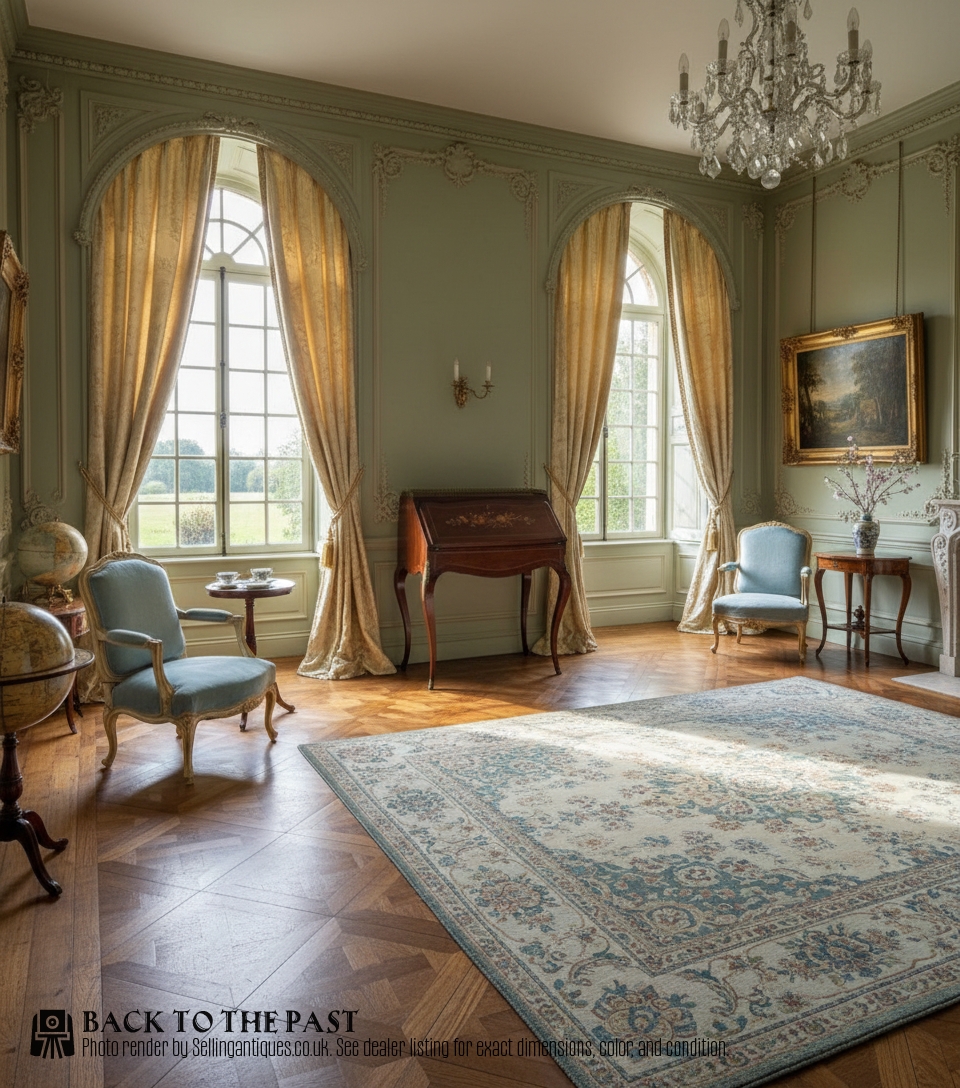
Antique Victorian French Inlaid Rosewood Freestanding Bureau
Antique Victorian French Inlaid Rosewood Freestanding Bureau
, 1860
Priced at £1,285 from London City Antiques
The 2026 retail price guide for Antique French Bureau is drawn from a proprietary archive of over 1.1 million retail prices indexed by Sellingantiques since 2003. This guide relies exclusively on their own internal data; no external sources or auction records are used.
Analysing nearly 25 years of UK antique market history alongside current retail values, the data indicates that typical UK retail prices for Antique French Bureau range between £1,400 and £7,500. Entry-level prices generally fall under £1,400 and premium examples upwards of £7,500.
A hinged writing flap or curved rolling cylinder covers the workspace.
Inside sits a fitted interior containing an arrangement of pigeonholes and small drawers. Some have small iron locks on the inner compartments.
Pull-out lopers flank the top drawer on fall-front models. These slide forward to support the writing surface when opened.
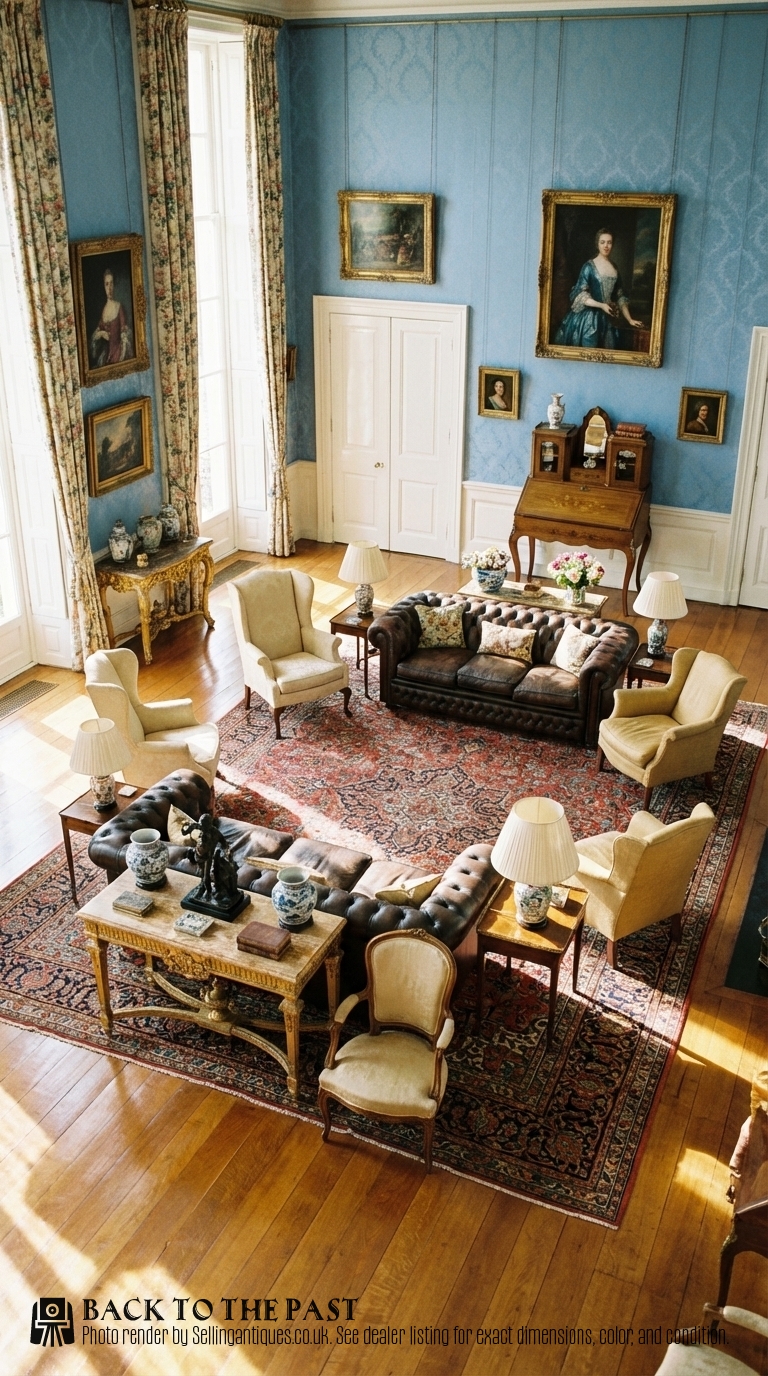
Lovely Walnut Ladies Desk, Victorian
Priced at £895 from Wayne Long Antiques and Interiors
Eighteenth-century craftsmen hand-cut dovetails to join the drawer sides. The pins and tails are often irregular on early pieces.
Veneering involved laying thin sheets of rare timber over an oak or pine carcase using hot animal glue.
Check the backboards. They are usually rough-hewn or hand-planed because they faced the wall and required no finish.
"Hidden compartments often sit behind the main interior drawers. Makers designed false backs to secure private letters."
"Cabinetmakers calculated the slope of the lid to display the wood grain at its best angle while standing closed."
"Many cylinder mechanisms use a clever counterweight system. Opening the drawer automatically rolls back the lid on some models."
Based on almost 25 years of Sellingantiques UK antique market data, Antique French Bureau appeared 1314 times (out of 1,100,000 antiques) which gives it a rarity score of 77/100.
This score measures scarcity within the Sellingantiques archive only and is not a survey of the entire antiques market, so these statistics may not be indicative of the general availability of Antique French Bureau elsewhere.
Dust the leather with a dry cloth. Avoid applying heavy oils or saddle soap because these can weaken the ancient hide and degrade the blind tooling.
Keep the bureau away from direct heat sources like radiators. High temperatures will shrink the old leather and cause the edges to lift away from the wooden substrate.
Most cylinder mechanisms rely on simple wooden runners or basic geared metal tracks. A restorer can usually ease a sticking cylinder by cleaning the channels and applying a hard wax.
If the solid curved panel has warped, the repair becomes more complex. Warped timber requires careful clamping and acclimatisation to fit the tracks again.
The slanted door rests on two wooden supports called lopers. These slide out from the carcase just above the top drawer.
If the hinges bend, the flap rests at a downward angle.
Internal drawers often swell due to changes in humidity. Forcing the brass knob can snap the metal post or pull the fixing straight through the old veneer.
Remove the surrounding drawers first. You can often reach behind the stuck drawer and gently push it forward from the back.
If it remains jammed, let the room dry out for a few weeks. Wood naturally shrinks in less humid conditions, which usually frees the drawer without intervention.
Please note: This Antique French Bureau guide and its associated pricing data are provided for general informational purposes only. It does not constitute formal financial, investment, or appraisal advice and should not be relied upon as the sole basis for any commercial activity, purchasing, or sales decisions. Sellingantiques.co.uk accepts no liability for any actions taken in reliance on this information. Always consult with a qualified professional or independent appraiser.
