


A 2026 Guide by Sellingantiques
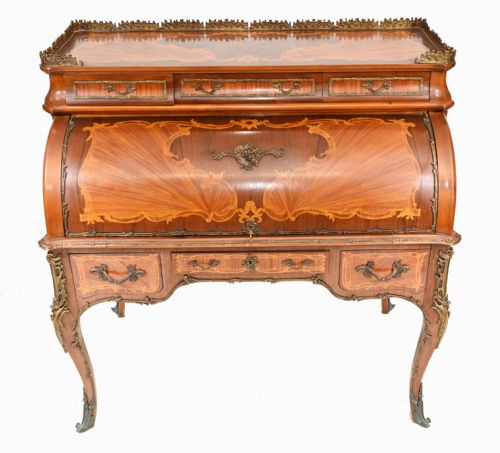
Sheraton Revival Satinwood Cylinder Bureau, 19th Century
Priced at £10,450 from Shackladys Antiques
Developed in France during the mid-eighteenth century. The form offered an elegant solution for keeping private correspondence hidden from domestic staff.
Look at English examples. They appear a few decades later, becoming a staple of Georgian and Victorian commercial life.
By the late nineteenth century, the antique cylinder bureau was often adapted for larger banking floors. Roll-top desks eventually took over the market.
Production slowed as flat-top office furniture became standard practice in the twentieth century.
Jean-François Oeben pioneered the mechanism in Paris during the 1760s. He started work on the famous Bureau du Roi before Riesener finished it.
Gillows of Lancaster produced solid English examples. Their late Georgian pattern books show several variations of the cylinder desk form.
Many provincial makers built these without leaving a label. Trade directories from the nineteenth century list hundreds of cabinet workshops producing them for local clerks.
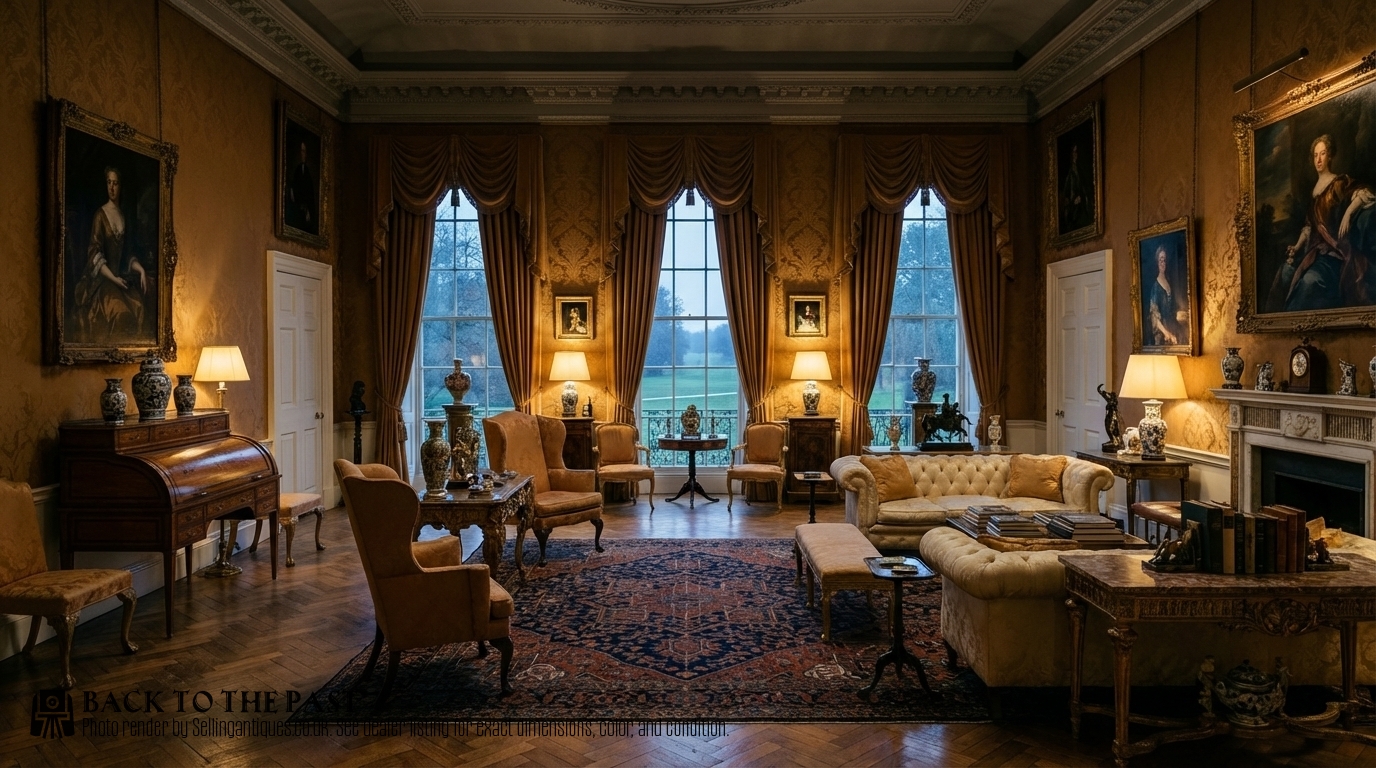
Pair of Important Georgian Satinwood Cylinder Cabinets, 19th Century
Priced at £46,750 from Shackladys Antiques
The 2026 retail price guide for Antique Cylinder Bureau is drawn from a proprietary archive of over 1.1 million retail prices indexed by Sellingantiques since 2003. This guide relies exclusively on their own internal data; no external sources or auction records are used.
Analysing nearly 25 years of UK antique market history alongside current retail values, the data indicates that typical UK retail prices for Antique Cylinder Bureau range between £1,200 and £7,300. Entry-level prices generally fall under £1,200 and premium examples upwards of £7,300.
The defining element is a quarter-round solid cover. This slides upwards and back into a void beneath the top gallery.
Pull out the writing surface. This action often engages a mechanism that automatically opens the cylinder above it.
Small pigeonholes and shallow drawers fill the interior. They sit slightly stepped back to allow the cover to pass cleanly over the desk.

Fine Quality Antique Victorian Mahogany Inlaid Cylinder Bookcase, 1880
Priced at £4,850 from London City Antiques
Early models required precise geometry. Crafting the curved track so the rigid wooden fall moved smoothly without jamming was a demanding task.
Notice the drawer joints. Hand-cut dovetails hold the carcase together, ensuring the heavy pedestal banks stay rigid over decades of use.
Veneering a curved surface took serious skill. Makers had to match the grain across the cylinder while pressing it flat enough to avoid catching.
"Some models feature secret compartments. Hidden drawers slide out from behind the central pigeonholes once a specific wooden divider is pressed."
"The pull-out writing surface doubles your space. It turns a compact piece of furniture into a deep, functional desk."
"Counterweights help the movement. Clever internal lead weights let a heavy solid wood cover glide open with just two fingers."
Based on almost 25 years of Sellingantiques UK antique market data, Antique Cylinder Bureau appeared 541 times (out of 1,100,000 antiques) which gives it a rarity score of 90/100.
This score measures scarcity within the Sellingantiques archive only and is not a survey of the entire antiques market, so these statistics may not be indicative of the general availability of Antique Cylinder Bureau elsewhere.
Do not force it. Forcing a stuck fall usually splits the veneer or cracks the underlying canvas backing.
Check the tracks on either side. Dust and dried wax often build up in the grooves, so cleaning them out gently with a wooden cocktail stick might free the mechanism.
If the slide is linked to the cover, pull the writing surface back and forth slowly to see if the internal gears are caught.
Most of these desks feature a locking mechanism that secures the lower pedestal drawers when the main cylinder is closed. The central lock drops pins down into the sides of the carcase.
You need to unlock the top section first. A locksmith can pick the cylinder lock or cut a new key without damaging the wood.
Once the fall rolls back, the internal pins lift automatically and the lower drawers will pull out freely.
Start with a soft dry cloth to remove surface dust. If the leather is sticky, wipe it briefly with a slightly damp cloth and dry it immediately.
Avoid standard furniture polishes. They degrade the original tooling and make the writing surface greasy.
Stiff pull-out slides are common. The runner rails underneath carry the weight of your arms and tend to wear down unevenly over time.
Sometimes a little beeswax rubbed on the wooden runners gets things gliding again. You just pull the slide right out, apply the wax, and replace it.
If the carcase has warped from central heating, the fix is harder. A cabinet maker would need to plane the runners back to square.
Please note: This Antique Cylinder Bureau guide and its associated pricing data are provided for general informational purposes only. It does not constitute formal financial, investment, or appraisal advice and should not be relied upon as the sole basis for any commercial activity, purchasing, or sales decisions. Sellingantiques.co.uk accepts no liability for any actions taken in reliance on this information. Always consult with a qualified professional or independent appraiser.
