

Antique Painted Beds
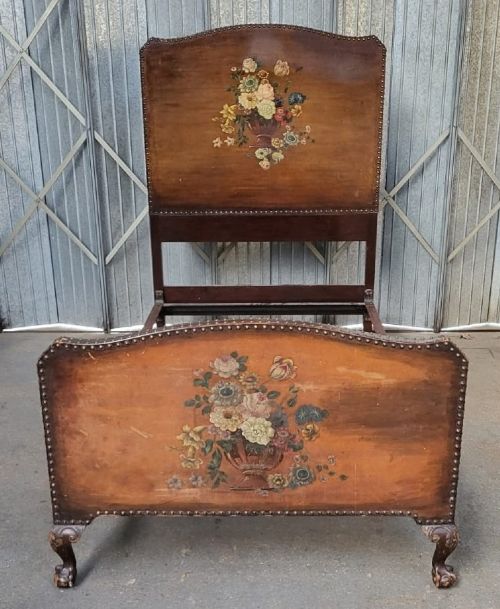
A bed frame finished in paint rather than polished wood, made to be slept in and to sit within a painted bedroom scheme.
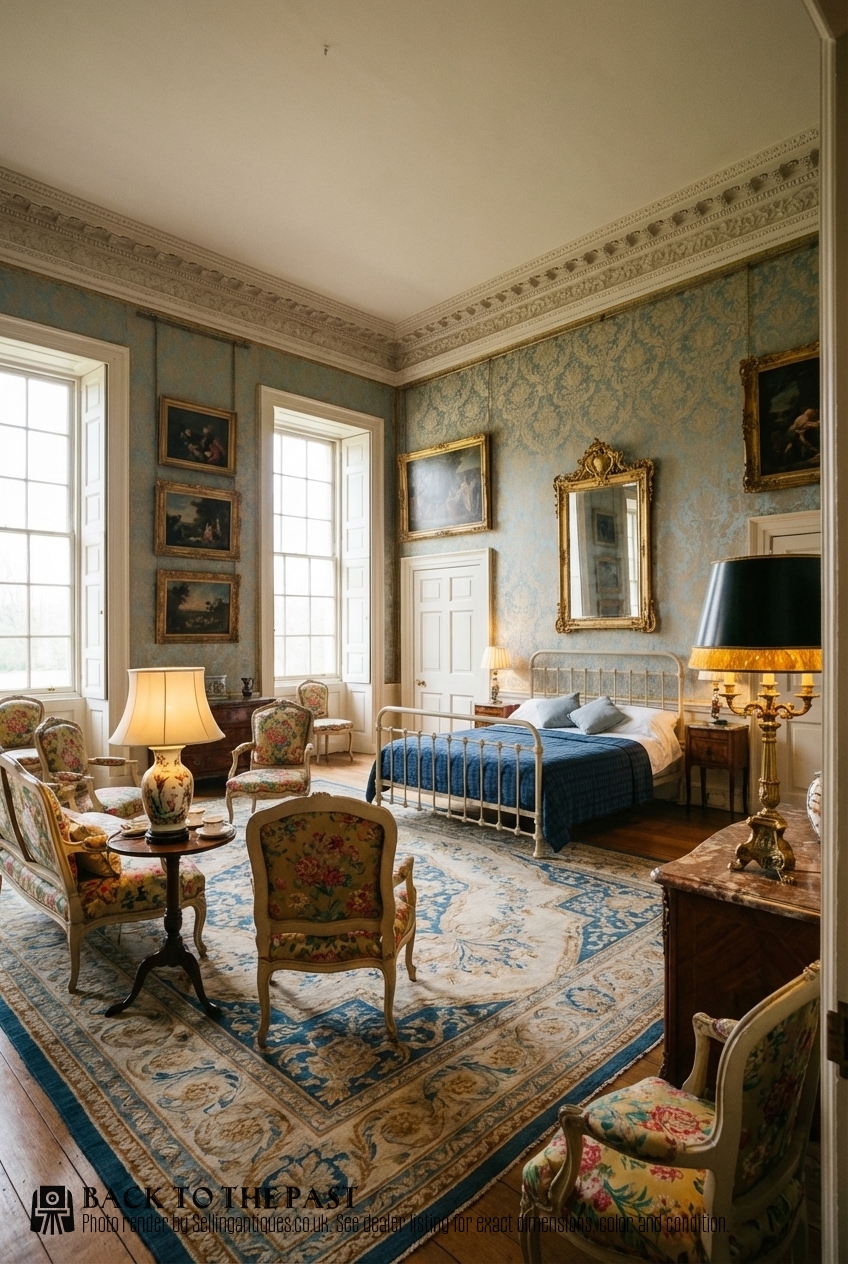
Antique Painted Beds
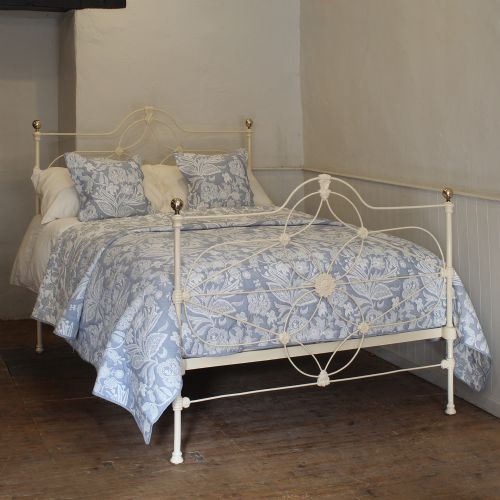
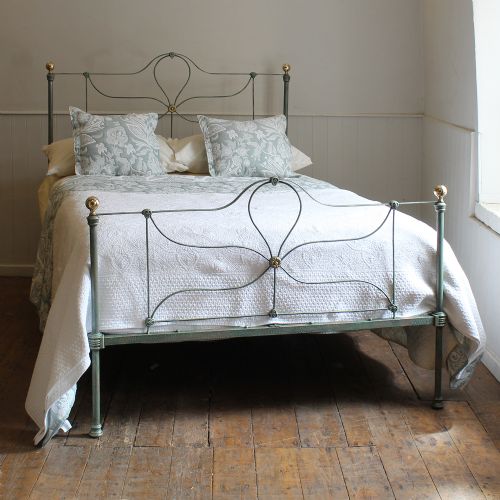
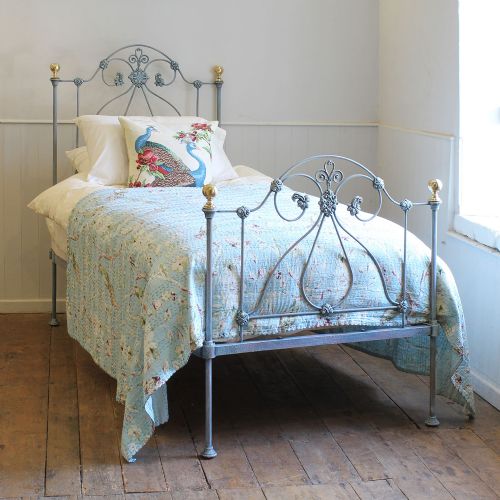
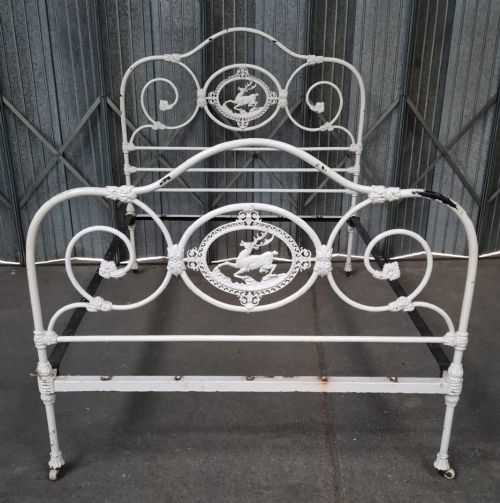
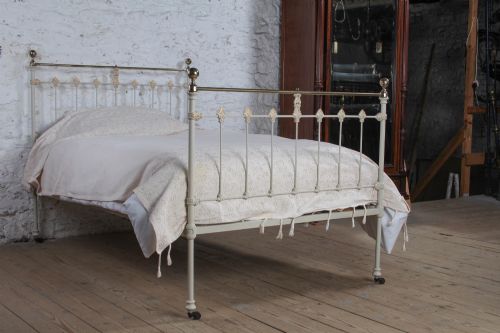
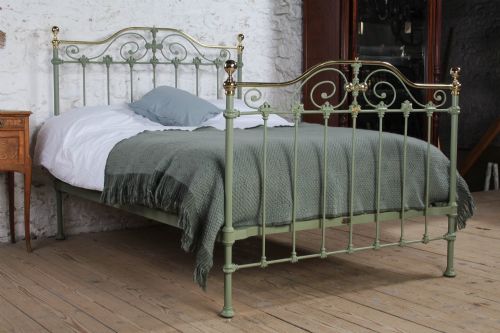
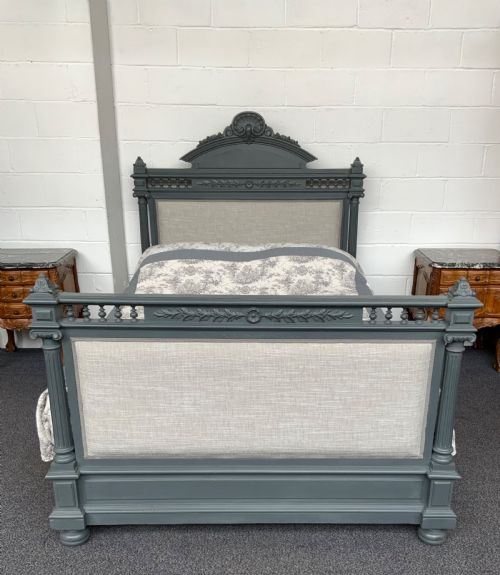
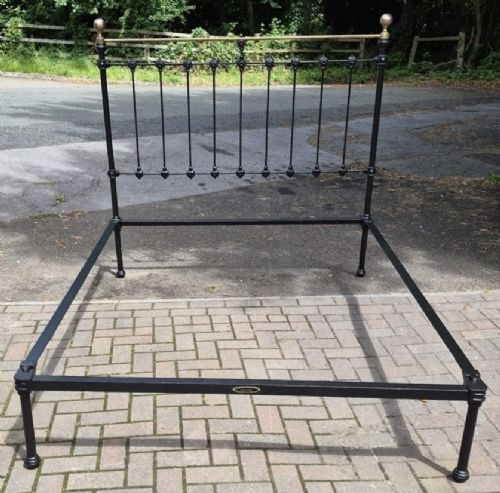
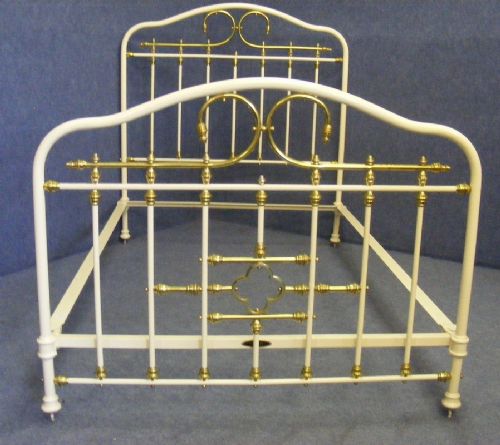
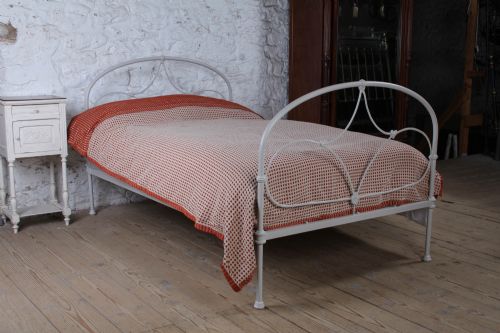
Two things dominate. French wooden frames in cream, grey, black or old paint make up about half the category, French origin being stated in 175 of 330 titles. Behind them sits a body of Victorian iron and brass bedsteads finished in paint, mass-made from the mid-19th century as a hygienic alternative to timber.
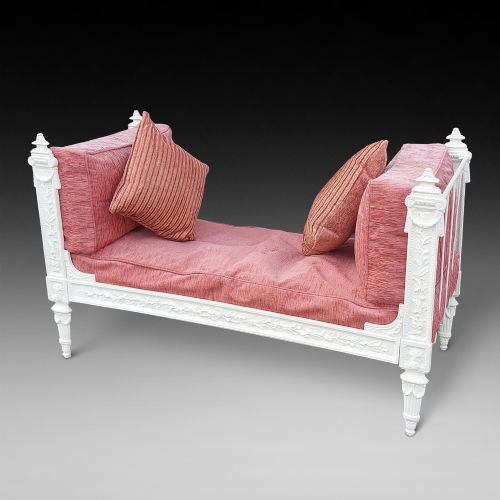
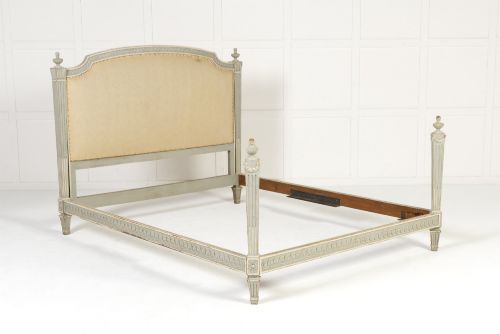
Paint on a bed was never a cover-up. Softwood and beech frames were painted across Europe to pull carved and turned parts into one surface and to match the room. On the French side the shapes carry their own names: corbeille, demi-corbeille, lit bateau, and Empire or Directoire styling.
Titles are written in modern mattress language, because frames have been widened or re-railed to take contemporary bases. Some form of king appears in 101 titles, super king in 14, against 51 doubles and 43 singles. Pairs of singles are a standing format, and several specify the two can be joined.
Dates supplied by dealers run 1850 to 1930, clustering late: the 1920s alone account for 88 of the 254 listings carrying a clean year, with the 1900s next. Earlier decades are thin, and the occasional Regency or 18th-century claim in a title sits loosely against that. Around twenty-seven of these are listed on Sellingantiques in a year, across fifty-one different dealers.

Where Value Sits
Surface first. Beds described as original paint or aged paint sit through the upper part of the range, and aged paint is named in ten titles on its own. Newly painted frames and custom paint colours run lower. The difference is between a surviving old finish and a decorator's choice made recently.
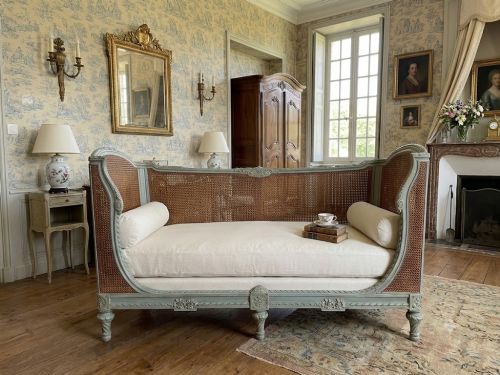
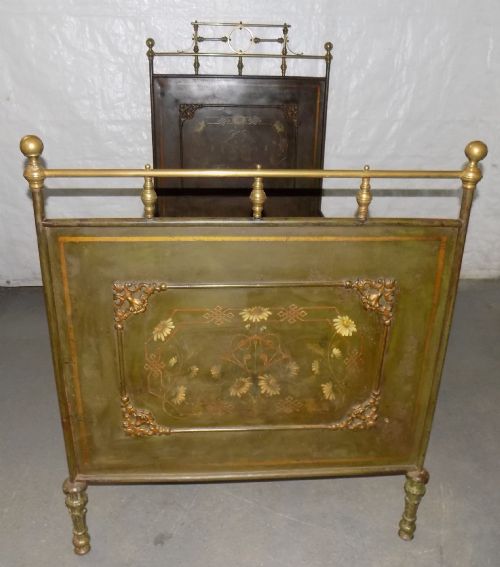
Then decoration and construction. Carving turns up in 23 titles, gilding and parcel gilt in a further batch, and the strongest titles combine the two over paint. Caned head and foot panels, and the enclosing bergère form, sit consistently above plain painted frames.
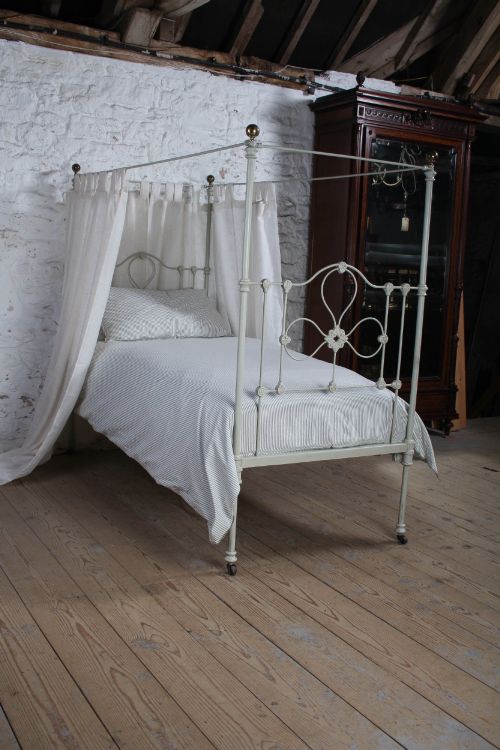
Width and completeness do the rest. Six-foot super kings, a two-metre-wide Directoire and one Emperor size all sit well above ordinary doubles and singles, and four-poster examples surface only a couple of times, both at the top. A pair with matching bedsides, or a full bedroom suite, outruns a single frame.
Antique Painted Beds Retail Price Guide 2026
Typical UK retail prices for painted beds, calculated from the Sellingantiques database of over a million retail prices indexed since 2003. This retail price guide relies exclusively on Sellingantiques data; no external sources or auction records are used, so the figures do not describe the wider market.
About twenty-seven painted beds are listed on Sellingantiques each year, and fifty-one different dealers have offered one.
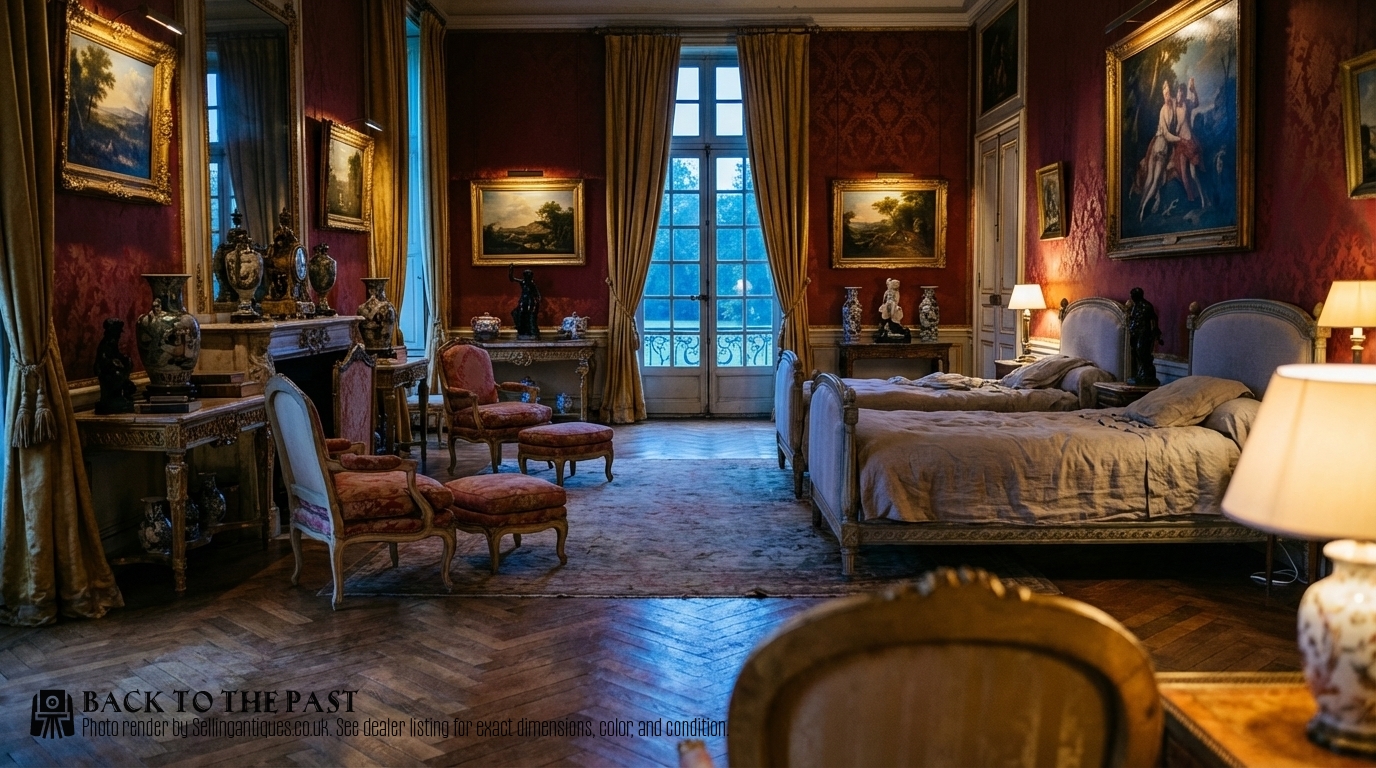
The Antique Painted Beds Glossary
- Kingsize / super king
- The modern mattress width the frame has been made up to; in these titles 5ft is king and 6ft super king.
- Bedstead
- The frame itself, head, foot and side rails. Used most often of the iron and brass examples.
- No end
- A bed with a headboard and no footboard, listed as "no end" or "low end".
- Caned
- Head and foot panels of woven cane set into the painted frame. Bergère is the curved, enclosing version of the same idea, the term borrowed from chairs.
- Corbeille / lit bateau
- Two French shapes: the corbeille is basket-form with inward-sweeping curved ends, the lit bateau boat-shaped with scrolled head and foot.
- Parcel gilt
- Gilding on parts only, mouldings and carving, over a painted ground. Half tester means a canopy over the head end alone.
Antique Painted Beds: Frequently Asked Questions
Why are these beds described by modern mattress size?
Because the frames have been widened or re-railed to take contemporary bases. A dealer writes king, super king, double or single so the buyer knows what will fit.
The language is standard across the archive. Some form of king appears in 101 of 330 titles, against 51 doubles and 43 singles.
Are all painted antique beds French?
No, though French dominates. Origin is stated as French in 175 of 330 titles, and the French frames make up the bulk of the sold archive.
Italian, Portuguese, Irish, Spanish, Scandinavian, Austrian, Dutch-style and American-style examples all appear in the sampled titles. Painted sheet metal, toleware, shows up only twice, once Austrian and once Italian.
What does original paint mean on a bed?
A surviving old painted surface rather than a modern repaint. Listings use "original paint" and "aged paint" for it, the latter in ten titles.
The alternative is a newly painted frame, sometimes offered in a custom colour chosen by the buyer. Both sell, but the two descriptions sit in different parts of the range.
How old are painted beds usually?
Dealer-supplied dates run 1850 to 1930 across 254 listings with a clean year. The 1920s account for 88 of those, the 1900s 76, so the early twentieth century carries the great majority.
Another 43 listings carry period words instead of dates, mainly "19th Century" and "Victorian". A few titles claim Regency or 18th century, and those attributions are loose.
Can a pair of single beds be joined?
Several listings say so. Pairs are a standing format, mentioned in 35 titles, and some specify the two singles can be pushed together into one wide bed.
Matching pieces turn up alongside them: bedsides, chairs, occasionally a full bedroom suite.
What are caned and bergère painted beds?
Caned beds have head and foot panels of woven cane set into the painted frame. Bergère describes the curved, enclosing version, a term taken from chair forms.
The combination is common enough to have its own title formula, French painted caned bergère at kingsize, and these sit in the upper part of the sampled range.