



Antique Canopy Beds
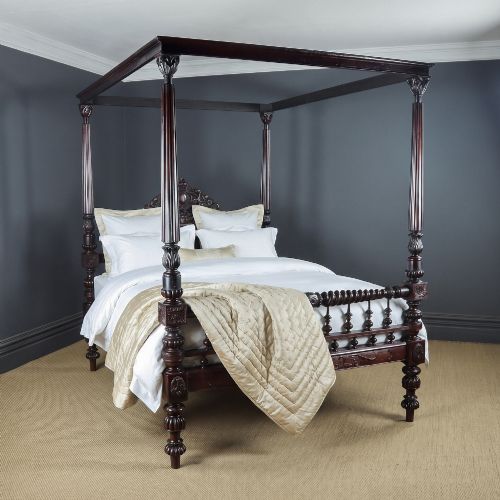
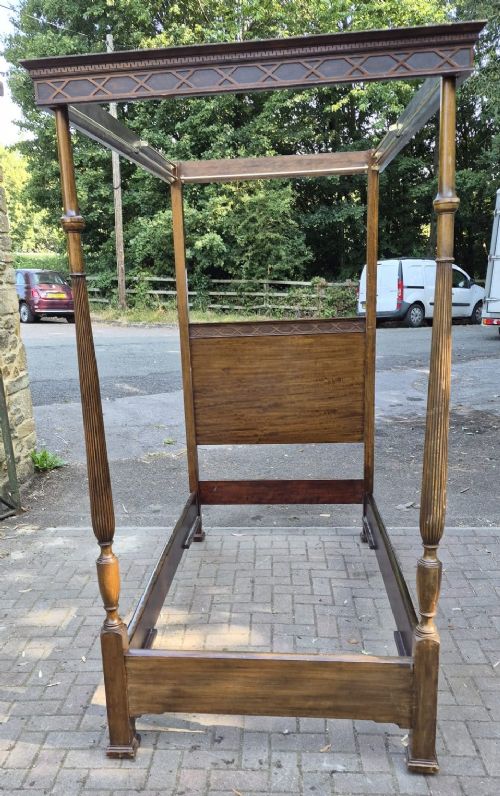
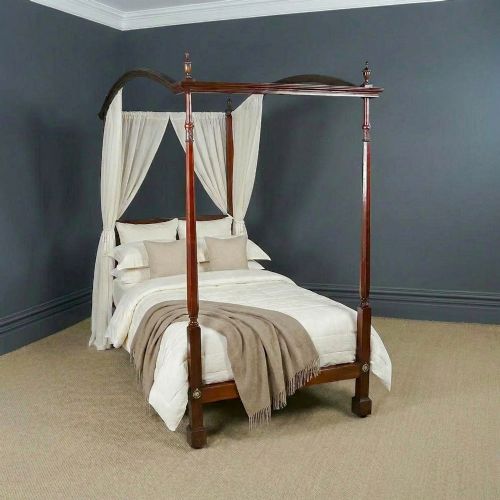
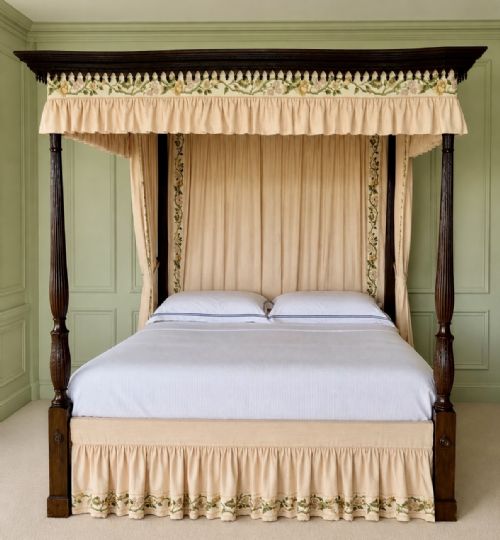
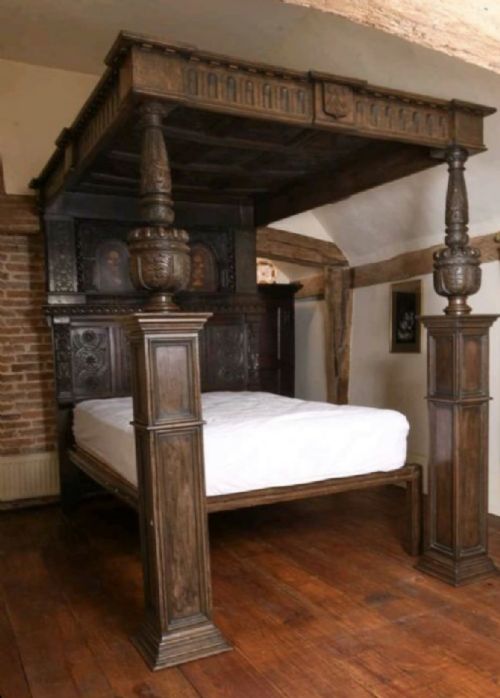
A canopy bed is an antique bedstead with a framework overhead, either a four-poster carrying a full tester across all four corners or a half-tester projecting over the head end alone, built to hold curtains in rooms that were shared and unheated.
Antique Canopy Beds
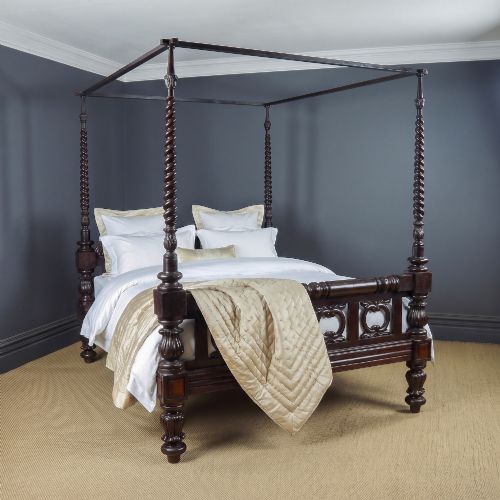
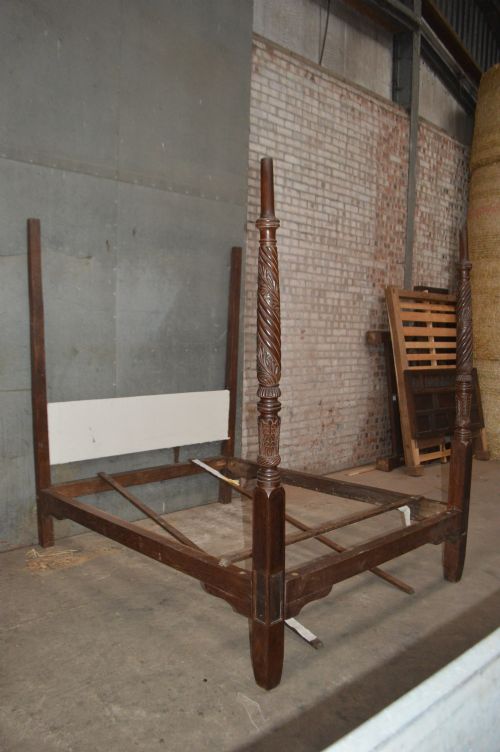
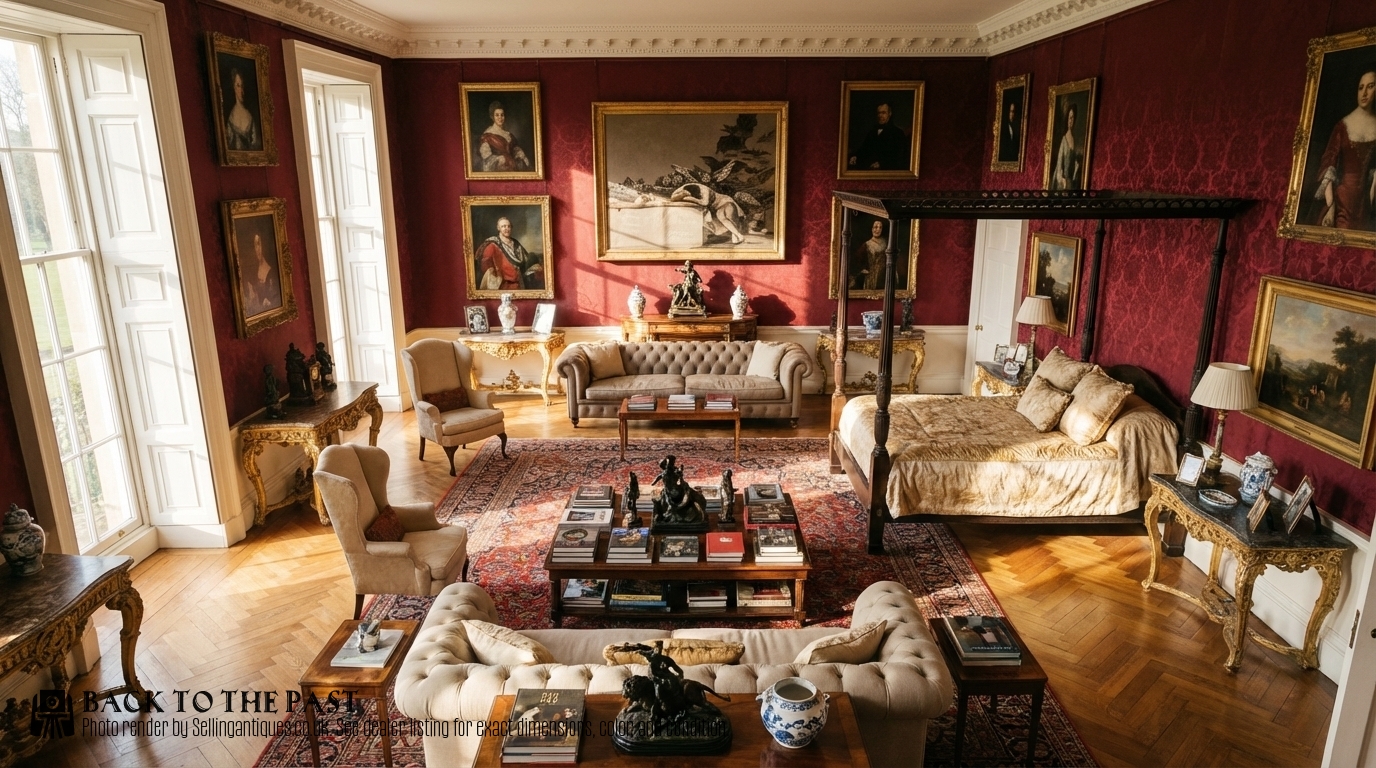
Two shapes sit under this heading. The four-poster has a post at each corner and a canopy frame spanning the whole bed. The half-tester drops the foot posts and carries a shorter canopy over the head end only. Four-poster titles dominate the archive, appearing in 37 of 55 listings.
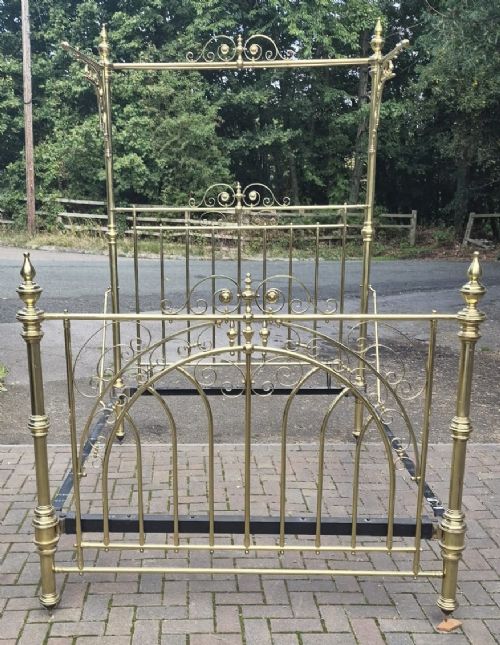
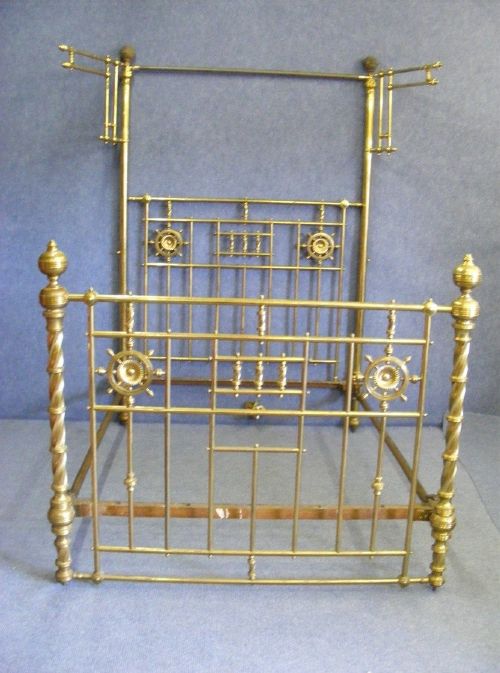
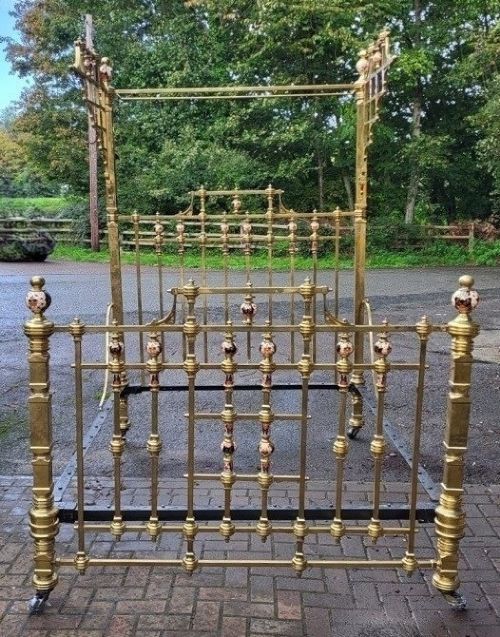
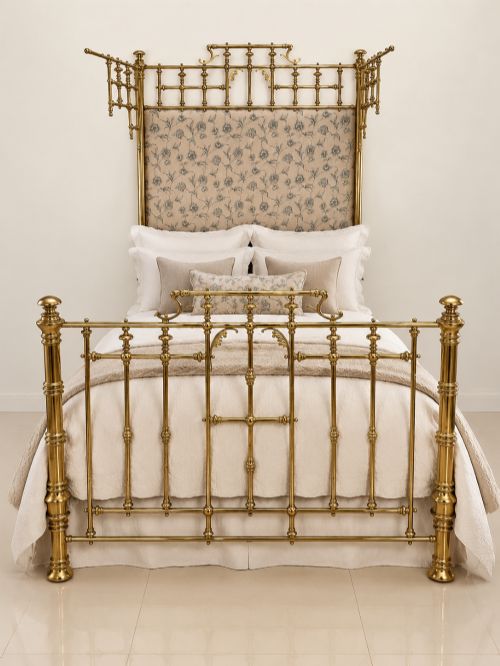
The bed you're most likely to meet is a Victorian or broadly 19th-century mahogany four-poster. Mahogany leads the timbers, oak follows, and a group of ten brass or cast-iron and brass frames runs alongside them. Half-testers turn up in a fifth of titles, some brass, others mahogany or burr walnut.
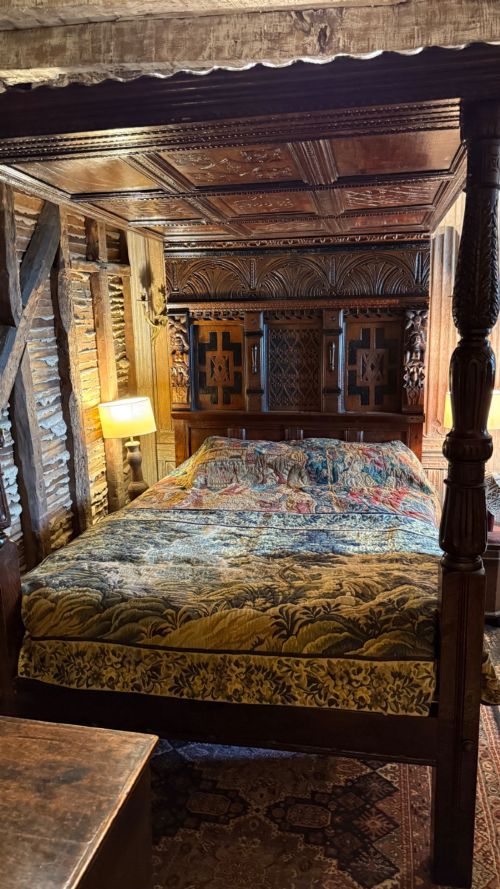
Beyond that core there are oak tester beds dated to the 17th century, seven of them, with title dates running from around 1600 to the 1690s. Anglo-Indian Colonial Raj four-posters appear three times, and single entries include a Chinese red lacquered marriage bed, a Chinese hardwood four-poster and a Dutch walnut floral marquetry canopy bed.
The dated field is more often a label than a year. Victorian, 19th Century and 17th Century lead it, and only 12 of 55 listings carry a clean year, running 1800 to 1920. Labels and titles don't always agree, so the title date and the period tag are worth reading against each other.
The Range
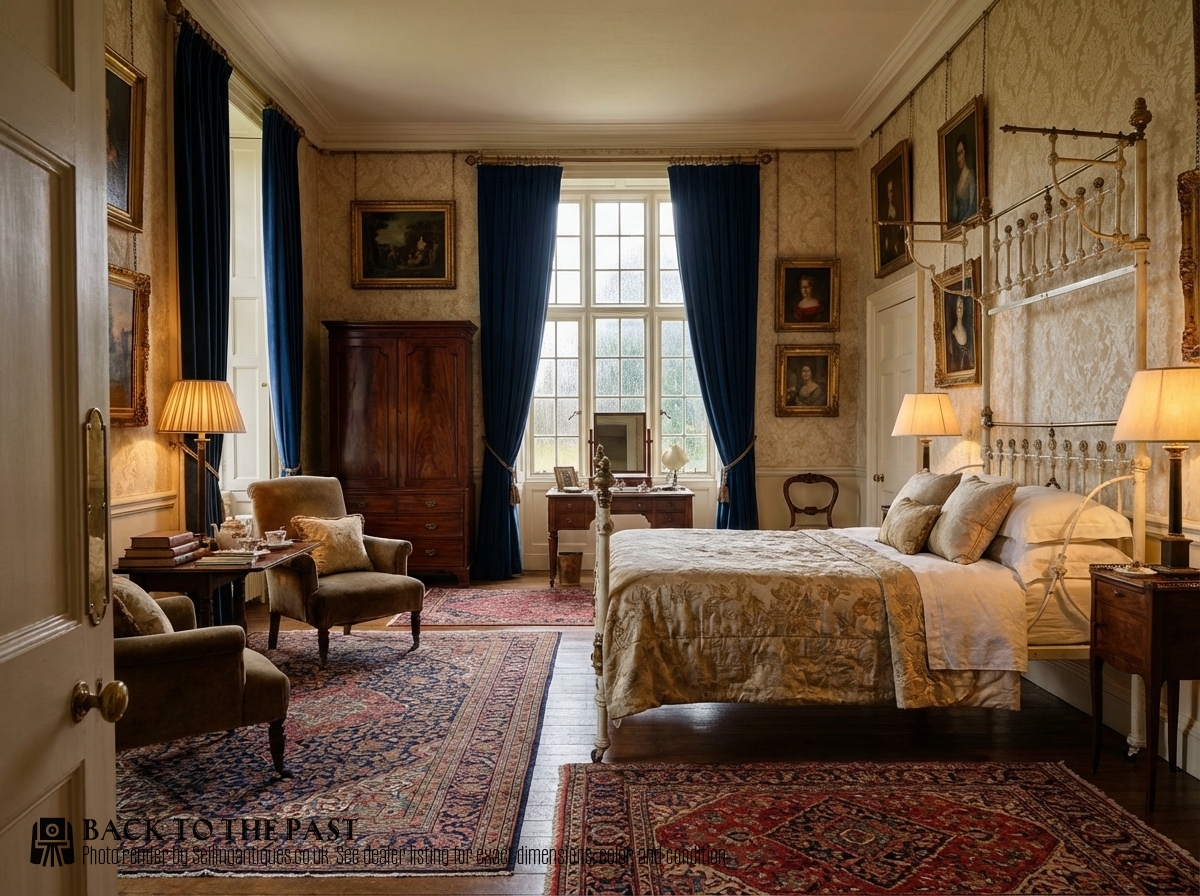
Timber and decoration set the spread. Plain mahogany and oak four-posters sit low and mid-range, while painted Regency frames, porcelain-mounted mahogany, Dutch floral marquetry and fruitwood-inlaid oak all appear at the upper end. Within the brass group the same logic holds: plain brass and cast-iron half-testers sit mid-range, gilded solid brass and the two titles calling themselves exhibition quality reach the top of it.
Form counts too. The 12 half-testers cluster in the middle, and the highest-priced beds are full four-posters and 17th-century full tester beds. Age pushes the same way at the early end, with the 17th- and 18th-century listings sitting largely in the upper half.
Size is unusually visible in this category. "King size" appears in 14 titles, alongside super king and stated widths such as 6 ft, 5ft 10" and 5ft 7", and those larger beds fall disproportionately at the higher end. A small early Victorian four-poster holds the bottom of the range; 18th- and early 19th-century timber beds hold the top.
Antique Canopy Beds Retail Price Guide 2026
Typical UK retail prices for canopy beds, calculated from the Sellingantiques database of over a million retail prices indexed since 2003. This retail price guide relies exclusively on Sellingantiques data; no external sources or auction records are used, so the figures do not describe the wider market.
The most expensive canopy bed sold on Sellingantiques was a pair of early 20th century upholstered single four-posters, in October 2024.
The Antique Canopy Beds Glossary
- Tester
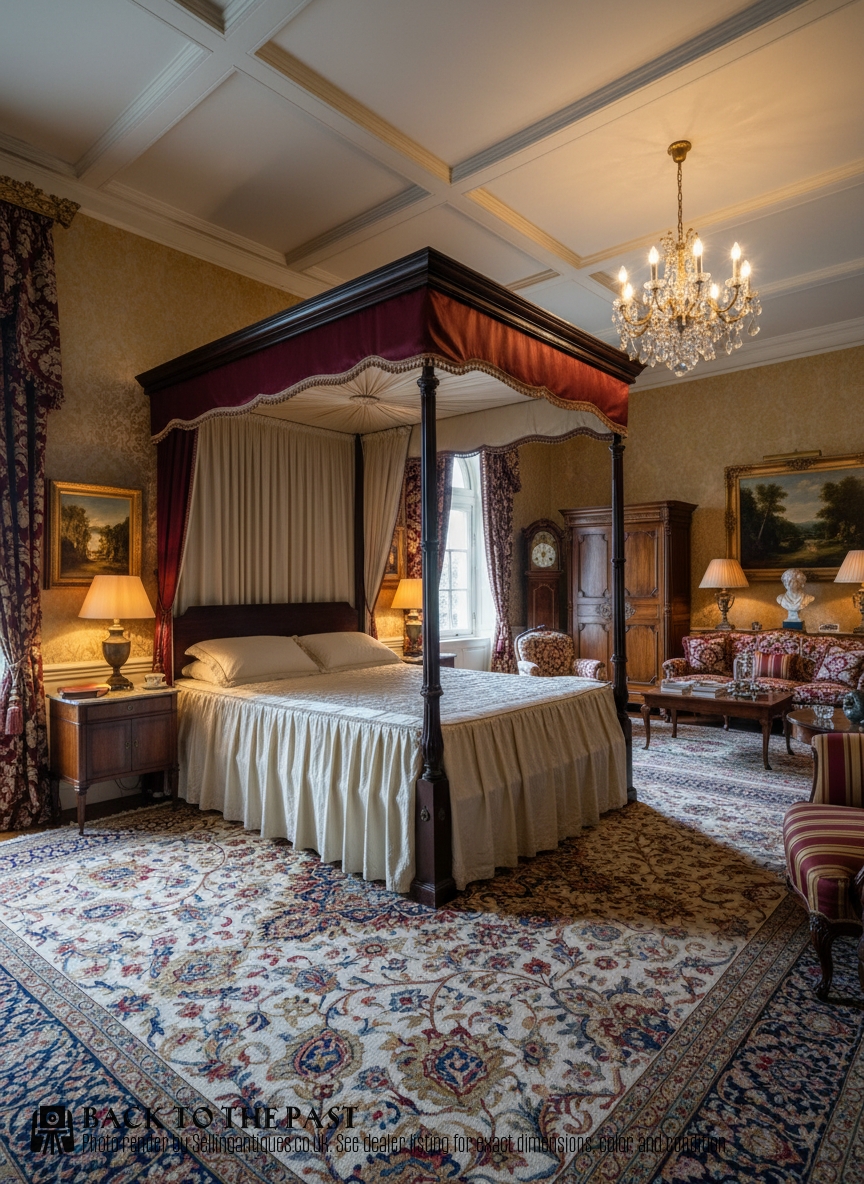
- The canopy or roof frame above the bed. "Full tester" means it spans the whole bed, corner post to corner post.
- Half tester
- A canopy over the head end only, with no foot posts beneath it. It runs through about a fifth of titles here.
- Bedstead
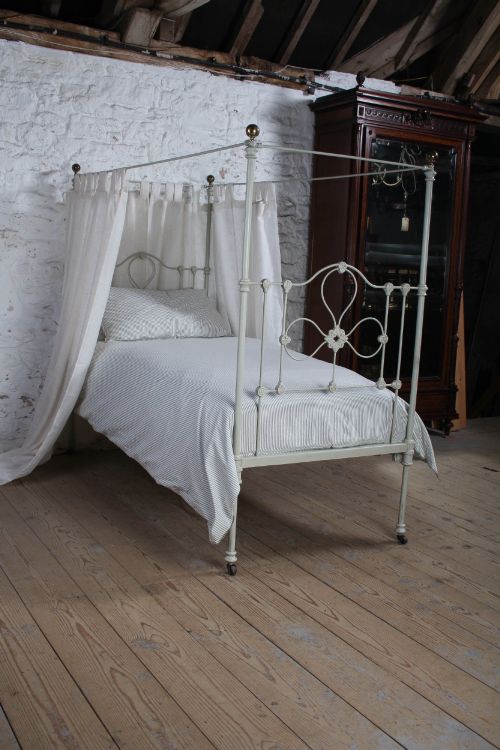
- The frame on its own, as against mattress and hangings. It's the usual word for the metal-framed examples.
- King size and super king
- Modern mattress sizes, stated in 14 titles, often with a width such as 6 ft given as well to signal fit.
- Anglo-Indian Colonial Raj
- Dealer term for beds made in India for British households, used in three titles and the most frequently named non-European origin.
- Drapes and hangings
- Curtains hung from the tester. They rarely travel with the bed; one listing sells drapes, curtains and a bed cover alongside it.
Antique Canopy Beds: Frequently Asked Questions
What's the difference between a four-poster and a half-tester?
A four-poster has a post at each corner carrying a canopy frame over the whole bed. A half-tester has no foot posts, and the canopy projects over the head end only.
Four-poster titles account for 37 of the 55 listings in the archive. Half-tester appears in 12.
Which timbers do these beds come in?
Mahogany leads, named in 12 titles, with oak next at eight. A group of ten frames is brass, or cast iron and brass.
Smaller runs include burr walnut on a half-tester, Dutch walnut with floral marquetry, and Chinese hardwood.
How old are most of the ones listed?
Victorian and 19th Century are the two largest period labels, covering 21 listings between them. Edwardian, 18th Century and 1920s appear in smaller numbers.
Seven listings are dated to the 17th century, all oak, with title dates around 1660, 1690 and a span given as c1600 to c1696. Those are the earliest claims in the archive.
Do canopy beds take a modern mattress?
Fit is declared in the title far more often than with other furniture. "Size" appears in 16 listings and "king size" in 14, with super king used as well.
Stated widths turn up too, including 6 ft, 5ft 10" and 5ft 7", and one bed advertised as taking a five foot mattress.
Are the curtains usually included?
Rarely. Hangings tend not to travel with the bed, and a single listing in the archive includes drapes, curtains and a bed cover.
One four-poster is described simply as being in black.
How many come up on Sellingantiques?
Around eight a year, spread across 24 dealers, so no one dealer carries the category.
Pairs are almost unknown. One listing offers two upholstered single four-poster canopy beds together.