


Antique Mahogany Beds
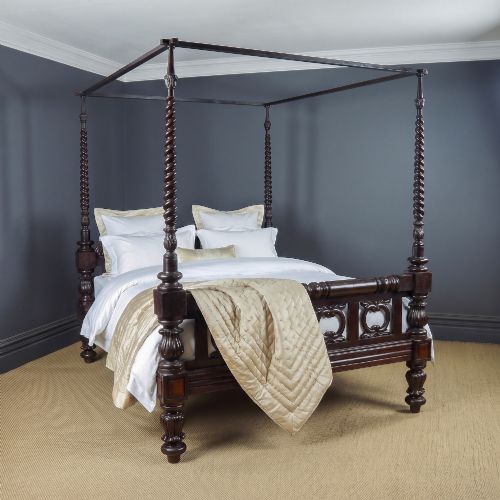
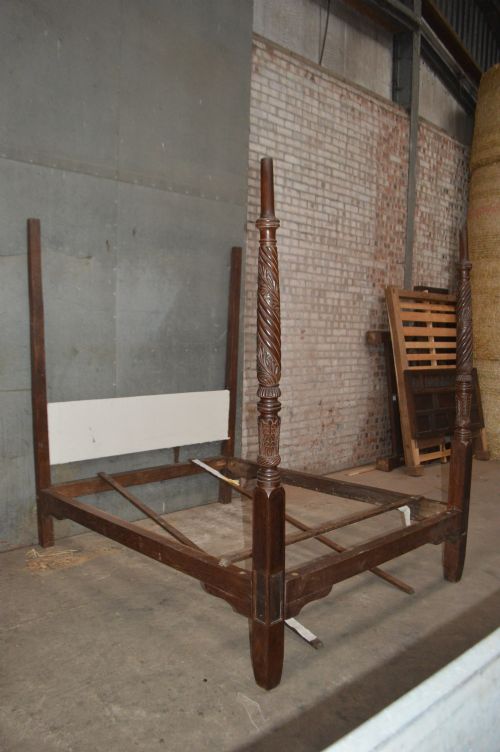
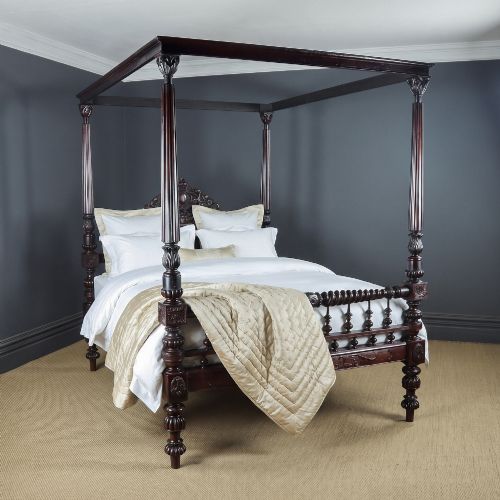
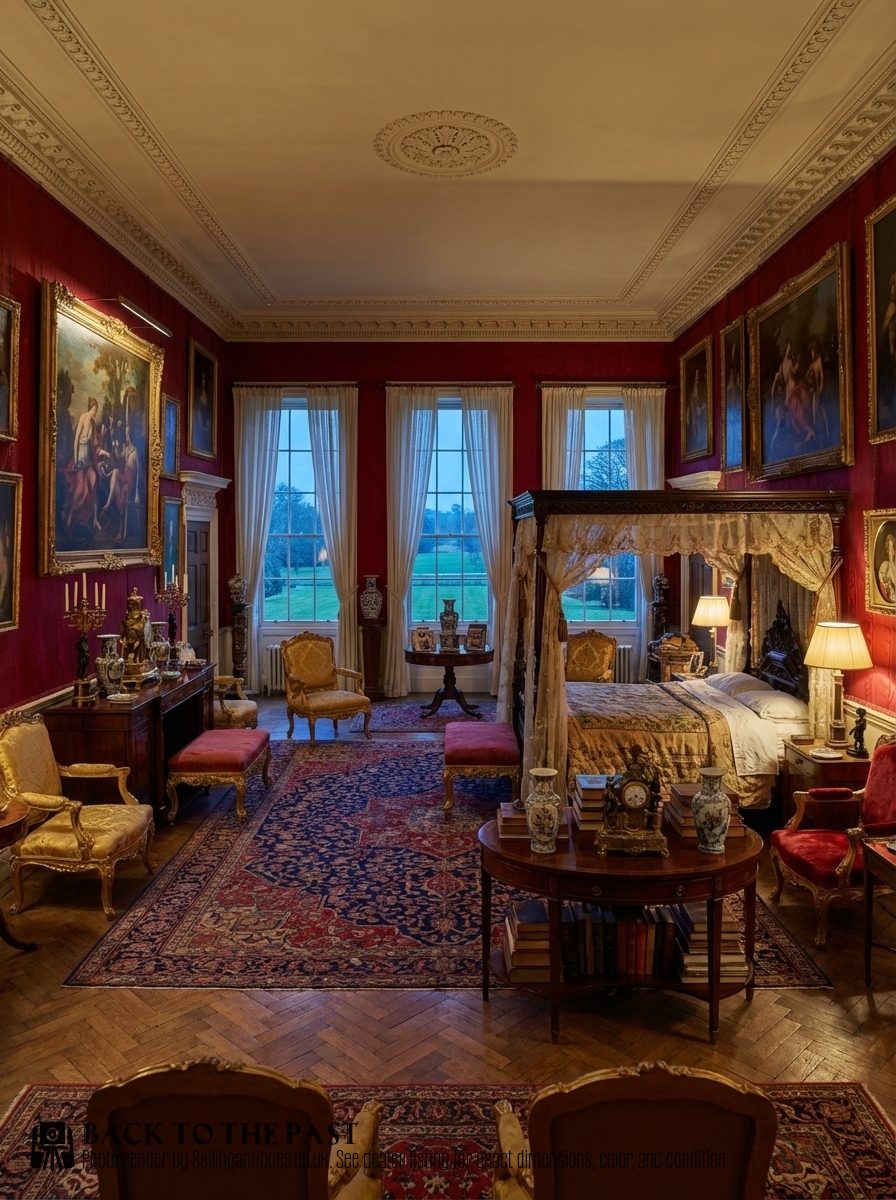
A mahogany bed frame, from a four-poster with its canopy down to a headboard on its own, made to be dressed with a base and mattress and slept in.
Antique Mahogany Beds
Mahogany came into English and French bedroom furniture from the mid-18th century, first for four-post and tester frames with turned or carved posts, later for the headboard-and-footboard bedstead joined by iron side rails. Both shapes are still the ones you meet on Sellingantiques, where 92 different dealers have handled mahogany beds.
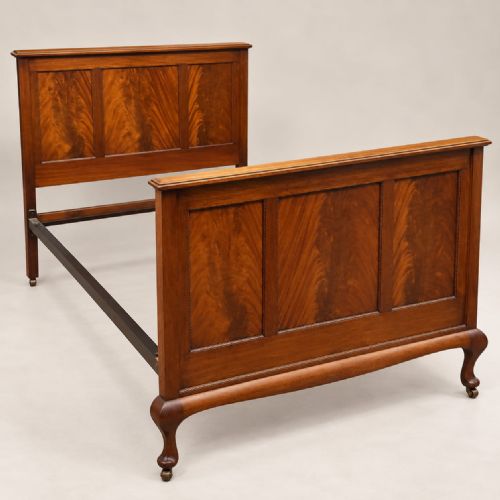
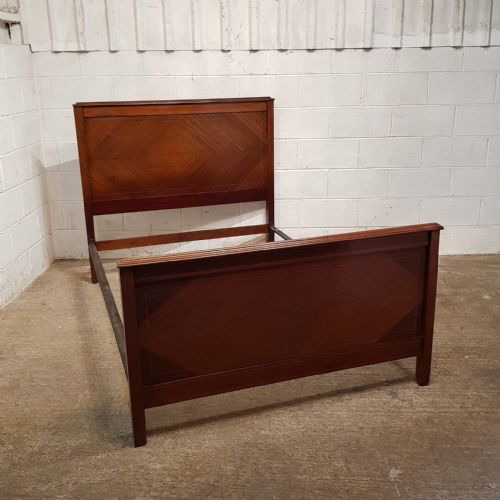
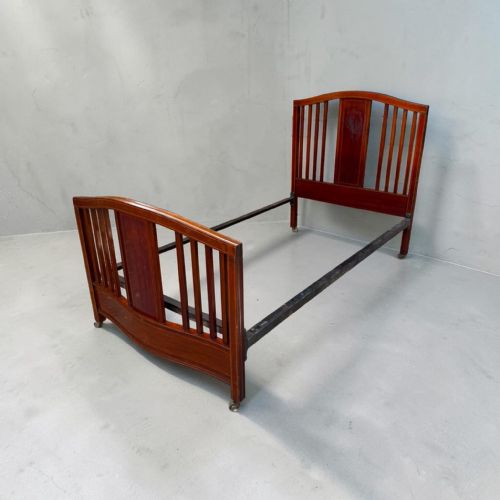
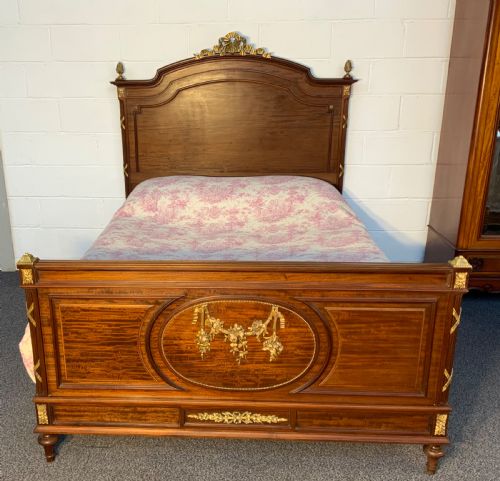
The commonest thing by some way is an English bedstead of about 1900: a head, a foot and the irons that join them, described as Edwardian or late Victorian, often inlaid, and listed as a double or a king. The period profile spikes either side of 1900, with 71 listings dated to the 1900s and another 71 simply called Edwardian.
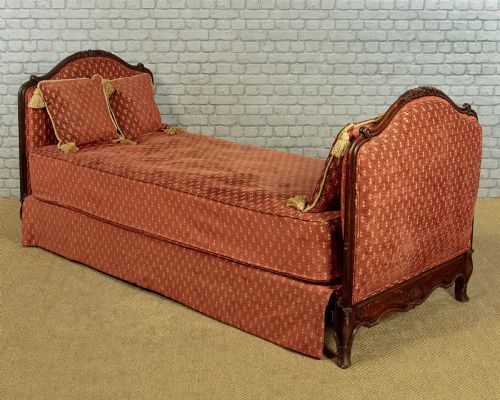
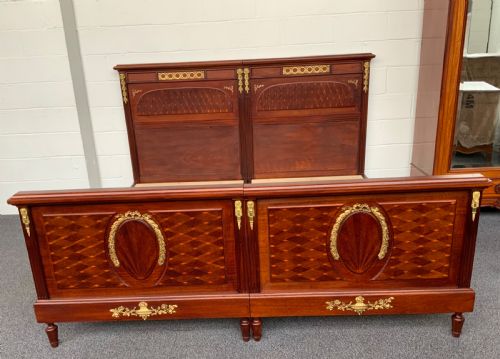
French beds are a fifth of the category and bring their own vocabulary with them: bateau lit, corbeille, Empire, Louis XV and XVI, ormolu mounts and brass. Panelled ends of roughly equal height, made to stand side-on against a wall rather than head-on.
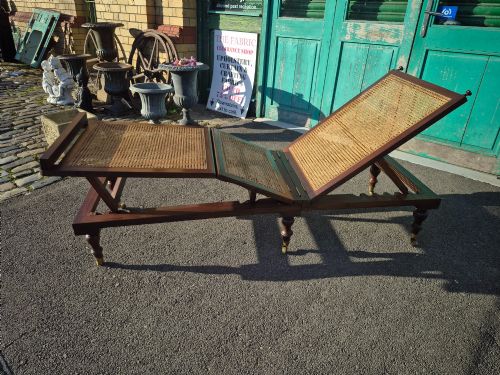
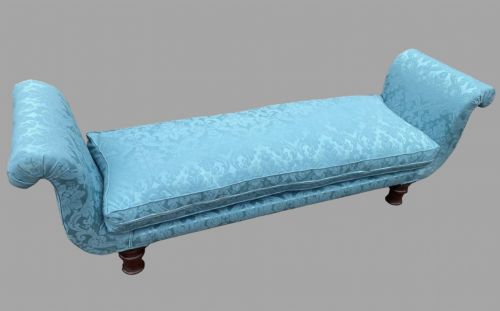
Round the edges sit pairs of singles, several described as joinable into one wide bed, along with day beds, campaign and folding beds, and headboards sold alone. Sizes in titles are the marketplace's own language, double, single, 5ft, king, super king, and many frames are described as converted or made up to modern mattress widths.
What Sets Them Apart
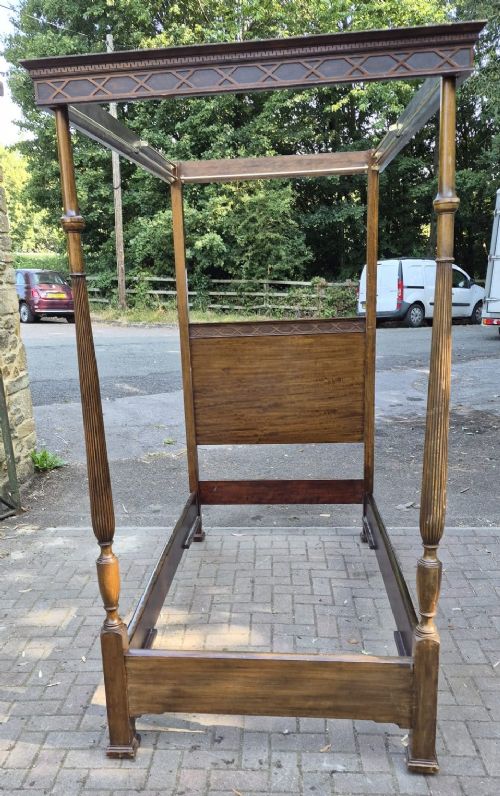
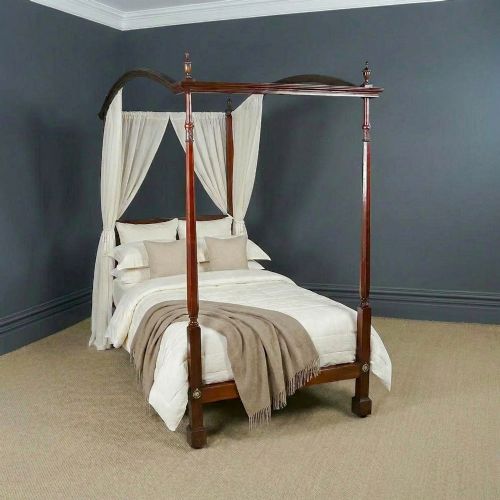
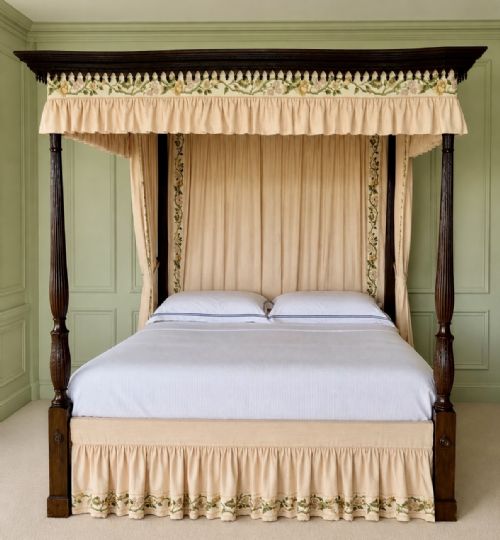
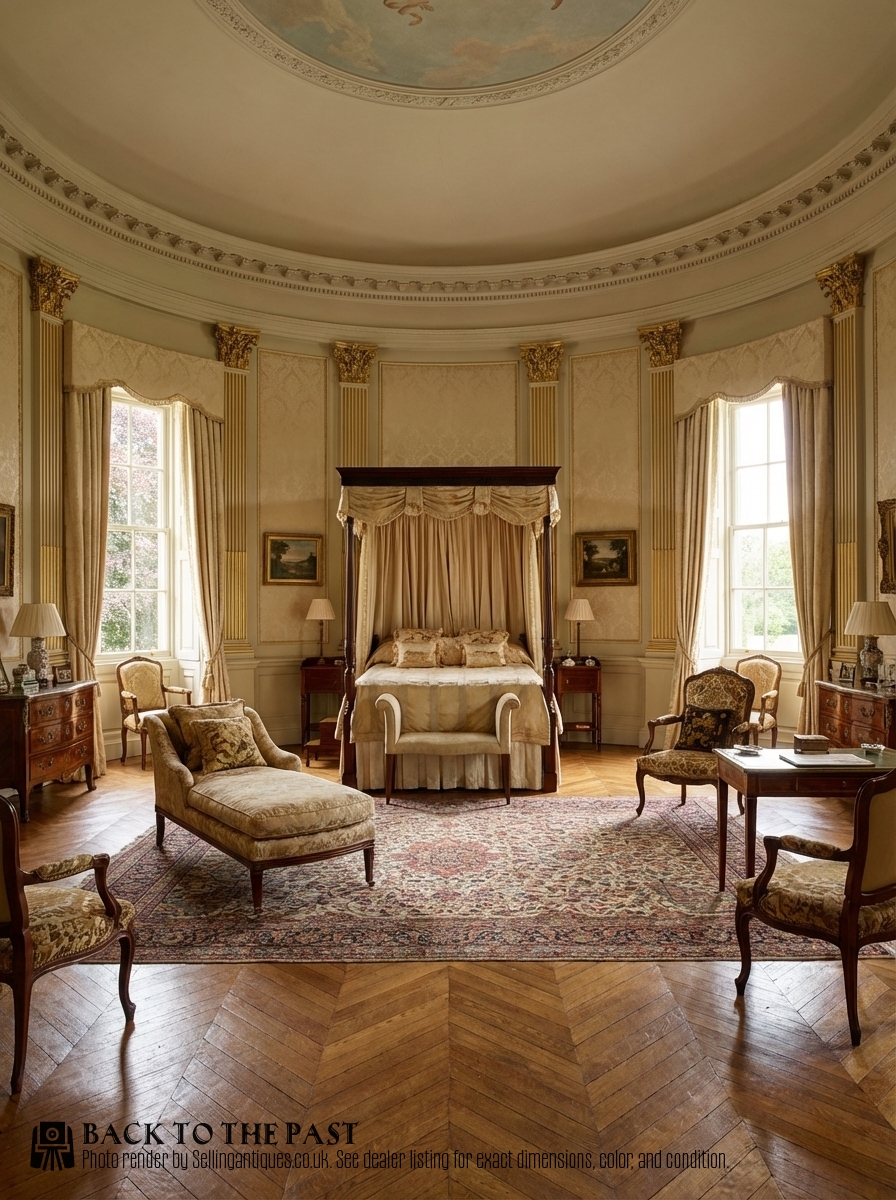
Posts carry the top of the range. Every entry in the highest reaches of the archive is a four-poster, a tester or a half tester, and the very top is an 18th-century posted bed. Half testers are commoner than full ones, and they are almost all English and Victorian.
Below that, completeness does the work. A whole frame with its side irons sits well above a headboard or a bed head on its own, and those parts make up most of the cheapest entries. Width pushes the same way: king appears in 84 titles, super king in 13, and super king shows up disproportionately at the upper end.
Then decoration and timber. Inlay and stringing, parquetry, carving, ormolu and brass mounts all lift a bed, and the ormolu-mounted French pieces cluster in the upper reaches. A named figure in the title, flame or plum pudding, sits above plain mahogany. So does being one of a matched pair, or a bed sold with its bedsides.
Antique Mahogany Beds Retail Price Guide 2026
Typical UK retail prices for mahogany beds, calculated from the Sellingantiques database of over a million retail prices indexed since 2003. This retail price guide relies exclusively on Sellingantiques data; no external sources or auction records are used, so the figures do not describe the wider market.
Around thirty-three mahogany beds are listed on Sellingantiques each year, and ninety-two different dealers have handled them.
The Antique Mahogany Beds Glossary
- Bedstead
- The frame itself, head, foot and the rails joining them, as opposed to a bed with base and mattress on it.
- Side irons
- The iron side rails linking headboard to footboard. Without them, a head and foot are only parts, and titles here say when they are present.
- Half tester
- A canopy carried on two posts or brackets over the head end only, rather than four full posts. Twenty titles say tester, sixteen say half tester.
- Bateau lit
- French boat-shaped bed with scrolled ends of roughly equal height, meant to stand sideways to the wall. Also written lit bateau.
- Flame mahogany
- Veneer cut to show a flared, feather-like figure, usually across headboard panels. Plum pudding is the speckled alternative, named for the dark spots.
- Ormolu
- Gilded metal mounts, found on the French Empire and Louis-style beds and named in eight titles.
Antique Mahogany Beds: Frequently Asked Questions
What size are antique mahogany beds?
Titles use the marketplace's own words. Double appears in 104, king size in 84, single in 57, super king in 13, with 5ft, 6ft and one at 2 metres recorded.
Many frames are described as converted or made up to modern mattress sizes, which is how a period bed ends up listed as a king.
Are French mahogany beds common on Sellingantiques?
They are about a fifth of the category, with 94 titles saying French. Empire appears in 25, Louis in 12, brass in 26 and ormolu in 8.
The recurring shapes are the bateau lit and corbeille, with panelled or scrolled ends of roughly equal height designed to stand side-on to the wall.
How old is a typical mahogany bed here?
The dated field runs from 1800 to 1960, though only 209 of 417 listings carry a clean year. The weight is around 1900: 71 listings dated to the 1900s, 71 called Edwardian, then 1910s and 1920s.
Seventy listings say only 19th Century and 41 say Victorian, labels that cover a full century between them. Just seven fall in the 1800s.
Eighteenth-century beds turn up as a handful of posted examples, dated no more precisely than 18th Century.
Why are some listings just a headboard?
Beds get split. Headboards, bed heads and head-foot-and-side-iron sets are listed on their own, and they cluster at the bottom of the range.
The same happens with a double bed surround or a bare bed frame. Complete frames, and those listed with a base, sit higher.
Do pairs of single beds come up?
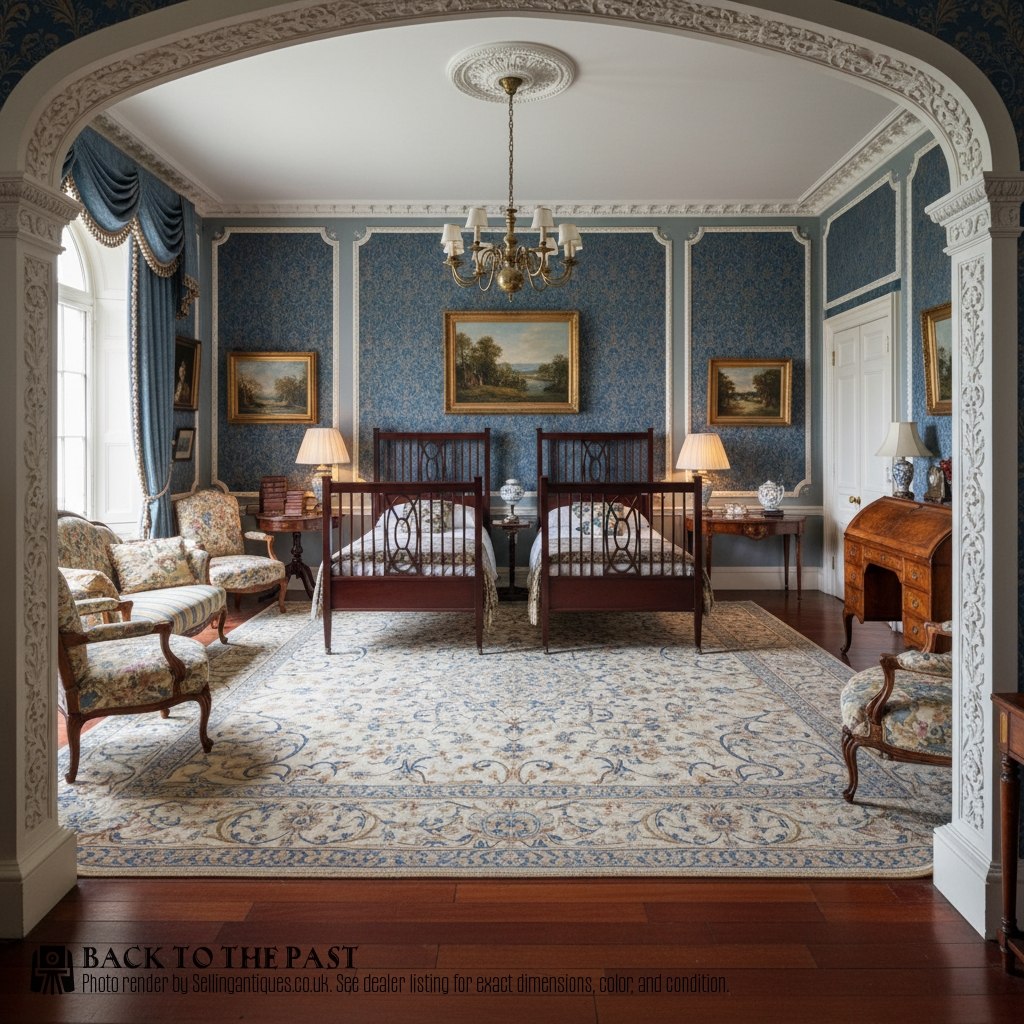
Regularly. Pair appears in 49 titles and single beds in 35, with matching in 9, and several are described as joinable into one wide bed.
Edwardian pairs are the recurring version, and pairs sit above comparable singles in the range.
What unusual mahogany beds have sold here?
One-offs turn up. A mahogany dog four-poster, a child's bed, a rattan folding campaign bed and a reclining leather day bed each appear once.
So do a marriage bed and a four-poster mounted with porcelain. Day beds, campaign and folding beds together stay under one in ten of the category.