





A 2026 Guide by Sellingantiques
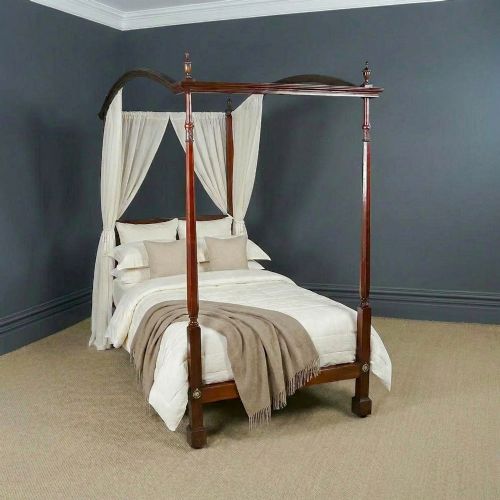
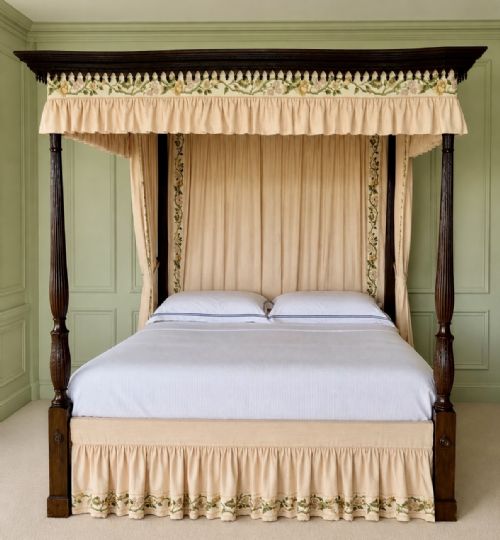
Early antique canopy beds functioned as enclosed rooms within larger chambers.
Thick curtains offered vital protection against winter draughts. You needed this before central heating became standard in large houses.
Look at the height of the posts. They gradually dropped as ceilings lowered in later domestic architecture over the nineteenth century.
State beds formed a separate category. Makers built these to impress visitors during formal morning levées, focusing on status rather than actual sleep.
Thomas Chippendale supplied grand state beds with complex carved testers. He worked during the mid to late eighteenth century.
Gillows of Lancaster produced substantial numbers of mahogany examples. Their workshops turned out beds with finely shaped posts between 1770 and 1840.
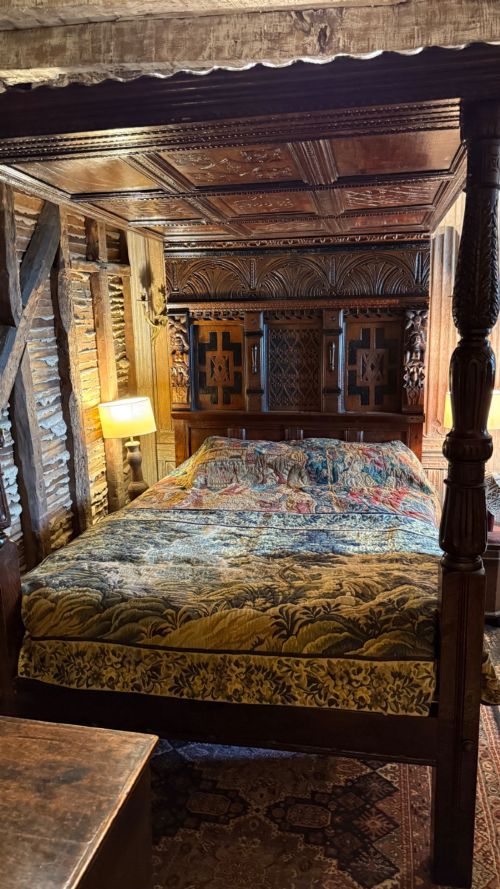
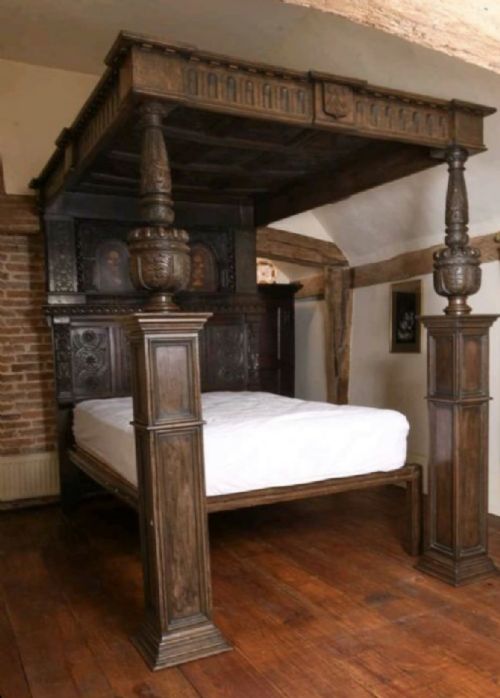
Regional joiners built most early oak versions. They left them unsigned, meaning dealers identify them only by local carving patterns and joint styles.
The 2026 retail price guide for Antique Canopy Beds is drawn from a proprietary archive of over 1.1 million retail prices indexed by Sellingantiques since 2003. This guide relies exclusively on their own internal data; no external sources or auction records are used.
Analysing nearly 25 years of UK antique market history alongside current retail values, the data indicates that typical UK retail prices for Antique Canopy Beds range between £1,500 and £13,700. Entry-level prices generally fall under £1,500 and premium examples upwards of £13,700.
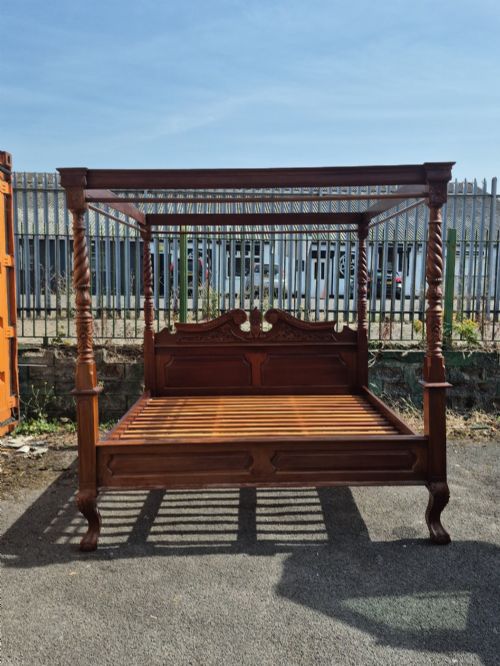
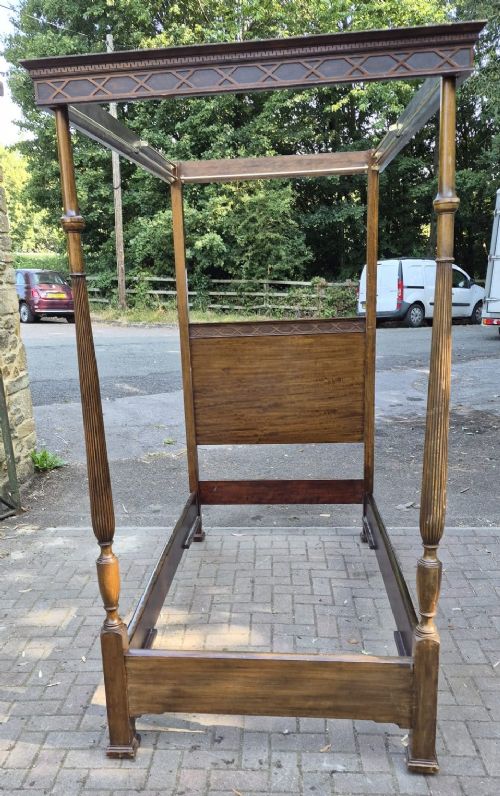
Four upright wooden posts support a heavy roof structure overhead.
The tester is the wooden frame at the top. It holds a fabric ceiling and side valances to enclose the sleeper.
Check the headboard design. It often remains a simple, unpolished plank when the maker intended it to be covered by thick upholstery.
Heavy mortise and tenon joints hold the main frames together. Joiners secured these by driving wooden pegs through the side.
Turners shaped the later mahogany posts on large lathes. They worked long sections of solid timber by hand.
Bed bolts appeared in the eighteenth century. These iron screws tighten the side rails and hide under brass covers.
"Plain headboards often survive in their original rough state. Makers designed them purely as hidden backings for expensive fabric displays."
"Dismantling these large structures is straightforward. They rely on simple joints meant to pack flat for transport up narrow domestic staircases."
"Modern mattress sizes frequently fit nicely into nineteenth-century frames. You won't always need to alter the antique woodwork to sleep comfortably."
Based on almost 25 years of Sellingantiques UK antique market data, Antique Canopy Beds appeared 135 times (out of 1,100,000 antiques) which gives it a rarity score of 97/100.
This score measures scarcity within the Sellingantiques archive only and is not a survey of the entire antiques market, so these statistics may not be indicative of the general availability of Antique Canopy Beds elsewhere.
Many later nineteenth-century frames take a standard double or king mattress with ease. The inner rails provide enough width for modern bedding.
Older oak frames often prove shorter or narrower than current standards. You might need a custom mattress made to clear the corner posts.
Cutting down the posts alters the proportions and removes original timber, which most dealers try to avoid. It changes how the canopy sits visually within the room.
If a piece has already been shortened in the past, taking off another inch matters less. On an unaltered frame, you're better off finding a bed that fits the space rather than cutting an antique to suit.
Most antique canopy beds use wooden slats running horizontally across the side rails. These rest on internal ledges.
This traditional slatted base supports standard modern box springs or thick mattresses.
They dismantle into manageable sections. The tester lifts off the top, often splitting into side and end rails. The main bed frame unbolts at the corners.
You're left with loose posts and the connecting rails. The headboard lifts away separately. This flat-pack design was deliberate, allowing makers to move large beds up narrow domestic staircases.
Marking the joints with chalk helps when putting it back together. The pieces usually fit best in the exact corners they came from.
Please note: This Antique Canopy Beds guide and its associated pricing data are provided for general informational purposes only. It does not constitute formal financial, investment, or appraisal advice and should not be relied upon as the sole basis for any commercial activity, purchasing, or sales decisions. Sellingantiques.co.uk accepts no liability for any actions taken in reliance on this information. Always consult with a qualified professional or independent appraiser.
