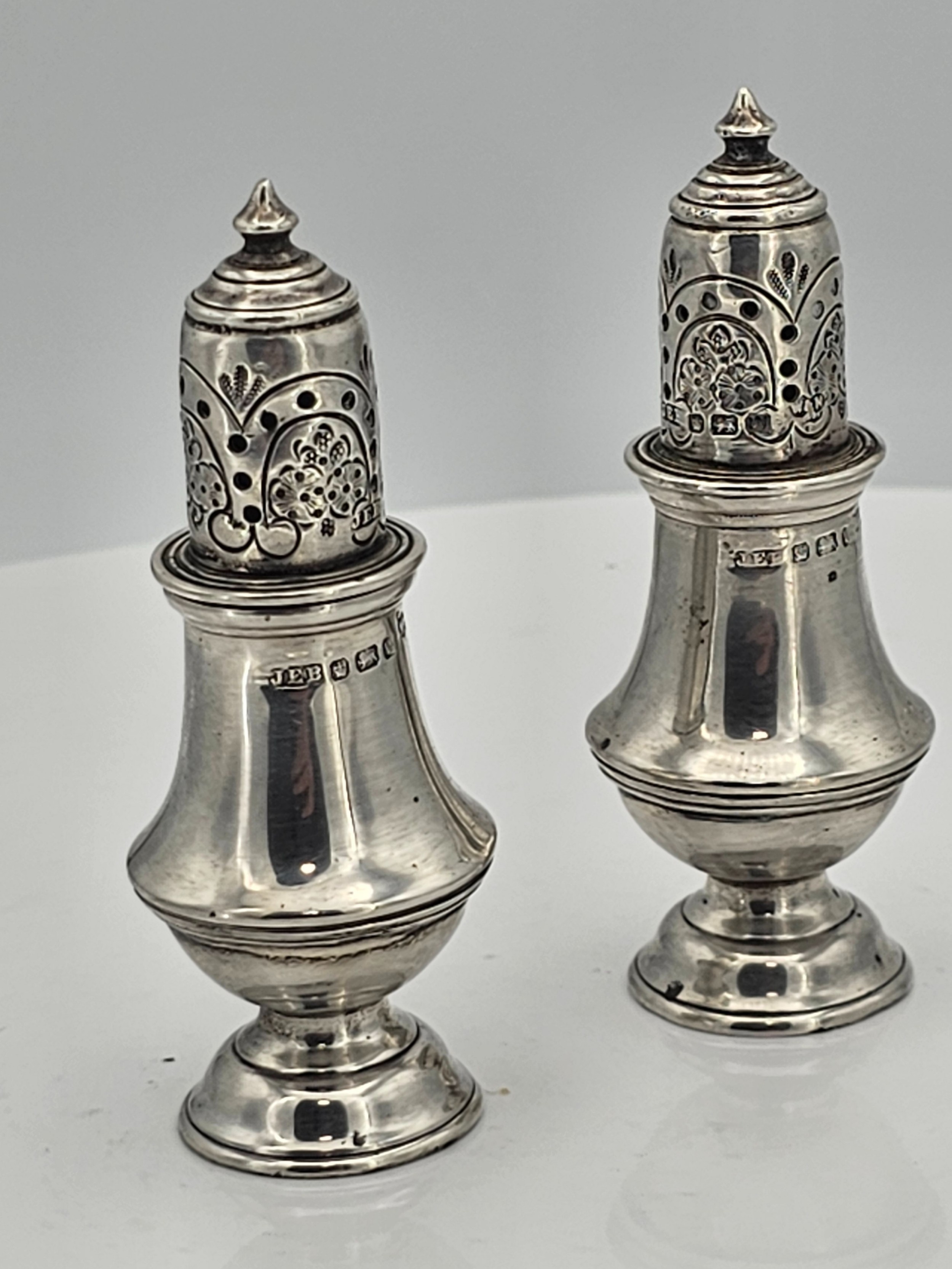
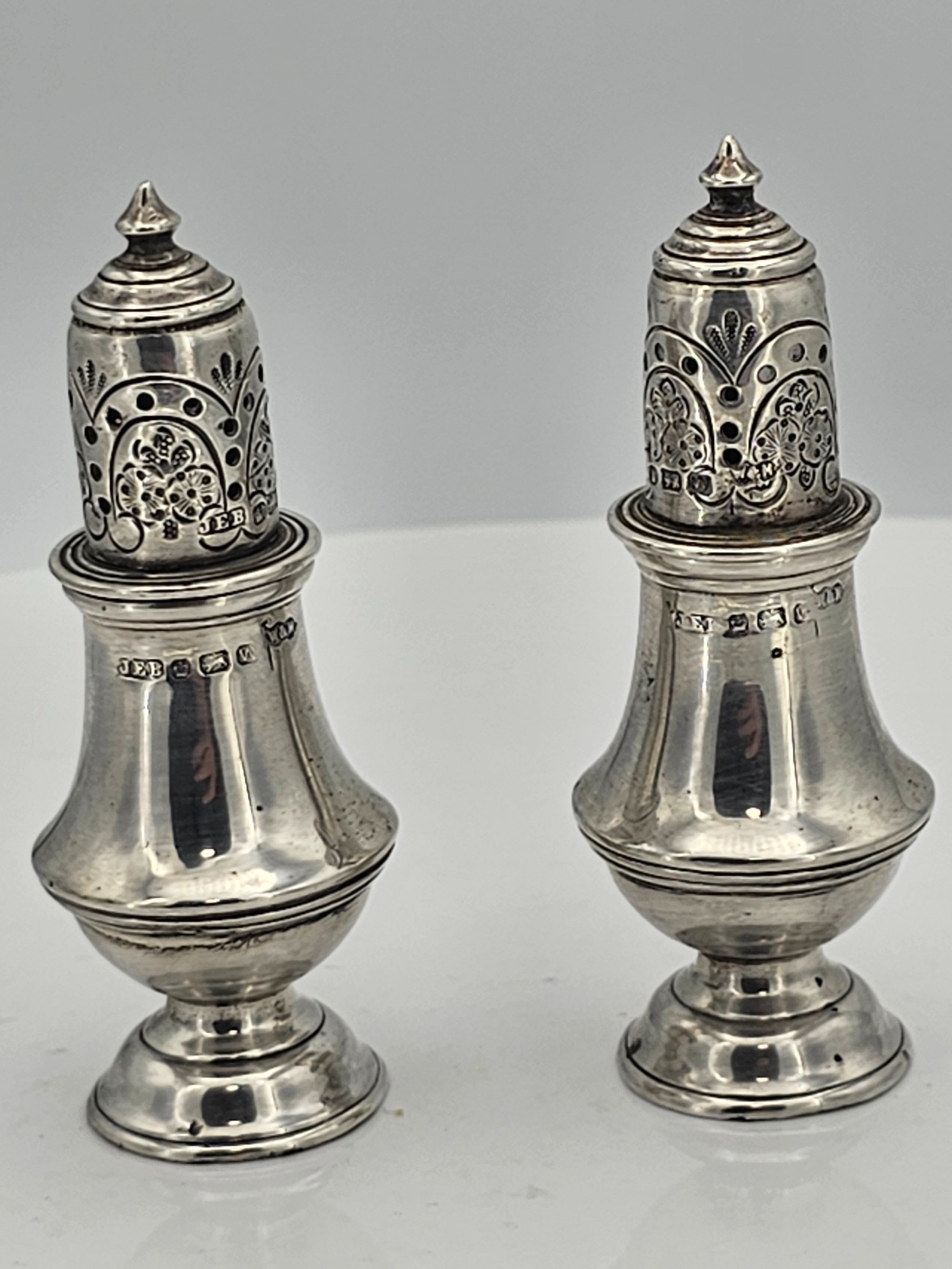
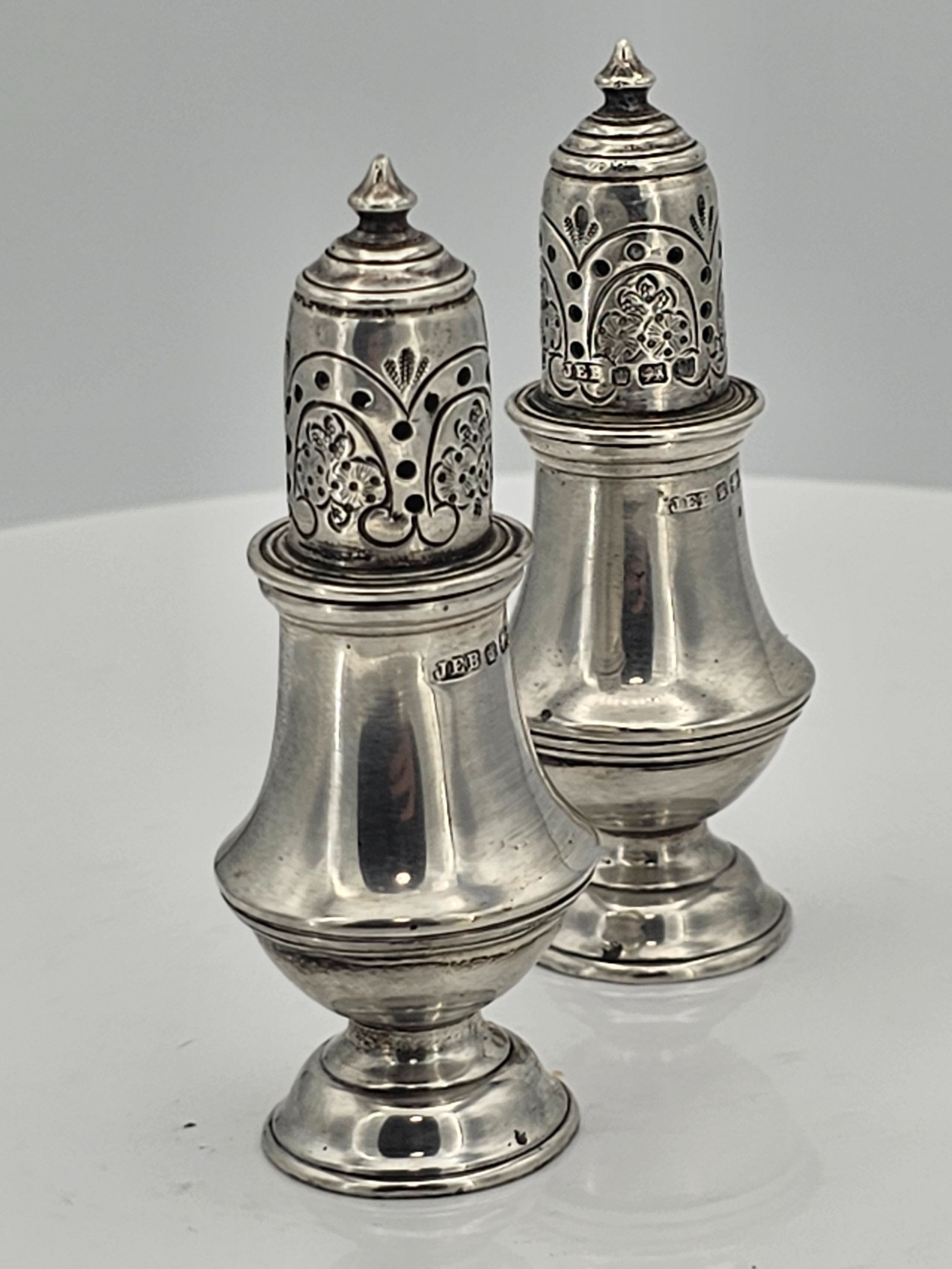
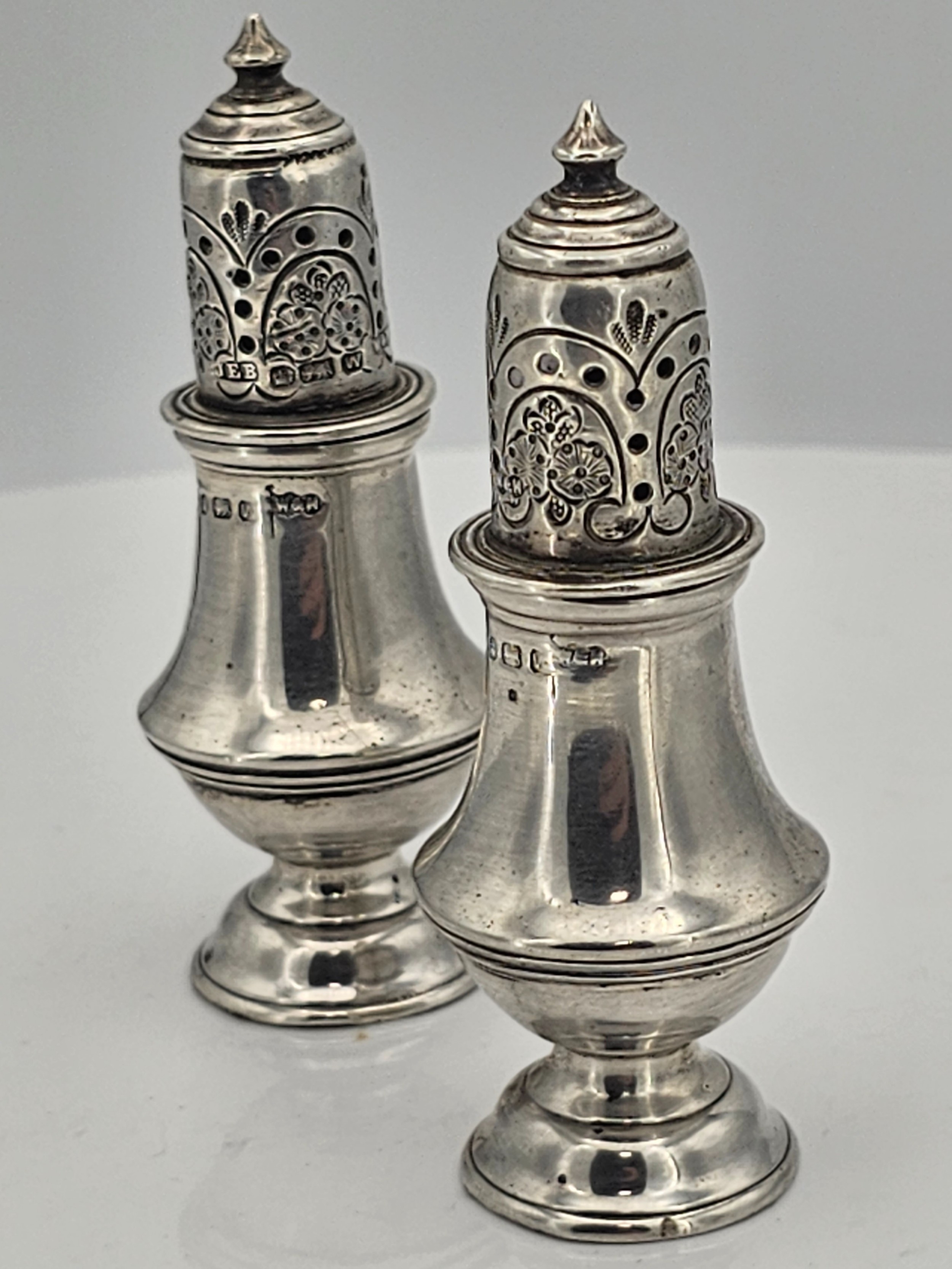
Lee Sherman Antiques has dated this piece to the 19th Century.
History:
Walker & Hall was established by George Walker (1816–1881), a Derbyshire-born table-knife forger.
George Walker later quarreled with Harrison and joined forces with a Doncaster schoolteacher, Samuel Coulson, and William Robson. Coulson supplied the capital, and they began an electro-plate venture at Electro Works, Howard Street, after taking out a license from Elkington of Birmingham in 1845. The firm was named George Walker & Co., electro-platers and gilders. Initially, it was plated for the trade, and James Dixon & Sons became a customer.

After Robson retired in 1848, Henry Hall (c. 1802-1889) joined the partnership. Hall had prospered in the grocery trade, partly in partnership with Sheffield wholesale grocer Edward Bingham (1808–1880). He had retired to his native Worcester, but electroplating tempted Hall with a fresh challenge. In 1852, when the firm employed about 60 workers, Coulson left, and Walker & Hall was formed. Hall was the traveler, and Walker was the technical man. John Edward Bingham (1839–1915), Edward Bingham’s son and the nephew of Anne Hall (Henry Hall’s wife), joined them in 1856.
Walker & Hall made good profits and registered its first silver mark in 1862. After this steady start, it emerged as one of the leaders in the silver and electro-plate trades. Walker told the Census (1861) that the firm employed 136 workers. In 1865, he retired to Warwick and died at Southport on May 4, 1881, leaving £13,378. Hall retired in 1873 and died at Abergavenny on January 3, 1889, aged 87, leaving £15,548. John E. Bingham took control, with his brother Charles Henry Bingham (1848–1901) as partner. In 1881, J. E. Bingham told the Census that the firm employed 413 workers. Other sources stated that the firm had between 500 and 700 workers by the 1880s (New Monthly, October 1882; Sheffield Independent, July 4, 1885). In 1892, Walker & Hall bought for £1,000 the assets of silversmiths Henry Wilkinson & Co.

In 1863, John Bingham married Maria Fawcett, the daughter of William Fawcett, a director at James Dixon & Sons. He became Master Cutler in 1881 and again in 1884 (when he was knighted). The Binghams were ‘men of mark’, even physically. Charles H. Bingham, who was Master Cutler in 1894, ‘stood 6 feet 3 inches, beating his nephew, Mr. A. E. Bingham, by half an inch. Even he, however, fell short of his grandfather, who stood 6 feet 7 inches in his stockings’ (Sheffield Daily Telegraph, October 3, 1900). When Charles H. Bingham died on October 2, 1900, aged 52 (leaving £74,000), Sir John’s only son, Albert Edward Bingham (1867–1945), became a director.

Fueling Walker & Hall’s rise was the almost insatiable Victorian and Edwardian demand for silver-plated goods: fancy entrée dishes, soup tureens, meat and venison dishes, tea trays, presentation plates, and prize cups. The firm apparently cast and plated its own products, ground its own cutlery, had engineers’ and cabinet-makers’ shops, and even made its own instantaneous Plate Cleaner’. All the firm’s products, whether large or small, were stamped with the ‘Flag’ trade mark, a banner bearing the letters ‘W & H, which was registered in 1861. In the nineteenth century, the company was the most prolific lodger of marks at the Sheffield Assay Office; it registered nine between 1862 and 1896. In 1904, Walker & Hall also received the first gold assay ticket after the Assay Office was allowed to stamp its own gold mark.
Electro Works was described as ‘one of the si
Lee Sherman Antiques has dated this piece to the 19th Century.
Sourcing beautiful antiques & collectables from the past three hundred years!
You can view the stock and full dealer information on the Lee Sherman Antiques Profile Page
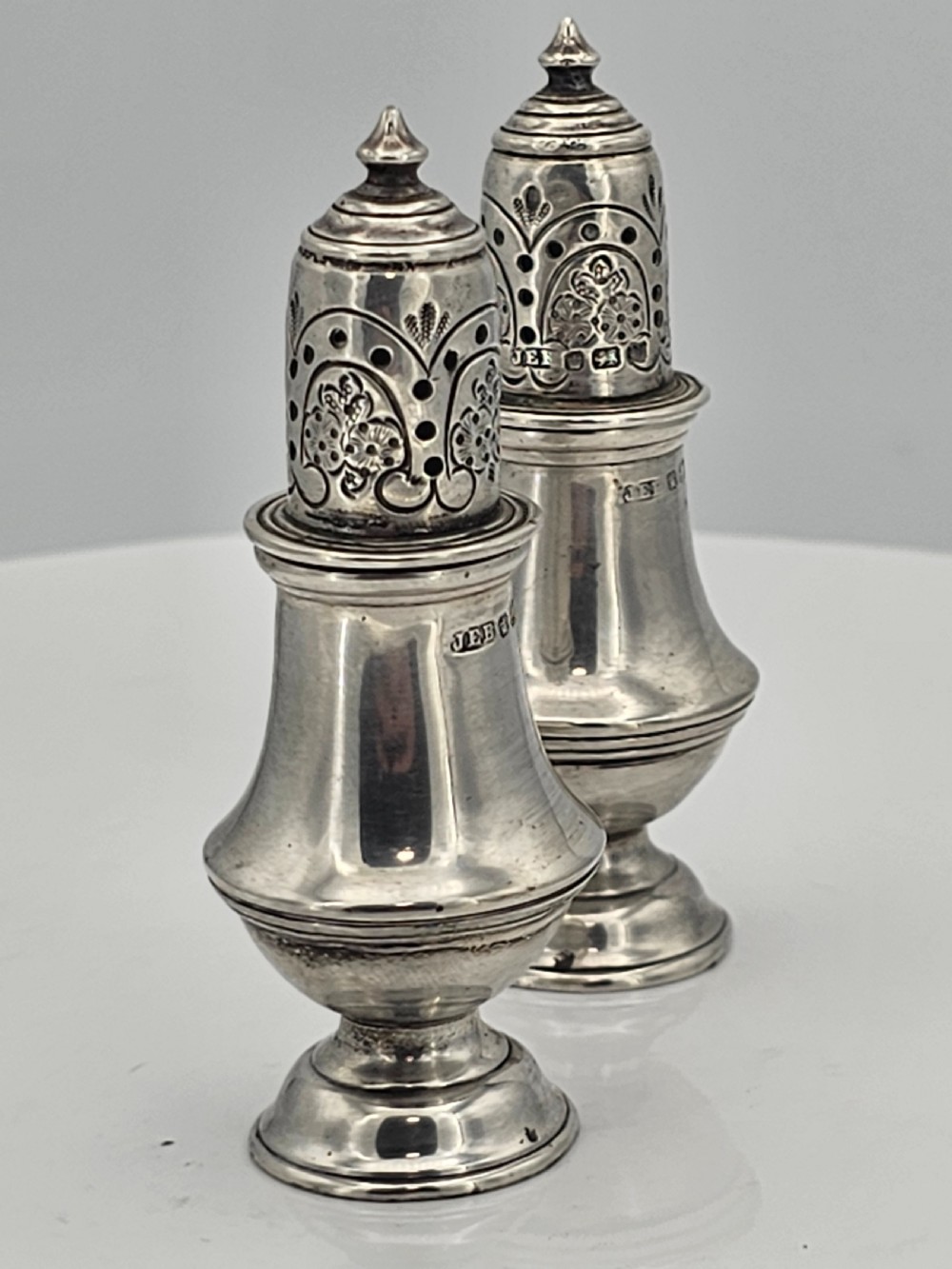

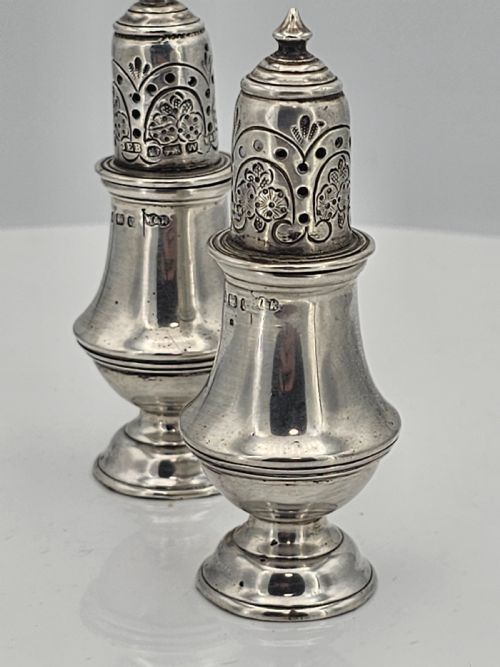
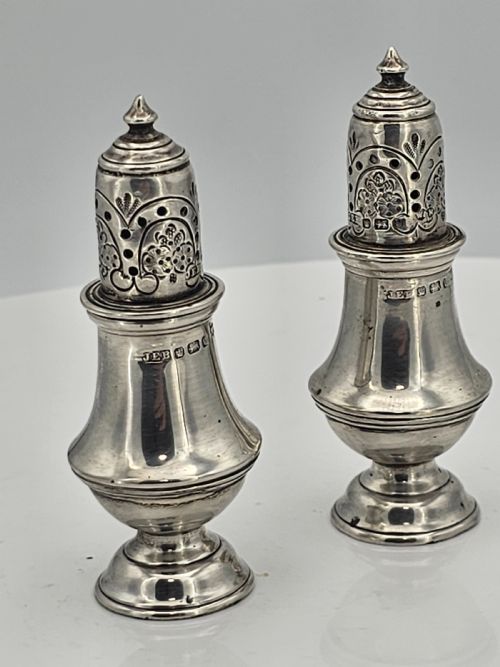
Delightful Pair of Silver Peppers Walker & Hall by John Edward Bingham 19thc