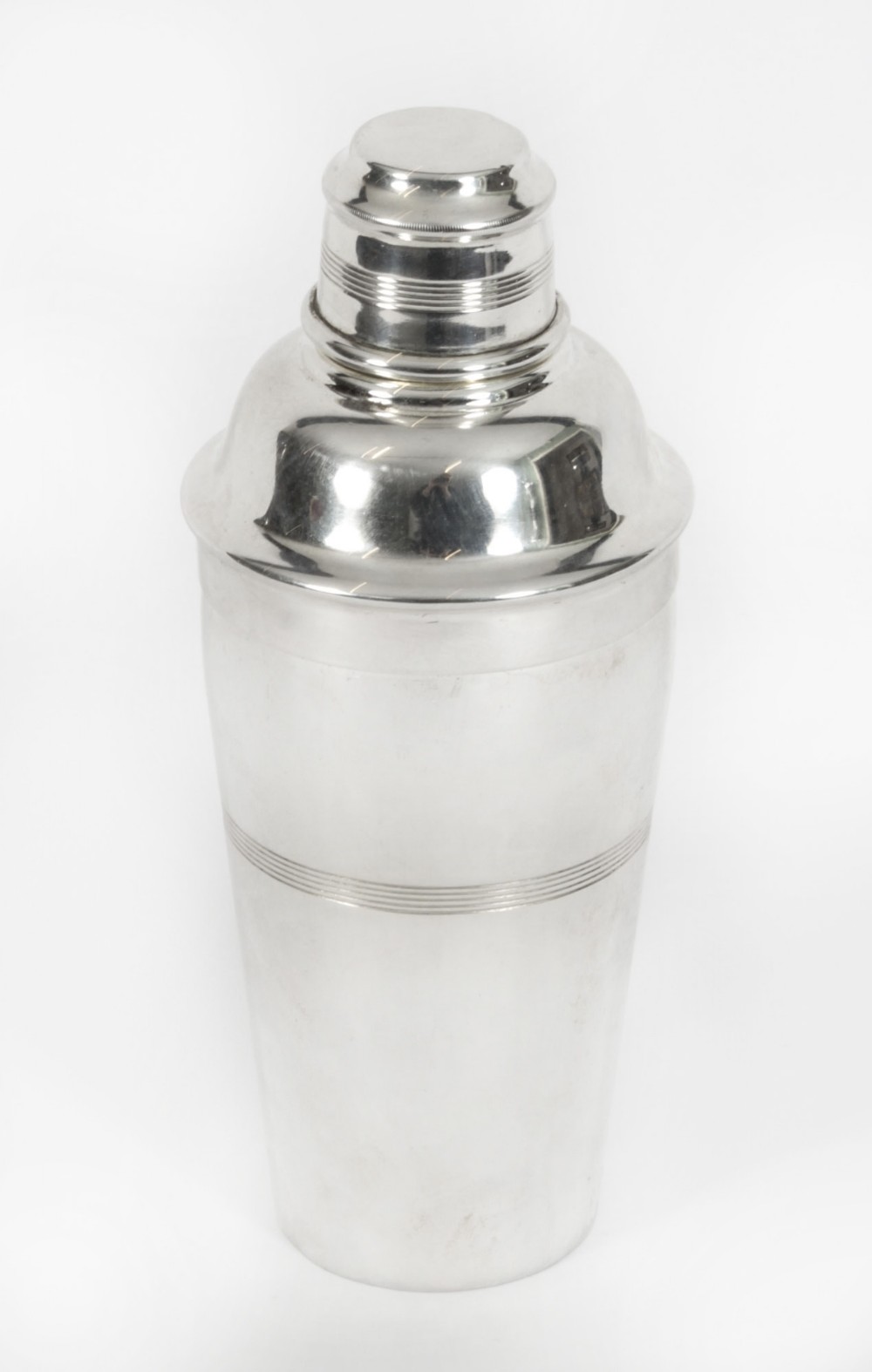
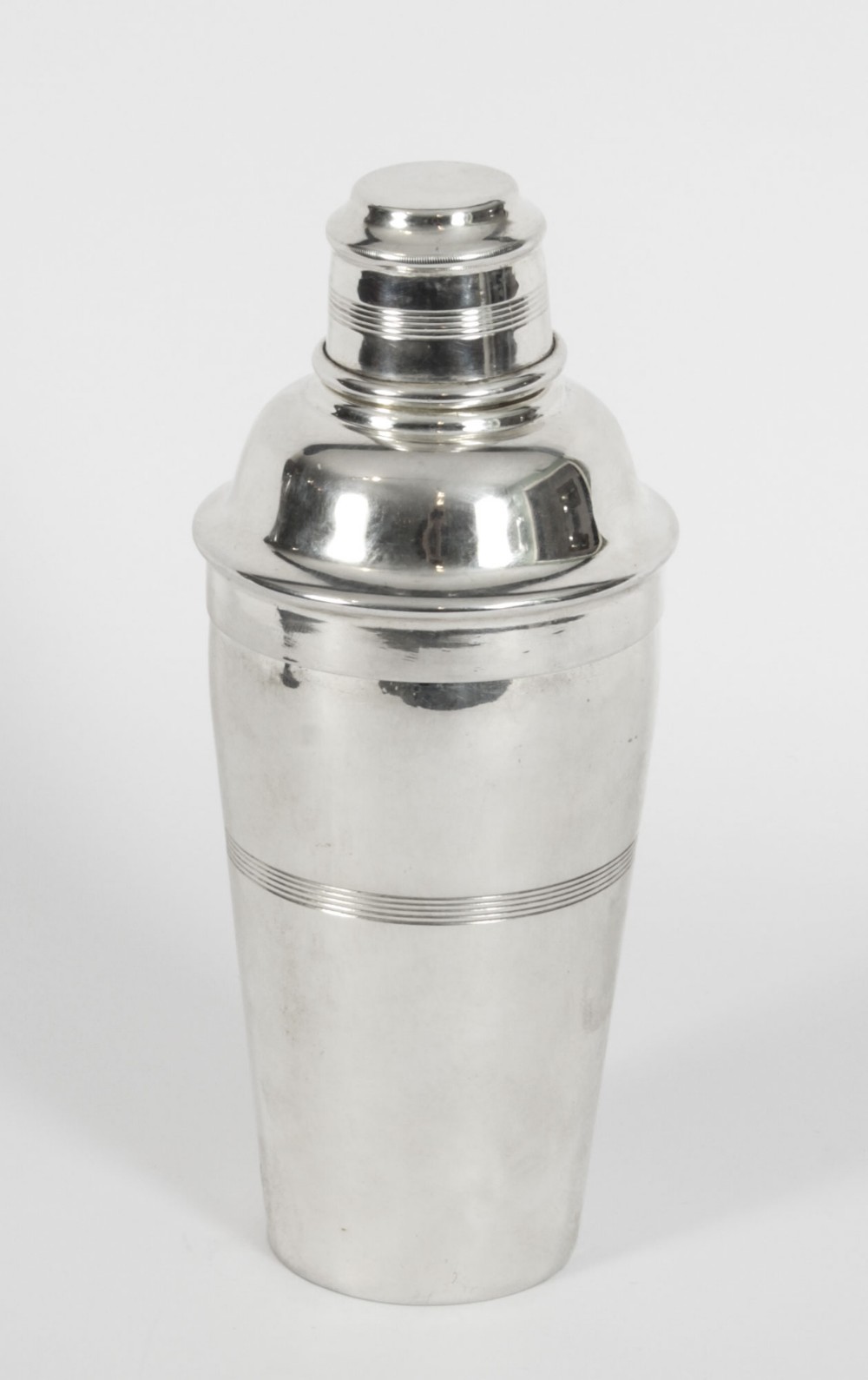
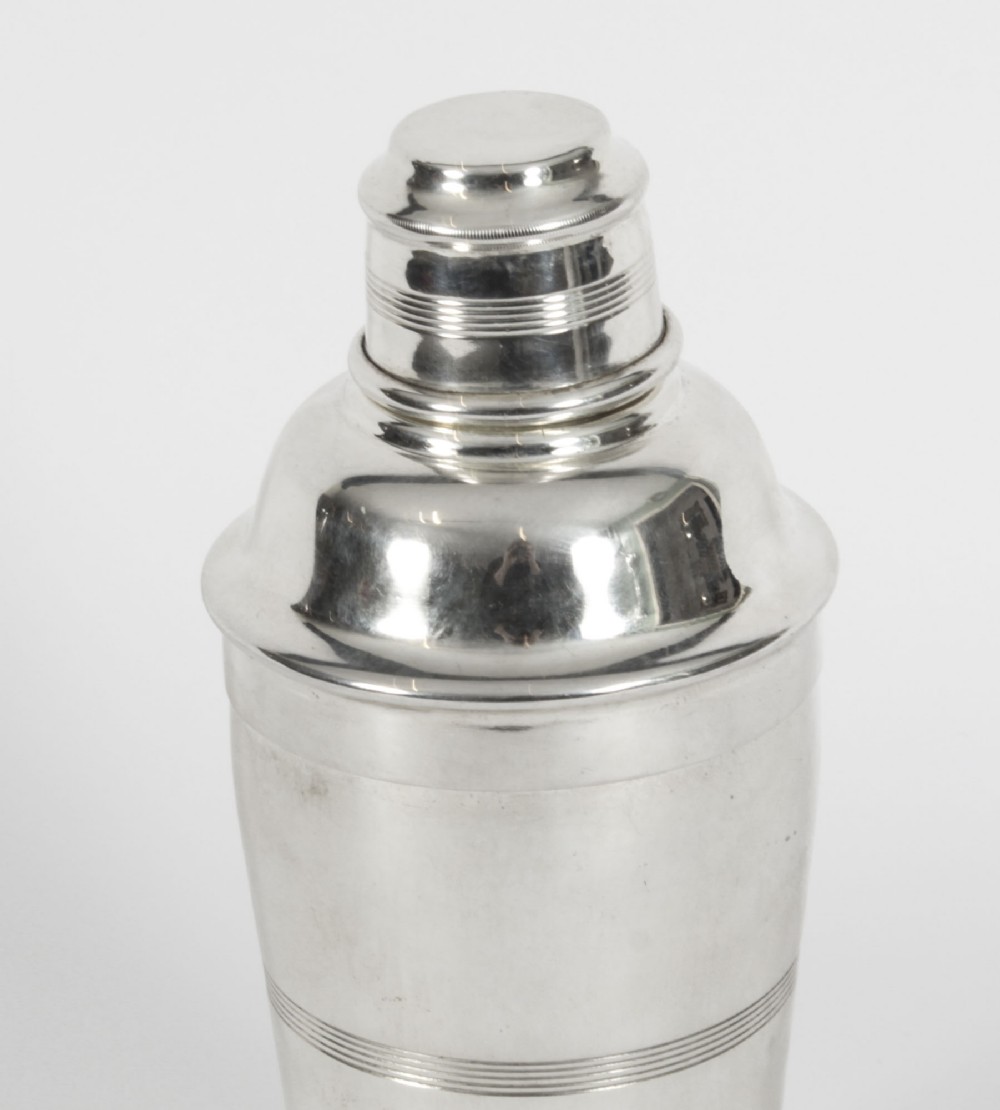
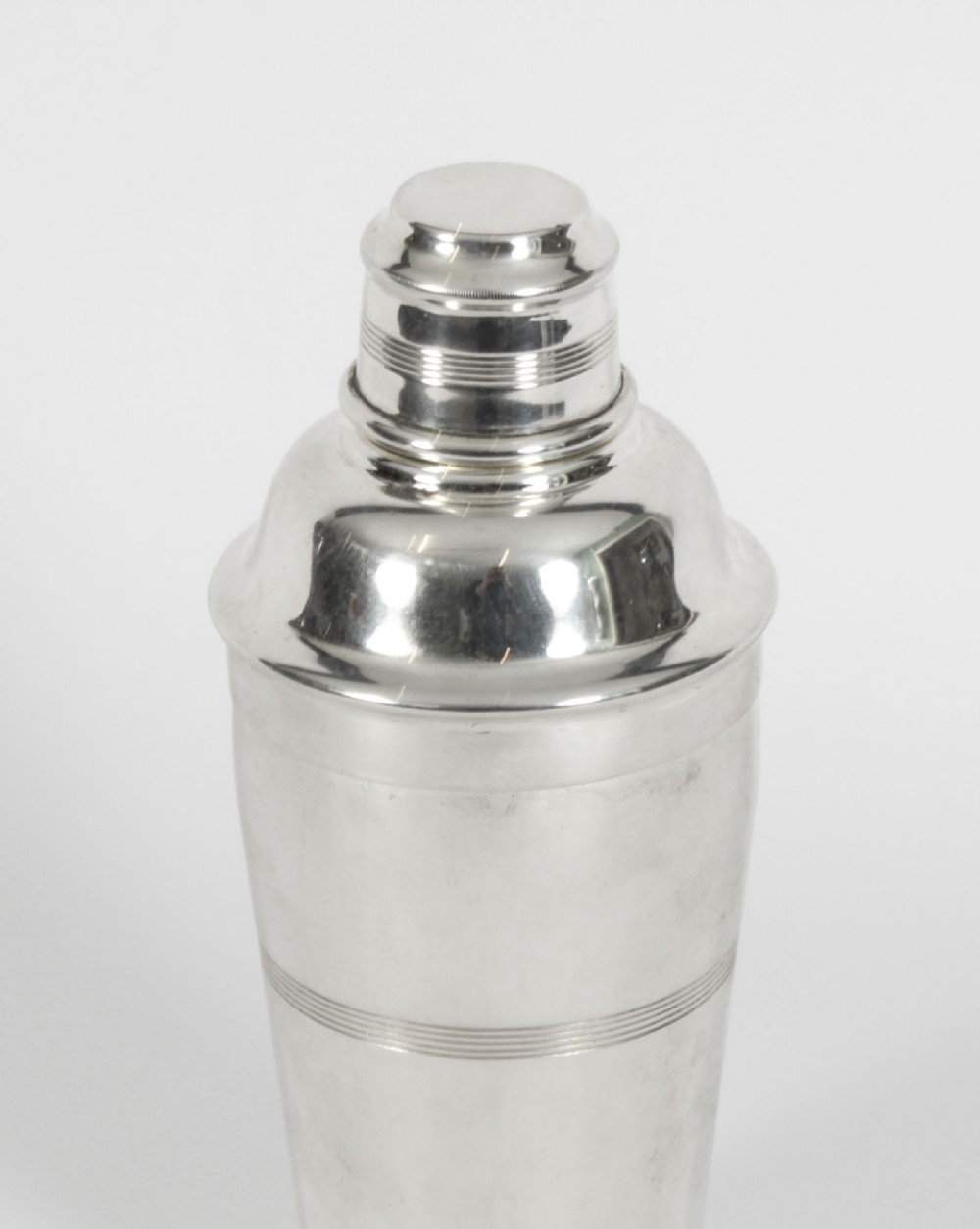
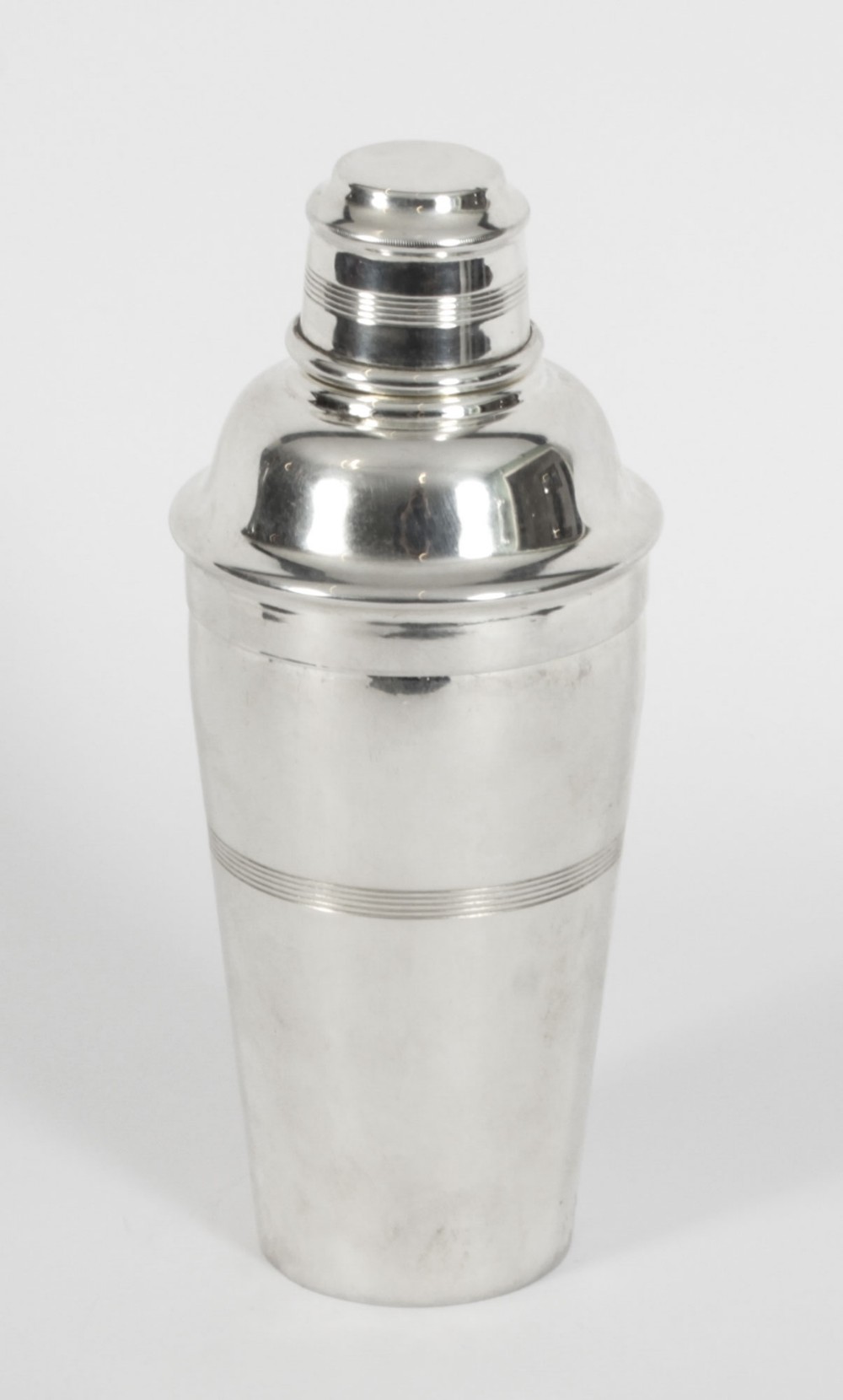
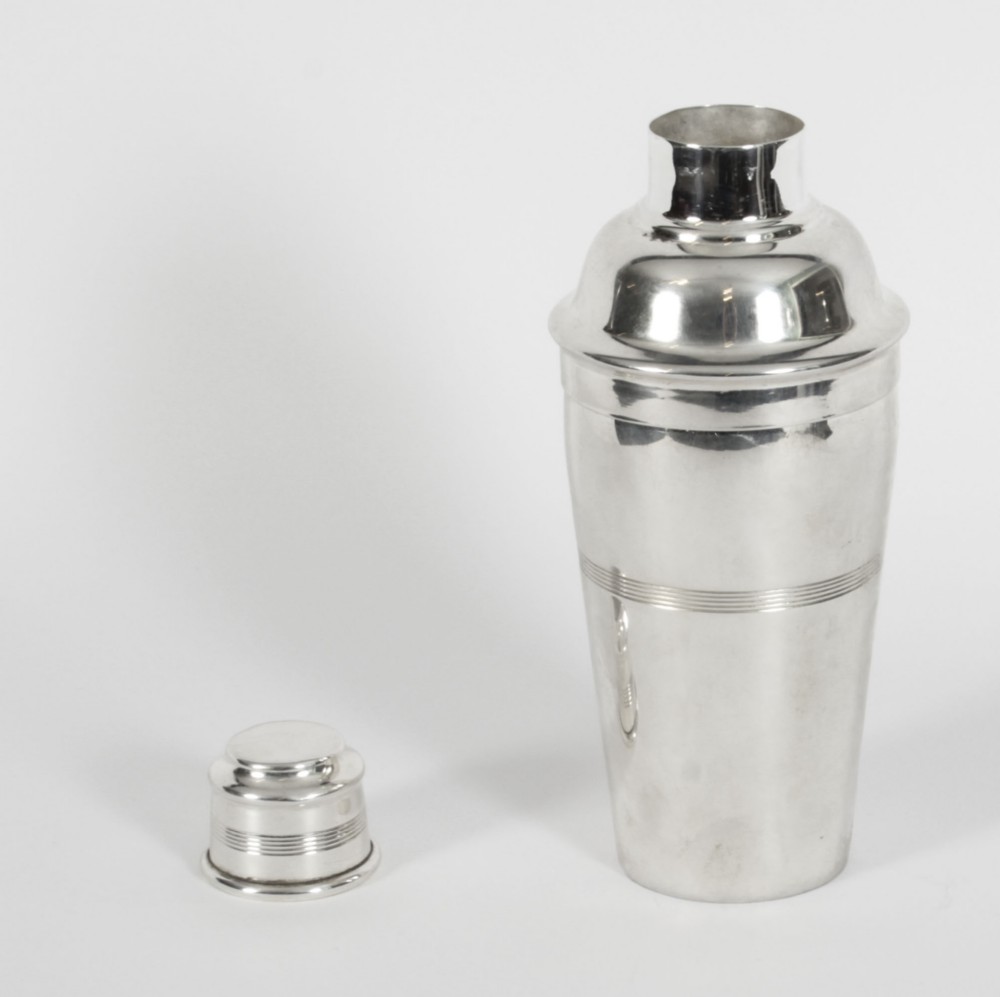
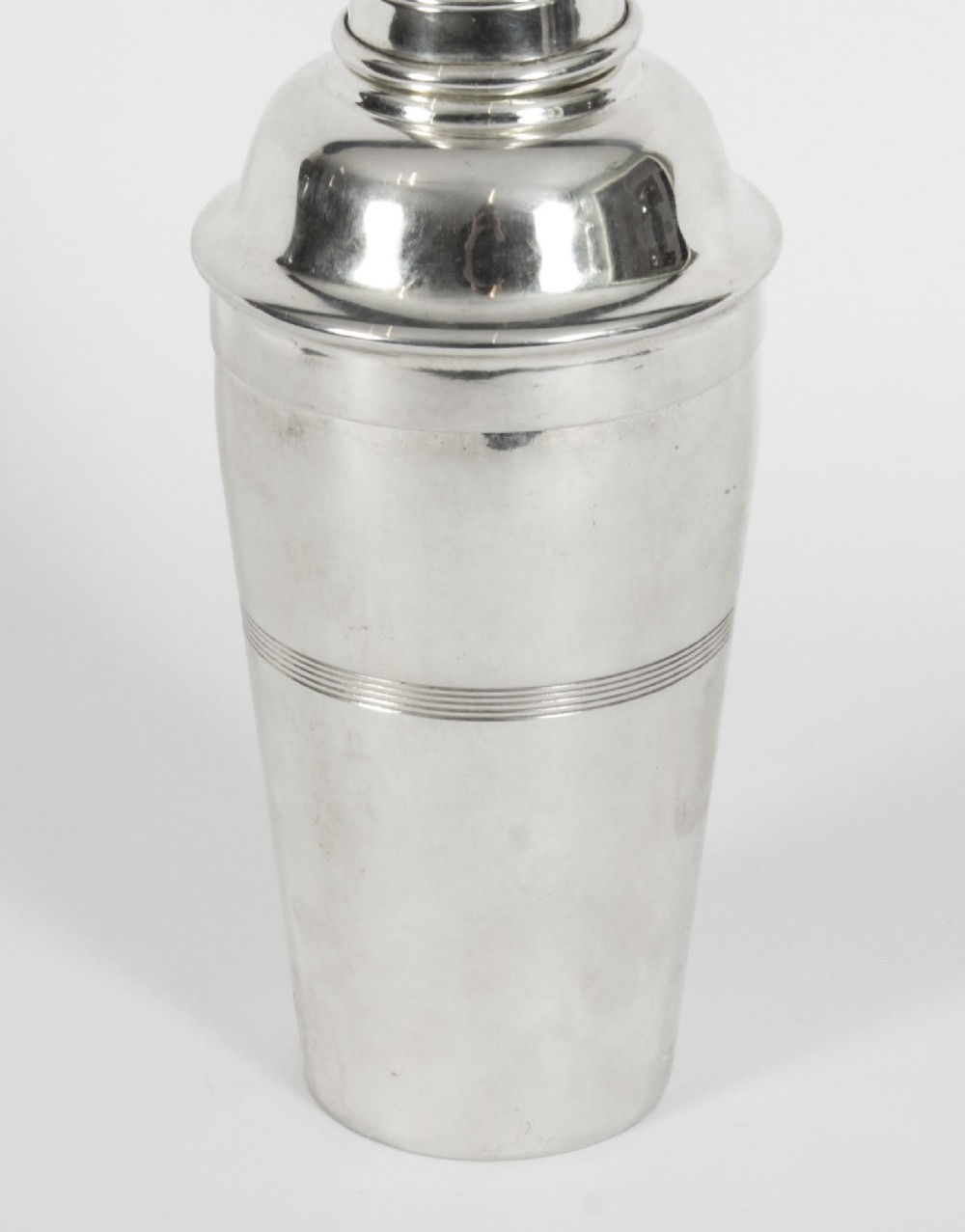
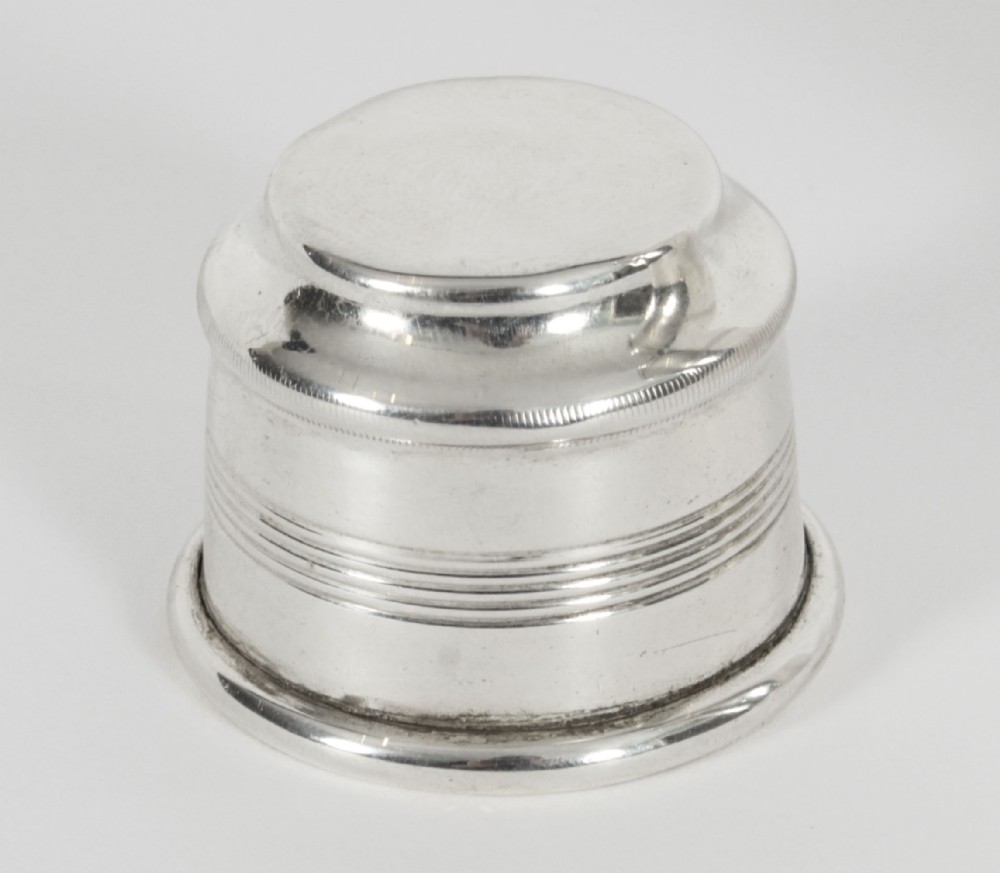
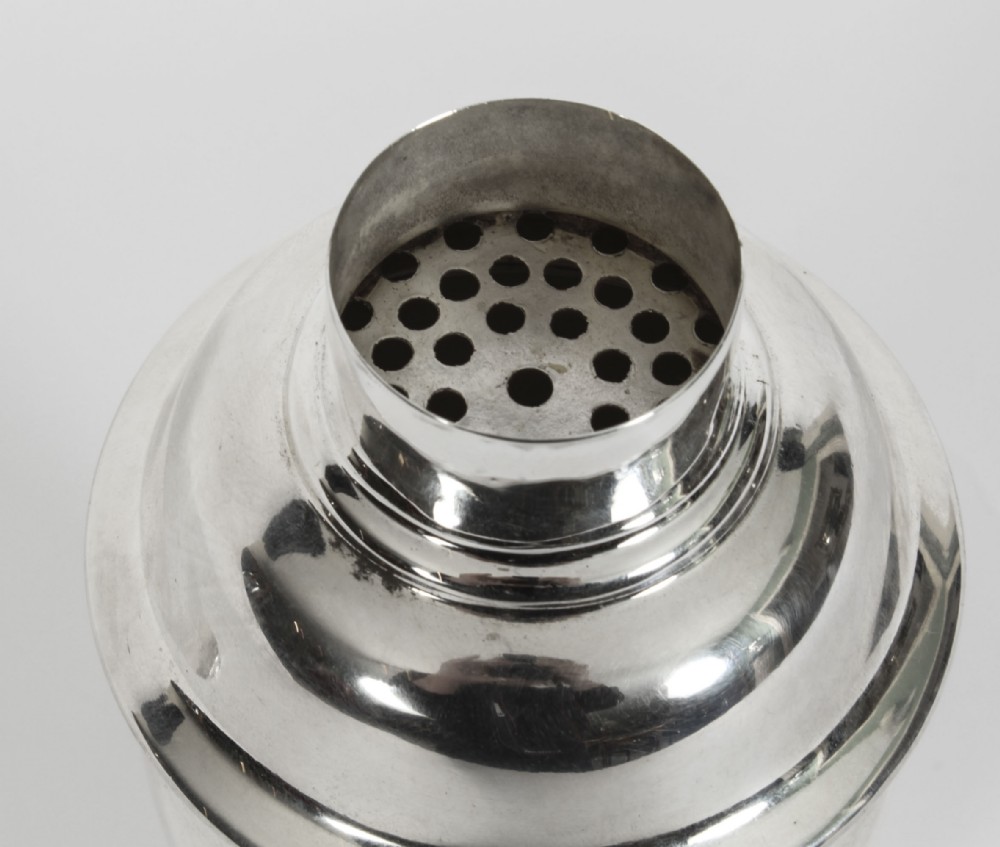
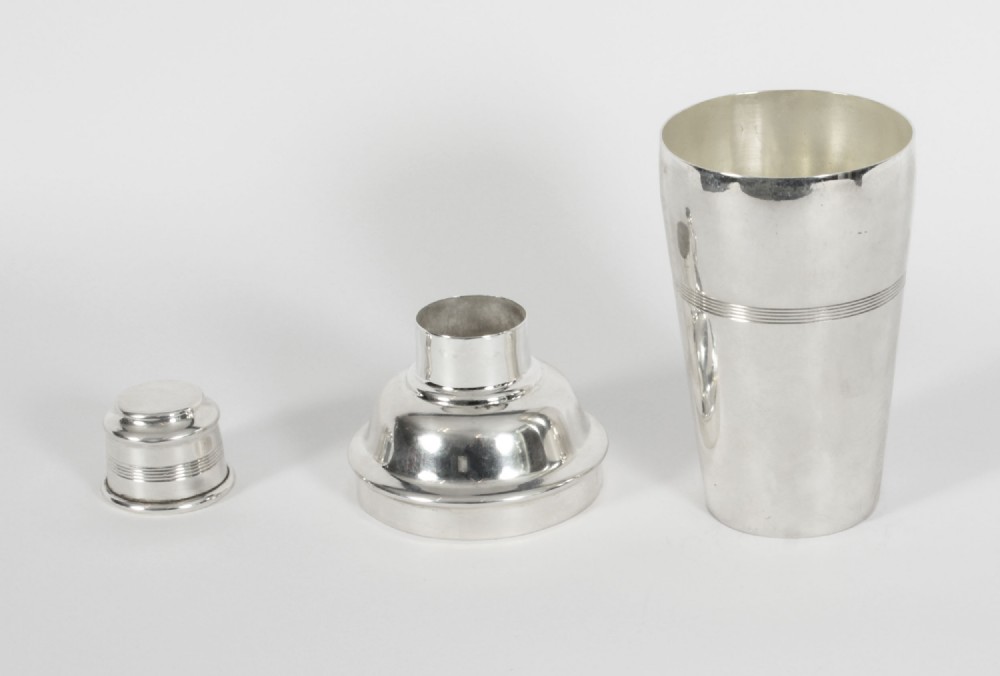
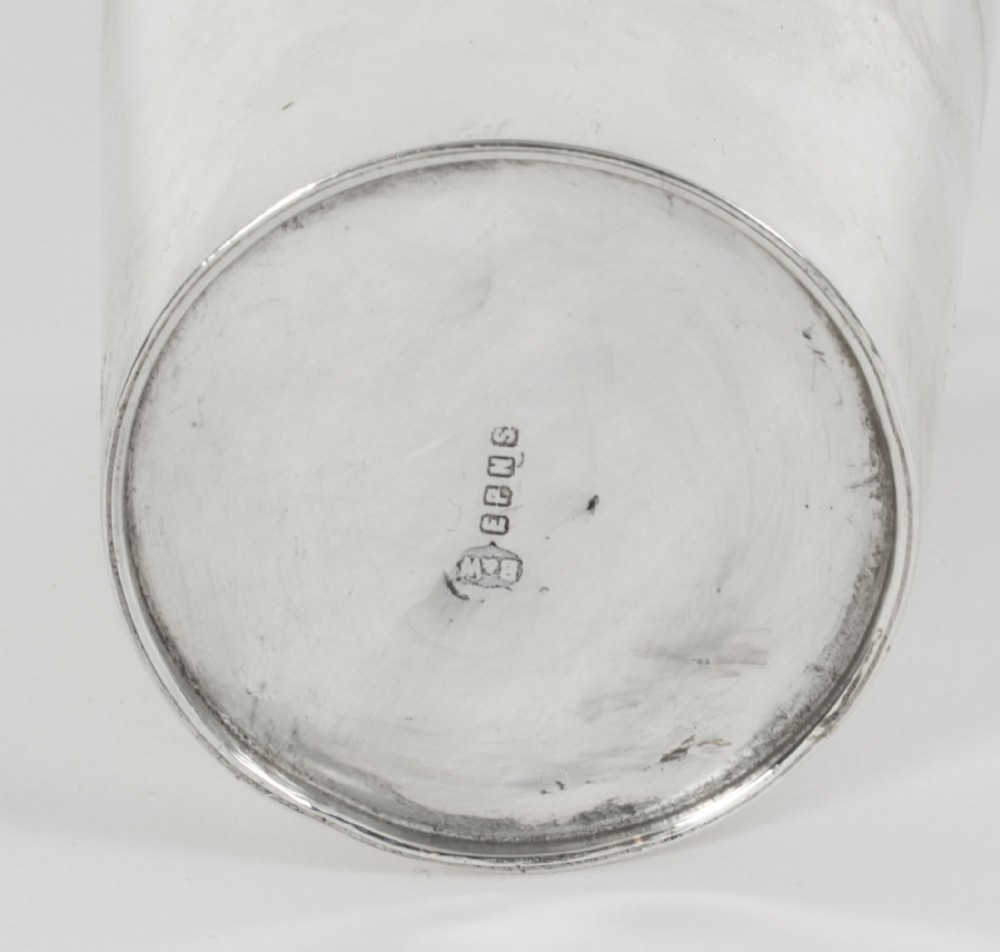
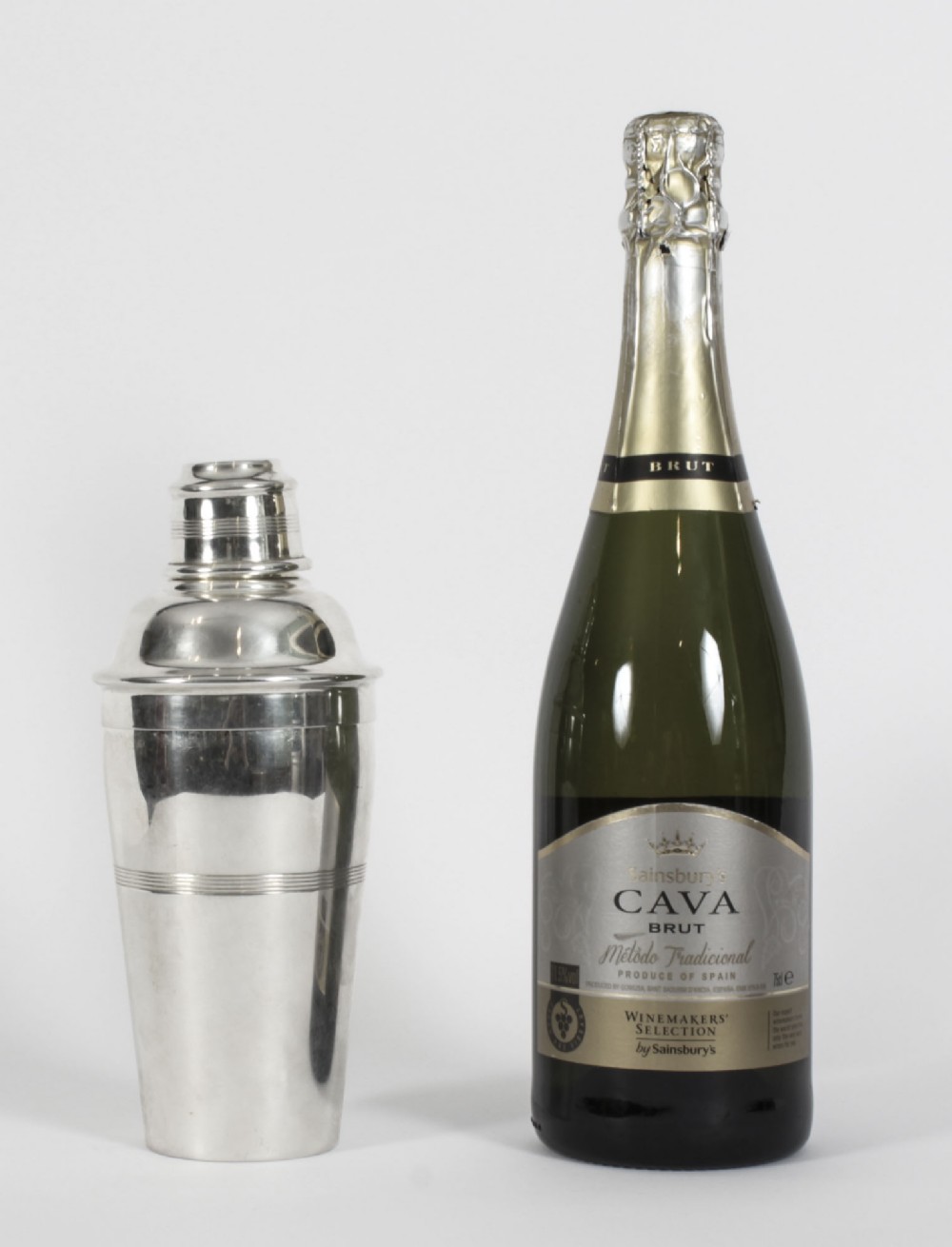
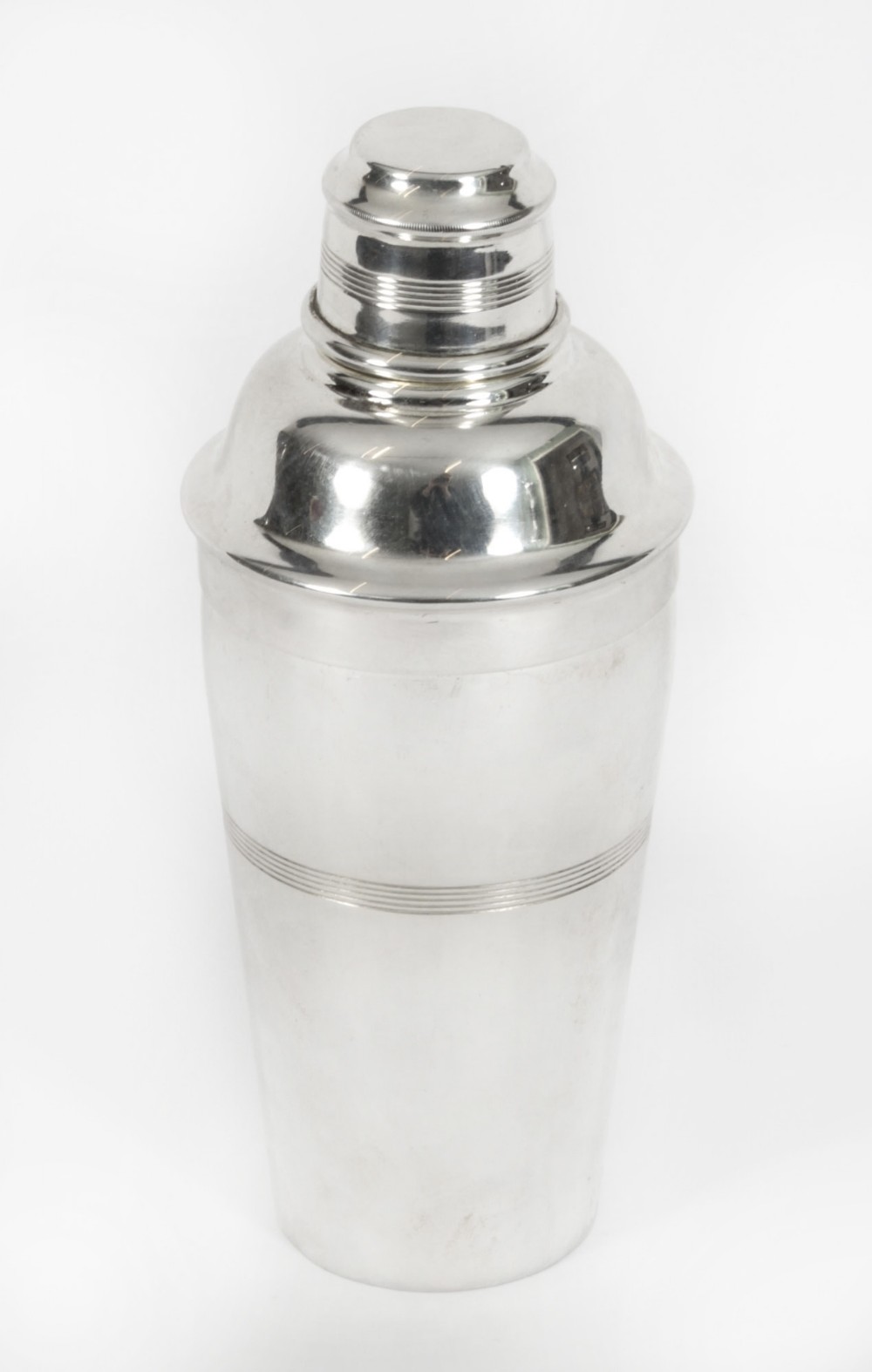
A very attractive silver plated Art Deco cocktail shaker by Burton & Waters, circa 1920 in date.
The decorative Deco shaker with engine turned design, typiocal of the period..
There is no mistaking the unique quality and design of this high quality piece and it is sure to add a touch of class to your next cocktail party.
Condition:
In excellent condition, please see photos for confirmation of condition.
Dimensions in cm:
Height 22 x Width 10 x Depth 10
Dimensions in inches:
Height 9 inches x Width 4 inches x Depth 4 inches
A cocktail shaker is a device used to mix beverages (usually alcoholic) by shaking. When ice is put in the shaker this allows for a quicker cooling of the drink before serving.
A shaken cocktail is made by putting the desired ingredients (typically fruit juices, syrups, liqueurs and ice cubes) in the cocktail shaker. Then it is shaken vigorously for around 5 to 10 seconds, depending upon the mixability of the ingredients and desired temperature.
There are at least three varieties of cocktail shakers:
The Boston Shaker: A two-piece shaker consisting of a 28 oz metal bottom and traditionally a 16 oz glass or plastic mixing glass. The mixing container and bottom are inserted into each other for shaking or used separately for stirring or muddling. A separate strainer, such as a Hawthorne or Julep strainer, are required for this type shaker if crushed ice is used. Without such a strainer, some bartenders may instead strain by narrowly separating the two pieces after shaking and pouring the drink through the resulting gap. The market offers now 18 oz or 20 oz container versions too. The unit is the imperial fluid ounce that is about 28,4 ml, so the bottom is about 795 ml and the 16 oz container is about 454 ml.
The Cobbler Shaker: A three-piece cocktail shaker that has tapers at the top and ends with a built-in strainer and includes a cap. The cap can often be used as a measure for spirits or other liquids. The French
Shaker: A two-piece shaker consisting of a metal bottom and a metal cap. A strainer is always required for this type of shaker, barring the separation method mentioned above.
Our reference: A3219