28,890  PAGES BROWSED TODAY PAGES TODAY • 70 ANTIQUES UPLOADED TODAYNEW ARRIVALS
GIFTSNEW
70 ITEMS ADDED TODAY
Sort Order
Items Per Page
Browse Categories
Sort order
Items per page
ID #SA874151
SOLD
Email Phone
Save
Antique Neo-classical Silver Plated Biscuit Sweet Box Munsey 1840 19th C
Sold by Regent Antiques
sold SA874151
Sorry, but this item has been sold.
Regent Antiques

Regent Antiques

Sellingantiques Verified Since Sep 2016
Browse dealers 673 items
  • About Us
    We specialise in english and continental furniture, silver, porcelain and decorative items.
  • Trade Associations
    Regent Antiques is a registered member of LAPADA  CINOA
Id #SA874151
PDF SHARE
SAVE

Antique Neo-classical Silver Plated Biscuit Sweet Box Munsey 1840 19th C

19th century
Sold 19 September 2022 · Regent Antiques
This “Antique Neo-classical Silver Plated Biscuit Sweet Box Munsey 1840 19th C ” found a buyer.

It was listed by Regent Antiques. Sold pieces stay on Sellingantiques as a record of what has passed through, and the next one is rarely far away.

Description

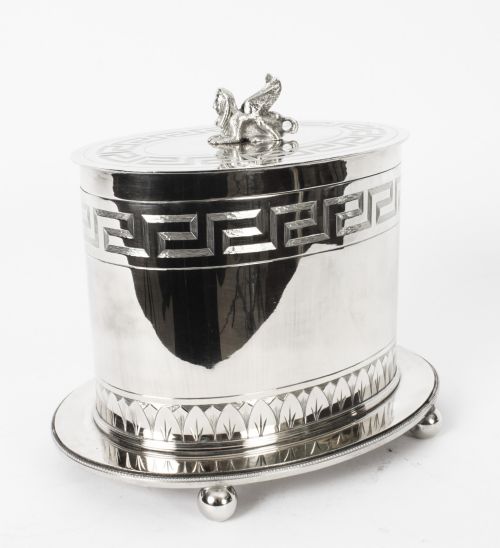
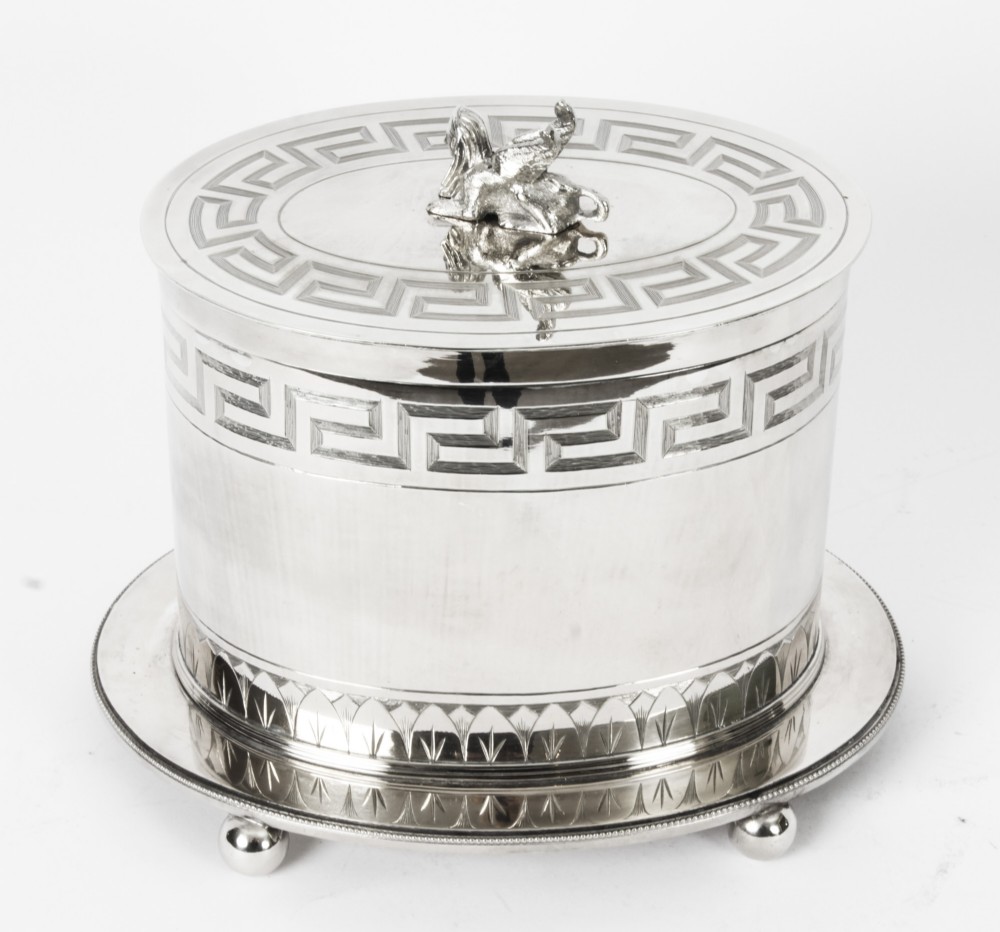
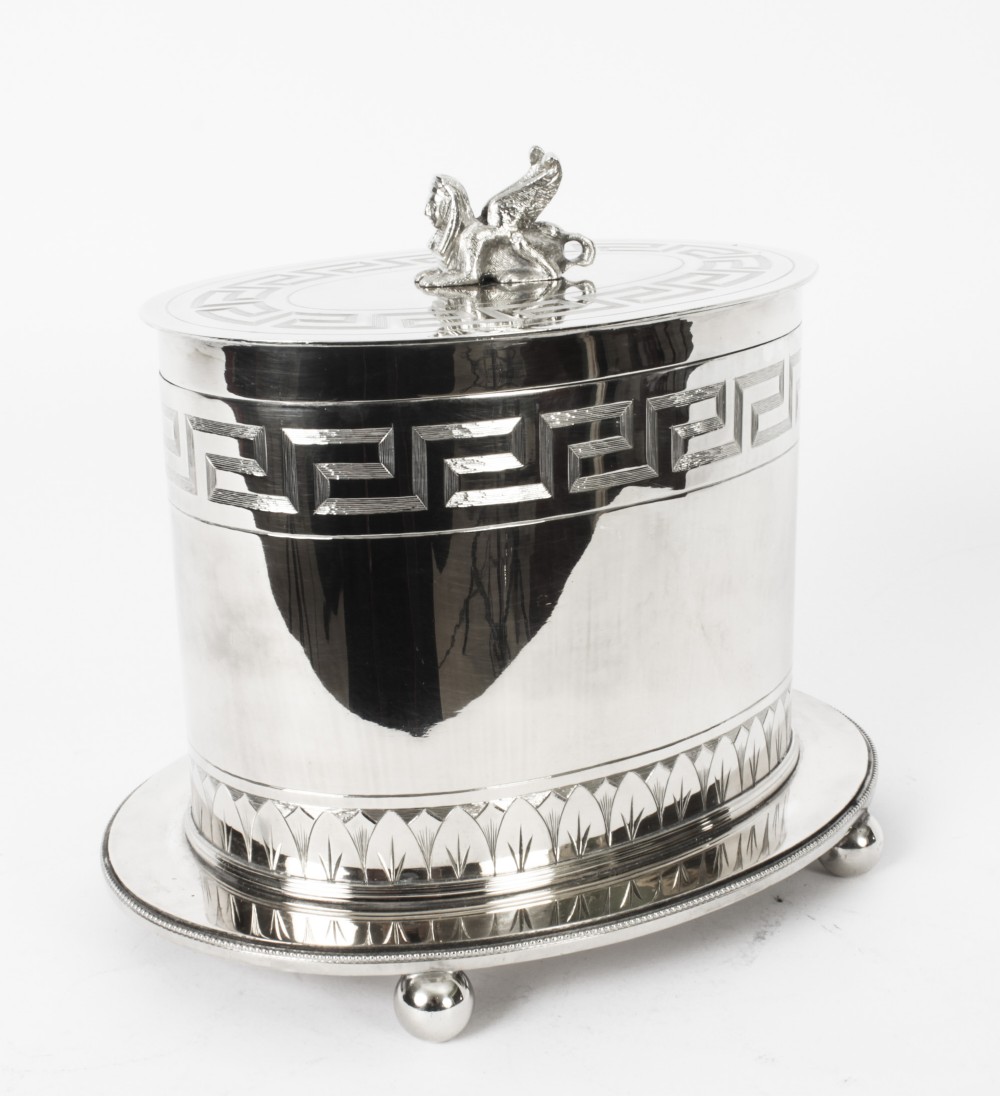
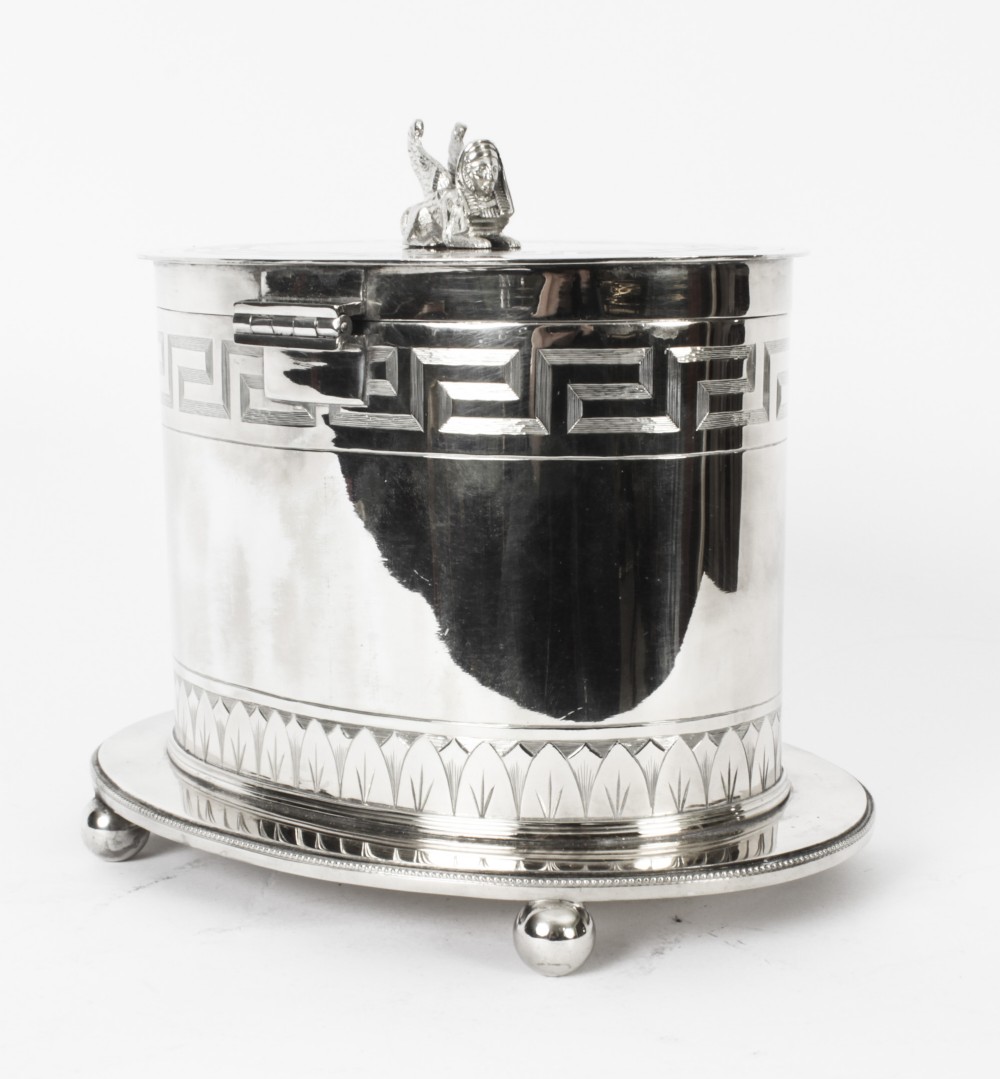
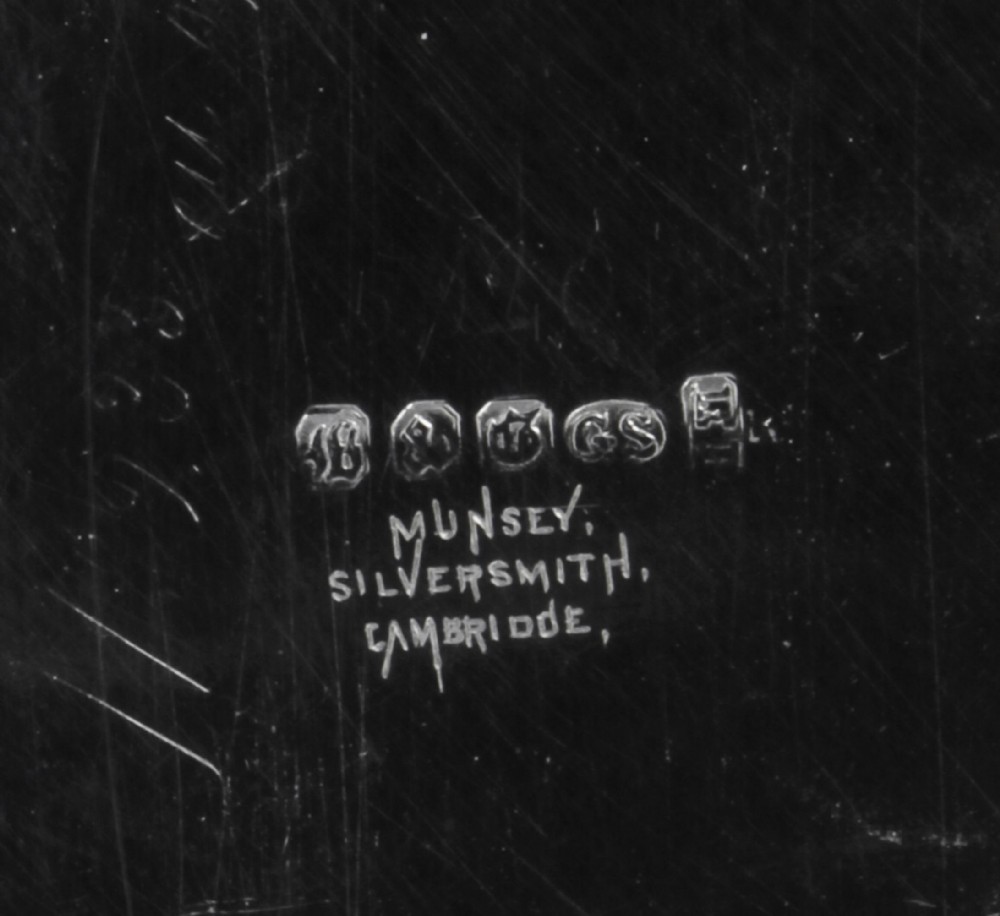
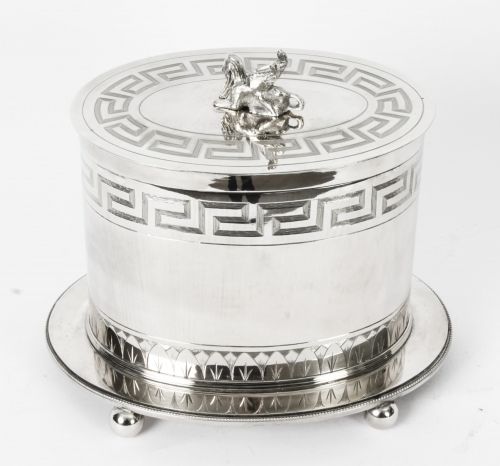
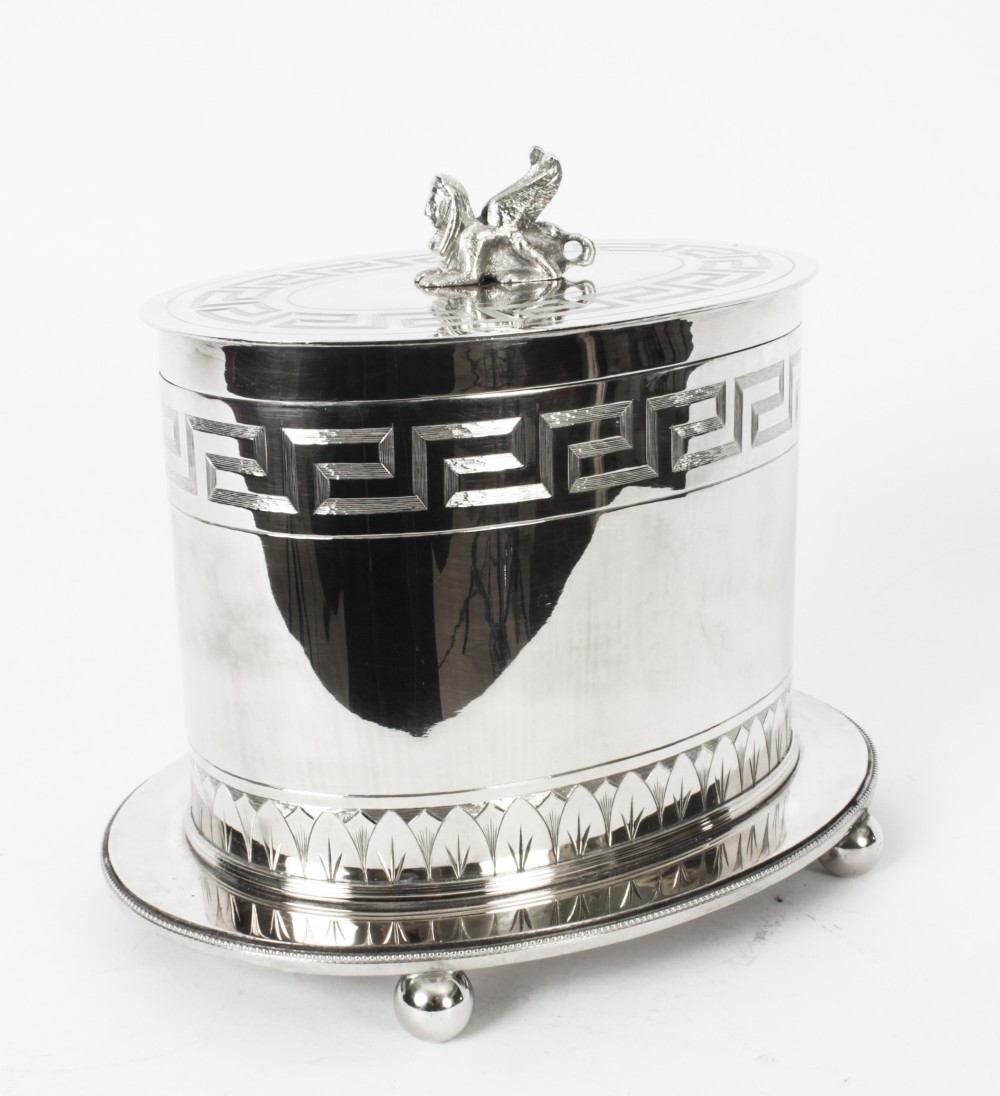
This is a beautiful early Antique Neo- classical Victorian silver plated biscuit box, bearing the makers mark for Munsey Silversmith of Cambridge Circa 1840 in date.

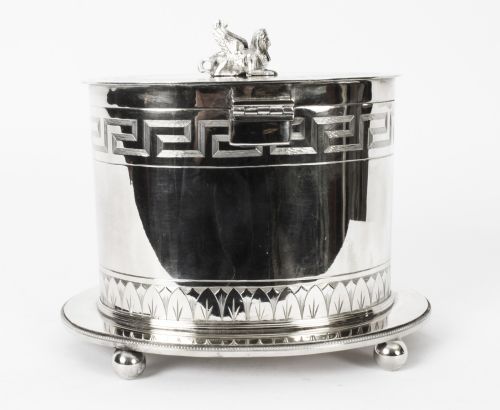
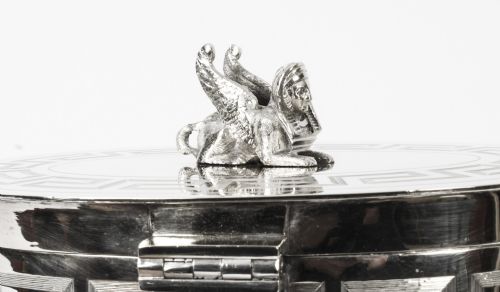
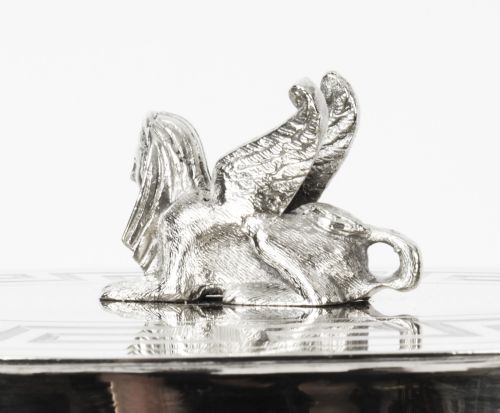
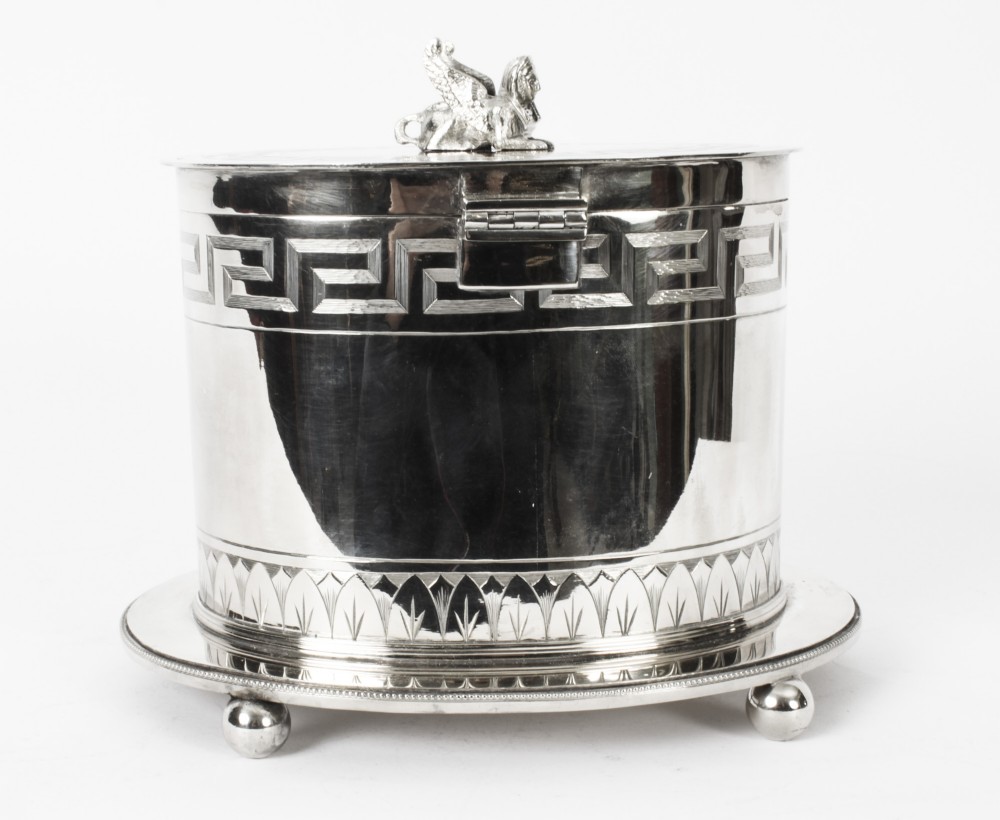
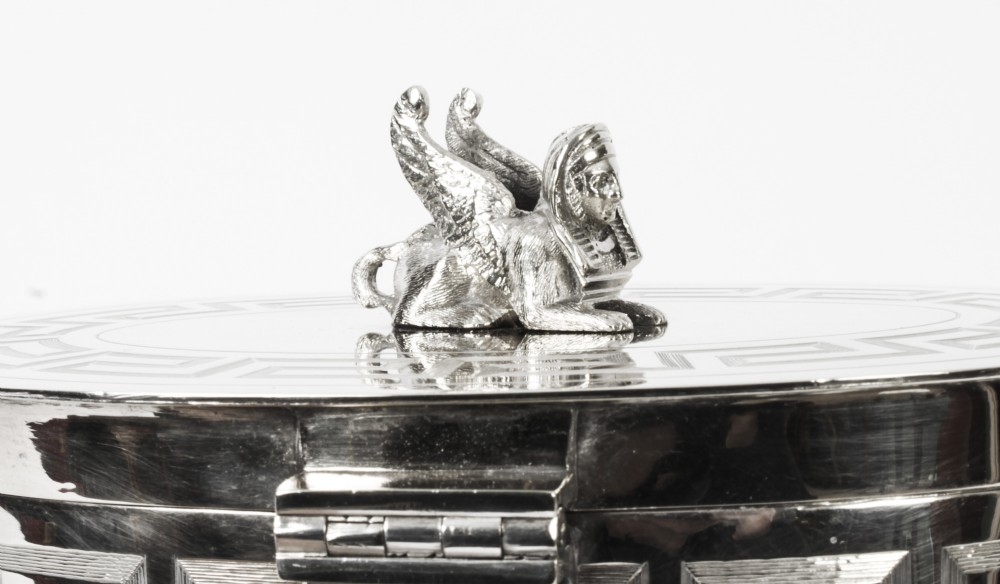
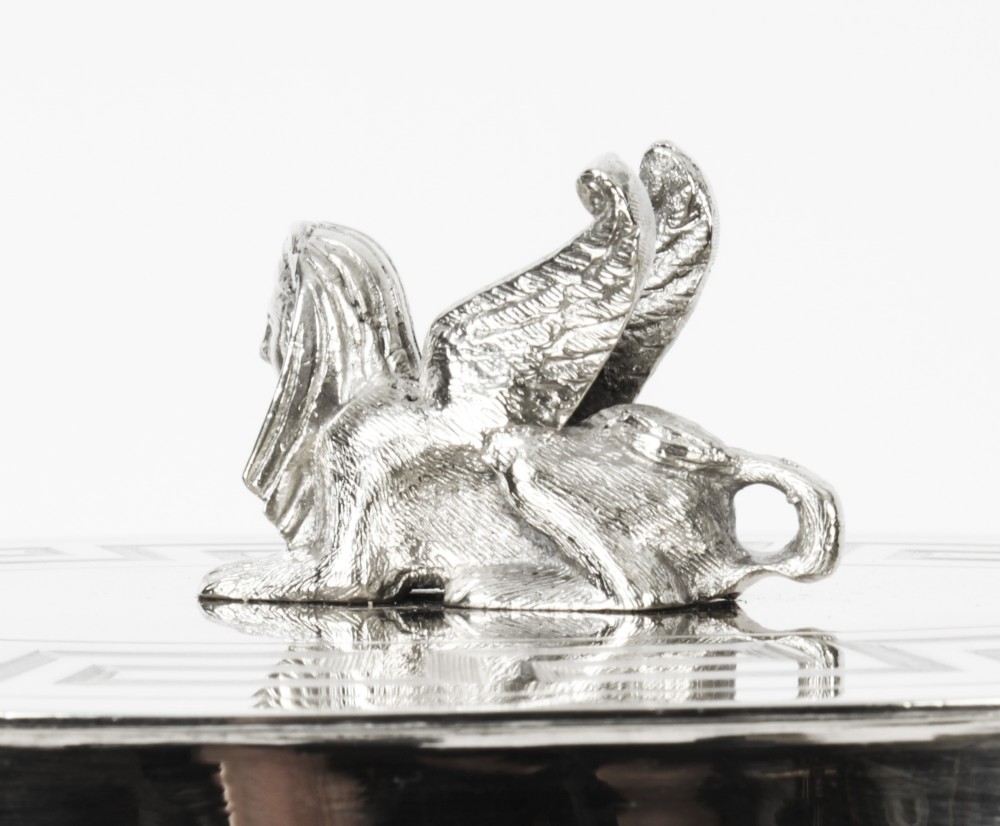
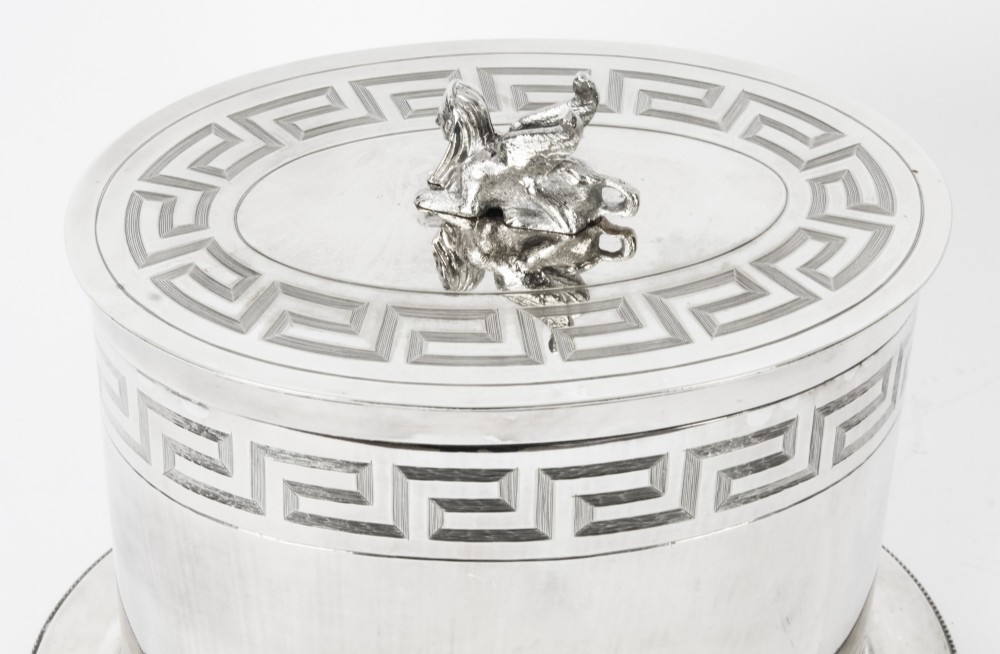
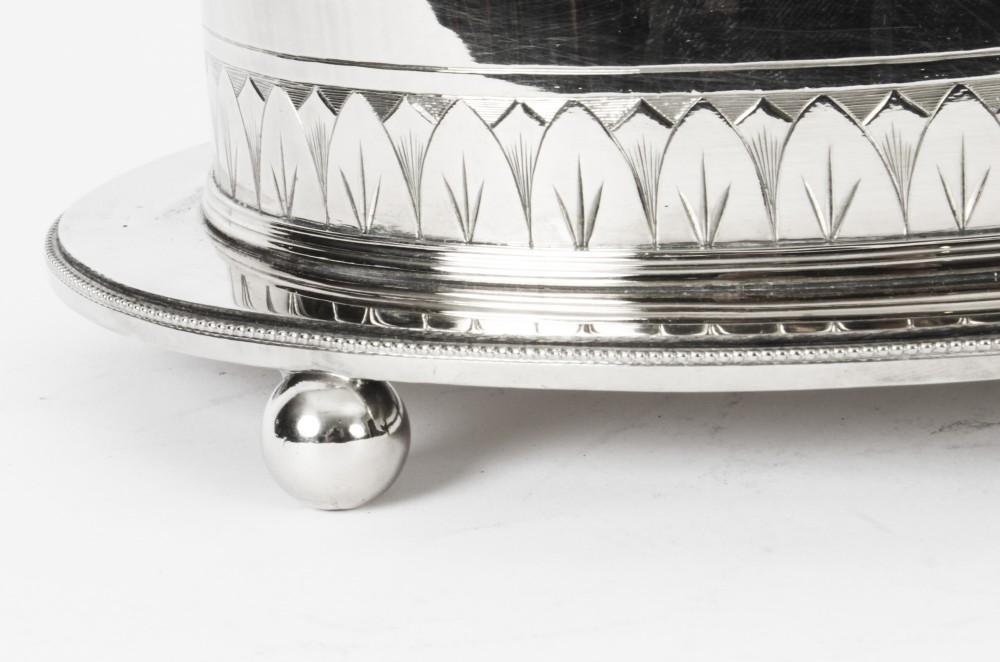
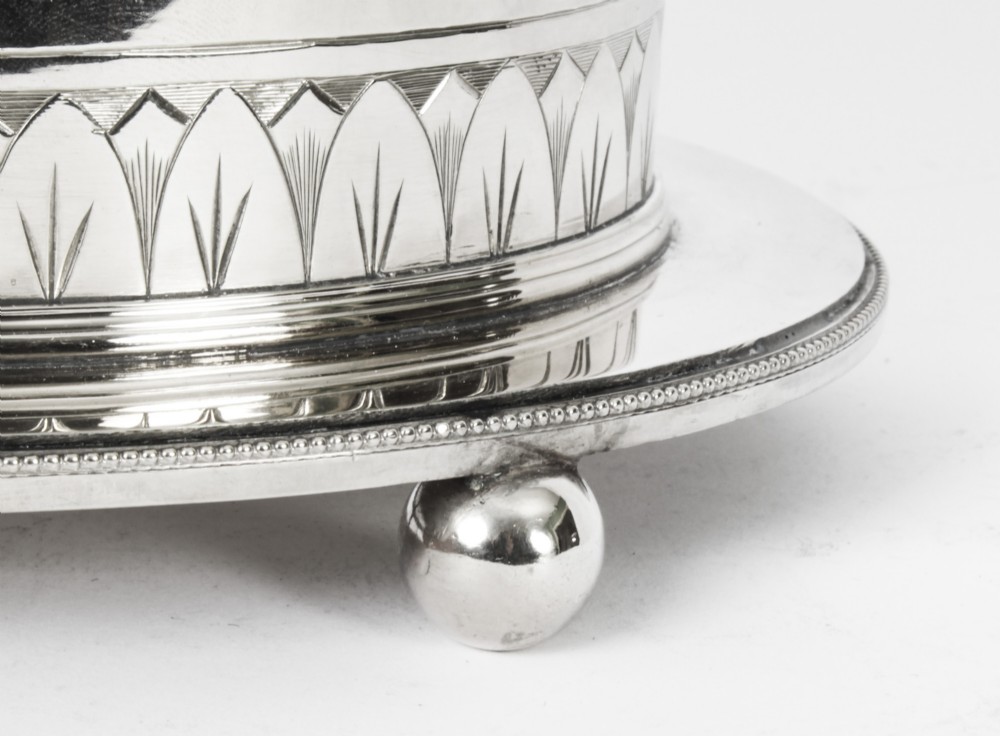
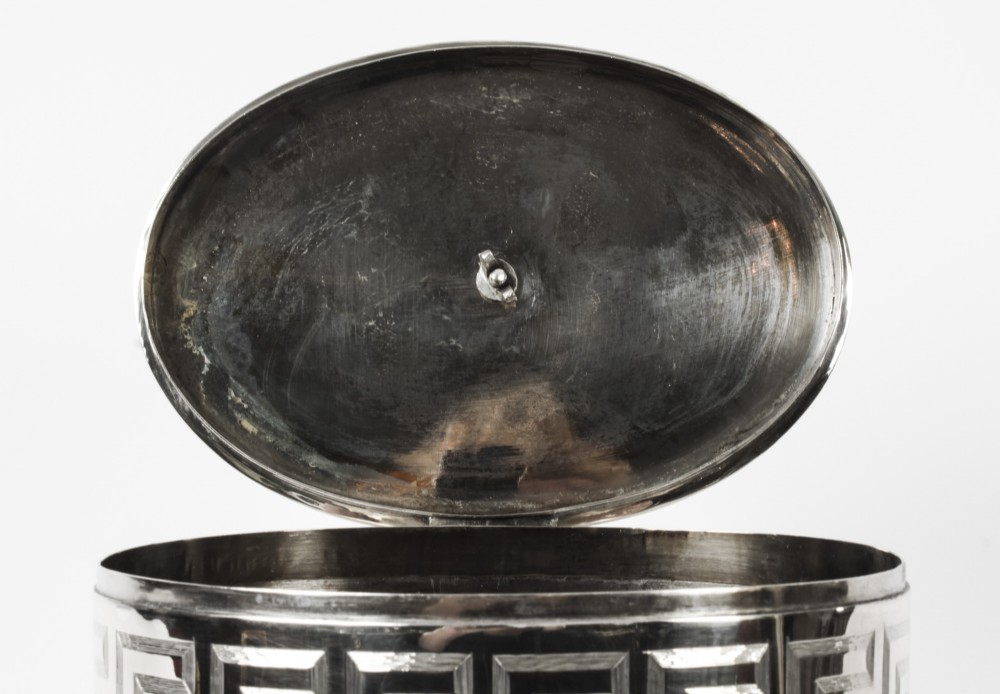
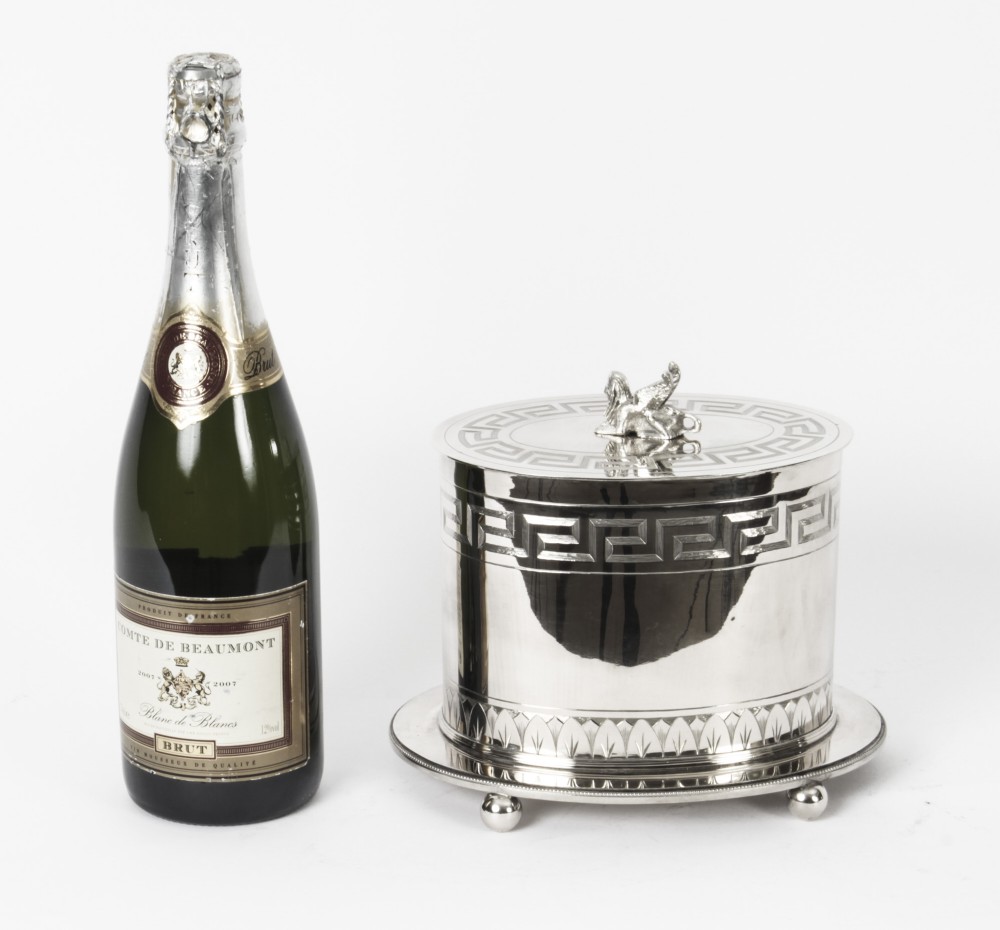
This exquisite oval shaped box has a hinged lid and features a winged Sphinx handle and is beautifully engraved with the Greek key pattern. The body features equally delightful stylised Egyptian leaf foliage trim. It stands on an oval shaped beaded base that rests on bun feet.
This container could house anything from sweets to biscuits or trinkets.

Whatever you choose to store in this lovely item you are sure to do it in style.

Condition:

In excellent condition with clear makers mark and no dings, dents or signs of repair. Please see photos for confirmation.
Dimensions in cm:

Height 21 x Width 21 x Depth 17

Dimensions in inches:

Height 8 inches x Width 8 inches x Depth 7 inches

Neoclassicism

Neoclassicism (also spelled Neo-classicism was a Western cultural movement in the decorative and visual arts, literature, theatre, music, and architecture that drew inspiration from the art and culture of classical antiquity. Neoclassicism was born in Rome largely thanks to the writings of Johann Joachim Winckelmann, at the time of the rediscovery of Pompeii and Herculaneum, but its popularity spread all over Europe as a generation of European art students finished their Grand Tour and returned from Italy to their home countries with newly rediscovered Greco-Roman ideals. The main Neoclassical movement coincided with the 18th-century Age of Enlightenment, and continued into the early 19th century, laterally competing with Romanticism. In architecture, the style continued throughout the 19th, 20th and up to the 21st century.
European Neoclassicism in the visual arts began c. 1760 in opposition to the then-dominant Rococo style. Rococo architecture emphasizes grace, ornamentation and asymmetry; Neoclassical architecture is based on the principles of simplicity and symmetry, which were seen as virtues of the arts of Rome and Ancient Greece, and were more immediately drawn from 16th-century Renaissance Classicism. Each "neo"-classicism selects some models among the range of possible classics that are available to it, and ignores others. The Neoclassical writers and talkers, patrons and collectors, artists and sculptors of 1765–1830 paid homage to an idea of the generation of Phidias, but the sculpture examples they actually embraced were more likely to be Roman copies of Hellenistic sculptures. They ignored both Archaic Greek art and the works of Late Antiquity. The "Rococo" art of ancient Palmyra came as a revelation, through engravings in Wood's The Ruins of Palmyra. Even Greece was all-but-unvisited, a rough backwater of the Ottoman Empire, dangerous to explore, so Neoclassicists' appreciation of Greek architecture was mediated through drawings and engravings, which subtly smoothed and regularized, "corrected" and "restored" the monuments of Greece, not always consciously.
The Empire style, a second phase of Neoclassicism in architecture and the decorative arts, had its cultural centre in Paris in the Napoleonic era. Especially in architecture, but also in other fields, Neoclassicism remained a force long after the early 19th century, with periodic waves of revivalism into the 20th and even the 21st centuries, especially in the United States and Russia

Our reference: A2514

Physical Dimensions
Height
21cm (8.27")
Width
21cm (8.27")
Depth
17cm (6.69")
Declaration

Regent Antiques has dated this piece to the 19th Century.

Reference Numbers
Sellingantiques Reference
SA874151
Dealers Internal Reference
A2514
Description
This is a beautiful early Antique Neo- classical Victorian silver plated biscuit box, bearing the makers mark for Munsey Silversmith of Cambridge Circa 1840 in date.
“
This exquisite oval shaped box has a hinged lid and features a winged Sphinx handle and is beautifully engraved with the Greek key pattern.
Regent Antiques

The body features equally delightful stylised Egyptian leaf foliage trim. It stands on an oval shaped beaded base that rests on bun feet.

fig 1. Antique Neo-classical Silver Plated Biscuit Sweet Box Munsey 1840 19th C

This container could house anything from sweets to biscuits or trinkets.

Whatever you choose to store in this lovely item you are sure to do it in style.

Condition:

In excellent condition with clear makers mark and no dings, dents or signs of repair. Please see photos for confirmation.

fig 2. Antique Neo-classical Silver Plated Biscuit Sweet Box Munsey 1840 19th C

Dimensions in cm:

Height 21 x Width 21 x Depth 17

Dimensions in inches:

Height 8 inches x Width 8 inches x Depth 7 inches

Neoclassicism

Neoclassicism (also spelled Neo-classicism was a Western cultural movement in the decorative and visual arts, literature, theatre, music, and architecture that drew inspiration from the art and culture of classical antiquity. Neoclassicism was born in Rome largely thanks to the writings of Johann Joachim Winckelmann, at the time of the rediscovery of Pompeii and Herculaneum, but its popularity spread all over Europe as a generation of European art students finished their Grand Tour and returned from Italy to their home countries with newly rediscovered Greco-Roman ideals. The main Neoclassical movement coincided with the 18th-century Age of Enlightenment, and continued into the early 19th century, laterally competing with Romanticism. In architecture, the style continued throughout the 19th, 20th and up to the 21st century.

fig 3. Antique Neo-classical Silver Plated Biscuit Sweet Box Munsey 1840 19th C

European Neoclassicism in the visual arts began c. 1760 in opposition to the then-dominant Rococo style. Rococo architecture emphasizes grace, ornamentation and asymmetry; Neoclassical architecture is based on the principles of simplicity and symmetry, which were seen as virtues of the arts of Rome and Ancient Greece, and were more immediately drawn from 16th-century Renaissance Classicism. Each "neo"-classicism selects some models among the range of possible classics that are available to it, and ignores others. The Neoclassical writers and talkers, patrons and collectors, artists and sculptors of 1765–1830 paid homage to an idea of the generation of Phidias, but the sculpture examples they actually embraced were more likely to be Roman copies of Hellenistic sculptures. They ignored both Archaic Greek art and the works of Late Antiquity. The "Rococo" art of ancient Palmyra came as a revelation, through engravings in Wood's The Ruins of Palmyra. Even Greece was all-but-unvisited, a rough backwater of the Ottoman Empire, dangerous to explore, so Neoclassicists' appreciation of Greek architecture was mediated through drawings and engravings, which subtly smoothed and regularized, "corrected" and "restored" the monuments of Greece, not always consciously.

fig 4. Antique Neo-classical Silver Plated Biscuit Sweet Box Munsey 1840 19th C

The Empire style, a second phase of Neoclassicism in architecture and the decorative arts, had its cultural centre in Paris in the Napoleonic era. Especially in architecture, but also in other fields, Neoclassicism remained a force long after the early 19th century, with periodic waves of revivalism into the 20th and even the 21st centuries, especially in the United States and Russia

Our reference: A2514

Height
21cm (8.27")
Width
21cm (8.27")
Depth
17cm (6.69")
Date of Manufacture

Regent Antiques has dated this piece to the 19th Century.

Reference Numbers
Sellingantiques Ref
SA874151
Dealers Internal Ref
A2514
Regent Antiques
Regent Antiques
Sellingantiques verified Since Sep 2016

We specialise in english and continental furniture, silver, porcelain and decorative items.

Dealer Profile

You can view the stock and full dealer information on the Regent Antiques Profile Page

Trade Associations

Regent Antiques is a registered member of LAPADA  CINOA
PDF SHARE
SAVE
Antique Neo-classical Silver Plated Biscuit Sweet Box Munsey 1840 19th C
SOLD6+ MONTHS AGO
1 / 14
Archive I Antique Neo-classical Silver Plated Biscuit Sweet Box Munsey 1840 19th C
SOLD6+ MONTHS AGO

Antique Neo-classical Silver Plated Biscuit Sweet Box Munsey 1840 19th C
Archive II Antique Neo-classical Silver Plated Biscuit Sweet Box Munsey 1840 19th C
 View II
Archive III Antique Neo-classical Silver Plated Biscuit Sweet Box Munsey 1840 19th C
 View III
Archive IV Antique Neo-classical Silver Plated Biscuit Sweet Box Munsey 1840 19th C
 View IV
Archive V Antique Neo-classical Silver Plated Biscuit Sweet Box Munsey 1840 19th C
 View V
Archive VI Antique Neo-classical Silver Plated Biscuit Sweet Box Munsey 1840 19th C
 View VI
Archive VII Antique Neo-classical Silver Plated Biscuit Sweet Box Munsey 1840 19th C
 View VII
Archive VIII Antique Neo-classical Silver Plated Biscuit Sweet Box Munsey 1840 19th C
 View VIII
Archive IX Antique Neo-classical Silver Plated Biscuit Sweet Box Munsey 1840 19th C
 View IX
Archive X Antique Neo-classical Silver Plated Biscuit Sweet Box Munsey 1840 19th C
 View X
Archive XI Antique Neo-classical Silver Plated Biscuit Sweet Box Munsey 1840 19th C
 View XI
Archive XII Antique Neo-classical Silver Plated Biscuit Sweet Box Munsey 1840 19th C
 View XII
Archive XIII Antique Neo-classical Silver Plated Biscuit Sweet Box Munsey 1840 19th C
 View XIII
Archive XIV Antique Neo-classical Silver Plated Biscuit Sweet Box Munsey 1840 19th C
 View XIV
Enlarged Archival View
Location
Manor Warehouse
318 Green Lanes
London
N4 1BX
United Kingdom
Verified Since Sep 2016
Items For Sale 673
Items Sold 2,658
Regent Antiques
Regent Antiques
Verified Since Sep 2016
View Dealer Info
Location: Manor Warehouse, 318 Green Lanes, London, N4 1BX, United Kingdom
Verified
Sep 2016
For Sale
673
Sold
2,658
Antique Neo-classical Silver Plated Biscuit Sweet Box Munsey 1840 19th C
Ref: SA874151
Antique Neo-classical Silver Plated Biscuit Sweet Box Munsey 1840 19th C
Detail View 1
Detail View 2
Detail View 3
Detail View 4
Detail View 5
Detail View 6
Detail View 7
Detail View 8
Detail View 9
Detail View 10
Detail View 11
Detail View 12
Detail View 13
Archival Detail
Every single antique dealer on our platform is individually approved by our internal team. We verify their professional trade history, ethical standards, and photographic quality to ensure a secure, high-standard buying environment. Upon joining, every dealer agrees to a strict 9-point code of conduct. While issues can occasionally arise, our dealers typically resolve them swiftly and directly with the buyer. In fact, since our founding in 2002, Sellingantiques has only had to step in to help resolve an issue on roughly five occasions—a true testament to the quality of our dealers and their dedication to your happiness.
Our dealers are highly experienced in packing and shipping fragile, high-value antiques. Because you are in direct contact with the dealer, you will be able to easily go through all available shipping and insurance options together to ensure your item arrives safely.
Antiques are the ultimate green purchase. By choosing historical pieces over newly manufactured goods, you completely eliminate the carbon footprint of modern mass production while preserving exceptional, timeless craftsmanship.
Written by Sellingantiques from the dealer’s photographs and listing
  • Period19th century
  • SizeH 21 cm (8 in) x W 21 cm (8 in) x D 17 cm (7 in)
items
Add keywords to the filter
Price
£100
£250000
Era
Period
Style
Material
Origin
Stock Location
Recently Added
Online Payments
Categories